
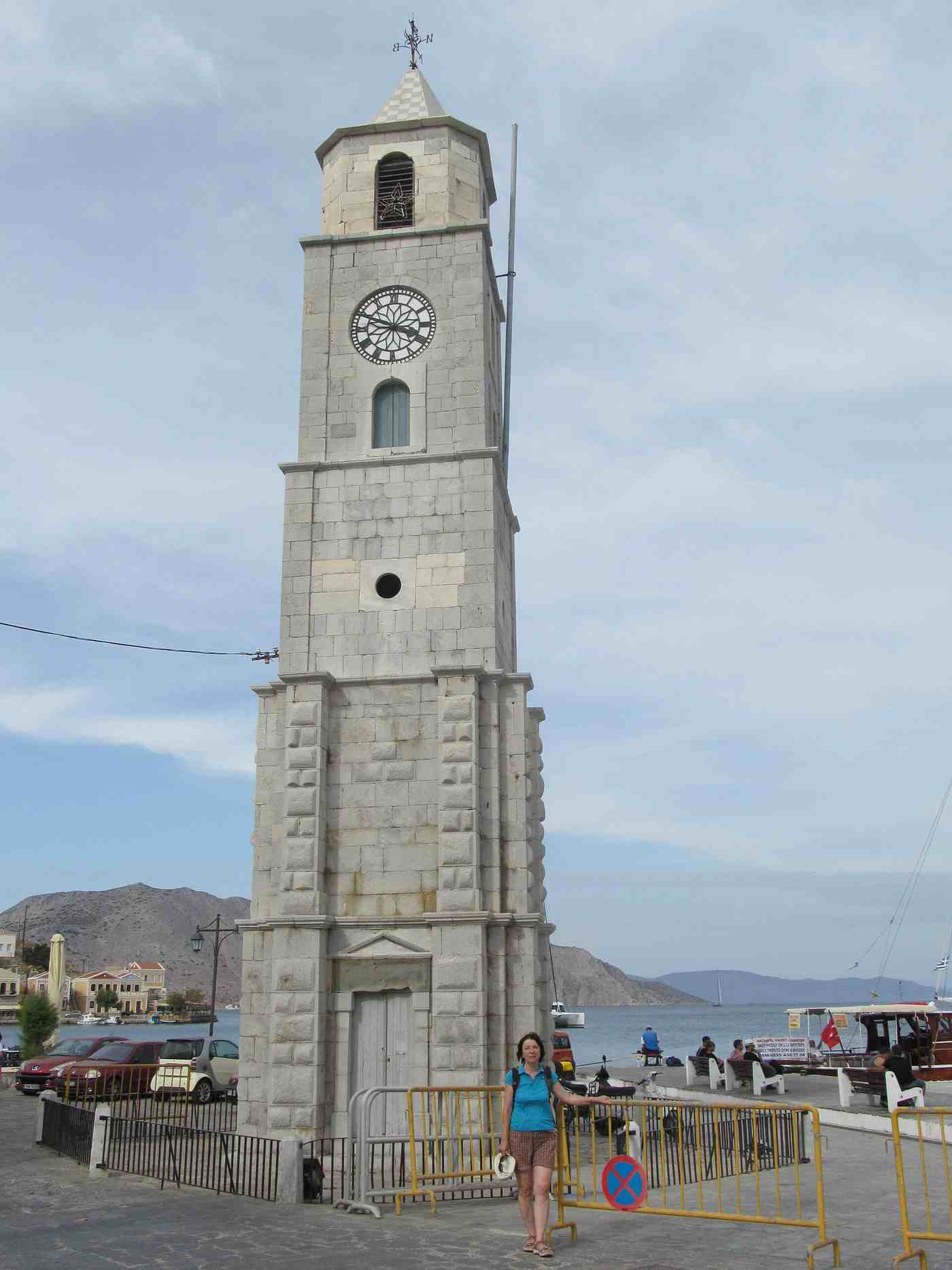
The clock tower and the nautical museum stand together on the Gialos waterfront of Symi. The tower, known as the Roloi, rises at the entrance of the harbour. It is a tall white neoclassical tower, topped by a clock and a statue. The tower dates from the age of the island’s sponge and shipping wealth. It greets the boats that arrive at the harbour front. A short walk along the quay leads to the nautical museum. The museum displays the seafaring history of the island. Models of caiques, sponge-diving gear, charts and old photographs fill its rooms. The two landmarks sit on the flat ground beside the water. Together they mark the maritime identity of the whole island in the Dodecanese.
The tower and the museum tell one story between them. That story is the seafaring past of Symi, a small island in the Dodecanese. The sponge trade and shipbuilding built the wealth of the harbour. The tower marks the entrance where the fleet once moored. The museum holds the models, tools and photographs of that trade. Both stand on the flat harbour front of Gialos, an easy walk along the quay. The museum makes a short, focused visit. It explains the wealth behind the coloured mansions that ring the port. This guide covers the tower, the museum and the whole maritime story of the island. Each section answers one clear question about the two landmarks on the waterfront.
Why is the clock tower a landmark of Symi’s harbour?
The clock tower stands at the entrance of the Gialos harbour, so it is the first landmark that greets boats arriving at Symi. Its tall white form marks the mouth of the port and guides every vessel toward the quay.
The tower rises on the flat waterfront at the harbour entrance of Gialos. Its base sits at the point where the open sea meets the sheltered port. Boats round the headland and see the white tower before the rest of the town. The tower marks the threshold between the bay and the quay. Sailors read it as the sign that the harbour lies ahead. The tower holds the corner of the waterfront where vessels turn to moor. Its position at the mouth of the port gives it the role of a marker. Every arrival by sea passes the tower on the way to the quay. This spot at the harbour edge makes the tower the gateway of the whole port.
White plaster covers the tower and sets it apart from the coloured mansions behind. The houses of the harbour rise in ochre, blue and deep red on the slopes. The tower stands pale and plain against that backdrop of colour. Its height lifts the clock above the roofs along the quay. The white shaft draws the eye across the whole width of the bay. Visitors pick out the tower from the far side of the harbour. The pale form works as a fixed point in the busy waterfront scene. Cafes, shops and moorings crowd the quay around its base. The tower keeps its own clear outline above the crowd. This contrast of white tower and coloured town fixes the landmark in every view of the port.
The islanders call the tower the Roloi, the Greek word for clock. The name fixes the tower in the daily life of the harbour. The clock faces the port and shows the time to the quay below. People on the waterfront look to the Roloi to read the hour. The tower stands on the flat ground at the water’s edge, not on a hill. Its place on the level quay keeps it close to the boats and the crowd. The name and the clock tie the tower to the working port. Locals give directions by the Roloi and meet beside it. The tower serves as the shared clock of the whole waterfront. This role in daily time-keeping makes the Roloi a landmark of use, not only of sight.
The tower anchors one end of the harbour promenade at Gialos. The quay runs from the tower along the water past the moored boats. A statue crowns the top of the tower above the clock. That crowning figure lifts the tower above the plain roofline of the front. Arriving passengers step ashore near the tower and take their bearings there. The tower gives a first fixed point to anyone new to the port. Ferries, day boats and yachts tie up within sight of its base. The landmark orders the space of the crowded waterfront. Guides and maps mark the tower as a reference on the quay. This fixed marker at the harbour edge helps every visitor read the shape of the port.
What is the neoclassical form and origin of Symi’s clock tower?
The clock tower is a tall white neoclassical tower, topped by a clock and a statue. It rose in the age of the island’s sponge and shipping wealth, when the trade of Symi paid for grand building along the harbour.
Neoclassical design gives the tower its formal, ordered shape. The style shaped the grand houses of the harbour in the same era. The tower carries the clean lines and symmetry of that fashion. A square white shaft rises in stages toward the clock. Plaster in white covers the stone of the tower. The form follows the classical taste that ruled building across the wealthy Aegean islands. The tower matches the mansions of the port in style and material. Its design places it firmly in the age of the sponge fortune. The classical shape marks the tower as a work of the island’s rich years. This shared neoclassical language ties the tower to the houses that climb the slopes above the quay.
A clock sits high on the tower and faces the harbour front. The clock gives the tower its Greek name, the Roloi. A statue crowns the very top, above the clock face. The figure lifts the outline of the tower over the roofs of the quay. The clock and the statue together finish the neoclassical design. The white shaft carries the eye up to the clock and the figure. These features set the tower apart from a plain church or civic tower. The clock marks the tower as a public timepiece for the port. The statue marks it as a monument as well as a clock. This pairing of clock and figure defines the profile of the tower against the sky.
Sponge diving and shipbuilding built the wealth that raised the tower. The island’s fleet worked the seabeds for natural sponges across the Aegean. Profits from the trade paid for grand public and private building at the port. The tower belongs to that surge of building along the harbour. Wealthy captains and merchants funded the works that shaped the waterfront. The tower stands as a civic mark of the island’s prosperous age. Its scale and finish reflect the money the sea trade brought. The neoclassical fashion of the tower fits the taste of that wealthy era. The origin of the tower lies in the fortune of the sponge and the ship. This link to trade makes the tower a monument to the island’s maritime wealth.
The tower joined the mansions as a public face of the rich port. The harbour of that age held grand houses, churches and civic works. The clock served the whole community that lived from the sea. A public clock marked a settlement of standing and order. The tower gave the port a shared timepiece at its heart. Its white neoclassical form matched the ambition of the merchant town. The tower spoke of a place proud of its trade and its wealth. The monument fixed the identity of the harbour in stone and plaster. Its survival keeps that age visible on the waterfront. This standing civic landmark carries the memory of the island’s greatest years into the present port.
What do visitors see arriving at Symi’s harbour past the clock tower?
Visitors arriving at Symi see the white clock tower first, at the entrance of the Gialos harbour. The tower marks the mouth of the port, and behind it the tiered mansions of the town rise in ranks of colour up the slopes.
Boats reach Symi by sea, from Rhodes and from other ports of the Dodecanese. The vessel rounds the coast and enters the long inlet of the harbour. The white tower appears at the mouth of the port on the flat quay. The tower stands as the gate to the sheltered water beyond. Passengers see it before the town spreads open around the bay. The tower fixes the first point of the harbour in the eye. Its pale form marks the boundary between open sea and port. The approach passes the tower on the way to the moorings. The landmark greets each arrival at the threshold of the quay. This first sight of the tower opens the whole harbour scene to the visitor.
The harbour opens as a bowl of coloured houses behind the tower. Mansions rise in tiers up the two slopes that frame the port. The houses wear ochre, blue and deep red plaster with white trim. Sponge wealth built these neoclassical fronts in the island’s rich years. The tower stands white and plain at the foot of that painted slope. The tiered town forms the backdrop to the tower on the quay. The arriving boat faces the full sweep of the harbour and its houses. The tower and the mansions share the same age and the same wealth. This ring of colour behind the pale tower defines the face of the port from the sea.
Passengers step ashore on the quay close to the clock tower. The flat waterfront runs level from the tower along the moored boats. Ferries and day boats tie up within a short walk of its base. The promenade of Gialos begins near the foot of the tower. New arrivals take their bearings from the tower on the front. Cafes and shops line the quay beside the landmark. The tower gives a fixed point in the busy scene of the port. Walkers set off along the waterfront from the tower toward the town. The landmark orders the space where boats meet the shore. This meeting of quay and tower forms the entrance point for every visitor to the island.
The flat harbour front stretches from the tower along the edge of the water. Boats moor stern-to against the quay the length of the front. The nautical museum stands a short walk along the same waterfront. The clock tower and the museum sit on the level ground beside the sea. A walker passes cafes, shops and moorings between the two landmarks. The whole front lies open and easy to cross on foot. The tower marks one point on this waterfront, the museum another. Both belong to the same flat strip beside the harbour water. The layout keeps the sights of the port within an easy walk. This level front ties the tower and the museum into one waterfront route for the visitor.
What does the nautical museum of Symi display?
The nautical museum of Symi displays the seafaring history of the island on the Gialos waterfront. Its rooms hold models of caiques and sailing ships, sponge-diving gear, old photographs, charts and captains’ instruments from the age of the sea trade.
The museum gathers the maritime past of the island under one roof. Its displays trace the fleet, the trade and the life of the sea. Models, tools, photographs and charts fill the rooms in turn. The collection covers Symi sponge diving and the sponge trade that built the harbour. Exhibits show how the divers worked and how the fleet sailed. The museum sets the objects of the trade beside its history. Visitors read the story of the port through the things it used. The displays explain the source of the wealth behind the mansions. The museum makes that maritime past concrete and close. This gathered collection turns the history of the harbour into objects a visitor can see.
The museum makes a short, focused visit near the harbour front. Its rooms hold a compact collection rather than a sprawling one. A visitor walks the displays in a modest span of time. The focus stays on the sea, the sponge and the ship. Each exhibit adds to the single story of the maritime island. The museum sits within an easy walk of the moored boats. The visit fits between a meal on the quay and a walk in the town. The compact scale keeps the history clear and direct. Visitors leave with a firm grasp of the island’s sea trade. This tight, focused museum explains the wealth behind the harbour without a long or crowded tour.
The museum explains the money that raised the mansions of the port. The coloured houses of the harbour came from sponge and shipping wealth. The displays show the trade that filled the merchants’ purses. Models and tools reveal how the fleet earned that fortune. The photographs record the crowded, working harbour of the rich years. Charts and instruments show the reach of the island’s ships. The collection ties the grand houses to the sea trade that paid for them. Visitors link the exhibits to the mansions they see outside the door. The museum reads the town through the trade in its rooms. This account of the wealth makes sense of the neoclassical harbour around the museum.
The museum stands on the Gialos waterfront, near the clock tower. The flat quay links the two landmarks along the water. A short walk carries a visitor from the tower to the museum door. The museum sits among the cafes and shops of the harbour front. Its place beside the water fits the subject of the sea. Boats moor along the quay a few steps from the entrance. The waterfront setting ties the museum to the port it records. The tower and the museum share the same level front. Visitors reach the museum on the same walk that passes the tower. This waterfront location keeps the museum at the heart of the harbour it explains.
What ship and caique models are shown in Symi’s nautical museum?
The museum shows detailed models of caiques and sailing ships from the island’s fleet. The models recall the wooden vessels that carried divers to distant sponge beds and traded goods across the Aegean, built in the yards of the harbour.
Models of wooden boats stand among the museum’s chief exhibits. Each model copies a vessel of the island’s sponge and trading fleet. The caiques appear with masts, rigging and painted hulls in miniature. Sailing ships of the fleet sit beside the smaller working boats. The models show the shape and gear of the vessels in fine detail. Visitors read the build of the boats from the models on display. The craft that carried the divers takes solid form in the cases. The models fix the vanished fleet in wood and paint. Each hull recalls a type that once filled the harbour. This gathering of models sets the working fleet of the island before the visitor’s eye.
The models record the ships that the island’s yards once built. Symi shipbuilding grew alongside the sponge trade as a second great industry. Carpenters and caulkers built the diving boats along the harbour front. The yards turned local skill and imported timber into seagoing vessels. The models in the museum show the fruit of that craft. Each hull reflects the work of the shipwrights of the port. The fleet the models copy came from the slipways of Gialos. The museum ties the models to the building trade that made them. Visitors see the product of the island’s yards in miniature. This link between model and yard tells how the island built its own maritime fleet.
The models cover the range of craft the trade required. Small boats carried divers and gear to the beds and back. Larger sailing ships made the long passage to distant grounds. Trading caiques moved sponges, timber and supplies around the Aegean. Each type appears in the museum in model form. The rigging and hulls differ from one type to the next. The collection shows how each vessel served the fleet. Divers, cargo and trade each had their own kind of boat. The models set these types side by side for comparison. Visitors grasp the whole working fleet from the range on show. This spread of models explains how the island moved its divers, its cargo and its trade by sea.
The models bring the daily work of the fleet into view. A visitor pictures the crews that sailed the boats to the beds. The vessels left the harbour each season for the sponge grounds. The models recall the long summer voyages of the divers. Wooden hulls and canvas sails carried the trade of the island. The museum uses the models to stage that seafaring life. Each boat stands for the men and the work behind it. The painted detail marks each craft as a real working boat. The models turn the abstract trade into concrete craft. Visitors connect the miniature fleet to the harbour outside. This fleet in miniature carries the working life of the sea into the rooms of the museum.
What sponge-diving gear is on show in Symi’s nautical museum?
The museum shows the sponge-diving gear that the island’s divers used at sea. The exhibits include the heavy diving suit and its metal helmet, the tools of the skafandro method that let divers reach the deep sponge beds off Symi.
The heavy diving suit stands among the museum’s key exhibits. The suit joins a sealed body of rubberised canvas to a metal helmet. A pump on the boat forced air down a hose into the helmet. The suit let a diver walk the seabed and breathe far below. Its weight and bulk show the strain the divers bore. The helmet bolts to a collar over the diver’s shoulders. Visitors see the gear that opened the deep beds to the fleet. The suit reveals how the island reached sponges beyond a held breath. The exhibit fixes the skafandro method in solid form. This diving suit and helmet stand at the centre of the museum’s account of the trade.
Other diving gear fills the cases beside the heavy suit. A flat, heavy stone shows the older breath-hold method of diving. Divers gripped the stone and let its weight drag them to the bottom. Ropes, nets and weights record the plain tools of the naked divers. The gear traces the shift from breath-hold diving to the pumped suit. Each object marks a stage in how the island worked the beds. The simple stone stands beside the heavy modern suit. Visitors read the whole span of diving method from the display. The tools show how the divers gathered sponges in every era. This range of gear sets the old and the new ways of diving side by side.
The gear on show reveals the hardship of the diving trade. The heavy suit weighed on the diver through every descent. The pump and hose tied the diver’s life to the crew above. The exhibits show the risk the divers faced on the deep beds. The tools explain why diving demanded strong and practised men. The museum sets the gear beside the story of the divers’ work. Visitors grasp the toll the trade took on the fleet. The objects make the danger of the deep beds concrete. Each piece of gear stands for the effort behind the catch. The display makes that effort plain to the visitor. This equipment tells how the island paid for its sponges in labour and risk.
The gear connects the museum to the sponges still sold on the quay. Cleaned natural sponges hang outside the shops of the harbour front. The diving suit and stone show how those sponges reached the surface. The gathered gear explains the trade behind the goods on the stalls. Visitors link the tools in the cases to the sponges outside. The museum places the method beside its product. The heavy suit stands for the deep beds the divers worked. The stalls stand for the market the catch supplied. The gear names the source of the sponges on sale. Together the gear and the sponges close the story of the trade. This pairing of tool and product ties the museum to the living waterfront around it.
What photographs and instruments does Symi’s nautical museum hold?
The museum holds old photographs and captains’ instruments from the age of the sea trade. The photographs record the crowded harbour and the fleet, and the charts, compasses and navigation tools show how the ships of Symi found the distant sponge beds.
Old photographs line the walls of the museum’s rooms. The images record the harbour of the island’s rich and crowded years. Boats fill the quay in the photographs of the working port. The pictures show the divers, the crews and the merchants of the trade. Faces from the sponge era look out from the framed prints. The photographs fix a busy harbour now far quieter. Visitors read the scale of the old trade in the crowded scenes. The images set living people beside the models and gear. The prints record the port at the height of the trade. The port of the photographs matches the quay outside the door. This photographic record brings the vanished working harbour back into view for the visitor.
Charts and navigation instruments fill the cases of the museum. Old sea charts map the routes the fleet sailed to the beds. Compasses and instruments show how the captains fixed their course. The tools guided the ships across the Aegean to distant grounds. The charts trace the reach of the island’s fleet by sea. Each instrument records the skill of the captains of the port. The gear of navigation sits beside the models of the ships. Visitors see how the vessels found their way to the sponge beds. The instruments explain the craft of sailing the open sea. The charts name the grounds the fleet reached. This gathered navigation gear shows how the island’s ships crossed the water to the trade.
Captains’ instruments record the command of the island’s ships. The tools of the master fill the cases beside the charts. Papers and logs mark the trade and the voyages of the fleet. The objects show the standing of the captains in the port. Each instrument served a master on the long sea passages. The gear ties the museum to the men who led the ships. Visitors read the rank and skill of the captains from the display. The instruments show the precision the trade demanded at sea. The tools stand for the command behind every voyage. The exhibits set the master’s craft beside the diver’s. This record of command completes the museum’s picture of the seafaring island.
The photographs and instruments together date the museum’s story. The images fix the look of the harbour in its working years. The charts and tools show the reach of the fleet across the sea. Together they set the trade in its place and its time. Visitors read both the scene and the skill of the port. The photographs supply the faces, the instruments the craft. The two kinds of exhibit fill out the account of the sea. The museum joins image and tool into one clear record. Each supports the models and gear in the other rooms. The two together date and place the whole trade. This blend of photograph and instrument rounds out the maritime story the museum tells.
How do the clock tower and museum tell Symi’s maritime story?
The clock tower and the museum together mark the island’s identity as a sponge-diving and shipbuilding place. The tower stands as the public face of the wealthy port, and the museum holds the tools and records of the trade of Symi.
The clock tower carries the maritime story on the outside. The tower stands where the fleet once entered the harbour. Its neoclassical form speaks of the wealth the sea trade brought. The white shaft marks the port that grew from sponge and ship. The tower greets arrivals as the sign of a proud sea town. Its clock served the crews and merchants of the trade. The monument fixes the age of the fortune on the quay. The statue on top lifts that story above the roofs of the front. The tower needs no cases or labels to tell its part. Visitors read the wealth of the port in the tower itself. This outward monument opens the island’s maritime story at the harbour mouth.
The museum carries the same story on the inside. Its rooms hold the models, gear and photographs of the trade. The museum explains what the tower only marks from outside. Visitors move from the sign on the quay to the record in the cases. The models show the fleet the tower’s age built. The gear shows the diving that filled the merchants’ purses. The photographs show the crowded harbour of the rich years. The record within the walls holds what the quay cannot show. The museum fills in the detail behind the outward monument. Tower and museum thus split the story between sign and record. This pairing lets the port show its past both on the quay and within the walls.
The tower and the museum together fix the identity of the port. Both stand in Symi Town and Gialos, the harbour that grew from the sea trade. The tower marks the entrance, the museum records the trade within. The mansions around them came from the same sponge wealth. The two landmarks read the harbour as one maritime whole. Visitors tie the tower, the museum and the houses into a single story. The port shows its past through monument, museum and mansion alike. Each part supports the others in telling the island’s sea history. The waterfront reads as a record of the sponge and the ship. This joined account marks the harbour as the seat of a seafaring island.
The story the two landmarks tell centres on sponge and ship. The island lived from diving the beds and building the boats. The tower rose from the wealth those trades produced. The museum records the tools and vessels of both trades. Sponge diving gathered the catch that filled the market. Shipbuilding made the craft that carried the divers and the cargo. The two industries built the fortune of the harbour together. The tower and the museum mark that double maritime base. The coloured mansions stand as the lasting proof of that wealth. Visitors leave with the island’s identity fixed in mind. This story of sponge and ship runs through both the monument and the museum on the quay.
How do visitors find and visit Symi’s clock tower and museum?
Visitors find the clock tower at the entrance of the Gialos harbour, the first landmark from the sea. The nautical museum stands a short walk along the flat waterfront, and both lie on level ground beside the quay of Symi.
Visitors find the clock tower with ease at the harbour mouth. The tower stands where boats enter the port of Gialos. Its white form rises clear above the flat quay. Arrivals by sea pass the tower on the way to the moorings. The tower marks one end of the harbour promenade. Walkers reach it along the level front from the town. The pale shaft carries the clock and the statue above the roofs. Passengers spot it before the boat reaches the quay. The landmark shows plainly from across the whole bay. The tower needs no ticket and stands open on the quay. This clear position at the harbour entrance makes the tower simple to find.
Visitors reach the nautical museum on the same flat waterfront. A short walk along the quay carries them from the tower to the door. The museum stands among the cafes and shops of the harbour front. Its place beside the water fits the story it tells. The visit runs short and focused on the sea trade. A modest span of time covers the models, gear and photographs. The compact rooms keep the history clear and direct. The displays trace the sea trade in a modest space. The museum sits within an easy walk of the moored boats. Visitors fit the museum between a meal and a walk in the town. This waterfront museum rounds out a walk along the harbour of the island.
The flat harbour front joins the tower and the museum in one walk. The quay runs level from the tower along the moored boats. A visitor crosses the front on foot with no climb. Cafes, shops and stalls line the way between the two landmarks. Sponges hang outside the shops along the same waterfront. The walk passes the working port on the level ground beside the sea. The tower marks one point, the museum another, on the same front. Both sit within an easy stroll of the ferry quay. The stalls and cafes fill the walk between them. The level ground keeps the sights within reach of every visitor. This short waterfront walk ties the tower and the museum into one easy route.
The tower and the museum fit into a wider walk of the port. The stepped street climbs from the harbour to the upper town above. The mansions rise in tiers on the slopes behind the quay. A visit to the tower and the museum sets the scene at sea level. The waterfront gives the maritime story before the climb begins. Sponges, models and gear prepare the walker for the town above. The tower and museum open the port to the newcomer. Both stand at the start of any tour of the harbour. Visitors begin with the sea and move up into the town. This waterfront pair forms the natural first stop on a visit to the island.
Frequently Asked Questions
Where is the clock tower on Symi?
The clock tower stands at the entrance of the Gialos harbour on Symi, on the flat waterfront beside the water. The tower marks the mouth of the port, so it is the first landmark that boats pass on the way to the quay. Its tall white neoclassical form rises clear above the coloured mansions behind. A statue and a clock crown the top of the tower. The landmark sits within an easy walk of the moored boats and the harbour promenade.
What is the Roloi on Symi?
The Roloi is the clock tower of Symi, named with the Greek word for clock. The tower stands at the harbour entrance of Gialos, a tall white neoclassical tower topped by a clock and a statue. The island built it in the age of the sponge and shipping wealth, when the trade of the port paid for grand building. The clock faces the harbour and once served the crews and merchants of the fleet. The Roloi now stands as the chief landmark of the waterfront.
What does the nautical museum of Symi show?
The nautical museum of Symi shows the seafaring history of the island on the Gialos waterfront. Its rooms hold detailed models of caiques and sailing ships from the fleet. The museum displays sponge-diving gear, including the heavy diving suit and its metal helmet. Old photographs record the crowded harbour of the trade’s rich years. Charts, compasses and captains’ instruments show how the ships found the distant sponge beds. The collection makes a short, focused visit that explains the wealth behind the mansions of the port.
How long does a visit to Symi’s nautical museum take?
A visit to the nautical museum of Symi takes a short span of time, since the collection is compact and focused. The rooms hold models, diving gear, photographs, charts and instruments in a modest space. A visitor walks the displays and reads the island’s sea trade without a long tour. The museum stands on the harbour front, within an easy walk of the moored boats. The visit fits between a meal on the quay and a walk up into the town above the port.
What sponge-diving gear can visitors see on Symi?
Visitors on Symi see sponge-diving gear in the nautical museum on the harbour front. The chief exhibit is the heavy diving suit, a sealed body of rubberised canvas joined to a metal helmet. A pump on the boat fed air down a hose into the helmet, so the diver breathed on the seabed. The museum also shows the flat, heavy stone of the older breath-hold method. Ropes, nets and weights record the plain tools the divers used to gather sponges from the beds.
How do the clock tower and museum relate on Symi?
The clock tower and the nautical museum together mark the maritime identity of Symi. The tower stands as the public face of the port at the harbour entrance, raised in the age of sponge and shipping wealth. The museum holds the models, gear, photographs and instruments of that same trade. The tower marks the story from outside, and the museum records it within. Both stand on the flat waterfront of Gialos, an easy walk apart. Together they tell how the sea built the town.
How do visitors reach the clock tower and museum on Symi?
Visitors reach the clock tower and the nautical museum of Symi on the flat waterfront of Gialos. Boats arrive by sea from Rhodes and other ports of the Dodecanese, and the tower stands at the harbour entrance. A short walk along the level quay links the tower to the museum. Both landmarks sit among the cafes, shops and moorings of the harbour front. The level ground keeps them within an easy stroll of the ferry quay and the promenade.