
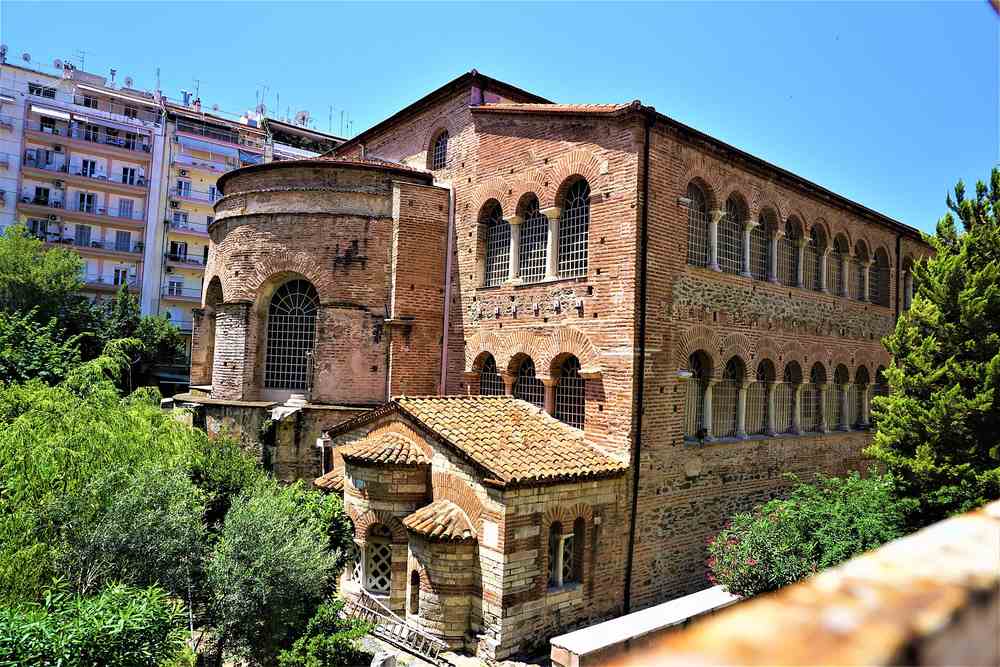
Panagia Acheiropoietos stands as a testament to early Christian architecture in the heart of Thessaloniki. This basilica, constructed in the fifth century, is among the city’s oldest churches that remain in continuous use. Its name, meaning ‘made without hands’, refers to a miraculous icon of the Virgin. Visitors are drawn to its three-aisled timber-roofed structure, lined with marble columns and adorned with mosaics depicting birds, fruit, flowers, and geometric patterns. As a part of the UNESCO Palaeochristian and Byzantine Monuments of Thessaloniki, it holds historical significance. Situated near the bustling Egnatia avenue and close to Agios Dimitrios, Panagia Acheiropoietos is a crucial site for both history enthusiasts and pilgrims exploring the city with My Greece Tours.
Panagia Acheiropoietos, a marvel of early Christian architecture, invites exploration through its rich history and artistic details. This basilica not only offers a glimpse into Thessaloniki’s past but also captivates with its decorative mosaics and historical inscriptions. The sections below cover its architectural significance, historical context, and cultural relevance. Visitors interested in a broader understanding of the city’s heritage can explore related sites through Thessaloniki tours, which include attractions such as the Rotunda and the Museum of Byzantine Culture.
What is the historical significance of Panagia Acheiropoietos?
Panagia Acheiropoietos is significant as one of Thessaloniki’s oldest churches, representing early Christian architecture and a continuous place of worship since the fifth century.
The basilica of Panagia Acheiropoietos holds a pivotal place in the history of Thessaloniki. As one of the earliest Christian churches, it showcases architectural styles that influenced Byzantine ecclesiastical design. The church’s construction reflects the fusion of Hellenistic and early Christian architectural principles, creating a space that has served religious functions for many centuries. Its continuous use as a place of worship underscores its enduring religious importance. The church’s conversion to a mosque during the Ottoman era marks a significant historical transition, reflecting the city’s diverse cultural and religious landscape. This transformation is evident in the carved inscription on a column, a testament to its changing role through the ages.
The name ‘Acheiropoietos’, meaning ‘made without hands’, refers to a miraculous icon, adding a layer of spiritual mystique to its historical narrative. This name suggests divine intervention in its creation, enhancing its religious allure. Legends surrounding the church often served to attract pilgrims and believers, embedding it deeper into the spiritual fabric of the region. The church’s role as a beacon of faith has remained unchanged through centuries, showcasing its resilience and importance in the religious life of Thessaloniki. Myths and stories associated with the church have contributed to its status as a site of pilgrimage and devotion.
Panagia Acheiropoietos is strategically located near Egnatia avenue, highlighting its historical prominence in the city. The church’s central position made it a focal point for religious and community gatherings, enhancing its importance in Thessaloniki’s historical narrative. Its proximity to other major sites like Agios Dimitrios further accentuates its importance. Historically, its presence on a major thoroughfare indicates its role as a central gathering place for the faithful and a focal point of community life. The central location has helped maintain its visibility and accessibility throughout Thessaloniki’s dynamic history, linking it to the broader narrative of the city’s development and growth.
How is the architecture of Panagia Acheiropoietos unique?
Panagia Acheiropoietos features a three-aisled timber-roofed basilica design with marble columns and Theodosian capitals, marking its architectural uniqueness.
The architectural design of Panagia Acheiropoietos is an exemplary model of early Christian basilicas. Its three-aisled layout, supported by marble columns, showcases the influence of Hellenistic styles. These columns are adorned with Theodosian capitals, which reflect the artistic and architectural trends of the period. Such elements highlight the church’s connection to broader architectural developments in the Byzantine world. The basilica’s design not only served religious functions but also stood as a testament to the sophisticated engineering of its time. The structure’s ability to withstand the test of time speaks volumes about the craftsmanship involved in its creation.
The basilica’s timber roof is another distinctive feature that sets it apart from other structures of its time. This design choice not only adds to the aesthetic appeal but also represents the practical architectural solutions of the era. Timber roofs allowed for larger spans without the need for additional supports, creating open and expansive interior spaces suitable for congregational gatherings. This architectural solution provided both aesthetic beauty and practical functionality, embodying the innovative spirit of early Christian architects. The openness of the space facilitated the flow of light and air, enhancing the spiritual ambiance within the basilica.
Mosaics in the soffits of the arches further enhance the church’s architectural beauty. These mosaics, depicting birds, fruit, flowers, and geometric patterns, are set against a gold background, adding a vibrant and luxurious touch. The use of mosaics not only served decorative purposes but also conveyed religious symbolism, making the church a visual narrative of faith and devotion. The intricate designs and vibrant colours reflect the artistic excellence of the period, contributing to the basilica’s status as a masterpiece of early Christian art. The mosaics’ preservation over the centuries speaks to their enduring significance and the care taken to maintain them.
What role does Panagia Acheiropoietos play in Thessaloniki’s cultural heritage?
Panagia Acheiropoietos plays a crucial role in Thessaloniki’s cultural heritage as a UNESCO-listed monument and a symbol of the city’s historical and religious continuity.
Panagia Acheiropoietos, as part of the UNESCO Palaeochristian and Byzantine Monuments of Thessaloniki, stands as a testament to the city’s rich cultural heritage. This designation highlights its architectural and historical value, ensuring its preservation for future generations. The basilica’s inclusion in this prestigious list underscores its significance in illustrating the development of early Christian architecture and its influence on Byzantine culture. The UNESCO listing helps protect the site, ensuring that its historical and cultural values are maintained for educational and tourism purposes.
The church’s continuous use over centuries adds to its cultural importance. It serves as a living link to the past, where religious practices and traditions have been maintained and adapted over time. This continuous use not only preserves the physical structure but also keeps the intangible heritage alive, offering insights into the spiritual and communal life of Thessaloniki across different eras. The uninterrupted worship practices reflect the church’s enduring relevance in the religious landscape of the city. The church’s role in the community provides a sense of continuity and connection to historical traditions.
Panagia Acheiropoietos also contributes to the city’s identity as a melting pot of cultures and religions. Its history reflects the dynamic interplay of different cultural influences, from its origins as a Christian basilica to its transformation into a mosque during the Ottoman era. This layered history embodies Thessaloniki’s diverse cultural tapestry, making the basilica a symbol of coexistence and resilience. The church’s story is a microcosm of the city’s broader historical narrative, illustrating the complex interactions between various communities throughout its history. Such a rich history enhances the cultural fabric of Thessaloniki, providing locals and visitors with a deeper understanding of the city’s past.
What can visitors expect to see at Panagia Acheiropoietos?
Visitors can expect to see the basilica’s impressive architecture, intricate mosaics, and historical inscriptions, reflecting its multifaceted history.
Visitors to Panagia Acheiropoietos will find themselves immersed in a blend of art and history. The basilica’s architectural features, including its three-aisled design and marble columns, offer a glimpse into early Christian architectural styles. The Theodosian capitals adorning the columns are particularly noteworthy for their intricate carvings, reflecting the artistic sophistication of the time. These elements provide a tangible connection to the past, allowing visitors to appreciate the craftsmanship of ancient builders and the enduring beauty of early Christian architecture. The church’s layout and design create a serene environment conducive to reflection and exploration.
The mosaics within the basilica are a highlight, captivating visitors with their vibrant colours and intricate designs. Set against a gold background, these mosaics depict a variety of motifs, including birds, fruit, flowers, and geometric patterns. Each element carries symbolic meaning, offering insights into the religious beliefs and artistic expressions of the period. These mosaics not only enhance the aesthetic appeal but also serve as a visual narrative of faith and devotion, illustrating the theological concepts prevalent during the basilica’s construction. The detailed artistry reveals the high level of skill possessed by the creators.
A carved inscription on one of the columns records the Ottoman conquest, marking a significant chapter in the basilica’s history. This inscription is a powerful reminder of the church’s transformation and its role in the city’s cultural evolution. Such historical markers allow visitors to engage with the complex history of Thessaloniki, providing context and depth to their exploration of the basilica. The presence of this inscription highlights the basilica’s resilience and its ability to adapt to the changing dynamics of the city over time. This historical context enriches the visitor experience, offering a deeper understanding of the site’s significance.
Why is Panagia Acheiropoietos significant in early Christian architecture?
Panagia Acheiropoietos is significant in early Christian architecture for its basilica design, Theodosian capitals, and mosaics, showcasing the period’s architectural advancements.
The architectural significance of Panagia Acheiropoietos lies in its exemplary basilica design, which influenced the development of early Christian architecture. The three-aisled layout, supported by marble columns, reflects a synthesis of Hellenistic and Christian architectural traditions. This design not only provided a functional space for worship but also set a precedent for subsequent church constructions in the Byzantine era. The basilica’s architectural innovations serve as a bridge between classical and medieval styles, illustrating the evolution of church architecture. The innovative use of space allowed for communal worship and enhanced the liturgical experience.
The use of Theodosian capitals in the basilica is another noteworthy aspect of its architectural significance. These capitals, with their intricate carvings, demonstrate the artistic excellence and innovation of the period. They represent a departure from earlier styles, showcasing the evolution of decorative motifs in ecclesiastical architecture. The presence of these capitals in Panagia Acheiropoietos highlights its role as a forerunner in the architectural developments of its time, influencing the design of later Byzantine churches. The capitals’ designs also serve as a testament to the cultural and artistic influences that permeated the region.
Mosaics in the church also contribute to its architectural importance. These mosaics, with their rich iconography and vibrant colours, reflect the artistic trends and religious symbolism of the early Christian period. They serve as a visual representation of the theological and cultural themes prevalent during the basilica’s construction. The integration of such decorative elements into the architectural framework of the church underscores its status as a significant monument in the history of early Christian architecture, providing a lasting legacy of artistic and religious expression. The mosaics’ enduring beauty continues to attract art enthusiasts and scholars alike.
How does Panagia Acheiropoietos connect to other Thessaloniki attractions?
Panagia Acheiropoietos connects to other Thessaloniki attractions through its proximity to sites like Agios Dimitrios and links to the broader Byzantine heritage.
Panagia Acheiropoietos is centrally located, making it easily accessible from other key attractions in Thessaloniki. Its proximity to Agios Dimitrios, another significant religious site, allows visitors to explore multiple historical landmarks within a short distance. These sites offer complementary insights into the city’s rich ecclesiastical history, providing a more comprehensive understanding of Thessaloniki’s religious and cultural evolution. A visit to these sites can be seamlessly integrated into a broader Thessaloniki itinerary, enriching the visitor experience with diverse historical perspectives. The central location facilitates exploration and enhances the overall travel experience.
The basilica’s connection to Thessaloniki’s Byzantine heritage is further enhanced by its inclusion in the UNESCO list of Palaeochristian and Byzantine Monuments. This designation links it to other significant sites, such as the Rotunda, which collectively illustrate the city’s historical and architectural development. Exploring these interconnected sites allows visitors to appreciate the diverse architectural styles and cultural influences that have shaped Thessaloniki’s identity over the centuries, offering a deeper appreciation of the city’s rich history. The basilica’s role within this network of sites underscores its importance in the broader narrative of Byzantine culture.
Visitors can also deepen their understanding of Byzantine culture by visiting the Museum of Byzantine Culture, where artefacts and exhibits provide context to the architectural and artistic developments seen in Panagia Acheiropoietos. The museum’s collections complement the visual and historical narratives encountered at the basilica, offering a holistic view of the Byzantine era. Such connections enrich the visitor experience, highlighting the interwoven nature of Thessaloniki’s cultural heritage and offering a comprehensive exploration of the city’s past. The museum visit enhances the educational aspect of exploring Thessaloniki’s historical sites.
What makes the mosaics of Panagia Acheiropoietos noteworthy?
The mosaics of Panagia Acheiropoietos are noteworthy for their vibrant colours, intricate designs, and symbolic motifs on a gold ground, reflecting early Christian artistry.
The mosaics of Panagia Acheiropoietos stand out as a remarkable feature of the basilica, showcasing the artistic achievements of the early Christian period. These mosaics, set against a gold background, are characterised by their vibrant colours and intricate designs. They depict a range of motifs, including birds, fruit, flowers, and geometric patterns, each carrying symbolic meaning. Such elements reflect the fusion of artistic and religious themes, making the mosaics a visual representation of the theological concepts prevalent during the basilica’s construction. The mosaics’ beauty and symbolism continue to attract and inspire visitors today. The colours and patterns used are indicative of the era’s artistic preferences and technical capabilities.
The craftsmanship evident in these mosaics highlights the skills and techniques employed by artisans of the time. The use of tesserae, or small tiles, to create detailed images and patterns demonstrates the precision and artistry involved in their creation. This level of detail not only enhances the visual appeal but also conveys the importance of religious symbolism in early Christian art. The mosaics serve as a testament to the artistic innovation and cultural expression of the period, illustrating the high level of craftsmanship and creativity that characterised early Christian artistic endeavours. The preservation of these mosaics indicates the high value placed on them by successive generations.
The mosaics of Panagia Acheiropoietos offer insights into the religious and cultural context of the time. The motifs depicted within the mosaics are imbued with symbolic significance, reflecting the beliefs and values of early Christian communities. These visual narratives provide a window into the spiritual and cultural life of the era, allowing visitors to engage with the basilica’s historical and religious heritage on a deeper level. Such artistic expressions continue to captivate and inspire, underscoring the enduring legacy of early Christian and Byzantine art and its impact on subsequent generations. The mosaics’ themes and styles are studied for their contributions to the development of religious iconography.
Frequently Asked Questions
What is the meaning of ‘Acheiropoietos’?
The term ‘Acheiropoietos’ translates to ‘made without hands’, referring to a miraculous icon of the Virgin associated with the church. This name implies a divine creation, enhancing the spiritual significance of the basilica and attracting pilgrims throughout history.
Where is Panagia Acheiropoietos located?
Panagia Acheiropoietos is located in central Thessaloniki, near the bustling Egnatia avenue and close to Agios Dimitrios. Its central location makes it easily accessible and a key site for visitors interested in exploring the city’s rich historical and religious heritage.
What are the architectural features of Panagia Acheiropoietos?
Panagia Acheiropoietos features a three-aisled basilica design with a timber roof and marble columns adorned with Theodosian capitals. Mosaics decorate the soffits of the arches, depicting birds, fruit, flowers, and geometric patterns on a gold ground, highlighting its architectural elegance.
How does Panagia Acheiropoietos relate to Thessaloniki’s UNESCO sites?
Panagia Acheiropoietos is part of the UNESCO Palaeochristian and Byzantine Monuments of Thessaloniki, underscoring its historical and architectural significance. This designation connects it to other sites, showcasing the city’s rich heritage and the development of early Christian and Byzantine architecture.
What historical events are associated with Panagia Acheiropoietos?
Panagia Acheiropoietos has witnessed significant historical events, including its conversion into a mosque during the Ottoman era. A carved inscription on one of its columns records the Ottoman conquest, marking a pivotal moment in the basilica’s history and Thessaloniki’s cultural evolution.
What can be learned from the mosaics in Panagia Acheiropoietos?
The mosaics in Panagia Acheiropoietos offer insights into early Christian artistry and symbolism. Depicting birds, fruit, flowers, and geometric patterns, these mosaics reflect the religious and cultural themes of the period, providing a visual narrative of faith and artistic expression.