
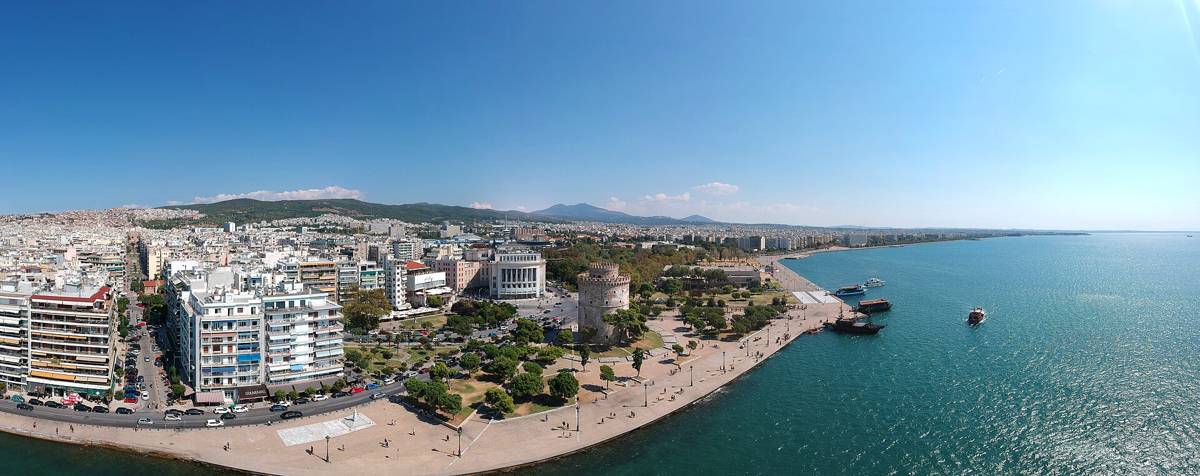
Thessaloniki packs Roman monuments, Byzantine churches, seafront cafés, and a bold food culture into one walkable grid beside the Thermaic Gulf. The right length of stay decides how deeply a traveller reads that layered city. Two full days cover the landmark core, three add the great museums and a day trip, and a longer week opens Meteora, Mount Olympus, and the Macedonian royal sites. This guide sets out a clear day-by-day plan for each option, with concrete stops, walking distances, and seasonal notes. Plan the trip, book the guided walks and excursions, and explore the port capital of Macedonia with My Greece Tours.
A first visit rewards a base in the historic centre, within a short walk of Aristotelous Square and the White Tower. From that anchor the Roman core, the churches, the markets, and the Nea Paralia promenade sit minutes apart on foot. Guided walks and small-group excursions add context and reach the sites beyond the ring road, and the full range of Thessaloniki tours suits a half day or a full week. The sections below cover how many days the city needs, one-day to three-day plans, day trips, the best season, food, and where to base yourself.
How many days do you need in Thessaloniki?
Thessaloniki needs two to three days for the city itself. Two days cover the Roman and Byzantine core plus the upper town, three add the major museums, and extra days open day trips to Meteora, Olympus, and Halkidiki.
The compact centre concentrates the headline sights inside a grid a visitor can cross on foot in twenty minutes. Two full days give the White Tower, Aristotelous Square, the Roman Forum, Ano Poli, and the seafront room to breathe without a rush from stop to stop. That length matches how a first visit tends to unfold, landmarks and churches by day and long tavernas by night, with time left for coffee by the water. The pace stays relaxed rather than packed, which is the way the locals treat their own city.
A third day earns the two great museums. The Archaeological Museum and the Museum of Byzantine Culture explain the Macedonian and Byzantine chapters in depth, and each rewards a slow morning rather than a quick pass. Travellers who prefer galleries over churches often trade a second walking day for these halls, since the objects inside carry the story the streets only hint at. A third day also opens room for a wine route in the hills or a first short excursion beyond the ring road.
Travellers with a week can hold the city as a base and ride out on separate days. Meteora, Mount Olympus, Pella, and Vergina each fill a full outing, and the beaches of Halkidiki add a swim day between the sightseeing. The centre stays small enough that returning to the same hotel each night costs no real time, so a longer stay layers day trips onto the two-day core rather than stretching the city itself.
The core sights repeat across itineraries because they cluster so tightly together. The full list of things to do in Thessaloniki runs from Roman ruins and Byzantine churches to covered markets and rooftop bars inside the same square kilometre, so the decision rests on appetite for museums and day trips rather than the size of the old town.
What can you see in one day in Thessaloniki?
One day covers the seafront and the Roman core. Start with bougatsa, walk the promenade to the White Tower, cross Aristotelous Square, then reach the Rotunda and the Arch of Galerius before dinner in the centre.
Day one opens with breakfast the local way, a warm slice of bougatsa filled with semolina custard or minced meat and dusted with sugar or pepper. The bakeries near the centre sell it by weight from the tray, and a strong Greek coffee alongside sets the tempo for the walk ahead. The sesame koulouri ring from a street cart works as a lighter start for anyone keen to reach the water sooner.
From the café the Nea Paralia promenade runs along the Thermaic Gulf, a flat ribbon of gardens, sculpture, and sea air that leads toward the White Tower. The path draws joggers, cyclists, and families through themed parks and past the floating Umbrellas sculpture, with open views across the water to the ridgeline of Mount Olympus on clear mornings. The stroll doubles as an easy orientation to the shape of the city.
The White Tower stands as the emblem of Thessaloniki, a fifteenth-century Ottoman bastion on the seafront that now holds a museum tracing local history across its spiral of floors. The climb up the ramp ends on a roof terrace that frames the gulf and the grid of the city behind it. From here Aristotelous Square opens inland, the grand civic space of the rebuilt centre, framed by arcaded façades and busy cafés that spill toward the sea.
A short walk uphill reaches the Rotunda, a vast Roman cylinder raised under the emperor Galerius, later a church and a mosque, its lone minaret still standing beside the dome. The Arch of Galerius, known locally as Kamara, closes the day a short step away, its carved panels marking the old imperial road where students and friends gather at dusk. Dinner in the surrounding lanes rounds off a full first day on foot.
What does a two-day Thessaloniki itinerary add?
Day two climbs to Ano Poli, the upper town that survived the great fire. It adds the Heptapyrgion fortress, Agios Dimitrios, the Roman Forum, the Modiano and Kapani markets, and an evening among the tavernas of Ladadika.
Day two heads uphill into Ano Poli, the old quarter that escaped the great fire of the early twentieth century and kept its timber houses, cobbled lanes, and long stretches of Byzantine wall. The climb rewards walkers with the widest panoramas over the rooftops and the gulf below, and the pace slows naturally among the courtyards, chapels, and washing lines of a living neighbourhood rather than a museum piece.
The Heptapyrgion crowns the summit, a fortress whose Greek name means seven towers, built into the Byzantine acropolis and later serving as a prison into recent decades. Its ramparts trace the defensive line that once ringed the whole upper town, and the platform outside the gate offers the definitive view down over the churches and the sea. The walk along the walls links a chain of viewpoints back toward the centre.
Back down the slope, Agios Dimitrios honours the patron saint of the city above the crypt where tradition places his martyrdom, and it ranks as the largest church in Greece by floor area. Nearby the Roman Forum spreads its terraces, odeon, and underground cryptoporticus across an open archaeological park set right into the modern grid, a reminder that the ancient agora still shapes the streets around it.
Midday belongs to the markets. The covered Modiano and the open-air Kapani sell cheese, olives, cured fish, herbs, and spices under one roof and along tight lanes loud with traders. Evening then moves to Ladadika, a district of former oil warehouses now lined with tavernas and bars, where a late dinner runs long over tsipouro and small plates. The contrast between the quiet upper town and the buzzing waterfront defines the second day.
How do you fill three days in Thessaloniki?
Day three turns to the museums and culture. The Archaeological Museum holds Macedonian gold and the Derveni Krater, the Museum of Byzantine Culture covers a thousand years of faith and art, and MOMus gathers the contemporary collections.
Day three slows the pace and moves indoors to the collections. The Archaeological Museum of Thessaloniki gathers finds from across ancient Macedonia, its centrepiece the bronze Derveni Krater and a hall of gold wreaths, masks, and grave goods that reveal the wealth of the northern kingdoms. The displays set the scene for the royal tombs at Vergina and give the day trips that follow a clear historical anchor.
A short walk away, the Museum of Byzantine Culture traces daily life, worship, and art from the early Christian centuries through the fall of the empire, its galleries rich in icons, mosaics, carved marble, and textiles. The pairing of the two museums covers the deepest layers of the city in a single morning, one hall for the Macedonians and the next for the Byzantines who followed them.
MOMus splits its holdings across separate venues, from the contemporary and state collections to photography and the avant-garde works of the Costakis collection. The waterfront branches sit within reach of the promenade, an easy add for travellers drawn to modern art over ancient marble. A stroll between them threads the museums into the same seafront walk that opened the trip on day one.
An afternoon on day three suits a first taste of the surroundings, whether a wine route through the vineyards of the hills or an early start on a longer excursion. Booking a guided Thessaloniki food tour is another way to close the third day, tracing bougatsa, koulouri, and the market stalls with a local who reads the flavours of the city as a form of living history.
Which day trips extend a Thessaloniki itinerary?
Four day trips stand out. Meteora’s clifftop monasteries sit under a three-hour drive, Mount Olympus and ancient Dion pair a mountain with a sanctuary, Pella and Vergina hold the Macedonian royal sites, and Halkidiki offers beaches and Mount Athos cruises.
The city works as a launch pad because the road and rail links fan out across northern Greece. Meteora tops the list, where monasteries perch on sheer rock pillars above the plain of Thessaly, reachable on a long but rewarding day by car or organised coach. The drive south crosses open farmland before the towers rise without warning, and a loop of the clifftop monasteries fills the hours until the return.
Mount Olympus rises to the south, the highest mountain in Greece and the mythical seat of the gods. A day trip pairs the trailheads and stone village of Litochoro with the archaeological park of Dion, the sanctuary where the kings of Macedon honoured Zeus before their campaigns. The mix of forest, waterfalls, and ancient marble makes the outing a change of gear from the city streets.
Pella and Vergina carry the story of the royal house of Macedon. Pella was the capital where Alexander the Great was born, its floor mosaics of lions and hunts still vivid in place, and Vergina guards the underground tomb of Philip the Second beneath its great mound, the gold larnax and painted façade preserved as they were found. The two sites together trace the rise of the dynasty that reshaped the ancient world.
Halkidiki spreads three green peninsulas of beaches and coves within easy reach for a swim or a boat day. The third finger holds the monastic republic of Mount Athos, closed to casual visitors on land yet open to view from cruise boats that trace its wooded coast beneath the monasteries. A guide can map these day trips from Thessaloniki around the days that best suit the season, the sea state, and the appetite for driving.
When is the best time to visit Thessaloniki?
Spring and autumn suit the city best. April to June and September to October bring mild days for walking and long seafront evenings. Summers turn hot and dry, and winters stay mild but wet, with lively indoor cafés.
Spring lands the mildest weather for a walking city, with warm afternoons, green surroundings, and comfortable evenings along the promenade. The shoulder months of April, May, and June keep the crowds lighter than the peak beach season on the coast, and the café terraces fill without the summer heat. Wildflowers on the slopes of Olympus and the surrounding hills make the season a favourite for pairing the city with a day trip.
Autumn mirrors that comfort from September into late October, when the sea holds its summer warmth and the terraces stay busy well after dark. The grape harvest and the food and film festivals give the season an extra pull for travellers who plan around the table and the calendar. Light rains arrive by November, yet the early autumn weeks rank among the finest of the year for a visit.
Summer brings heat and strong sun, with July and August pushing daytime temperatures into the mid-thirties Celsius and the locals heading for Halkidiki at weekends. The city empties a little at midday and revives after sunset, when the waterfront cools and the nightlife fills the old warehouses of Ladadika. Sightseeing works best in the early morning and the late evening across the hottest weeks.
Winter runs mild and damp by northern European standards, with grey spells, short rains, and rare cold snaps blowing in off the Balkans. The museums, covered markets, and warm cafés carry the season, and hotel rates fall to their lowest of the year. The festive weeks around the holidays light up Aristotelous Square and draw a domestic crowd for city breaks.
How do you get around Thessaloniki on foot?
Thessaloniki rewards walkers above all. The flat centre sits on a grid rebuilt after the fire, the five-kilometre promenade links the landmarks, and only the climb to Ano Poli tests the legs. A new metro now speeds longer hops.
The centre lends itself to walking because the French architect Ernest Hébrard laid out a regular grid after the great fire, with wide avenues running parallel to the sea and cross-streets climbing gently inland. Distances between the headline sights rarely pass fifteen minutes on foot, so a day of sightseeing needs no ticket at all. The flat layout makes it easy to read the map and hard to get lost between the water and the upper walls.
The Nea Paralia promenade forms the backbone of any route, a flat five-kilometre path from the White Tower to the Concert Hall lined with themed gardens and the floating Umbrellas sculpture. Cyclists share the seaward lane, and rental bikes turn the far end into an easy ride for travellers who want to cover ground. The promenade doubles as the social heart of the city at sunset, when the whole waterfront comes out to walk.
Ano Poli marks the one real climb, a steady twenty-minute ascent from the Roman Forum to the fortress walls along stepped lanes and quiet squares. Local buses grind up the hill for walkers who prefer to save their legs for the gentle descent back through the old quarter. The reward at the top is the finest free view in the city, out over the domes and the gulf.
A metro line now runs beneath the main avenue, speeding trips between the railway station, the centre, and the eastern districts with driverless trains and glass-walled platforms. For the compact tourist core, though, the pavement stays the fastest and most scenic way to move, since the sights sit closer together than the stations. Taxis and a dense bus network fill the gaps for luggage runs and late nights.
What food defines a Thessaloniki itinerary?
Thessaloniki ranks as the food capital of Greece. Bougatsa and koulouri open the morning, the markets supply mezedes for lunch, and the tavernas of Ladadika and Modiano pour tsipouro over small plates late into the night.
Breakfast sets the tone in a city famous for pastry. Bougatsa arrives warm from the bakery in sweet custard or savoury cheese and meat versions, cut with scissors and dusted at the counter, while the sesame-crusted koulouri ring sells from street carts for the price of a coffee. The morning ritual of pastry and strong coffee runs deep, and the best bakeries draw a queue well before the office hour.
Lunch belongs to the markets and the mezedes table. Kapani and Modiano stack cheeses, olives, cured fish, and spices that flavour the small plates poured over tsipouro, the local pomace spirit served by the carafe. The eastern influence runs deep in the kitchen, a legacy of the refugees from Asia Minor who reshaped the city’s cooking a century ago and gave it a sharper, spicier edge than the south.
Sweets carry the Ottoman and Anatolian thread through the day. Trigona panoramatos, the crisp cream-filled pastry cones, sit beside syrup-soaked baklava and the chilled submarine spoon sweet dropped into a glass of cold water. The dessert counters read like a map of the mixed heritage of the city, where Balkan, Greek, and Levantine tastes meet on the same tray.
Dinner stretches long across Ladadika and the lanes off the markets, where tavernas and ouzeri fill after dark with plates meant for sharing. A guided walk turns the scene into a lesson in origins and ingredients, and an organised food tour threads bakeries, market stalls, and tsipouro bars into one unhurried afternoon of tasting across the centre.
Where do you base yourself in Thessaloniki?
The historic centre makes the best base. Rooms near Aristotelous Square and the Ladadika quarter put the seafront, markets, and Roman sights within a short walk. Ano Poli suits quiet views, and the eastern seafront trades bustle for calm.
The central grid around Aristotelous Square puts a first-time visitor in the middle of everything, steps from the promenade, the markets, and the main churches. Hotels here range from restored townhouses to modern rooms with rooftop bars and views over the gulf, and the location cuts out taxis for the whole first two days. The trade-off is a livelier soundscape, since the square and its cafés stay awake late.
Ladadika trades daytime quiet for a lively evening on the doorstep, its car-free lanes packed with tavernas and bars inside restored warehouses. Light sleepers lean instead toward the streets just inland around Valaoritou, close enough to walk to the action yet a block back from the noise. The district puts dinner and drinks within a two-minute stroll of the pillow.
Ano Poli offers a calmer, village-like stay above the city, with guesthouses tucked among the old houses and views that reach to Olympus on clear days. The trade-off is the daily climb back up from the centre, softened by the frequent buses that grind up the hill. The reward is waking above the rooftops in the most atmospheric quarter of the city.
The eastern seafront beyond the White Tower suits travellers after space and sea breezes, a short bus or bike ride from the core along the promenade. A quick read of where to stay in Thessaloniki weighs these districts against budget, noise, and the length of the trip, since a two-night visit favours the centre while a week can spread out toward the water.
What can you do in Thessaloniki after dark?
Evenings run long in a student city. The promenade fills for the sunset walk, Ladadika and Valaoritou pour tsipouro and cocktails into the small hours, and the concert halls and cinemas keep the culture going once the museums close.
The evening promenade is a ritual in its own right, when families, couples, and students take to the Nea Paralia for the volta, the slow sunset walk along the water. The café-bars strung between the gardens fill from the late afternoon, and the Umbrellas sculpture turns into the favourite backdrop for the last light over the gulf. The habit stretches dinner far later than northern visitors expect.
Ladadika and the streets around Valaoritou form the nightlife core, where restored warehouses hold tavernas, ouzeri, and cocktail bars packed close together. The scene runs from tsipouro over mezedes to live rebetiko and late dancing, and the density of venues means a whole night unfolds within a couple of blocks. The student population keeps prices fair and the energy high through the week, not only at weekends.
Culture fills the calendar once the sun drops. The Thessaloniki Concert Hall stages orchestras and recitals on the seafront, the State Theatre and smaller stages carry drama in the centre, and the autumn film festival turns the city into a magnet for cinema. The port warehouses host exhibitions and screenings that pull the crowd down to the water long after the shops shut.
A quieter evening favours a rooftop bar for the panorama, a seafront ouzeri for grilled octopus, or a bougatsa run to a bakery that never seems to close. The compact centre lets a night mix all three on foot, from a sunset drink above the White Tower to a midnight sweet in a lane off the market.
How do you combine Thessaloniki with the rest of Greece?
Thessaloniki links easily to the rest of Greece. Fast trains reach Athens in about four hours, the airport flies to the islands and Europe, and the road network runs to Halkidiki, Meteora, and the Pelion coast for onward travel.
The intercity train links Thessaloniki and Athens along the main north-south line, covering the distance in roughly four hours through the plains of Thessaly. The route makes a two-city trip simple, pairing the northern capital with the ancient sights of the south on a single rail ticket. The central station sits a short metro or taxi ride from the seafront.
The airport carries flights to the Greek islands and cities across Europe, opening onward hops to Crete, Rhodes, Santorini, and the Cyclades without a return through Athens. Charter and budget carriers grow the map in summer, and the short transfer from the terminal keeps a fly-in, fly-out weekend within reach. The city works as a gateway to the north, not just a destination in itself.
The road network fans out for a self-drive loop of the mainland. Halkidiki lies to the southeast for beaches, the Pelion peninsula and the port of Volos sit to the south for ferries to the Sporades islands, and the highway west reaches Meteora and the mountains of Epirus. A hire car turns the city into the hinge of a longer Greek itinerary.
Ferries do not sail from the city centre itself, yet the harbours of the north stay close by road. Volos connects to Skiathos, Skopelos, and Alonnisos in the green Sporades, and the ports of Halkidiki run boats to the coves and to Mount Athos. A day of driving opens a sea leg that the compact city cannot offer on its own.
What suits families on a Thessaloniki itinerary?
Families find an easy mix in Thessaloniki. The flat promenade suits strollers and bikes, the White Tower and the science centre reward young visitors, and the beaches of Halkidiki lie an hour away for a swim between the sightseeing days.
The seafront carries the family day, a flat and traffic-free five-kilometre run made for prams, scooters, and rental bikes. The themed gardens of the Nea Paralia break the walk into playful stages, from the garden of music to the garden of the seasons, and the Umbrellas sculpture becomes a favourite photo stop. Ice-cream carts and open lawns keep the youngest walkers moving.
The NOESIS science centre and planetarium sits on the eastern edge of the city, with a domed screen, hands-on halls, and a technology museum built for curious children. A short ride from the centre, it fills a half day of learning under cover when the sun turns fierce. The White Tower adds a castle-shaped climb with a view that rewards the effort at the top.
Food keeps children happy across the day, from bougatsa and koulouri in the morning to grilled meats and simple pasta in the tavernas at night. The relaxed Greek table welcomes families late into the evening, and the market stalls turn shopping for a picnic into a game of colours and smells. Portions come large and sharing is the norm.
The beaches of Halkidiki sit within an hour of the city by car, turning a hot afternoon into a swim on soft sand. A boat trip along the coast or out toward the coves of Sithonia gives the trip a holiday rhythm between the museums and the ruins. The mix of city and sea suits families who want variety without long transfers.
Why is Thessaloniki worth visiting?
Thessaloniki rewards visitors with depth over spectacle. Roman rotundas, UNESCO Byzantine churches, an Ottoman upper town, and a refugee-shaped food culture layer together in one seafront city that stays lived-in, affordable, and easy to walk.
The appeal rests on layers rather than a single monument. The Roman rotunda, the Byzantine churches, the Ottoman walls, and the modern grid stack on top of one another within a short walk, telling the story of the whole eastern Mediterranean in one place. The city reads as a timeline that a visitor crosses on foot in an afternoon.
The scale keeps the experience human. The centre stays compact and lived-in, far from a theme-park old town, so cafés fill with students and workers rather than tour groups alone. Prices run lower than the island resorts and the capital, and a meal, a coffee, and a museum ticket stretch further here than almost anywhere else in the country.
The setting seals the case, a curve of waterfront facing the gulf with Mount Olympus on the horizon. Sunsets draw the whole city to the promenade, the food carries a depth born of Balkan and Anatolian roots, and the day trips reach the finest sights in northern Greece. The combination explains why return visits come easily.
The timing works in the city’s favour too. The season stretches long, from the wildflowers of spring to the harvest of autumn, and the indoor life of winter keeps the tavernas and museums busy when the coast shuts down. A short flight or a half-day drive links the trip to the islands, the mountains, and the ancient south, so the northern capital rewards both a focused city break and the opening stop of a wider Greek journey.
Frequently Asked Questions
Is two days enough for Thessaloniki?
Two days cover the essentials of the city. Day one takes the seafront, the White Tower, Aristotelous Square, and the Roman monuments, and day two adds Ano Poli, the Heptapyrgion, Agios Dimitrios, the markets, and Ladadika. A third day frees up the great museums and a day trip.
What is Thessaloniki best known for?
The city stands out for its Byzantine churches, Roman monuments, and food culture. Fifteen of its early Christian and Byzantine buildings hold UNESCO World Heritage status, and the bougatsa, mezedes, and tsipouro scene ranks it as the gastronomic capital of Greece.
How do you get from the airport to the centre?
Thessaloniki Airport sits about sixteen kilometres southeast of the centre. City buses run the route to the seafront and the main square, taxis cover it in under half an hour outside rush hour, and rental cars pick up at the terminal.
Which day trip is worth it from Thessaloniki?
Meteora rewards the longest drive with clifftop monasteries above the Thessalian plain. Closer options include Mount Olympus with ancient Dion, the royal Macedonian sites of Pella and Vergina, and the beaches and Athos cruises of Halkidiki.
When is the cheapest time to visit Thessaloniki?
Winter carries the lowest hotel rates, from November through February, outside the holiday week. The weather runs mild and damp, the museums and covered cafés stay open, and the city keeps its evening buzz without the summer heat or crowds.
Is Thessaloniki walkable?
Thessaloniki ranks among the most walkable cities in Greece. The flat central grid, the five-kilometre seafront promenade, and the tight cluster of sights let visitors cross the core on foot, with only the climb to Ano Poli and a metro for longer hops.
How far is Thessaloniki from Athens?
Thessaloniki sits about five hundred kilometres north of Athens by road. The intercity train covers the route in roughly four hours, flights take under an hour, and a self-drive along the national highway runs about five hours with stops at Meteora or Mount Olympus on the way.
Can you see Thessaloniki in a weekend?
A weekend fits the core of the city. Two days walk the seafront, the White Tower, the Roman monuments, Ano Poli, and the markets, with evenings in Ladadika. A long weekend of three days adds the museums or a single day trip to Meteora or Olympus.