
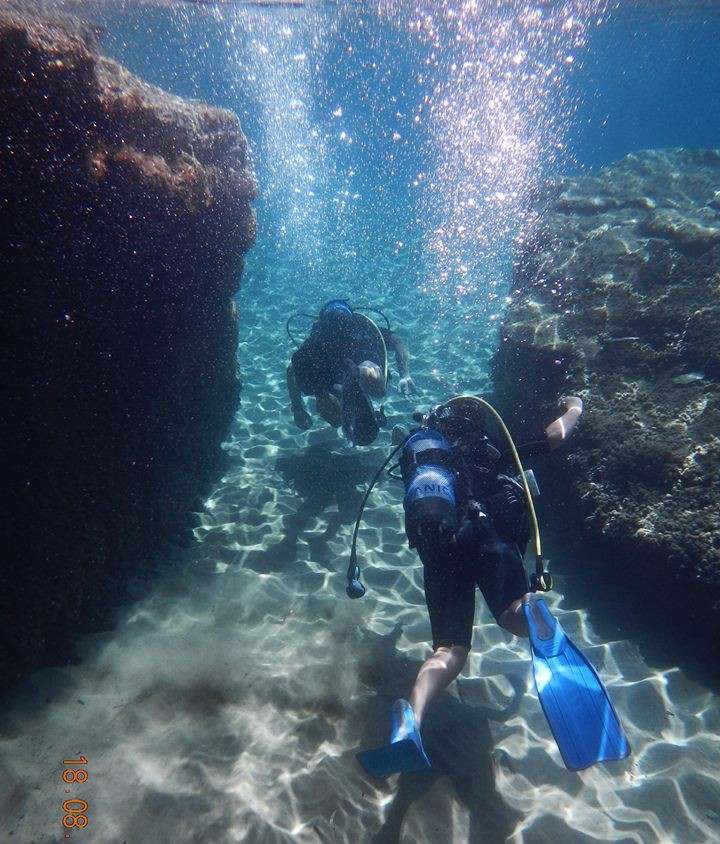
Diving on Zakynthos is a fine way to see the island from below the waves. The clear Ionian water gives long visibility, and the rocky coast hides caves, arches, reefs and walls. Dive sites lie off the south and around the sea caves of the coast. Dive centres cluster at Limni Keriou near Keri, running trips and courses for all levels. Divers meet colourful fish, and lucky ones glimpse a sea turtle. Warm summer seas make the sport easy and pleasant. Explore the underwater world of the Ionian with My Greece Tours.
The island turns its clear water and rocky shore into a playground beneath the surface. Caves, reefs, walls and bright fish reward the diver, and the warm summer sea makes it welcoming for beginners. The dive centres of the south make it easy to start. The sections below cover the diving itself, the main sites, the centres and courses, the marine life, and safety. Set the diving in its wider surroundings with our Zakynthos travel guide.
What is scuba diving like on Zakynthos?
Scuba diving on Zakynthos means clear, warm water with long visibility, and a rocky coast full of caves, arches, reefs and walls. Sites suit all levels, from first-timers in sheltered bays to certified divers on deeper walls.
The diving here is shaped by the clear Ionian water and the rugged coast. Visibility is often long, so divers can take in the shape of the reefs, the mouths of caves and the drop of the underwater walls. The rocky shore, riddled with caves and arches above the water, carries the same forms below the surface. Divers pass through swim-throughs, along ledges and over reefs where fish gather. The water is warm through the summer, calm in the sheltered bays and clear over the pale seabed. The mix of easy shallow sites and deeper, more dramatic ones means the island suits both the curious beginner and the experienced diver seeking caves and walls.
Water temperature governs much of the diving here through the year. The sea warms steadily from late spring, reaching its most comfortable levels in the height of summer, and holds that warmth into early autumn. Divers in the warmest months need only a thin wetsuit, and the mild water lets them stay down longer without chill. The clear conditions come from the low silt and gentle currents of the sheltered southern bays. Swim-throughs and arches carry shafts of sunlight into the rock, lighting the caverns from within. The seabed shifts from pale sand to rock and seagrass meadow, and each surface holds its own life.
This blend of warm water and clear light explains why the island draws divers back across the diving season.
A diving day fits neatly into a wider island holiday. Most trips run in the morning, leaving the afternoon free for the beaches, the town or a boat tour of the coast. Divers rise, reach the harbour, gear up and board a small boat for the short ride to the site. A briefing sets the plan, the depth and the signals, and the group descends together under a guide. A surface interval on the boat then gives time to rest, warm up and swap stories before a second descent. The centres run these days through the warmer months, matching the number of dives to the level of the group.
This gentle rhythm lets diving sit alongside the rest of a stay without dominating it.
The south coast and the sea caves are the main diving grounds. Around the southern capes and the bay near Keri, the coast offers reefs, caverns and clear water within easy reach of the dive boats. The protected waters of the south, part of the marine park, hold rich sea life. Further round, the famous sea caves of the coast give dramatic scenery below as well as above. A day’s diving usually means a short boat ride from the harbour to the site, one or two dives, and a return by early afternoon. It fits easily around the rest of a stay, adding a wholly different view of the Zakynthos beaches and coast.
What are the best dive sites on Zakynthos?
The best dive sites lie off the south coast and the sea caves, with reefs, caverns and walls near Keri and the marine park. Sheltered bays serve beginners, while deeper caves and drop-offs reward experienced divers.
The waters around the southern cape and Keri hold many of the island’s finest sites. Here the coast falls away into reefs, caverns and swim-throughs, with clear water and plentiful fish. The sheltered bay of Limni Keriou gives calm, easy conditions for first dives and training, while the open coast beyond offers deeper and more adventurous sites. Caves and arches pierce the rock, letting divers pass through tunnels of stone into pools of blue light. The nearby Keri Caves are a highlight, their underwater forms as striking as those above. This southern stretch, within the protected marine park, is the heart of diving on the island.
Other sites lie scattered around the coast. The dramatic sea caves of the far coast give cave and cavern dives amid white rock and glowing water. Reefs and rocky points along the shore hold fish, octopus and the occasional larger visitor. Some centres run trips to a small wreck or to underwater points known for their scenery and life. The choice of site depends on the weather, the level of the divers and the aims of the day, and the dive centres pick the best spot accordingly. Between the caves, the reefs and the walls, the island offers enough variety to fill many days of diving without repeating the same ground.
The area around Marathonisi and the Marathia headland adds more fine diving. The reefs off this small island hold rich fish life, and the clear water over the pale seabed makes for bright, easy dives. Named reef points near the Keri peninsula give divers rock walls, ledges and swim-throughs to explore. The stretch near Cameo and Agios Sostis, and the reefs off the Porto Roma side, round out the choice on the calmer south-east coast. Kalamaki and its offshore reefs suit gentler dives close to the resorts. Dive centres read the day’s wind and swell, then pick the sheltered coast that offers the calmest water and the best visibility.
This spread of sites keeps the diving fresh across a longer stay on the island.
Where can you dive and take courses?
Dive centres cluster at Limni Keriou near Keri in the south of Zakynthos, with others in the main resorts. They run guided dives, try-dives for beginners and full certification courses, hiring out all the gear needed.
The village of Limni Keriou, on the sheltered bay below Keri, is the main diving base on the island. Several dive centres operate from the harbour there, drawn by the calm water and the fine sites nearby. They run daily boat trips to the reefs, caves and walls of the south, guiding divers of every level. More centres are based in the larger resorts around the coast, offering trips and courses to their guests. All the centres hire out the full kit, so visitors need bring nothing but themselves and, if certified, their diving card and logbook. The harbour of Keri and its bay make a natural and relaxed base for a diving day.
The centres cater to everyone from the complete beginner to the seasoned diver. A try-dive, or introductory dive, lets those who have never dived before take their first breaths underwater in a sheltered bay under close guidance, with no certificate needed. Full courses lead to internationally recognised diving qualifications, taught over several days by qualified instructors. Certified divers can join guided trips to the more advanced sites, or build their experience with further training. Families often find that a mix of try-dives for the young and guided dives for the experienced suits them well. The relaxed, well-run centres make it easy to take up the sport or to keep diving while on the island.
Booking a dive on the island is a simple matter. Certified divers bring their qualification card and logbook, and the centre checks their level before assigning suitable sites. Beginners need only turn up ready to swim, since the try-dive requires no paperwork or prior training at all. The centres supply masks, fins, wetsuits, tanks and weights, all cleaned and checked between uses. A guided dive typically runs as a morning trip, with a short boat ride, a briefing, one or two dives and a return by lunchtime. Prices, timetables and course lengths vary between centres, so a quick enquiry ahead of a trip settles the details.
Snorkellers, too, can join many boat trips to see the caves and reefs from the surface.
What marine life will you see diving on Zakynthos?
Divers on Zakynthos see colourful reef fish, octopus, moray eels, bream and shoals over the reefs, with sponges and life on the rock. Lucky divers may glimpse a loggerhead turtle in the protected southern waters.
The reefs and rocks teem with the fish of the Ionian Sea. Bream, wrasse, damselfish and grouper move over the reefs, and shoals of smaller fish shimmer in the clear water. Octopus lurk in holes in the rock, morays coil in crevices, and colourful sponges and small life cling to the ledges. Over sandy patches, rays and flatfish may rest. The clear water makes it easy to watch this busy world at close range. The southern waters, protected as part of the marine park, are especially rich, since the rules that guard the turtles also shelter the wider sea life. Every dive brings the chance of a new sighting among the reefs and caves.
The great prize is the loggerhead turtle. The bay of Laganas and the southern waters are a key nesting ground for these loggerhead turtles, and divers in the area sometimes cross paths with one gliding through the blue. Encounters are a matter of luck, and divers keep their distance and never chase or touch, in line with the marine park rules. Monk seals also live along the coast, though sightings are rarer still. Even without such headline moments, the sheer abundance of fish and the beauty of the caves and reefs make the diving rewarding. The life below adds a living thrill to the underwater scenery of the island.
The seagrass meadows off the south coast form a habitat worth watching closely. These beds of Posidonia carpet the sandy seabed, feeding and sheltering young fish, seahorses and small creatures among their blades. The meadows help keep the water clear and the seabed stable, and they play a part in the health of the wider marine park. Divers gliding over the grass may spot pipefish, hidden flatfish and the burrows of crabs and worms. Octopus haunt the rocky edges where meadow meets reef, and moray eels watch from the crevices nearby. Damselfish hover in loose clouds above the reef tops, darting for cover as divers pass.
Reading these habitats, from bare rock to grass to open sand, is part of the pleasure of diving here.
Is diving on Zakynthos safe for beginners?
Diving on Zakynthos is well suited to beginners. Sheltered bays, calm warm water and professional dive centres make it safe to start, with try-dives and courses run by qualified instructors who supply all the gear and close supervision.
The island is a gentle place to learn. The bay of Limni Keriou and other sheltered spots give calm, shallow water where beginners can take their first dives in safety. The dive centres are staffed by qualified instructors who follow the standards of the international diving bodies, teaching in small groups with close supervision. A try-dive lets a newcomer experience diving under an instructor’s direct care, with no prior training, in easy conditions. All equipment is provided and checked, and the warm summer sea removes much of the discomfort that colder waters bring. For most healthy people, taking a first dive here is straightforward and safe.
Sensible precautions keep diving safe for all. Divers should be in reasonable health, and those with certain medical conditions must check with a doctor before diving. It is wise not to dive after heavy drinking or when unwell, and to leave time before flying home at the end of a trip. The centres brief divers fully, match sites to experience, and never push people beyond their level. Following the guidance of the instructors and the rules of the marine park keeps both divers and sea life safe. Combined with the calm water and the professional centres, these simple steps let visitors of all levels enjoy the underwater world off Zakynthos Town and the southern coast with confidence.
Children and nervous first-timers are well catered for by the island’s centres. Junior programmes let older children try diving in shallow, calm water under close instructor care, with gear sized to fit them. Those unsure of diving can start with a snorkel over the same reefs, watching the fish and caves from the surface before committing to a tank. Instructors keep groups small, move at the pace of the slowest diver, and abort a dive at any sign of trouble. Calm bays free of strong current suit these gentle first outings, and the warm water keeps discomfort low. Building confidence in steps, from snorkel to shallow try-dive to guided descent, lets even the cautious enjoy the sea.
This patient approach makes the island a reassuring place to overcome early nerves.
Frequently Asked Questions
Do you need experience to dive on Zakynthos?
You do not need any previous experience to dive on Zakynthos, which makes it a fine place to try the sport for the first time. The dive centres, based mainly at Limni Keriou in the south and in the larger resorts, offer a try-dive or introductory dive for complete beginners. This lets you experience breathing underwater and exploring a shallow, sheltered bay under the direct guidance of a qualified instructor, with no certificate or prior training required. All the equipment is provided and checked, and the calm, warm summer water makes the experience gentle and welcoming.
Those who enjoy it can go on to take a full certification course, taught over a few days, which qualifies them to dive more widely. Those who already hold a diving qualification can join guided trips to the reefs, caves and walls suited to their level. Whether you are a curious first-timer or an experienced diver, the island’s centres can match a dive or course to your needs, so a lack of experience is no barrier to getting started.
When is the best time to dive on Zakynthos?
The best time to dive on Zakynthos is through the warmer half of the year, roughly from late spring to early autumn, when the sea is warm, calm and clear. In the height of summer the water is at its warmest and most inviting, and the long days and settled weather make for easy boat trips and comfortable dives. Visibility in the clear Ionian water is generally good throughout this season. Late spring and early autumn can be especially pleasant, with warm water, fewer crowds and often excellent conditions, though the sea is a little cooler at the edges of the season.
The dive centres run their main programmes across these months, matching sites and trips to the daily weather. Diving is possible in the cooler months too, but many centres reduce their operations then, and a thicker wetsuit is needed. For most visitors, planning to dive during a summer holiday gives the warmest water and the widest choice of trips and courses on the island.
Can you see turtles while diving on Zakynthos?
It is possible to see a loggerhead sea turtle while diving on Zakynthos, though such encounters are a matter of luck rather than a certainty. The bay of Laganas and the wider southern waters of the island are among the most important nesting grounds for these turtles in the Mediterranean, and the area is protected as a national marine park. Divers exploring the reefs and clear water of the south sometimes cross paths with a turtle gliding gracefully through the blue, which is a memorable highlight of any dive.
Divers who meet a turtle keep a respectful distance, move calmly, and never chase, touch or feed the animal, in line with the strict rules that protect the marine park and its wildlife. Turtles are more often seen near the surface and around the nesting beaches than deep underwater, so snorkelling or a boat trip may offer as good a chance of a sighting as a dive. Even without a turtle, the rich fish life and the caves and reefs make diving in these protected waters well worthwhile.
What should you bring for a diving day on Zakynthos?
For a diving day on Zakynthos you need surprisingly little, since the dive centres supply the bulky kit. Certified divers should bring their qualification card and logbook, so the centre can confirm their level. Their own mask can add comfort if they own one that fits well. A swimsuit worn under the wetsuit, a towel and a change of clothes cover the basics. Sun cream, a hat and sunglasses help on the boat ride and surface intervals. Drinking water and a light snack help on longer trips, though many centres carry water aboard. The centre provides the wetsuit, tanks, weights, fins, mask and other gear, all checked between dives. Beginners need bring nothing technical at all.
Those prone to seasickness may want a remedy for the short boat rides to the sites. It is wise to leave valuables at the accommodation and carry only what the day needs. Following the centre’s advice on health, rest and timing before flying home rounds out the simple preparation.