
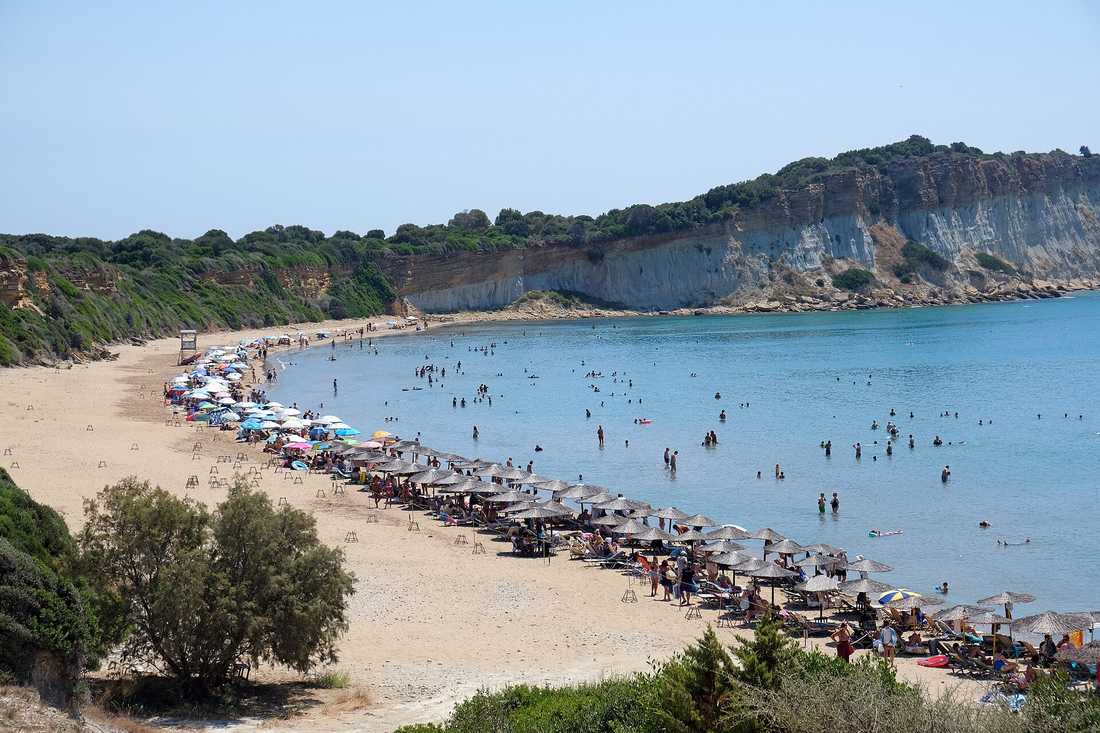
Gerakas Beach stretches along the southeastern tip of Zakynthos, where the Vasilikos peninsula meets the Ionian Sea. Soft clay cliffs rise behind a sweep of golden sand, and clear shallow water laps the shore. This shore ranks among the finest on the island and stands as one of the most crucial loggerhead sea turtle nesting sites in the Mediterranean. A protected area inside the National Marine Park of Zakynthos keeps the beach safe for these remarkable creatures. Fences guard the upper sand where turtles bury their eggs, and strict rules limit umbrellas, digging, and noise. The beach closes to people at night during nesting season. Visitors can learn more about conservation efforts with My Greece Tours.
The sections below cover what makes this stretch of coastline unique on Zakynthos. Calm warm water and fine sand create a gentle experience by day. Strict conservation measures ensure that night belongs to the turtles. A small information centre at the site explains the biology of these animals and the work of the marine park. Anyone planning a trip to the island can find broader inspiration through a Zakynthos travel guide that offers further ideas for exploring this beautiful region.
Where does Gerakas Beach sit on Zakynthos?
Gerakas Beach lies on the Vasilikos peninsula at the southeastern tip of Zakynthos in the Ionian Sea. Soft clay cliffs border the golden sand, and clear shallow water meets the shore along this quiet coastline.
The Vasilikos peninsula curves along the southeastern edge of Zakynthos, and Gerakas sits at its quiet tip. Golden sand sweeps between low clay cliffs and the Ionian Sea. Clear shallow water stretches out from the shoreline, making the bay ideal for relaxed swimming. The beach forms part of a wider stretch of coast that visitors explore to discover the full range of Zakynthos beaches. Gerakas stands apart due to its protected status and its role as a turtle nesting habitat. A path leads down from above the cliffs and the view opens across the golden bay. Soft sand shifts underfoot, and the warm shallow water invites a gentle paddle beyond the fenced nesting zone.
The whole scene captures the essence of this remarkable corner of the island.
The golden sand and clear shallow water of Gerakas rank among the finest features of the Zakynthos coastline. Visitors often head straight to Navagio Beach for the famous shipwreck, yet the southeastern corner near Vasilikos offers a quieter alternative. Gerakas rewards those willing to travel beyond the main tourist hubs with unspoilt scenery. The drive from Zakynthos Town passes through countryside before reaching the low clay cliffs above the beach. A small path leads down to the sand, where the panorama stretches across the open Ionian Sea toward the distant horizon. Soft golden sand and gentle shallows make this spot perfect for visitors who prefer calm conditions.
The clay cliffs behind the beach glow warm in the late afternoon light and frame the whole bay beautifully.
Gerakas sits about eighteen kilometres from Zakynthos Town along the eastern edge of the wide Laganas Bay. The sandy strip runs close to nine hundred metres in length and averages roughly twenty metres in width. A narrow tongue of sand reaches out at the far end and forms a small promontory that dips into the sea. Low cliffs of soft clay and sandstone rise behind the golden shore and shape the whole bay. The clay in these cliffs once drew visitors who spread it on their skin as a natural treatment. Erosion of that clay ridge led the park to fence the fragile far tip and keep people off.
The main sweep of sand stays open for daytime visitors who reach it on foot.
Why do loggerhead turtles nest at Gerakas?
Loggerhead turtles return to Gerakas because the warm soft sand provides ideal conditions for burying and incubating their eggs. The beach ranks among the most important nesting sites for these turtles across the entire Mediterranean region.
Female loggerheads crawl up the golden sand at night to bury their eggs above the tide line. Each turtle lays her clutch, covers it carefully with sand, and then returns to the sea. The warm sand incubates the eggs until the hatchlings emerge and head toward the water. Protecting the loggerhead turtles remains a top priority for the National Marine Park of Zakynthos. The upper section of Gerakas stays fenced off throughout the entire nesting period to prevent damage to buried clutches. Strict rules limit umbrellas, digging, and loud noise to keep the nesting zone safe and undisturbed. The unique combination of soft sand and warm shallow water makes this coastline ideal for successful nesting.
The whole beach closes at night so the turtles can come ashore in peace to complete their ancient cycle.
Gerakas is not the only nesting beach inside the Marine Park. The protected area also encompasses other shores including Laganas Beach, which forms part of the same turtle conservation zone. The park applies uniform rules across all these nesting beaches to keep the turtles safe. Visitors who care about responsible tourism should plan their visits carefully. Every nesting beach closes at sunset so the turtles can come ashore undisturbed at night. Gerakas stands out for its golden sand and its calm shallow water within the protected area. The fine golden sand and the gentle slope into the warm Ionian water create ideal nesting conditions for loggerheads.
Park staff educate visitors about the fragile balance between tourism and wildlife conservation on the island. The survival of each nest matters enormously for the future of this endangered population.
Female loggerheads return to the same stretch of coast where they themselves hatched decades earlier. Each nesting female may lay more than one clutch across a single summer, with each clutch holding roughly one hundred eggs. The sand temperature during incubation shapes the sex of the hatchlings, so the warm golden sand of Gerakas matters greatly. The wide beaches ringing Laganas Bay together host close to one thousand three hundred nests in a strong year. Gerakas ranks among the busiest of these nesting shores on the whole island. The gentle slope of the sand lets tired females climb above the tide line with less effort.
The soft grains also let each turtle dig her nest chamber cleanly before she covers the eggs and returns to the water.
What rules protect the Zakynthos turtle nests?
The National Marine Park of Zakynthos enforces strict rules to safeguard turtle nests. Fences block off the upper sand, and the entire beach closes to all visitors at night throughout the nesting season. Umbrellas, digging, and loud noise remain restricted.
Conservation rules at Gerakas reflect the wider mission of the Marine Park across the coast of Zakynthos. The upper portion of sand where turtles bury their eggs sits behind protective fencing that keeps foot traffic away from delicate nests. Visitors must stay within the designated swimming zone and avoid bringing umbrellas onto the sand. Digging is strictly forbidden to prevent accidental disturbance of buried eggs. Noise restrictions help keep the beach calm and suitable for turtles coming ashore at dusk. Visitors who wish to explore beyond Gerakas can discover other coastal features like the Keri Caves elsewhere on the island of Zakynthos.
These measures ensure that tourism and nature coexist on the island without threatening the survival of the loggerhead population. Every precaution matters on this remarkable stretch of protected Greek coastline.
The Marine Park applies strict rules to protect turtles in the shallow water near the shore of Zakynthos. Local operators offer Zakynthos boat tours that follow park guidelines and respect the protected zones around Gerakas. These excursions let visitors appreciate the golden coastline from the water without interfering with nesting activity on the sand. The careful management of the beach complements the rules about fencing and closing times throughout the season. Together these regulations create a comprehensive shield for the turtles during their most vulnerable period on land and in shallow coastal water. Visitors who follow every posted guideline help preserve one of the finest turtle habitats in the whole Mediterranean region.
The information centre at the entrance provides full details about every restriction that applies to visitors on the sand.
Access to Gerakas closes from half an hour before sunset until half an hour after dawn during the nesting months. This overnight ban covers the full window when females come ashore and when hatchlings dash for the sea. Beach furniture stays back from the sand near the fenced upper zone so nests remain undisturbed. Visitors must avoid leaving litter, since debris can trap emerging hatchlings on their short journey to the water. Bright torches and camera flashes are banned after dark because artificial light disorients both adults and hatchlings. Park wardens patrol the shore and explain each rule to arriving visitors.
The nesting season stretches from late May through October, and the strictest limits apply across those warmer months when most clutches incubate in the sand.
What does the Gerakas information centre offer?
A small information centre at Gerakas explains the loggerhead turtles and the work of the National Marine Park. Displays cover nesting behaviour, hatchling journeys, and the conservation rules that keep the beach safe throughout the egg-laying season.
The information centre sits near the top of the path that leads down to the sand. Inside, visitors find clear panels about the loggerhead turtles and the work of the Marine Park. Staff explain how turtles come ashore at night to bury their eggs in the warm sand above the tide line. Photos and maps show the full extent of the Marine Park across the coastline. The centre also explains the rules that protect the nesting turtles and their habitat on the beach. Educational talks run through the day and help visitors understand why simple rules like no umbrellas and no digging matter so much.
Children respond with enthusiasm to the visual displays about tiny hatchlings racing toward the sea. The centre offers the perfect introduction to a beach visit at this remarkable protected site.
Spending time at the centre before walking onto the sand gives context to everything visitors see at Gerakas. The soft clay cliffs behind the beach form part of the landscape that makes this corner of Zakynthos so striking. Park volunteers often stand at the entrance to answer questions and point out the fenced nesting areas visible from the cliff path. The combination of education and direct observation turns a simple beach visit into a meaningful wildlife experience. Visitors leave with a deeper appreciation of the effort required to maintain this delicate balance between human enjoyment and species survival.
The centre represents the visible frontline of conservation on an island that welcomes enormous numbers of summer tourists to its spectacular shoreline each season. The message is clear and consistent throughout every exhibit.
The centre near the cliff path runs on the work of volunteers and marine park staff each summer. Displays trace the full life cycle of the loggerhead, from the buried egg to the adult turtle that roams the open Ionian. Panels explain how hatchlings use the brightness of the open horizon to find the sea after they climb out of the nest. Maps mark every protected nesting beach around Laganas Bay and show the boundaries of the marine park. Staff answer questions about the timing of the closures and the reasons behind each posted rule. The centre also shares simple ways that visitors can lower their impact during a stay on the island.
A short visit here turns curiosity into understanding before anyone sets foot on the protected sand below.
How warm is the water at Gerakas Beach?
The water at Gerakas stays calm, warm, and shallow far out from the sand. Fine golden sand covers the bottom, and the gentle gradient makes this one of the most relaxing beaches on the entire island.
The shallow water and soft sandy bottom at Gerakas make it ideal for wading and gentle swimming. The water stays warm in the Ionian sun and remains comfortable for swimming throughout the day. The clear water reveals the fine golden sand across the bottom of the whole bay. Families appreciate the safe conditions and the calm approach to the sea. The beach never feels packed due to the restrictions on umbrellas and the limited access after sunset. Visitors can enjoy the clear shallow water that extends far from the shoreline at this gentle beach. The fine sand and warm shallow conditions combine to create one of the most relaxing spots on the island.
Gerakas earns its reputation as a gentle beach by day, and the night belongs to the nesting turtles.
The fine golden sand at Gerakas feels soft underfoot and slopes gently into the sea. This texture makes barefoot walking a pleasure from the cliff path right down to the water. The colour of the sand glows warm and bright under the midday sun, giving the beach its golden reputation. The clear water and the fine visibility add to the appeal for swimmers. The restrictions on loud noise keep the bay peaceful and calm. Sunbathers stretch out on open sand beyond the fenced nesting zone and enjoy the quiet atmosphere. Gerakas shows how Zakynthos shares its finest shores with rare wildlife without compromising the visitor experience.
Day belongs to people and night belongs to the turtles on this special protected coastline. The golden sand and the calm water make Gerakas one of the most beautiful beaches on the island.
The seabed at Gerakas shelves so gently that swimmers can wade far from shore while the water stays at chest height. This shallow profile suits young children and cautious swimmers who prefer firm footing on soft sand. Summer sea temperatures in this part of the Ionian climb into the mid twenties Celsius through the peak months. The bay faces roughly southeast, which shelters the water from the strongest afternoon winds that reach other coasts. Calm mornings often leave the surface almost flat, and the clear water shows the rippled sand below. Swimmers should still keep clear of the fenced nesting zone and any marked turtle activity near the shore.
The warm shallow water and the fine golden sand together explain why families return to this quiet corner of Zakynthos.
Frequently Asked Questions
When does Gerakas Beach close for turtle nesting?
The beach closes to all visitors at night throughout the nesting season. This restriction protects the turtles as they come ashore to bury their eggs under the cover of darkness. The rules form part of the wider protections enforced by the National Marine Park of Zakynthos. Daytime access remains open within designated hours and within marked boundaries on the sand. Fences block the upper nesting zone throughout the whole season. Visitors must leave the beach before sunset so the area stays quiet and undisturbed for the turtles. The closures give the animals the darkness and peace they need to complete their nesting cycle. Loud noise is restricted to keep the beach calm.
The upper sand where the turtles bury their eggs stays fenced off and clearly marked. Strict rules about umbrellas and digging prevent accidental disturbance of the buried clutches. The information centre at the entrance provides full details about the nightly closures.
Can I swim at Gerakas Beach during the day?
Swimming is permitted at Gerakas during daylight hours within the designated zones. The clear shallow water and the fine golden sand create a gentle and enjoyable environment for bathers of all ages. The calm warm conditions make the sea ideal for relaxed swimming throughout the day. The shallow water means swimmers can walk out a long way from the sand before the depth increases. The information centre explains the rules on the protected beach to every visitor. Umbrellas are restricted to keep the upper sand clear for turtle nests, so visitors should bring sunscreen and plan accordingly. The absence of loud noise keeps the bay peaceful throughout every visit.
The water stays remarkably clear thanks to the fine sandy bottom along this stretch of protected coastline. Visitors appreciate the gentle conditions and the clean golden sand throughout the whole bay. Daytime access offers the full experience before the beach closes at sunset for the nesting turtles.
How do I get to Gerakas Beach from Zakynthos Town?
Gerakas lies on the Vasilikos peninsula at the southeastern tip of Zakynthos. The beach sits at the end of the road that crosses the peninsula from the main town. Visitors arrive on foot via a path that leads down from the low clay cliffs above the sand. The golden beach and the clear shallow water come into view at the bottom of the path. Signposts for the National Marine Park information centre guide visitors to the correct entrance. The information centre sits near the top of the path and provides details about the turtles and the park rules.
Visitors should arrive early to enjoy the beach at its quietest before the nesting zone fences and the restricted areas fill with people. The fine golden sand stretches along the shore and the warm shallow water invites a gentle swim. Comfortable walking shoes help on the descent to the beach. Gerakas counts among the most beautiful beaches on the island and the effort to reach it feels worthwhile.
What is the clay promontory at the end of Gerakas Beach?
The far end of Gerakas narrows into a thin tongue of sand that finishes in a small promontory of soft clay and sandstone. This ridge formed as the sea and weather carved the low cliffs behind the beach over long spans of time. Visitors once scooped the pale clay from these cliffs and spread it on their skin as a folk treatment. The steady removal of clay weakened the ridge and made the tip unstable and unsafe for people. Park authorities now fence off the final section to protect both the fragile landform and the visitors themselves. The closure also shields the quiet upper sand where turtles bury their clutches away from foot traffic.
Visitors can still admire the striking clay promontory from the open beach and the cliff path above. The soft cliffs give Gerakas its distinct character among the golden shores of Zakynthos and mark it apart from the busier resort beaches on the island.