
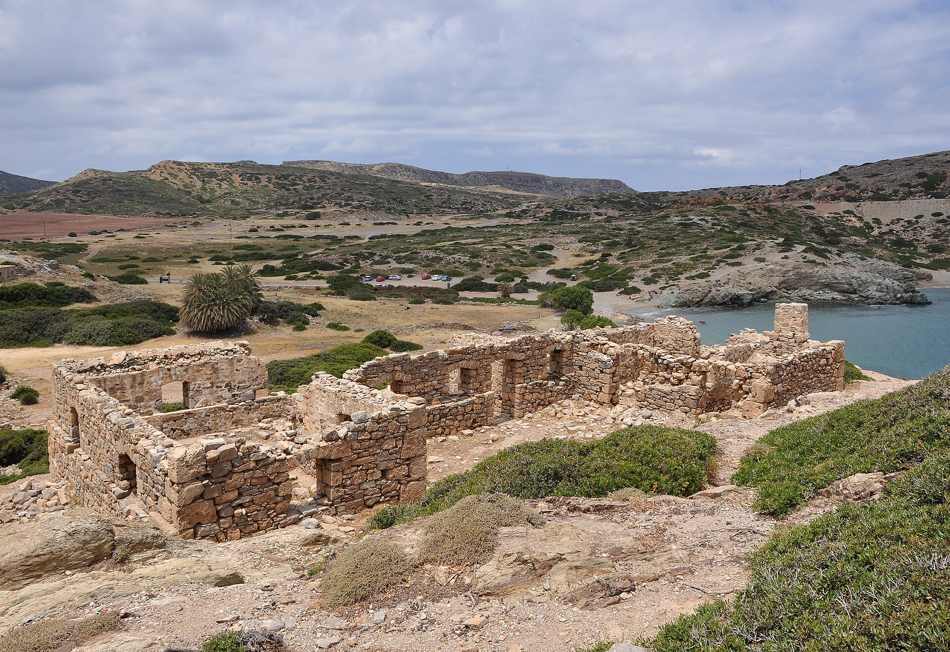
Itanos is the site of an ancient city on the far north-east coast of Crete, in the Lasithi district, sitting beside the palm beach of Vai and below the fortified monastery of Toplou. People also call it Erimoupoli, the deserted city, a name that fits the low ruins scattered quietly across a bare headland above the sea. It grew into an important Greco-Roman port and trading town that flourished for centuries before it was abandoned to the wind and the waves. Today the ground holds walls, houses, early Christian basilicas and two acropolis hills, all open to the salt air. Plan a remote north-eastern day around this quiet coast with My Greece Tours.
Itanos rewards travellers curious about ancient Crete beyond the Minoan palaces, joining archaeology to swimming and solitude on one of the island’s most remote shores. The site stays open, unfenced and free to wander, so you move among the ruins at your own pace and drop down to small sandy and pebble coves whenever the clear water tempts you. It lies a short drive from Vai and the monastery of Toplou, easy to fold into one full day. The sections below cover the ruins, the coves, the neighbouring sights and the practical approach. For the wider regional picture, our Crete travel guide sets Itanos among the island’s eastern roads.
Where is Itanos on Crete’s north-east coast?
Itanos lies on the far north-east coast of Crete in the Lasithi district, on a bare headland above the sea. It sits beside the palm beach of Vai and below the fortified monastery of Toplou.
Itanos occupies one of the most remote corners of the whole island, out on the exposed north-eastern tip where the road finally runs out at the coast. The ancient city spreads across a low headland above small coves, in the Lasithi district that forms Crete’s eastern end. The famous palm beach of Vai lies close by to the south, and the fortified monastery of Toplou stands inland on the road that leads out here. This far edge of Crete feels a long way from the busy resorts of the north, and that distance is exactly what keeps the ground quiet and the coves clear. Travellers reach the site by driving out past the last villages and olive groves.
From there they walk the open ground between the low ruins and the sea, with only wind and salt air for company.
The approach carries its own reward before you even reach the first wall. The road out from Sitia climbs past Toplou and drops toward a coast of pale rock, thyme scrub and turquoise water, with the palm grove of Vai marking the way. Out at the headland the land opens flat and bright, and the ruins rise low against the sea rather than towering over it. There are no gates, no ticket booth and no crowd filing through, only the marked ground of an old city left quietly to the wind and the elements.
This sense of arriving at the very edge of the map, where the tarmac gives out and the sea takes over, gives Itanos a rare mood. Busier archaeological parks on the island simply cannot match it for the curious traveller.
What ancient ruins can you see at Itanos?
Itanos shows the low ruins of an ancient Greco-Roman port: walls, houses, early Christian basilicas and two acropolis hills spread across the headland. The stones sit open above small coves, marking a trading town that flourished for centuries before abandonment.
The ruins at Itanos read as a whole ancient city laid flat across the headland rather than a single grand monument. Foundations of walls and houses trace the shape of streets and rooms where a working port once lived and traded. Two acropolis hills rise gently at either edge of the site, the natural high points that any Greek city used for defence and for its most important buildings. Between and around them the ground carries the marked remains of early Christian basilicas. These churches show how the town carried on into the early Christian age, long after its Greek and Roman beginnings.
The stones sit low and weathered against the bright sky, so the pleasure here lies in reading the plan of the place slowly with your own eyes, not in craning up at columns.
This is ancient Crete beyond the Minoan palaces, and that difference is the point of a visit. Where sites such as Knossos speak of the Bronze Age, Itanos speaks of the Greco-Roman world and the early Christian centuries that followed, a later and less-visited chapter of the island’s long story. The town grew wealthy as a port and trading centre, holding its place on the busy eastern sea routes for a great stretch of time before it was finally left deserted to the wind. Walking the open ground, you piece together walls, homes, churches and harbour together into the picture of a real community.
Readers drawn to hidden gems in Crete find in Itanos a rare chance to have a whole ancient city almost entirely to themselves.
What are the beaches and coves at Itanos like?
Itanos edges small sandy and pebble coves with clear, calm water tucked below the ruins. The beaches stay quiet and undeveloped, so swimmers pair a dip in the sea with a wander through the stones on the same easy visit.
The coast at Itanos folds into a run of small coves right below the ancient ground, mixing pale sand with smooth pebble at the water’s edge. The sea here stays strikingly clear and, on settled days, calm, protected in pockets by the shape of the headland and its low rock. Set far from any resort, these little beaches keep an undeveloped, natural feel, with no rows of loungers or bars crowding the quiet shore. Swimmers spread a towel on the sand between spells of exploring the ruins, dropping into cool water just steps away from a two-thousand-year-old wall.
This easy blend of archaeology and swimming, ruins on one side and clear coves on the other, is the signature pleasure of the whole spot for any curious traveller who makes the long drive out here.
The wider north-east coast carries the same wild, uncrowded spirit that makes Itanos so rewarding for a day by the water. Close by lies the palm beach of Vai beach, whose grove of native palms draws more visitors and gives a busier, more famous contrast to the empty coves at the ruins. Travellers comparing shores across the island in our roundup of Crete beaches will find the Itanos coves grouped firmly with the remote, natural end of the range rather than the organised resort sands. The lack of development is the whole appeal. You swim off a quiet cove with an ancient city at your back and the open sea in front.
That combination feels increasingly rare on a heavily travelled island, and it is what draws curious visitors out this far.
What lies near Itanos for a full day out?
The palm beach of Vai and the fortified monastery of Toplou both sit a short drive from Itanos, with the town of Sitia further west. Ruins, palm grove, monastery and coves fold neatly into one full north-eastern day.
The land around Itanos packs a strong mix of sights into short driving distances out on this remote tip of Crete. The palm beach of Vai lies just to the south. Its dense grove of native palms forms one of the island’s most distinctive landscapes and an obvious pairing with the ruins. Inland on the approach road stands the monastery of Toplou Monastery, a fortified religious house that guarded this exposed coast and now welcomes visitors to its thick walls and quiet courtyards. The spread of these places, ancient city, palm beach and fortress-monastery, lets one base carry a genuinely varied day without long transfers back and forth across the district.
Each stop sits within easy reach of the next, so the loop stays relaxed rather than rushed, with time to linger over ruins, palms and clear water in turn.
A visit builds naturally into a single unhurried loop out to the north-east and back. Travellers often start inland at Toplou, drop down to wander the free ruins of Itanos and swim off its coves, then finish among the palms at Vai before the drive home. The town of Sitia further west makes a natural gateway for the whole area, with its harbour, services and road connections toward the rest of the island. This corner rewards a slow, curious approach rather than a rushed tick-list, giving history, landscape and clear water in one remote stretch.
Travellers who plan the day well leave the north-east with a rounded sense of an ancient port, a sacred fortress and a palm-fringed shore all in a short run of coast.
How do you plan a visit to Itanos on Crete?
Itanos stays open, unfenced and free, so a hire car and a half-day give the easiest visit. Drive out past Toplou and Vai, wear sturdy shoes for the open ground, and carry water, shade and swimming things for the coves.
Planning a visit to Itanos is refreshingly simple because the site asks so little of you in the way of gates or timetables. The ground stays open, unfenced and free to wander, so there is no ticket to buy and no closing hour to race against on the drive out. A hire car is the natural way to reach this remote headland, since the site lies well beyond the reach of easy public transport at the eastern edge of the island. Sturdy shoes help on the open, uneven ground among the low walls and up the gentle acropolis hills.
The lack of any facilities on site means you bring your own water, shade and food, treating the trip as a self-contained outing rather than a serviced attraction.
The reward for that small effort is a rare freedom to explore an ancient city entirely on your own terms. You can trace the walls, climb the two acropolis hills, read the shape of the basilicas and then cool off in a clear cove, all without a rope, a sign or a crowd steering your steps. Morning light and calm early water make a fine start, leaving the afternoon for Vai and Toplou nearby. Travellers weighing wider itineraries and things to do in Crete often fold Itanos into a single grand loop of the remote north-east, pairing quiet ruins with a swim.
The site rewards curiosity and a little planning with solitude, archaeology and clear water on one of Crete’s most beautiful and least-crowded coasts.
Frequently Asked Questions
Is Itanos worth visiting compared with Crete’s Minoan palaces?
Itanos is well worth visiting for travellers who want ancient Crete beyond the Minoan palaces. Where sites such as Knossos and Phaistos show the Bronze Age, Itanos preserves the later Greco-Roman and early Christian city, a different and quieter chapter of the island’s past. The ruins here sit low and weathered rather than reconstructed, so the pleasure lies in reading the plan of a whole port town, its walls, houses, basilicas and two acropolis hills, across an open headland above the sea. The setting adds a great deal to the appeal. The stones stand right beside small coves of clear water, so a visit blends archaeology with a swim in a way the busier inland palaces cannot offer.
The site stays free, unfenced and almost empty, giving a sense of discovery that the major ticketed monuments have long since lost. For curious travellers who value solitude and a real, lived-in ancient city over polished crowds, Itanos more than earns the remote drive out to the far north-east coast.
How much time should you spend at Itanos and what should you bring?
A half-day suits Itanos well, giving time to wander the ruins slowly and swim off the coves without rushing. The open ground covers walls, houses, early Christian basilicas and two low acropolis hills, all of which reward an unhurried walk rather than a quick glance from the roadside. Pairing the site with nearby Vai and Toplou fills a comfortable full day out in the north-east. Bring the right kit, since the site carries no facilities at all. Water, a hat and sun protection matter on the exposed, shadeless headland, and sturdy shoes help on the uneven ground among the stones.
Pack swimming things and a towel to make the most of the clear coves below the ruins, and carry your own snacks, as there is nowhere to buy food on the spot. A hire car is effectively essential for reaching this remote corner. Treat the trip as a self-contained outing and Itanos gives history, landscape and a swim in one rewarding, peaceful stretch of coast.
Is Itanos suitable for a swim as well as sightseeing?
Itanos suits a swim beautifully, and that blend of ruins and sea is one of its great pleasures. Small sandy and pebble coves sit right below the ancient ground, holding water that stays clear and, on calm days, gentle in the pockets sheltered by the headland. Set far from any resort, these little beaches keep a wild, undeveloped feel, with no loungers, no bars and no crowd between you and the sea. The practical rhythm of a visit makes swimming easy to fold in. You wander the walls, houses and basilicas, then drop straight down to a cove to cool off, drying out on the sand before returning to the stones.
The site carries no facilities, so bring your own towel, water and shade. Calmer mornings tend to give the clearest, stillest water for a dip. The chance to swim off a quiet cove with a whole ancient city at your back gives Itanos an appeal that few archaeological sites on Crete can match for a warm summer day.