
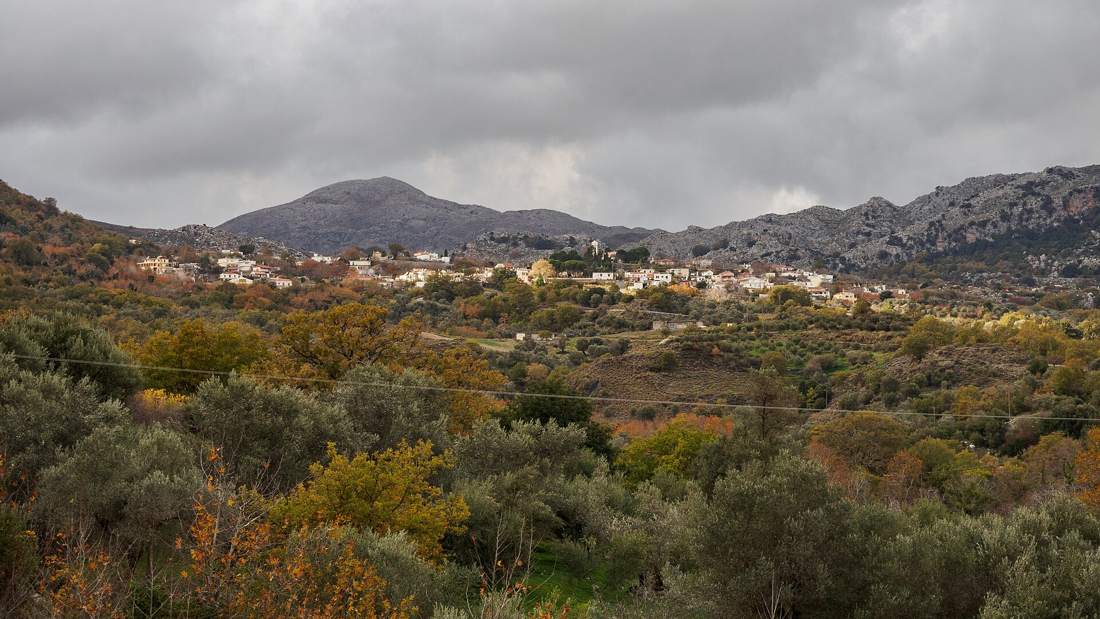
Gerakari is a mountain village in the upper Amari valley of the Rethymno district in central Crete, set on the green slopes of Mount Kedros among fruit orchards and running springs. It is known across the whole island for its cherries, celebrated at a summer festival, and for apples and pears grown in the cool highland climate. Stone houses, churches, cafes and tavernas line the road through the settlement, and the air stays fresh where water and greenery replace the heat of the coast. The village carries a hard history, destroyed in the wartime occupation and later rebuilt. Plan a cool orchard escape into the heart of the mountains with My Greece Tours.
Gerakari rewards travellers after fruit orchards, mountain scenery and a taste of highland village life away from the busy northern resorts. The scenic drive through the village links the Amari valley with Spili and the south, opening wide views of Mount Kedros and its terraced slopes. Cool air, springs and greenery set the place apart from the coast, and the summer cherry festival gives it a fixed point on the island calendar. The sections below cover the location, the cherries and festival, the food and orchards, the scenic drive, and the wartime story, all set within our Crete travel guide for the wider region.
Where is Gerakari in Crete’s Amari valley?
Gerakari sits in the upper Amari valley of the Rethymno district in central Crete, on the green slopes of Mount Kedros. Orchards, springs and stone houses fill a cool highland setting well above the busy coast.
Gerakari occupies a high shelf of the upper Amari valley, tucked into the eastern flank of Mount Kedros in the Rethymno district. The valley itself curves through central Crete between the great bulk of Psiloritis and the ridge of Kedros, holding a string of old villages among terraces and orchards. Gerakari ranks with the highest and greenest of them, its houses gathered where springs break out of the mountainside and feed the fruit trees below. The setting reads as mountain country rather than coast: cool air, running water, and the deep green of orchards climbing the slopes.
Roads reach the village from the direction of Rethymno to the north and from Spili and the south, threading through smaller settlements that share the same terraced, water-fed character of the upper Amari.
The approach to Gerakari frames the whole mood of the place before you arrive among its houses. The road climbs steadily out of the lower valley, passing olive groves that give way to cherry and apple orchards as the altitude rises and the air cools. Mount Kedros stands over the village, its slopes terraced and planted, its higher reaches bare stone above the tree line. In the settlement itself, stone houses, churches, cafes and tavernas line the road, and the sound of running spring water follows you between them.
This position keeps Gerakari apart from the coastal crowds, a genuine highland village that rewards the drive up with cool green calm rather than a resort scene built for the summer season.
Why is Gerakari famous for its cherries?
Gerakari grows cherries prized across Crete, ripened by the cool highland climate of Mount Kedros. A summer cherry festival celebrates the harvest each year, drawing visitors up into the orchards for fruit, food and village celebration.
Cherries carry the name of Gerakari across the whole island, and the reason lies in the mountain itself. The cool highland air on the slopes of Mount Kedros, fed by springs and set well above the coastal heat, gives the fruit a slow ripening that concentrates its flavour. Orchards of cherry trees terrace the ground around the village, coming into fruit through the early summer when the lower island already bakes. The harvest turns Gerakari into a working fruit village at that time of year, with baskets and boxes moving down the mountain roads to markets across Crete.
This reputation is old and local rather than manufactured for tourism, rooted in generations of growing fruit where the climate suits it, and it gives the village a clear identity within the wider Amari valley.
The summer cherry festival marks the peak of the harvest and pulls visitors up from the coast into the cool of the mountains. The celebration fills the village with fruit, food and music, a fixed point on the island calendar that turns the everyday orchard work into a shared occasion. Travellers who time a visit to the festival find the village at its liveliest, the tavernas full and the cherries at their best straight from the trees around them. The event sits naturally among the wider things to do in Crete for anyone drawn to real village life rather than packaged resorts.
Beyond the festival weeks, the orchards still shape the rhythm of the place, and the fruit remains the thread that ties Gerakari to the rest of the island.
What can you eat and grow around Gerakari?
Gerakari’s orchards yield cherries, apples and pears ripened in the cool mountain climate, alongside olive oil and garden produce. Village tavernas serve honest Cretan food, drawing on fruit, vegetables and meat from the slopes around them.
The orchards around Gerakari carry more than cherries, and the cool climate of Mount Kedros shapes everything that grows there. Apples and pears ripen well in the highland air, sharing the terraces with the cherry trees and extending the fruit season further into the year. Lower down, olive groves climb the valley sides and feed the oil that anchors every kitchen, while village gardens supply vegetables and herbs to the tavernas along the road. This spread of produce reflects the altitude and the water: fruit and cool-climate crops thrive here where the coast could not grow them.
Eating in Gerakari means tasting that mountain difference directly, food that belongs to the slopes rather than shipped up from the resorts below on the northern shore.
Meals in the village follow the unhurried Cretan pattern, served in tavernas and cafes that line the road among the stone houses. Menus lean on what the orchards, gardens and slopes provide: fruit in season, vegetables from the terraces, cheese and meat from the mountain, and olive oil pressed in the groves nearby. The cool air makes the village a welcome table in the heat of high summer, when the coast swelters and the mountains stay fresh. Travellers exploring Cretan food at its source find Gerakari a rewarding stop, a place where the link between the land and the plate stays plain to see.
The everyday kafeneia hold their own steady rhythm too, coffee and quiet talk under the shade at the edge of the orchards.
What is the scenic drive through Gerakari like?
The scenic drive through Gerakari links the Amari valley with Spili and the south, climbing among orchards and springs on the slopes of Mount Kedros. Wide mountain views, terraced greenery and old villages line the route.
The road through Gerakari ranks among the finest mountain drives in central Crete, connecting the upper Amari valley with Spili and the southern side of the district. It climbs and winds along the flank of Mount Kedros, threading between terraced orchards, springs and stone-built villages that share the same cool, green character. Views open at every bend across the valley toward Psiloritis and down the slopes toward the distant coast, framed by cherry and apple trees close at hand. The drive stays quiet outside the peak weeks, a route for slow travel rather than a fast transfer between resorts.
Travellers touring by car use it to cross from the heart of the Amari into the country around Spili, gathering mountain scenery, village stops and fresh air along the way.
The character of the drive lies in its contrasts, packed into a short distance of mountain road. One moment the route runs deep among orchards with spring water crossing the tarmac, the next it opens onto a bare ridge with the whole valley spread below. Old villages punctuate the way, each with its churches, cafes and terraced fields, giving reasons to stop and reasons to linger. Gerakari itself makes a natural pause on the route, its tavernas and shade a welcome break in the climb.
This is a road for travellers who count the journey as part of the destination, and it sets Gerakari firmly on the map of scenic mountain routes that reward the patient driver across the Cretan highlands.
What is the wartime history of Gerakari in Crete?
Gerakari was destroyed during the wartime occupation of Crete and later rebuilt, a hard history shared by neighbouring Amari valley villages. Memorials mark the loss, and the rebuilt stone village stands as a lasting record of that endurance.
Gerakari carries a heavy chapter of the island’s past, destroyed during the wartime occupation of Crete in reprisal, a fate shared by the villages of the upper Amari valley. The mountain communities of this district paid a steep price during those years, and the memory runs deep in the stone and the people. The village standing today was rebuilt afterward, its houses, churches and cafes raised again along the same road among the orchards. Memorials mark the loss and honour those who suffered, giving the everyday scene of fruit trees and running water a quieter, deeper layer beneath its calm.
Travellers who learn the story read the village differently, aware that its green peace was hard won and deliberately restored rather than simply inherited unbroken from the past.
That history binds Gerakari to its neighbours across the Amari valley, where the same wartime fate and the same slow rebuilding shaped a whole cluster of mountain villages. The valley today reads as green and gentle, its orchards and springs at odds with the violence of that period, and the contrast gives the landscape a particular weight for those who seek the story out. Gerakari sits among the quieter hidden gems in Crete partly for this reason, a place of real depth rather than surface charm.
The whole Amari region, and the wider Rethymno district around it, holds this mix of beauty and memory, best understood by travellers willing to look past the cherry orchards and running springs to the history that shaped them and the people who chose to rebuild.
Frequently Asked Questions
When should you visit Gerakari and its cherry festival?
Early summer suits Gerakari best, when the cherries ripen on the slopes of Mount Kedros and the village holds its cherry festival at the peak of the harvest. That is the time to taste the fruit straight from the orchards and to see the village at its liveliest, tavernas full and the celebration in full swing. The cool highland climate keeps the air fresh through the hottest weeks, a welcome contrast to the baking coast below, so the mountains reward a visit right through high summer. Apples and pears extend the fruit season further into the year, and the orchards stay green long after the cherries are picked.
The scenic drive through the village and on toward Spili holds its beauty across the warm months, threading among terraces and springs. Travellers chasing the festival should time their arrival to the early summer harvest, while those after cool air, mountain views and quiet village life find the whole warm season rewarding in the upper Amari valley.
How do you reach Gerakari and get around the Amari valley?
Gerakari sits high in the upper Amari valley of the Rethymno district in central Crete, reached by mountain road from the north near Rethymno or from Spili and the south. A hire car gives the most freedom here, letting travellers move between the orchard villages, the springs and the viewpoints at their own pace. The final approach climbs steadily out of the lower valley, passing olive groves that give way to cherry and apple orchards as the air cools and the altitude rises. The scenic drive linking the Amari with Spili passes through the village and rewards slow travel with wide views of Mount Kedros and the terraced slopes.
Roads stay quiet outside the peak weeks, so the journey becomes part of the pleasure rather than a chore. Gerakari works well as a mountain stop on a wider tour of the Amari valley, a place to pause among the orchards, eat in a taverna and breathe the cool highland air before driving on.
What makes Gerakari different from Crete’s coastal villages?
Gerakari stands apart through altitude, water and greenery, a genuine mountain village rather than a coastal resort. Set high on Mount Kedros in the upper Amari valley, it keeps cool air and running springs where the coast holds only heat, and its orchards of cherry, apple and pear replace the beaches and tavernas of the shore. The village grows fruit prized across the island and celebrates it at a summer festival, giving it a working identity rooted in the land rather than in tourism. Its history adds further depth: destroyed in the wartime occupation and later rebuilt, it carries memorials and memory beneath its green calm.
The scenic drive linking the Amari with Spili sets it on a route of mountain villages and wide views rather than a coastal strip of hotels. Travellers who want the real highland Crete, cool and green and honest, find in Gerakari a clear alternative to the busy northern resorts and the crowded beaches below.