
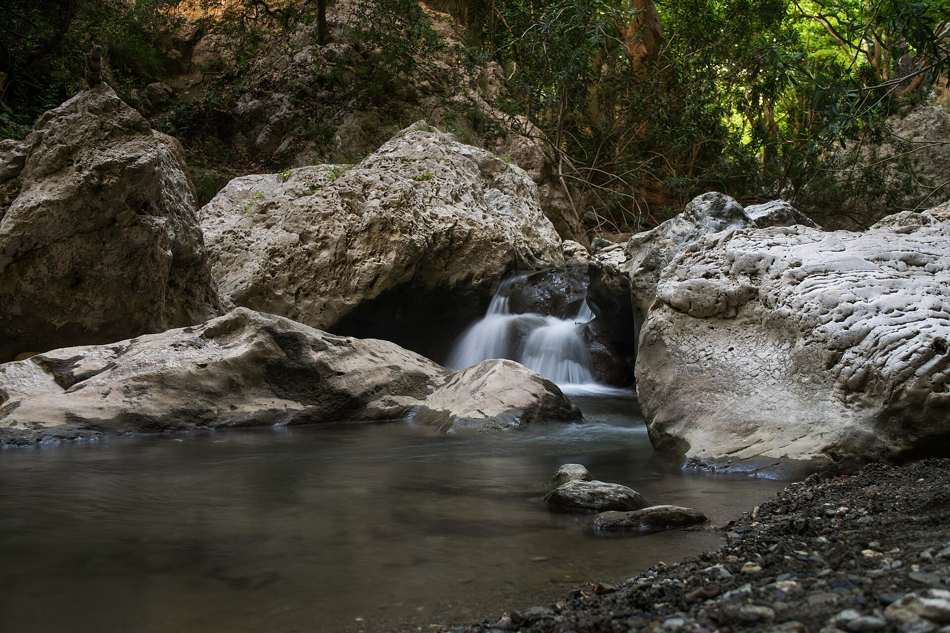
Prassano Gorge is a long river canyon in the Rethymno district of Crete, cut by the Platys river between the Amari valley and the north coast, south of the town of Rethymno. People also know it as the Prasano or Panteli gorge. Tall grey limestone walls rise on either side. Plane trees, oleander and running water line the floor. This is a demanding route of boulder-hopping, wading and route-finding rather than an easy walk, and it stays far quieter than the famous gorges of the island. Plan a wild, un-touristed canyon day close to the north-coast towns with My Greece Tours.
The Platys river carves Prassano through grey limestone before it emerges near the villages south of Rethymno, and the walk runs for kilometre after kilometre across rough ground. There is no entrance gate and no facilities, so the gorge rewards fit, experienced hikers ready to find their own way. The sections below cover where the canyon sits, what the route demands, when to go safely, what you see along the floor, and who the walk suits. For the wider regional picture, our Crete travel guide places Prassano among the island’s mountains and quieter corners.
Where is Prassano Gorge in Crete?
Prassano Gorge lies in the Rethymno district of Crete, cut by the Platys river between the Amari valley and the north coast, south of the town of Rethymno. The river emerges near the villages south of the town.
Prassano sits in the heart of the Rethymno district, one of the quieter mountain reaches on the north-central side of Crete. The Platys river forms it, running down from the Amari valley toward the north coast. It slices a deep channel through grey limestone on the way. The gorge threads between the upland farming country of the Amari and the busier coastal belt around Rethymno, so it feels both remote and close to a major north-coast town. The river finally emerges near the villages that lie south of Rethymno, where the walls open out and the water spreads across gentler ground. This position gives Prassano a rare double character.
It is a wild inland canyon that still sits within easy reach of the coast, hidden yet strangely near.
The setting explains much of why the gorge stays so quiet. It carries no famous name to pull the coach parties inland, and the walk starts and ends away from any resort strip or ticket office. Grey limestone cliffs press in on both sides. They stand tall enough to throw the floor into shade for long stretches of the day, while plane trees and oleander soften the stone with green. The place also goes by the names Prasano and Panteli, which can confuse first-time visitors comparing maps and notes. Travellers weighing wider itineraries and things to do in Crete rarely have this canyon on the list, and word of it spreads slowly by other means.
That happy neglect keeps its floor empty and its atmosphere wild right through the walking season.
What is the Prassano Gorge hike like?
The Prassano hike is demanding, running for kilometres of boulder-hopping, wading and route-finding rather than a marked path. It fills a full day and calls for fitness and hillcraft, because the floor stays rough and the river shapes the way.
The route through Prassano is a physical piece of walking rather than a stroll along a groomed trail. The Platys river shapes the floor into a jumble of boulders, gravel bars and pools. The way forward means clambering over rock, picking a line through the stones and wading where the water crosses the bed. There is no continuous marked path, so hikers read the canyon itself and choose the safest passage from one bank to the other. Kilometre after kilometre of this ground adds up to a full day for most parties, longer if the water runs high. Sturdy footwear that can get wet, ample drinking water and an early start all matter.
There is nowhere along the way to buy anything or to call for an easy exit.
Route-finding is the skill the gorge demands most. The walls funnel walkers into a single corridor of rock. Yet within that corridor the safe line shifts constantly with the river, and a wrong choice can lead into deep water or an awkward drop. Confident scrambling and steady balance count for more than raw speed here. Parties who lack that experience gain a great deal from going with a guide or a company who know the canyon and its moods. This is one of the walks where our overview of hiking in Crete is worth reading first.
It sets Prassano against gentler, waymarked routes and helps hikers judge honestly, before setting out, whether the effort and the risk truly sit within their reach on the day.
When is it safe to hike Crete’s Prassano Gorge?
Late spring and early summer suit Prassano best, when the water runs low but the canyon stays green. Flash floods make it dangerous after rain and in winter, so the route demands settled weather and a careful eye on conditions.
Timing decides whether Prassano is a wild pleasure or a serious hazard. Late spring and early summer form the window most walkers aim for, once the winter flow has eased and the river drops low enough to cross on foot. In those weeks the floor still holds running water and the plane trees keep the canyon green and shaded. The gorge shows its best face without the peak flow that makes wading unsafe. The grey walls hold the cool through the middle of the day, a welcome thing when the coast bakes below. This narrow season is part of what keeps Prassano quiet, and it rewards those who plan around it.
The gorge never opens to a summer-long stream of visitors the way a gated, path-laid ravine can.
Flash floods are the real danger, and they shape every decision about when to go. In the wake of rain, and right through winter, the Platys can rise fast and turn the same boulder-strewn floor into a churning torrent with no easy way out. A dry sky overhead is not enough on its own, because rain falling higher up the Amari catchment can send water down the canyon with little warning. Settled dry weather, a careful reading of the forecast and a willingness to turn back all belong in any plan for the day.
Walkers who want a safer, lower-stakes canyon day can look instead at Myli Gorge, a gentler ravine closer to the town, and keep Prassano for a proven, settled dry spell later on.
What will you see inside the gorge?
Inside Prassano, tall grey limestone walls rise above a floor of plane trees, oleander and running water. The Platys river threads through boulders and pools, and the shade and greenery give the canyon a wild, secluded feel across its length.
The scenery inside Prassano is the reward that pays back the effort of reaching it. Tall grey limestone walls climb on both sides, close enough in places to feel like a corridor and high enough to shut out the sun. Along the floor the Platys river runs clear over stone, gathering into pools and spilling across gravel between the boulders. Plane trees root along the banks and lean over the water. Their broad leaves filter the light, while oleander adds its own greenery and, in season, its flowers against the grey rock. The blend of stone, water and shade gives the canyon a cool, hidden quality.
It feels a whole world apart from the bright, open coast lying only a short distance to the north.
This wild, un-touristed character sets Prassano apart from the island’s headline canyons. There is no gate, no ticket booth and none of the facilities that line a managed route, so nothing softens the raw feel of the place. Walkers meet the gorge on its own terms, sharing it with little more than the sound of running water and birds among the plane trees. That solitude is precisely why the canyon appeals to travellers hunting hidden gems in Crete, the corners the guidebooks skim over. The floor changes constantly as it goes.
It narrows between sheer walls, then widens where the river slows and pools gather in the shade, so the walk keeps unfolding fresh views rather than settling into one repeated scene from start to finish.
Who is Prassano Gorge suited to?
Prassano suits fit, experienced hikers after a wild, un-touristed canyon close to the north-coast towns. The boulder-hopping, wading and route-finding reward strong walkers, ideally with a guide or company, rather than casual visitors seeking an easy marked trail.
Prassano is a walk for people who already know their way around rough country. The full-day route, the boulder-hopping, the wading and the constant route-finding all ask for real fitness and steady confidence on uneven ground. Strong, experienced hikers who relish a physical day out and the deep quiet of an empty canyon find exactly what they came for. Casual visitors after a gentle, waymarked stroll are better served elsewhere, since Prassano offers no easy path and no safety net along its length. Reading the setting honestly matters here.
This is a reward earned through real effort and preparation, not a scenic walk laid on for every level of visitor who simply happens to be staying nearby on the coast for a relaxed summer week.
The town of Rethymno makes the natural base, close to the mouth of the gorge yet full of rooms, food and services for the evenings either side of the walk. Inland, the Amari valley shapes the upper catchment that feeds the Platys. Travellers who enjoy Prassano often explore that quiet farming country too. Going with a guide or a company who know the canyon lifts both the safety and the pleasure of the day. Handled with the right fitness, the right weather and the right support, Prassano gives a genuine taste of wild, untamed Crete within easy reach of the busy north-coast towns.
It stands out as a rare and deeply memorable day in the mountains for those fit and ready to meet it on its own terms.
Frequently Asked Questions
How long does the Prassano Gorge walk take, and how far is it?
The walk through Prassano runs for kilometres along the floor of the canyon and takes most parties a full day from start to finish. The distance itself tells only part of the story. The ground is rough throughout: boulder-hopping, wading across the Platys river and constant route-finding all slow the pace far below what the same distance would take on a level path. High water or awkward boulders can stretch the day out further still. An early start gives the safest margin, since there is no gate, no facilities and nowhere along the way to rest, refuel or leave the canyon quickly.
Carry ample drinking water, wear footwear that can get wet and allow far more time than the raw distance suggests. Treating Prassano as a committing full-day route, rather than a short morning walk, keeps the day both safe and enjoyable for a fit, well-prepared party who respect the canyon.
Do you need a guide for Prassano Gorge?
A guide is not a legal requirement, but the canyon strongly rewards going with one, or with a company who know it well. Prassano has no marked path, so the whole walk turns on route-finding through boulders and across the Platys river, and the safe line shifts constantly with the water. Hikers new to river gorges, or unsure of their scrambling and balance, gain both safety and confidence from someone who has read the canyon again and again. A guide also judges the weather and the water level with local knowledge, which matters greatly given the flash-flood risk after rain and through winter.
Fit, very experienced hikers who are comfortable with self-reliant scrambling and careful navigation can tackle Prassano independently, provided they choose settled dry weather and start early. For most visitors, though, the wild, un-touristed nature of the gorge makes expert company the wiser and more rewarding choice on the day.
How does Prassano compare with the Samaria gorge?
Prassano stays far quieter than the Samaria gorge, and the two make very different days. Samaria carries a famous name, a managed route and a steady stream of walkers through the season. Prassano, by contrast, has no entrance gate, no facilities and only a trickle of visitors even at its best. The trade for that solitude is difficulty: instead of a long but broadly followable path, Prassano asks for boulder-hopping, wading across the Platys river and continuous route-finding between grey limestone walls. It runs for kilometres and fills a full day for a fit party. The flash-flood danger after rain and through winter also weighs more heavily here, given the lack of any managed exit.
Walkers drawn to Prassano are usually seeking exactly what Samaria cannot give, a wild, un-touristed canyon close to the north-coast towns, met on its own raw and demanding terms rather than as a well-trodden, ticketed island highlight.