
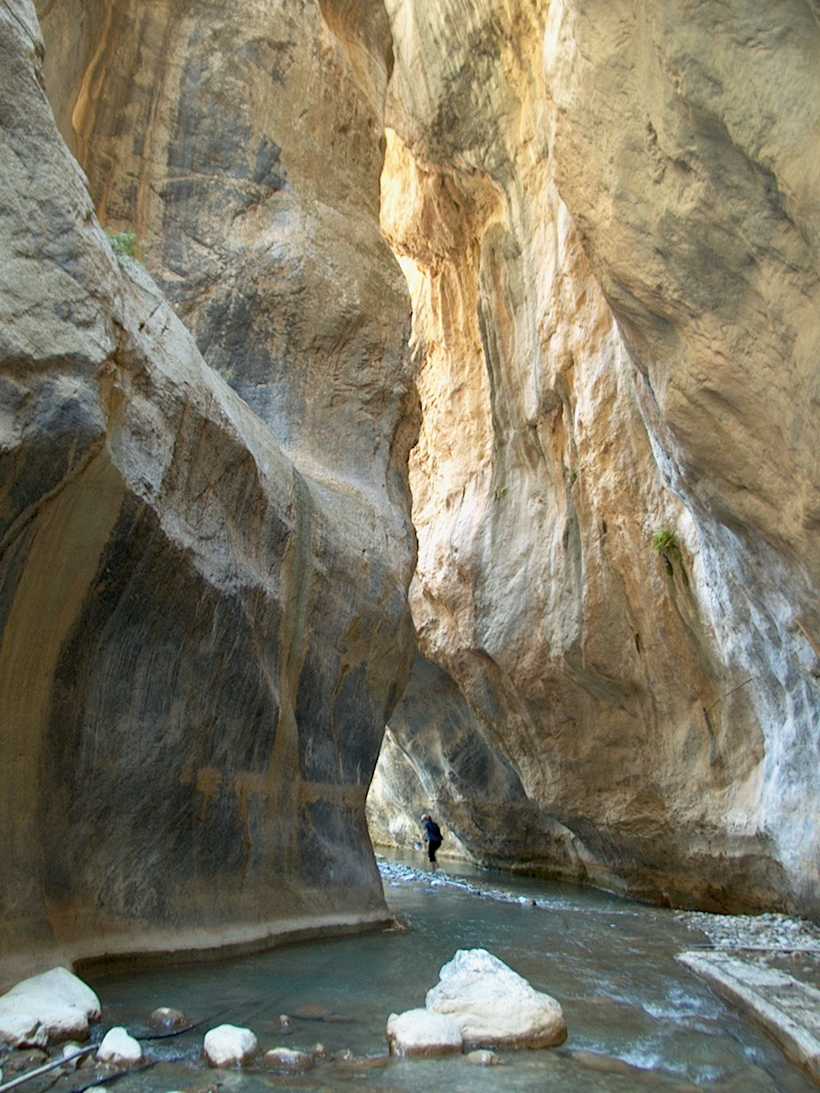
The Sarakina Gorge is one of eastern Crete’s most refreshing short walks, a narrow canyon carved into the hills above the coastal village of Myrtos. Sheer grey walls of marble-like limestone rise on both sides, closing to a couple of metres in the tightest passages, while the Kryos river threads through pools and over smooth boulders along the streambed. The route rewards casual walkers rather than long-distance trekkers, taking a couple of hours there and back. Plane trees and oleander shade the water, and a swim at Myrtos waits on the coast below. Plan your gorge day, and the wider Lasithi region, with My Greece Tours.
This guide answers the questions walkers ask before setting off for the canyon. Where does it sit, how hard is the walk, when is the water at its best, and how does it fold into a coastal day around Ierapetra? The sections below cover the setting near Mythoi and Myrtos, the wet streambed scramble, the ideal seasons, and pairings with a beach swim and a fish lunch. For the full regional picture, from the villages of the interior to the beaches of the south, see the wider Crete travel guide and build the gorge into a relaxed eastern itinerary.
Where is the Sarakina Gorge in Crete?
The Sarakina Gorge sits in the hills above Myrtos in the Ierapetra area of eastern Crete, within the Lasithi district. Walkers reach it from a car park near the village of Mythoi, a short drive inland from the southern coast.
The gorge belongs to the far east of the island, a quieter corner than the crowded centre and west. It cuts through the hills of the Ierapetra region in the Lasithi district, and the walk begins from a car park near the small village of Mythoi. From there the trail drops into the streambed of the Kryos river, which has shaped the canyon over long ages of running water. The coastal village of Myrtos lies below, a short drive away, giving the route an easy base with tavernas and a beach for the afternoon. This eastern setting places the gorge among the region’s calmer things to do in Crete.
It stays well away from the busy monuments, packed resorts and long queues that draw the larger summer crowds to the centre and the west of the island.
Getting there rewards a self-driven day rather than a bus tour, since the approach roads wind through hill villages and silver olive groves. The nearest hub for supplies and beds is the town of Ierapetra, the southernmost town in Europe, a short coastal drive to the east of the trailhead. Drivers leave the main road, climb steadily toward Mythoi, and park where the trail sign points into the mouth of the canyon. The final stretch on foot follows the river bed into ever-narrowing walls of pale stone. This position, tucked between the coast and the mountains, keeps the Sarakina Gorge off the main tourist trail.
It has the feel of a local secret, shared mostly among travellers who already know the eastern shore of the island well.
How hard is the Sarakina Gorge walk?
The walk is short but hands-on, following the streambed between smooth grey walls. Walkers wade through pools and scramble over boulders, so wet feet are guaranteed. It suits families and casual hikers after a couple of hours of gentle adventure.
This is a walk of scrambling rather than steady striding across level ground. The route stays on the floor of the canyon, hopping from boulder to boulder and splashing through shallow pools where the Kryos river collects and rests. In the tightest sections the marble-like walls draw in to a couple of metres, so the path and the river become one and the same channel. Grip matters more than stamina, and sturdy shoes that can get wet beat dry hiking boots along this streambed. The reward is a cool, shaded corridor of polished stone that feels a world apart from the sun-baked coast below.
Compared with the demanding day-long routes elsewhere, this counts among the gentler options for hiking in Crete, friendly to children with a taste for water and rock.
There and back takes a couple of hours at an easy pace, with time to linger in the shade and paddle in the deeper pools along the way. The gorge is far shorter and easier to reach than the great gorges of the west, which swallow a full day and demand real fitness and an early start. No technical gear is needed, though a walking pole helps on slick stone and a dry bag keeps phones safe from the constant splashes. The out-and-back format means walkers turn around whenever they like, so short legs and cautious hikers set their own comfortable limit and pace.
Its modest length, gentle grade and refreshing running water make the Sarakina Gorge an outing that fits neatly into a relaxed coastal holiday rather than a serious mountain expedition across open ridges and peaks.
When is the best time to visit the Sarakina Gorge?
Late spring and summer are ideal, once the heavy winter flow of the Kryos river has eased. Warm months turn the cool running water into welcome relief, while the shaded stone corridor stays refreshing at the peak of the heat.
Timing shapes the whole experience within this canyon. Winter and early spring send a strong flow of water down the Kryos river, which can make the streambed route awkward or even risky, so the gorge rewards a little patience. By late spring the flow has calmed to shallow pools and a gentle stream, and the walk becomes a pleasure rather than a wade against the current. Summer then turns the gorge into a natural cooler: plane trees, oleander and the running water hold the fierce heat at bay while the open coast bakes below. Morning starts beat the strongest midday sun, though the tall walls throw welcome shade for much of the day.
This seasonal rhythm rewards travellers who plan around the water levels rather than simply turning up on a whim.
The warm months also line up with the wider eastern-Crete travel season, when beaches, tavernas and hill villages are all open and lively with visitors. A gorge walk slots easily into a summer itinerary that mixes stone and sand, since the cool canyon balances the long, hot afternoons spent by the sea. Travellers chasing the region’s finest Crete beaches find the Sarakina Gorge an easy detour inland, a shaded contrast to the open shore and the glare of the sand. Later summer keeps water levels low and predictable, ideal for families with young children in tow.
The combination of low flow, warm air and reliable sunshine makes the stretch from late spring through summer the clear window for a comfortable, splashy walk through the marble walls of the gorge.
What can you combine with a Sarakina Gorge trip?
The gorge pairs naturally with a swim and a fish lunch at Myrtos on the coast below. A morning walk through the canyon and an afternoon by the sea make a balanced day out along the quiet eastern shore.
The canyon works best as one half of a coastal day rather than a standalone trip on its own. A morning scramble through the cool grey walls pairs perfectly with an afternoon at the seaside village of Myrtos, which sits on the coast directly below the mouth of the gorge. There a long sweep of beach, gentle water and a row of tavernas reward tired walkers with a swim and a plate of fresh fish. The rhythm of shaded stone in the cool of the morning and open sand in the warmth of the afternoon gives the outing a natural, satisfying balance.
Few short walks on the island tie so neatly to a relaxed beach and a good lunch, which is part of the gorge’s easy, unhurried appeal for families and couples travelling the eastern shore alike.
The wider eastern corner offers more to string together across a couple of unhurried days. The southernmost town in Europe lies a short drive to the east, with a long seafront promenade, a Venetian fort and a working harbour full of small boats. Hill villages, silver olive groves and quiet coves fill the roads in between, so a base near Myrtos or the coast opens up a slow, restful stretch of shoreline. The Sarakina Gorge becomes one thread in a broader tapestry of gentle adventures, sitting comfortably among the region’s most enjoyable outings for travellers who prefer scenery and swimming over crowds and queues.
It is the kind of quiet, surprising place that turns an ordinary beach holiday into a small expedition and a memory worth carrying home from the island.
Why is the Sarakina Gorge special among Crete’s canyons?
Its sheer marble-like limestone walls, narrowing to a couple of metres, set it apart. The Sarakina Gorge delivers dramatic scenery in a short, wet, accessible walk, giving the thrill of a deep canyon without the western routes’ long trek.
The walls make this gorge memorable above all else. Smooth grey limestone, polished to a marble sheen by the patient river, rises steeply on both sides and closes to a couple of metres in the narrowest passages. Standing in the deepest cleft, with cool water underfoot and a thin strip of bright sky far overhead, delivers the drama of a great canyon in miniature. The Kryos river keeps the corridor alive with sound and movement, and the plane trees soften the hard stone with cool green. This concentration of scenery into a short, easy walk is the gorge’s real gift. It packs a big-canyon feeling into a couple of hours that even young families can manage.
There is no demanding climb here, and no long, exposed approach across the open mountainside above the coast to reach the marble walls.
Accessibility sets it further apart from the island’s famous canyon giants. The gorge is far shorter and easier to reach than the great gorges of the west, which call for an early start, real stamina and a whole day out on the trail. Here the reward comes with modest effort, and the wet, playful streambed adds a sense of adventure that dry, dusty paths simply lack. That mix of quick access, refreshing water and genuine drama places the Sarakina Gorge high on the list of the eastern shore’s hidden gems in Crete.
For walkers who want the feel of a deep canyon without the commitment of a full mountain trek, this cool marble corridor above Myrtos is very hard to beat on a warm summer day.
Frequently Asked Questions
Do you get wet walking the Sarakina Gorge?
Walkers get wet on the Sarakina Gorge, and that is part of the fun of the route. The path follows the streambed of the Kryos river between the smooth grey walls, so it repeatedly crosses shallow pools and short runs of running water. In places the gorge narrows to a couple of metres, leaving no dry line around the water, and scrambling over the boulders means that splashes are unavoidable. Shoes that drain well and dry quickly beat heavy boots here, and a dry bag keeps phones and cameras safe from the spray.
Late spring and summer bring lower, gentler water once the winter flow has eased, so the wading stays comfortable rather than a struggle against the current. The cool water is a blessing in the summer heat, turning the whole walk into a natural refreshment. Travellers who expect wet feet and dress for them enjoy the canyon far more than those who hope to keep their shoes dry along the pools and the stones.
Is the Sarakina Gorge suitable for children?
The Sarakina Gorge suits families and casual walkers well, making it a friendly choice for children with a taste for water and rock. The route runs only a couple of hours there and back, far shorter and easier to reach than the great gorges of the west, so young legs cope with it comfortably and happily. Wading through shallow pools and scrambling over boulders feels like play rather than a serious hike, and the out-and-back format lets a family turn back whenever the children have had enough of the water. Supervision matters on the slick stone and around the deeper pools, and shoes with grip help on the wet rock.
Cool water, shade from the plane trees and the drama of the narrow walls hold young attention nicely. A swim and a fish lunch afterward at Myrtos on the coast below round off a day that balances gentle adventure with rest, ideal for family holidays along the quiet eastern shore of the island.
How do you reach the Sarakina Gorge from Ierapetra?
Reaching the Sarakina Gorge from the town in the far south is an easy self-driven trip of a short coastal and hill drive. Travellers head west along the coast toward Myrtos, then turn inland and climb toward the village of Mythoi, where a car park sits near the mouth of the canyon. From there the walk drops into the streambed and follows the Kryos river between the marble-like walls of pale stone. A hire car gives the freedom this corner of the island needs, since public transport is thin and the winding hill roads reward a relaxed pace through olive groves and small villages.
Walkers often base themselves in the town below or in Myrtos itself and treat the gorge as a morning outing before an afternoon on the beach. Setting off early beats both the heat and any crowds, and the short distances mean the whole eastern shore stays within easy reach for a full day of canyon, coast and seaside tavernas by the water.