
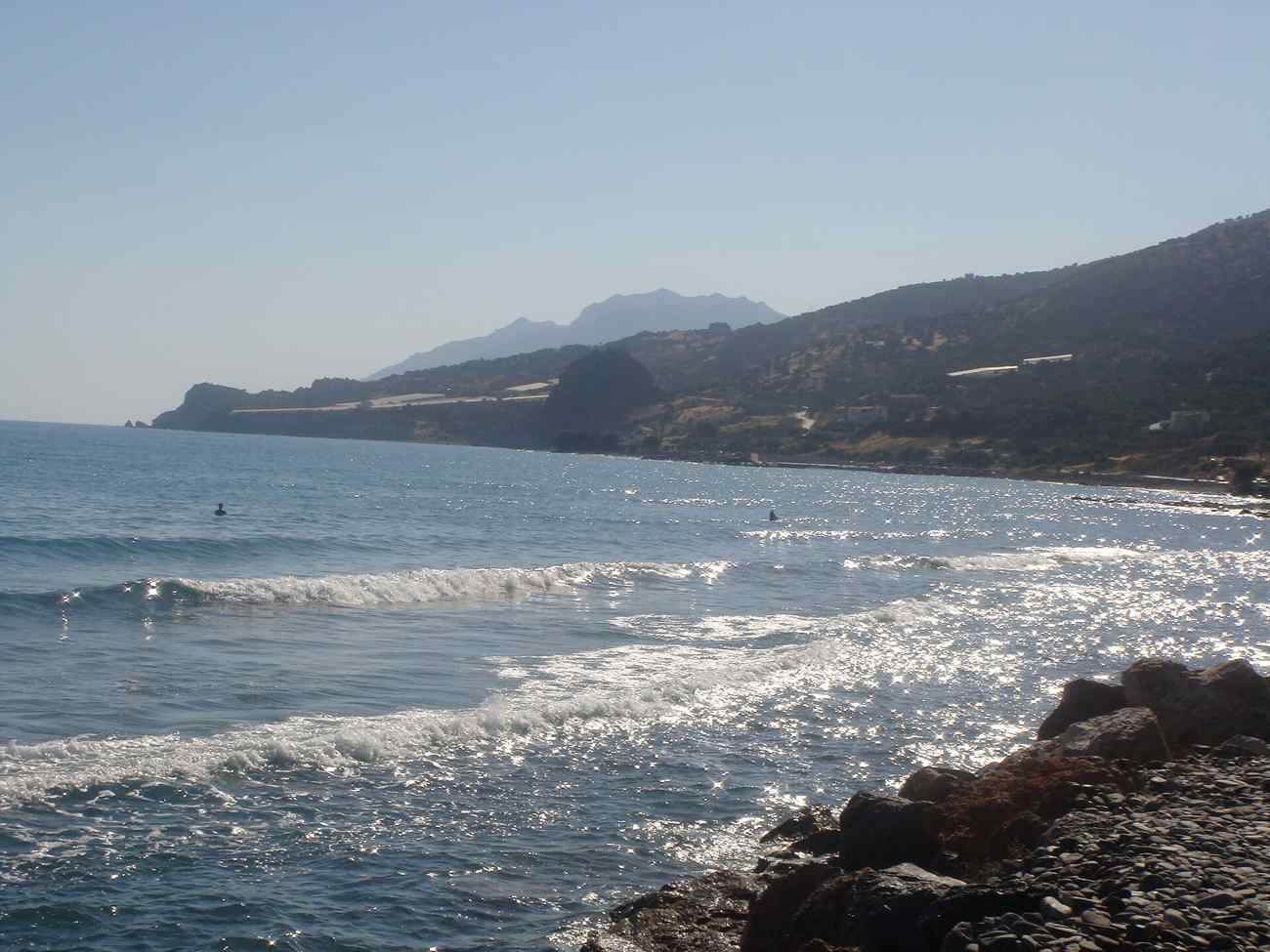
Keratokambos sits on the remote southern shore of Crete, where the Dikti foothills meet the Libyan Sea in the Heraklion region. This unpolished seaside village offers a long stretch of mixed sand and pebble beach, backed by traditional tavernas, simple rooms and a small working harbour. Greenhouses and olive groves spread across the coastal plain, while rough mountain roads wind up into the villages of Viannos above. The warm, calm sea and distance from the airport ensure quiet beaches and an authentic pace. Travellers seeking genuine island life away from crowded northern resorts discover Keratokambos through guided exploration with My Greece Tours.
The neighbouring resort of Kastri lies close by, sharing the same tranquil coastline and traditional character. Fresh fish, unhurried days and a landscape of working farms define the local rhythm. The sections below cover the beach, the setting, practical details and the wider region. Visitors looking for polish and nightlife should look elsewhere, but those after a genuine corner of the south coast find exactly what they need here. Our Crete travel guide provides context for the island’s diverse coastal villages and mountain communities.
What makes the beach at Keratokambos in Crete distinctive?
The beach stretches for a considerable distance along the shore, mixing sand and pebbles beneath the warm Libyan Sea. A small harbour, traditional tavernas and simple accommodation line the waterfront, while the remote location keeps visitor numbers low throughout the season.
The shoreline at Keratokambos extends along the southern coast of the Heraklion region, offering a mix of sand and pebble underfoot and clear, warm water that stays calm through most of the summer. The beach lacks the manicured appearance of northern resort strands, presenting instead a working waterfront where fishing boats share space with swimmers. Tavernas sit directly on the shore, serving fresh catch and traditional dishes to visitors who arrive seeking authenticity over amenities. The small harbour adds character, with local boats pulled up on the shingle and nets drying in the sun. Compared to the more developed Crete beaches on the northern coast, Keratokambos retains a genuine, unpolished feel that appeals to independent travellers.
The Libyan Sea here maintains warmer temperatures than the northern Aegean, making swimming comfortable from late spring through early autumn. The beach remains uncrowded even during peak months, a direct result of the distance from the airport and the lack of large hotels. Neighbouring Kastri shares the same coastline and quiet character, effectively doubling the available shoreline for those willing to walk. Sunbeds and umbrellas appear in limited numbers, and the atmosphere stays relaxed and local. The coastal plain behind the beach spreads with greenhouses and olive groves, framing the view with working agriculture rather than resort development.
Visitors seeking one of the hidden gems in Crete find exactly that combination of natural beauty and authentic village life along this southern shore.
How does the Viannos mountain setting shape Keratokambos?
The Dikti foothills rise directly behind the coastal plain, creating a dramatic backdrop and sheltering the shore from northern winds. Rough roads climb into the traditional villages of Viannos, where mountain culture contrasts sharply with the seaside pace below.
The mountains of Viannos dominate the view inland from Keratokambos, their slopes covered in scrub, olive terraces and scattered stone villages. These foothills form the southern edge of the Dikti range, creating a barrier between the coast and the interior plateau. The elevation provides natural shelter, helping to keep the Libyan Sea calm and warm while northern Crete experiences stronger winds. Rough dirt roads wind upward from the coastal plain, connecting the seaside to mountain communities where shepherds, farmers and beekeepers maintain traditional livelihoods. The contrast between the two environments is striking: the coast stays warm and dry, while the mountains above catch more rain and support denser vegetation.
Exploring the relationship between shore and summit adds depth to any visit focused on things to do in Crete beyond the standard beach routine.
The villages of Viannos perch on hillsides and ridges, their stone houses and narrow lanes preserving centuries of mountain architecture. Driving or hiking into this interior reveals a different side of the region, where kafeneia serve mountain coffee and tavernas prepare lamb and goat rather than fish. The agricultural plain between the shore and the foothills spreads with greenhouses producing tomatoes, cucumbers and peppers for island markets, alongside ancient olive groves that have supplied oil for generations. This working landscape gives Keratokambos its character, grounding the village in genuine island economy rather than tourism alone.
The combination of mountain, plain and sea creates a layered environment that rewards travellers who take time to explore beyond the waterfront and understand how geography shapes local life in this corner of southern Heraklion. High above the coast, the mountain town of Viannos guards the road inland.
What practical details should visitors to Keratokambos know?
Accommodation consists of small hotels, rooms and studios rather than large resorts. Tavernas serve fresh fish and traditional dishes, and a minimarket covers basic supplies. The nearest airport is Heraklion, roughly two hours by car over mountain roads.
Reaching Keratokambos requires commitment, as the village sits far from the main coastal highway and airport. The drive from Heraklion takes approximately two hours, winding through the interior and over mountain passes before descending to the south coast. Public transport options remain limited, making a rental car the practical choice for independent travellers. Accommodation options include family-run hotels, simple rooms and self-catering studios, all modest in scale and price. The village lacks large resort complexes, international chains and organized entertainment, which is precisely the appeal for visitors seeking quiet and authenticity. Tavernas line the waterfront, serving grilled fish, octopus, local vegetables and Cretan wine in a relaxed setting.
Deciding where to stay in Crete depends on priorities: Keratokambos suits those who value genuine character over convenience and amenities.
A small minimarket provides essentials, but serious shopping requires a drive to larger villages inland or along the coast. The harbour remains active with local fishing boats, and taverna menus reflect the daily catch. Mobile coverage and internet access work reliably, though the pace of life encourages disconnection. The beach lacks lifeguards, water sports rentals and beach bars, maintaining a natural, uncommercialized character. Neighbouring Kastri offers additional tavernas and rooms within easy walking distance, effectively expanding the available options without changing the overall atmosphere.
The best time to visit Crete for this coast runs from May through October, when the Libyan Sea stays warm and the weather remains reliably sunny, though the village sees visitors year-round drawn by the mild winters and off-season tranquility.
How does Keratokambos compare to other Crete coastal villages?
Keratokambos remains far less developed than northern coastal resorts, offering genuine village life and working agriculture alongside tourism. The remote south coast location, warm Libyan Sea and mountain backdrop create a distinctive character absent from busier destinations.
Northern Crete hosts the majority of tourist infrastructure, with large resorts, organized beaches and easy airport access dominating the coast from Chania through Heraklion to Malia. Keratokambos sits on the opposite shore, both geographically and in character. The village retains a working identity, with fishing, farming and greenhouse cultivation supporting the local economy alongside the modest tourism trade. The beach lacks the organized rows of sunbeds, beach bars and water sports that define northern resort strands, presenting instead a natural shoreline where visitors find their own spot on the pebbles. The tavernas serve locals as well as tourists, and the pace remains unhurried throughout the year.
Compared to destinations like Agios Nikolaos on the northeast coast, Keratokambos offers a completely different experience: quieter, simpler and more authentic, but also less convenient and less polished.
Other south coast villages share the remote character and warm Libyan Sea, but each has its own identity. Keratokambos lacks the dramatic gorge backdrop of Agia Roumeli or the Venetian history of Loutro, but it offers easier road access and a longer beach than either. The coastal plain behind the village, covered in greenhouses and olive groves, creates a distinctive landscape that sets it apart from rockier stretches of the southern shore. The proximity to the Viannos mountain villages adds cultural depth, allowing visitors to combine beach days with explorations of traditional highland communities.
The village suits travellers who have already seen the major sites and crowded beaches, who understand what Crete offers beyond the postcard images, and who value genuine local life over resort comforts and organized activities.
What activities and excursions work well from Keratokambos?
Swimming and beach relaxation form the core activities, supplemented by coastal walks to Kastri and exploration of the Viannos mountain villages. Taverna meals, fishing harbour visits and drives along the south coast offer low-key but rewarding ways to spend time.
The beach itself provides the main focus, with swimming in the warm, calm Libyan Sea occupying most visitors for much of the day. The long shoreline allows for walks in either direction, with the neighbouring resort of Kastri reachable on foot for those wanting a change of taverna or a different stretch of pebbles. The small harbour offers a glimpse of working village life, with fishing boats coming and going and nets being mended on the quayside. Snorkeling works well in the clear water, though the seabed consists mainly of pebbles and rocks rather than dramatic reefs. The coastal plain invites walks among the greenhouses and olive groves, revealing the agricultural foundation of the local economy.
Taverna meals become a daily ritual, with fresh fish, grilled octopus, Greek salads and local wine enjoyed at tables overlooking the sea as the sun sets behind the mountains.
Driving into the Viannos mountains opens up a different landscape and culture, with traditional villages, stone churches and mountain tavernas providing contrast to the coastal scene. The rough roads require careful driving but reward the effort with views, authentic kafeneia and a sense of stepping back in time. The south coast road allows exploration east toward Arvi or west toward Tsoutsouras, each village offering its own variation on the quiet, unpolished south shore character. Hiking opportunities exist in the foothills, though trails remain unmarked and require good navigation skills. The overall pace stays slow and the activities remain simple, which is exactly what draws visitors to this corner of the island.
Keratokambos works best for travellers who find contentment in beach days, good food, quiet evenings and the rhythms of a genuine village rather than the organized entertainment of larger resorts.
Frequently Asked Questions
How do I get to Keratokambos from Heraklion airport?
Keratokambos sits roughly two hours by car from Heraklion airport, following a route that crosses the interior of the island and climbs over mountain passes before descending to the south coast. Rental cars provide the most practical option, as public bus service to this remote village remains infrequent and inconvenient. The drive takes you south from Heraklion through the wine villages of the Peza region, then over the mountains toward the Viannos area before dropping down to the coast. The roads are paved but narrow and winding in places, requiring attention and patience. Taxis can make the journey but cost significantly more than a rental car for the week.
The distance and mountain terrain mean that Keratokambos works best as a base for a longer stay rather than a day trip, allowing you to settle in and enjoy the quiet pace without the pressure of a long return drive the same day.
Is Keratokambos suitable for families with children?
Keratokambos suits families who value quiet beaches, safe swimming and genuine village life over organized kids’ clubs and resort entertainment. The beach shelves gradually into the warm Libyan Sea, creating safe conditions for children to swim and play, though parents should supervise as no lifeguards patrol the shore. The village offers simple pleasures: building pebble towers on the beach, watching fishing boats in the harbour, eating ice cream at the tavernas and exploring the coastal plain. Accommodation consists of small hotels and self-catering studios rather than large family resorts, so expectations should match the scale and simplicity of the village.
The remote location means limited distractions and a slower pace, which can be ideal for families seeking to disconnect and spend time together, but may feel isolating for those accustomed to constant activity and entertainment. The lack of water parks, playgrounds and organized activities makes Keratokambos better suited to families with older children or those who actively seek a quieter, more authentic Greek island experience away from the crowds and commercialization of northern resort areas.
What is the best time of year to visit Keratokambos?
The warmest and most reliable weather runs from May through October, when the Libyan Sea reaches comfortable swimming temperatures and sunshine dominates the forecast. July and August bring the highest temperatures and the most visitors, though crowds remain modest by Crete standards due to the remote location. June and September offer ideal conditions for those seeking warm weather with fewer people, while May and October provide pleasant temperatures for beach days with cooler evenings and occasional unsettled weather. The south coast generally stays warmer and calmer than the north throughout the season, making Keratokambos particularly appealing in the shoulder months when northern beaches can experience stronger winds.
Winter months from November through March see reduced services, with some tavernas and accommodation closing, though the village never shuts down completely and the mild climate allows for quiet off-season visits. The agricultural calendar shapes village life year-round, with olive harvests in late autumn and greenhouse cultivation continuing through winter, so visitors at any time witness genuine working rhythms rather than a purely seasonal tourist economy.