
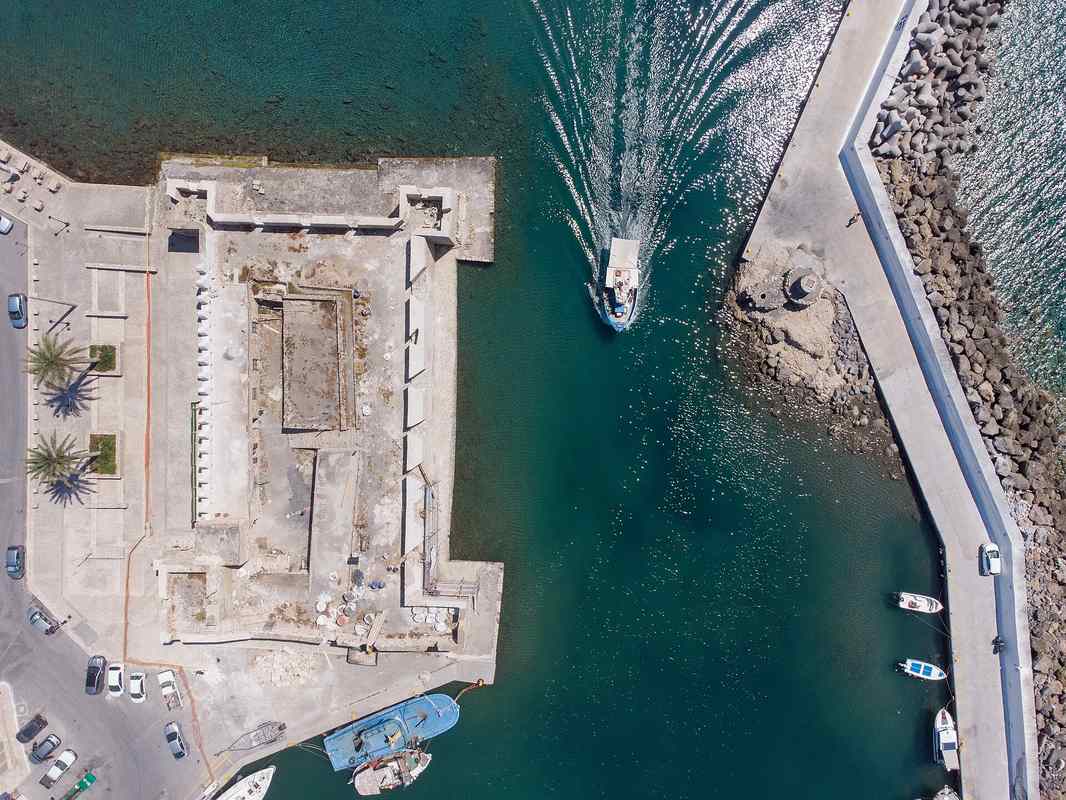
Ierapetra holds the distinction of being the southernmost city in Europe, sprawling across the narrow waist of Crete in the Lasithi region. This working town on the island’s sun-drenched south coast offers an authentic Cretan experience far removed from the polished resort atmosphere found elsewhere. The Venetian fortress Kales stands guard over the old harbour, while the maze-like old quarter invites exploration through narrow lanes. Sandy beaches stretch along the waterfront, and the surrounding plain is blanketed with greenhouses that produce vegetables year-round. Discover this genuine corner of the island with My Greece Tours.
The town serves as a practical base for exploring the sunny south-east corner of the island, combining local character with coastal charm. Visitors can stroll the long seafront promenade, visit the small archaeological collection, or take boat trips to the uninhabited island of Chrissi. The sections below cover the fortress, old town, beaches, island excursions, and practical information for your visit. Our comprehensive Crete travel guide provides additional resources for planning your journey to this authentic Mediterranean destination.
What makes the Kales fortress significant in Ierapetra?
The Kales fortress guards the old harbour entrance, a Venetian structure that reflects centuries of maritime defence. Its compact stone walls and strategic position overlook the fishing boats and waterfront, offering visitors a glimpse into the town’s historical importance.
The fortress stands as a compact reminder of Venetian rule, built to protect the harbour from pirate raids and maritime threats. Its thick stone walls and simple rectangular design reflect practical military architecture rather than grand palatial ambitions. Visitors can walk through the small interior courtyard and climb to the upper levels for harbour views. The structure has survived earthquakes and centuries of weathering, testament to Venetian engineering. The fortress opens to the public during daylight hours, and its proximity to the waterfront makes it an easy addition to any harbour stroll. Interpretive signs provide historical context about the building’s role in coastal defence. The surrounding area features traditional tavernas and cafés where locals gather in the evenings.
The harbour itself remains a working port where fishing boats unload their daily catch alongside the fortress walls. This authentic maritime activity continues traditions that stretch back through Ottoman, Venetian, and earlier periods. The waterfront promenade extends from the fortress along the coast, lined with palm trees and benches facing the Libyan Sea. Evening walks along this stretch reveal the town’s genuine character, as families and friends gather to enjoy the sea breeze. The fortress provides a natural focal point for orientation, helping visitors navigate between the old quarter and the modern seafront. Exploring this area ranks among the essential things to do in Crete for those seeking authentic coastal history.
What characterizes the old quarter of Ierapetra?
The old quarter spreads inland from the harbour in a maze of narrow lanes and traditional houses. This residential area maintains its authentic character with local shops, small churches, and neighbourhood tavernas where residents gather, offering an unvarnished glimpse into everyday Cretan life.
The old town’s labyrinthine streets follow no obvious grid pattern, reflecting organic growth over centuries rather than planned development. Whitewashed houses with blue shutters line the narrow passages, their doorways opening directly onto the cobblestones. Small neighbourhood churches appear at unexpected corners, their bells marking the rhythm of daily life. Local bakeries produce fresh bread each morning, filling the lanes with the scent of baking. Traditional kafeneions serve Greek coffee to older residents who gather for conversation and backgammon. The quarter lacks the polished tourist infrastructure found in resort areas, maintaining instead the lived-in character of a genuine neighbourhood.
Washing hangs from balconies, cats sleep in sunny doorways, and residents go about their daily routines with little regard for visitors.
Exploring these streets requires no map or destination, just curiosity and comfortable shoes. The small archaeological collection occupies a restored Ottoman building within the old quarter, displaying finds from the surrounding region. Pottery, coins, and sculptures from Minoan through Roman periods fill the modest exhibition space. The collection provides context for understanding the area’s long habitation and strategic importance. Neighbourhood tavernas tucked into the old quarter serve traditional Cretan dishes to locals and the occasional visitor who wanders in. The contrast between this authentic district and the modern seafront development illustrates the town’s dual character. The eastern region capital of Agios Nikolaos offers a more polished alternative, but Ierapetra preserves working-town authenticity.
How do the beaches and climate define Ierapetra in Crete?
Sandy beaches stretch along the waterfront, benefiting from the southernmost position in Europe and exceptional sunshine hours. The surrounding plain’s greenhouses exploit this climate to grow vegetables year-round, while visitors enjoy warm, dry conditions that make the coast ideal for extended beach time.
The town beach extends along the eastern seafront, a long stretch of sand with shallow waters suitable for families. Beach facilities include sunbeds, umbrellas, and seasonal lifeguards during summer months. The water temperature remains comfortable from late spring through autumn, and the southern exposure ensures maximum sunshine. Local residents use the beach year-round for morning swims and evening strolls. The surrounding agricultural plain is blanketed with plastic greenhouses that shimmer in the sunlight, growing tomatoes, cucumbers, and peppers for European markets. This intensive agriculture dominates the landscape, creating a distinctive visual character. The greenhouses thrive on the extended growing season and minimal rainfall that characterize the south coast climate.
High above the plain, the sheer Ha Gorge splits the Thripti mountains behind the town.
The climate statistics confirm Ierapetra’s reputation as one of the sunniest locations in Greece, with minimal cloud cover and low annual precipitation. Summer temperatures reach comfortable highs without the extreme heat found in some Mediterranean locations. The Libyan Sea moderates temperature extremes, providing cooling breezes during hot afternoons. Winter remains mild enough for outdoor activities, though swimming becomes less appealing. The best time to visit Crete depends on preferences, but Ierapetra’s southern position extends the comfortable season at both ends. Deciding where to stay in Crete involves balancing climate, accessibility, and character, with the south coast offering distinctive advantages for sun-seekers and those avoiding crowds.
What makes boat trips to Chrissi island special?
Boats depart the harbour for Chrissi, an uninhabited island with exceptional beaches and turquoise waters. The excursion takes approximately one hour each way, offering a day trip to pristine natural surroundings and Caribbean-like conditions without permanent development or crowds.
The island lies approximately fifteen kilometres offshore, a protected nature reserve with golden sand beaches and shallow lagoons. Cedar trees dot the interior, a rare forest ecosystem adapted to the saline environment. The island remains uninhabited except for seasonal beach cantinas that operate during summer months. Boats typically depart mid-morning and return late afternoon, allowing several hours for swimming, snorkelling, and beach relaxation. The water clarity around the island is exceptional, revealing sandy bottoms and marine life in the shallow bays. Visitors bring their own shade umbrellas, as natural shade is limited to the cedar groves. The main beach, Belegrina, features the finest sand and calmest waters, attracting most day-trippers.
The boat journey itself provides views of the south coast and the opportunity to spot dolphins in the open water. Operators run daily trips during peak season, with reduced frequency in shoulder months and no service during winter. Advance booking is recommended during July and August when boats fill to capacity. The experience of Chrissi island offers a complete contrast to the working-town atmosphere of Ierapetra, showcasing the natural beauty that draws visitors to the region. The combination of authentic town life and pristine island excursions creates a balanced holiday experience. The nearby village of Makrigialos provides an alternative coastal base with a quieter, more resort-oriented atmosphere for those preferring smaller settlements.
Why choose Ierapetra as a base for exploring south Crete?
The town combines practical amenities with authentic character, serving as the largest settlement on the south coast. Its central location in the Lasithi region provides access to beaches, gorges, and archaeological sites while maintaining genuine local atmosphere and reasonable prices.
Ierapetra offers the full range of services expected in a regional centre, including supermarkets, banks, medical facilities, and car rental agencies. The town’s working character means restaurants and shops cater primarily to residents rather than tourists, resulting in authentic menus and fair pricing. Accommodation options range from simple rooms to seafront hotels, generally more affordable than equivalent facilities in northern resort areas. The bus station provides connections to Heraklion, Sitia, and other regional destinations, though car rental offers greater flexibility for exploring the surrounding area. The town’s position on the narrow waist of the island means the north coast lies just thirty kilometres away via mountain roads, making day trips to different regions feasible.
High in the mountains above, the green village of Thripti stays cool through the summer.
The surrounding area contains archaeological sites, traditional villages, and natural attractions within easy driving distance. The Minoan palace site at Gournia lies to the north, while mountain villages preserve traditional architecture and customs. Gorges cutting through the southern mountains offer hiking opportunities, and remote beaches dot the coastline east and west of town. The genuine local atmosphere provides cultural immersion often missing in purpose-built resort areas. Evening strolls along the promenade reveal families, couples, and friends enjoying their town without the self-conscious performance sometimes found in tourist-dependent communities. The combination of practical amenities, authentic character, and strategic location makes Ierapetra a sensible base for visitors prioritizing real Cretan life over resort comforts.
The town rewards those seeking substance over polish, offering daily life rather than staged experiences. West along the coast, the village of Myrtos offers a quieter seaside stop.
Frequently Asked Questions
How do I reach Ierapetra from the main Crete airports?
Heraklion airport lies approximately one hundred kilometres to the west, requiring roughly ninety minutes by car via the national highway and southern route. Rental cars provide the most flexible option, allowing exploration of the surrounding region at your own pace. Public buses connect Heraklion to Ierapetra with multiple daily departures, though journey times exceed two hours due to intermediate stops. The bus station in Heraklion is located near the port, requiring a taxi or local bus connection from the airport. Sitia airport to the east is closer, about sixty kilometres distant, but receives fewer international flights and operates seasonally.
Taxis from either airport are expensive for the distance, making pre-arranged transfers or rental cars more economical for most visitors. The drive from Heraklion crosses the island’s mountainous interior before descending to the south coast, offering dramatic scenery. Road conditions are generally good, though mountain sections require attention to curves and gradients. Planning your arrival during daylight hours makes the initial journey easier for first-time visitors unfamiliar with the routes.
What should I expect from the local dining scene in Ierapetra?
The dining scene reflects the town’s working character, with tavernas serving traditional Cretan cuisine to local clientele rather than international tourists. Menus feature grilled meats, fresh fish, dakos, horta, and other regional specialties prepared without elaborate presentation or fusion experiments. Prices remain reasonable compared to northern resort areas, with generous portions and complimentary raki often concluding meals. Waterfront establishments along the promenade offer sea views but maintain authentic menus rather than tourist-oriented offerings. Neighbourhood tavernas in the old quarter provide the most genuine experience, where Greek predominates and menus may lack English translations. The town’s position in an agricultural region ensures fresh vegetables appear prominently in salads and cooked dishes.
Local bakeries produce traditional breads, pies, and sweets, with bougatsa available for breakfast and koulouri sold from street carts. Kafeneions serve Greek coffee and simple snacks throughout the day, functioning as social gathering points. Evening dining follows traditional Greek timing, with restaurants filling after nine in the evening during summer months. The absence of international chain restaurants and themed establishments preserves culinary authenticity.
Can I combine Ierapetra with visits to other parts of Crete?
The town serves as an excellent base for exploring the south-east corner while remaining accessible to other regions for day trips or longer excursions. The drive to Heraklion takes approximately ninety minutes, making the capital and its archaeological museum feasible for a full-day visit. The eastern tip of the island, including Sitia and Vai palm beach, lies within an hour’s drive along coastal roads. The Lasithi Plateau and its traditional villages occupy the mountains to the north, reachable in under an hour via winding mountain roads. The south coast extends both east and west, with remote beaches and small villages dotting the shoreline within easy driving distance.
Combining a stay in Ierapetra with time in northern resort areas or western regions creates a balanced itinerary showcasing different aspects of the island. The contrast between the working south coast and the developed north provides insight into the island’s diversity. Renting a car for your entire stay allows maximum flexibility to explore multiple regions while maintaining a single base. The town’s authentic character and practical amenities make it a comfortable home base that contrasts with but complements visits to archaeological sites, resort areas, and mountain villages throughout the island.