
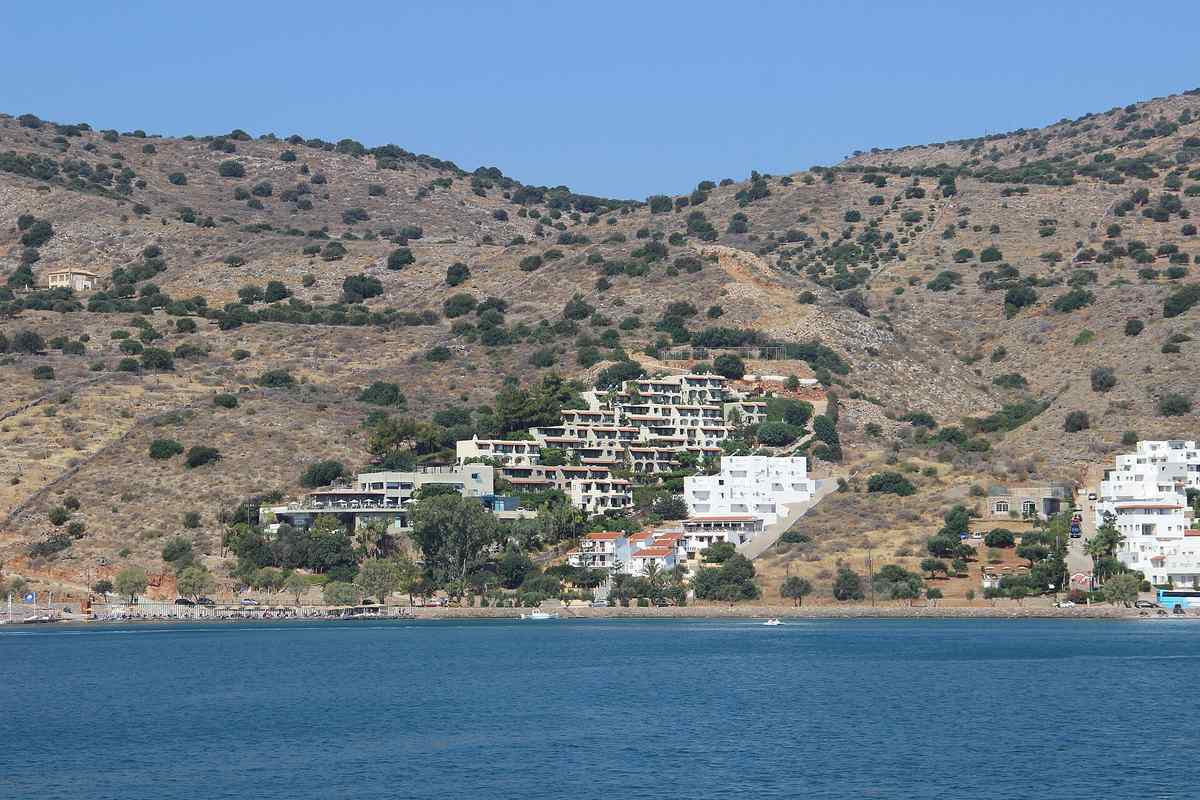
Elounda sits on the shore of Mirabello Bay in eastern Crete, in the region of Lasithi, just north of the town of Agios Nikolaos. The village is the best-known luxury resort area on the island, ringed by high-end hotels and villas that spread along a series of calm, sheltered coves. The water here stays shallow and quiet, which makes the shoreline easy for swimming and long, slow days by the sea. A working harbour with tavernas keeps the centre low-key despite the upmarket reputation. Plan a stay in this corner of eastern Crete with My Greece Tours.
A narrow causeway links the village to the Kolokytha peninsula, beside the submerged ancient city of Olous, where Greco-Roman ruins lie in the shallows. From the harbour, boats cross to the fortress island of Spinalonga, and more depart from nearby Plaka. For wider context on the island, our Crete travel guide maps out how this eastern resort fits alongside the beaches, gorges, and old towns further west. The sections below cover the bay, the resorts, the sunken city, the boat trips, and the best season to arrive.
Where is Elounda on the map of Crete?
Elounda lies on Mirabello Bay in eastern Crete, in Lasithi, a short drive north of Agios Nikolaos. The village faces a wide, protected bay, with the Kolokytha peninsula closing off its calm inner waters.
The village occupies the western shore of Mirabello Bay, one of the largest bays in Crete and home to the island’s flagship luxury hotels. Its position in the far east of the island puts it well away from the busier centres around Heraklion and Chania, giving the resort a quieter, more contained feel. The road down from the hills opens onto a sweep of sheltered water, with the low ridge of the Kolokytha peninsula screening the coves from open-sea swell. That natural shelter is a big part of why the bay stays so calm. The village faces the water directly, so hotels and tavernas look out across the bay rather than onto a busy road behind them.
The mountains rise close behind the shore, framing a shoreline that reads as a distinct, self-contained pocket of the Cretan coast rather than a stretch of continuous resort sprawl.
Nearby Agios Nikolaos serves as the main town for the area, with its shops, harbour, and transport links a short drive south along the bay road. Many visitors base themselves in the village and treat the town as a supply and dining hub, dropping down for a change of pace before returning to the quiet coves. The two settlements share the same sheltered stretch of Mirabello Bay, joined by a coast road that hugs the water and frames the Kolokytha peninsula across the way.
For the wider picture of routes, drives, and day trips across the island, our guide to things to do in Crete sets the resort in its regional context and shows how the east links to the rest of Crete.
Why is Elounda Crete’s luxury resort area?
Elounda earned its reputation from the cluster of high-end hotels and private villas built along its calm coves. The sheltered bay, the quiet setting, and the discreet, low-rise style of the shoreline made it Crete’s premier upmarket resort destination.
The village grew into a luxury base, a natural choice for a Crete honeymoon, because the geography suited it. Calm, shallow water and a string of small coves gave hotels private frontage on gentle beaches, while the surrounding slopes offered elevated plots with long views over Mirabello Bay. Development stayed low-key rather than high-rise, so the resorts blend into the coast instead of dominating it. The result is a shoreline of villas and quiet hotel grounds rather than a crowded strip of concrete towers. The shelter of the Kolokytha peninsula keeps the sea in front of these properties settled and clear, which suits the emphasis on private swimming and long, unhurried days by the water.
That mix of natural calm, elevated views, and restrained building made the bay the natural home for the island’s most upmarket accommodation.
That upmarket character shapes how people plan a trip to eastern Crete. Travellers weighing where to stay in Crete often choose this bay for its calm and privacy over the livelier resorts elsewhere on the island. The harbour still keeps a village heart, with tavernas around the waterfront and fishing boats moored close by, so the setting feels grounded rather than purely resort-built. The two sides sit comfortably together: discreet hotels and villas along the coves on one hand, and a working Cretan harbour on the other, both facing the same sheltered water.
That balance of comfort and a real sense of place is a large part of what draws visitors back and keeps the bay distinct from the busier corners of the coast.
What is the submerged city of Olous near Elounda?
Olous was an ancient Greco-Roman city near Elounda, now largely submerged in the shallows by the Kolokytha causeway. Ruins and mosaics lie beneath and beside the clear water, visible to visitors who walk out along the narrow land bridge.
Olous once stood as a coastal settlement on this stretch of the bay, and over the centuries the land sank so that much of the ancient city now sits under shallow water. Beside the causeway, the outlines of old walls and floor mosaics can still be picked out through the clear sea. The setting is unusual: a working village causeway that doubles as a window onto a Greco-Roman town, with the ruins lying right at the waterline rather than fenced behind a formal gate. The shelter of Mirabello Bay keeps the water above the remains calm and transparent, so the stonework stays visible from the surface.
The site rewards a slow look, letting visitors trace the shapes of a settlement that the sea has partly reclaimed across the long span of its history on the coast.
The narrow causeway that carries the road across to the Kolokytha peninsula is the easiest place to see the remains. From there the shallow, transparent water reveals stonework beneath the surface, and the calm of the inner bay keeps the sea clear enough to view them without any special equipment. It is a quiet, open-air site rather than a ticketed monument, which suits the low-key character of the village and rewards a slow walk along the land bridge. The causeway also carries visitors on toward the peninsula itself, so a stop at the sunken city fits naturally into a wider wander around the headland.
Pairing the ruins with the walk across to Kolokytha turns a short detour into one of the most distinctive strolls around the whole resort.
How do you visit Spinalonga from Elounda?
Boats to the fortress island of Spinalonga leave from the Elounda harbour, and more depart from nearby Plaka across the water. The short crossing over the calm bay reaches the walled island, one of the region’s most-visited historic sites.
The trip to Spinalonga is the classic excursion from the village. Small boats run across the sheltered bay from the harbour, weaving past the coves and the mouth of the inner lagoon before reaching the fortified island. The village of Plaka, a little further up the coast, offers the shortest crossing, and boats leave from there as well, so travellers can pick the departure that suits their day. Either way the sea stays calm, so the passage is gentle and short, and the approach frames the island’s walls rising straight from the water.
The crossing itself is part of the appeal, giving passengers a slow look back at the resort shoreline and the Kolokytha peninsula as the boat threads its way out across the protected bay toward the fortress.
The island itself carries a long, layered history as a fortress and later a settlement, and its walls and old streets draw a steady stream of visitors through the warm season. Combining a morning on the water with an afternoon back on the bay is a common way to spend a day here, pairing the historic island with the calm coves of the resort. The boats run most reliably through the busier months, so the crossing suits a trip planned around the core of summer rather than its fringes.
For a broader list of excursions and sights that pair well with the boat trip, our overview of things to do in Crete gathers the options across the east and beyond, from gorges and old towns to the beaches that line this side of the island.
When is the best time to visit Elounda in Crete?
Late spring through early autumn suits Elounda best, when the bay is warm and calm for swimming. The sheltered water holds its heat well, so the swimming season here runs long across the island’s mild eastern coast.
The calm, shallow bay makes the water pleasant for swimming across a long stretch of the warm season, and the sheltered coves stay gentle even when open coasts pick up a breeze. Spring brings green hills and quieter shorelines, high summer delivers the warmest sea and the fullest run of boat trips to the fortress island, and early autumn keeps the water warm as the crowds start to thin. Each window offers a slightly different balance of heat, activity, and quiet along the bay. The shelter of the Kolokytha peninsula extends the comfortable swimming period at both ends, holding the sea settled and warm when more exposed parts of the island turn choppy.
That reliability of calm water is one of the traits that defines the resort’s long season on the coast. The neighbouring village of Plaka faces Spinalonga across the channel to the north.
Timing a trip well depends on what you want from the coast, and our guide to the best time to visit Crete breaks down the seasons in detail across the island. For this eastern bay, the sheltered setting extends the comfortable swimming window at both ends of summer, so early and late visitors still find warm, gentle water in the coves. Boat services to the fortress island and to Plaka run most reliably through the warmer months, so travellers set on the Spinalonga crossing should aim for that core season rather than the edges of the year.
Balancing the swimming, the boat trips, and the quieter shoulder weeks lets visitors match the bay to their own pace, from lively high summer to the calmer edges of the warm season.
Frequently Asked Questions
Is Elounda good for swimming?
Yes, the bay at Elounda is well suited to swimming. The village sits on Mirabello Bay, sheltered by the Kolokytha peninsula, so the inner water stays calm and shallow rather than choppy. That protection keeps the sea gentle along the string of small coves that line the resort shoreline, which makes entry easy and the water settled for long swims. The shallows also stay clear, so you can see the seabed and, near the causeway, the submerged remains of ancient Olous beneath the surface. Many of the coves front hotel grounds and villas, while the harbour keeps a working village feel with tavernas close to the water.
The sheltered setting also lengthens the comfortable swimming season at both ends of summer, holding warmth into the early autumn. For planning a stay by the water, our guide to where to stay in Crete covers this bay alongside other coastal bases.
How far is Elounda from Agios Nikolaos?
Elounda lies a short drive north of Agios Nikolaos along the coast of Mirabello Bay, in the Lasithi region of eastern Crete. The two sit close enough that visitors staying in the village often treat the town as their main hub for shops, dining, and transport, dropping down the coast road in a matter of minutes. The town of Agios Nikolaos anchors this eastern corner of the island, with its own harbour and services, while the resort village offers the calmer, more upmarket shoreline just to the north. The road between them hugs the bay, so the drive itself frames the wide, sheltered water and the Kolokytha peninsula beyond.
That easy link is one reason the area works well as a base: quiet coves and luxury resorts on one side, a full-service town a few minutes away on the other, all facing the same protected stretch of the Cretan coast.
What can you do around Elounda besides the beach?
Beyond the calm coves, the area around Elounda offers a handful of standout excursions and sights. The best known is the boat crossing to the fortress island of Spinalonga, which leaves from the village harbour and from nearby Plaka over the sheltered bay. Close to the resort, the narrow causeway out to the Kolokytha peninsula passes the submerged ancient city of Olous, where Greco-Roman ruins and floor mosaics lie in the clear shallows beside the walk. The nearby town of Agios Nikolaos adds harbour dining, shops, and a change of pace within a short drive.
From this eastern base you can also strike out into the wider island, and our overview of things to do in Crete gathers gorges, old towns, and beaches to pair with the bay. The mix of sunken ruins, a fortress island, and a low-key harbour keeps the setting varied well beyond the shoreline itself.