
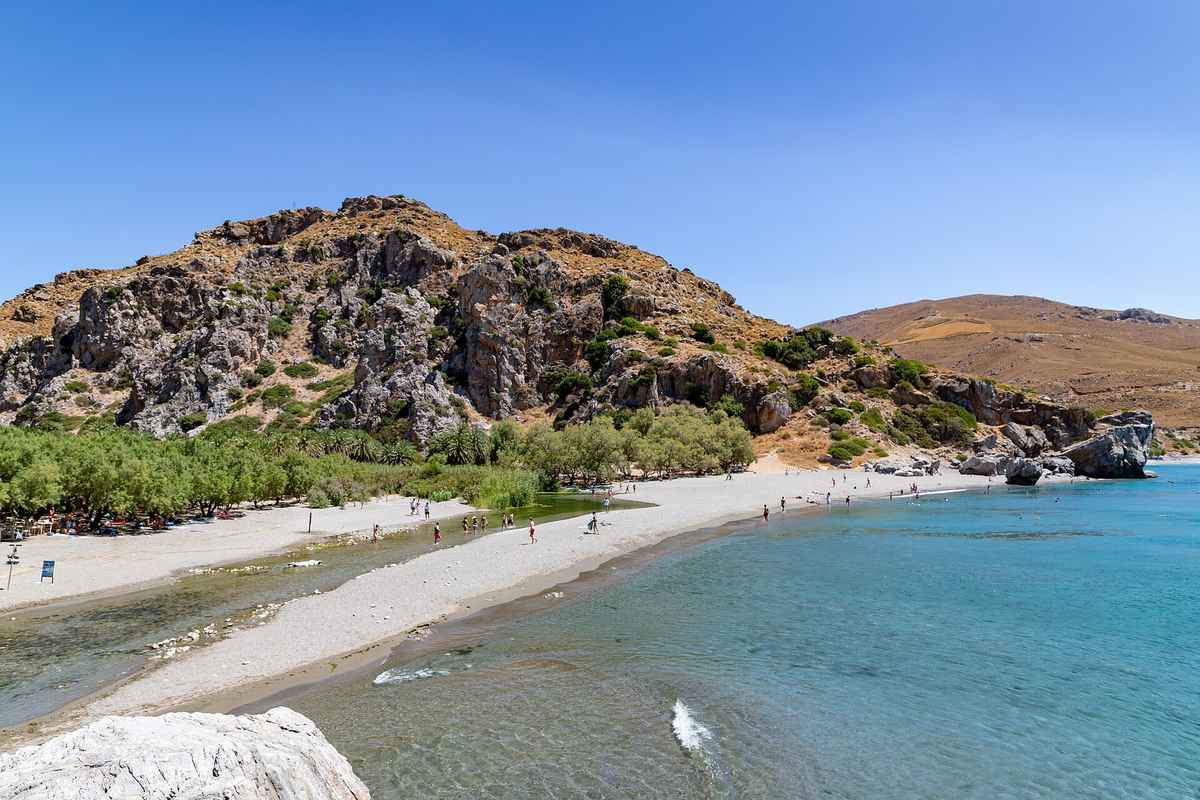
Preveli Beach sits on the south coast of Crete, in the Rethymno region, at the point where the Megalopotamos river leaves the Kourtaliotiko gorge and meets the Libyan Sea. Locals and visitors also call it Palm Beach or Phoenix Beach, after the grove of Cretan date palms that shades the freshwater stream behind the sand. The result is a rare shoreline that mixes river, palms and open sea in one setting. Sunbathers cool off in the salt water, then wade a short way up the cool river channel. This south-Crete landmark holds a special place in every itinerary I plan for travellers with My Greece Tours.
Preveli rewards a little planning, so it helps to place it inside your wider Crete travel plan before you set out. Read it alongside my full Crete travel guide, which frames the island’s regions, driving routes and pace. The sections below cover where the beach lies, how the palm river works, the two main ways to arrive, the monastery on the hillside above, and the practical points that make a summer visit smoother. Each answer stays short and factual, and each supporting note points you toward the details that matter most for a comfortable day on this protected stretch of coast.
Where is Preveli Beach on Crete?
Preveli Beach lies on the south coast of Crete, in the Rethymno region, at the mouth of the Kourtaliotiko gorge, where the Megalopotamos river reaches the Libyan Sea below the historic Preveli Monastery on the hill.
The beach sits at the southern edge of the Rethymno region, facing the Libyan Sea rather than the busier north coast. The Megalopotamos river drains the Kourtaliotiko gorge and spills across the sand here. That is why the whole setting feels so different from the sunbed rows of the northern resorts. Drivers usually approach from the Plakias area, or from the villages inland of Rethymno. Brown tourist signs point the way toward Preveli Monastery and the cliff-top car park above the cove. The route threads through olive terraces and small settlements before the coast comes into view. The last stretch drops toward the sea in a run of tight, scenic bends.
A slow, unhurried pace suits the road and the views far better than a rush.
This corner of the south coast rewards travellers who like scenery over crowds. It fits neatly among the wider things to do in Crete that reach beyond the museums and old towns. The final road winds through hills and olive groves. The sea then appears suddenly, far below the ridge. From the cliff-top car park the beach reveals itself as a green ribbon of palms. The palms cut through pale grey rock, with the river mouth glinting where fresh water meets the salt. That first view draws photographers, walkers and swimmers throughout the warm season.
It also explains why the cove earns a firm place on most south-coast day plans, even for travellers who are short on time and juggling other stops on a packed island route.
Why is Preveli called Palm Beach?
A grove of native Cretan date palms lines the Megalopotamos river behind the sand, giving Preveli its Palm Beach and Phoenix Beach names. The palms shade a freshwater channel you can wade up from the shore.
The palms belong to a wild Cretan species. They grow along the riverbanks rather than beside the open sea, forming a shaded green corridor inland from the back of the beach. Walkers can leave the salt water and follow the cool freshwater stream up between the trunks. The route wades through cool shallow pools as the gorge walls close in overhead. That mix of river, palm and sea stands out even among the famous Crete beaches. Most of those offer sand and sea, but nothing like this freshwater grove. The contrast of green fronds against dry, sun-bleached gorge walls gives the cove an almost tropical character.
It is the single feature people remember most about a day spent on this quiet, sheltered stretch of the south-coast shore.
A wildfire once swept through the grove and burned much of the palm cover. The slopes stood scorched and bare for a time, which alarmed everyone who knew the beach. The palms regrew steadily from their roots. The shaded river corridor returned to the lush form visitors know today. That recovery is part of why the whole site is now protected. It also explains the discreet signs asking people to keep to the sand and water. Visitors are asked to avoid trampling young growth along the banks. The regrown grove now anchors one of the south coast’s most recognisable natural scenes.
It stands as a living reminder that the landscape here is both striking and fragile, and well worth the real care that visitors are asked to give it.
How do you get to Preveli Beach in Crete?
Two main routes reach Preveli Beach in Crete: a long stairway down from the cliff-top car park above the cove, or a seasonal boat from Plakias or Agia Galini that lands you directly on the sand.
The land route ends at a car park on the cliff above the beach. From there a stone stairway descends the slope to the sand below. The walk down is steep, and the climb back up takes real effort in the summer heat. Sturdy footwear, water and a slow pace all help on the return. Give yourself unhurried time in both directions. Treat the climb back as the harder half of the trip, not an afterthought. Travellers who enjoy this kind of walking often pair Preveli with a bigger hike. The Samaria Gorge elsewhere on the island makes a natural companion.
Together they build a coast-and-mountain trip that shows off Crete’s dramatic south from two very different angles, one at sea level and one high in the peaks.
The sea route skips the stairway entirely and makes the day far easier on the legs. Seasonal boats run from Plakias and from Agia Galini. They drop passengers straight onto the beach. That suits families, older visitors, or anyone who would rather not tackle the steep descent and climb. Arriving by water also gives you the full, head-on view of the palm river meeting the open Libyan Sea. The stairway route only ever reveals that scene from high above. Boat schedules follow the summer season and shift year to year. Check current departure times and return slots locally before you plan the whole day around them.
Allow a margin, too, so a busy sailing on a hot afternoon does not leave you stranded on the sand.
What is Preveli Monastery above the beach?
Preveli Monastery is a historic Greek Orthodox monastery set on the hillside high above the beach. It gives the cove its name and sits along the mountain road travellers follow down toward the cliff-top car park.
The monastery stands on the sun-baked slopes high above and overlooking the coast. It has watched over this stretch of the Libyan Sea for centuries. Stone buildings, shaded courtyards and wide sea views make it a natural stop on the way to or from the sand below. The same winding mountain road links the two places easily in one outing. The drive between the monastery and the cove takes only a short while. Most visitors do both in a single unhurried half-day. The pairing of a working monastery with a wild palm beach is a rare one. It ranks the area among the quieter hidden gems in Crete.
These reward a slower, more curious kind of travel over a rushed checklist of the island’s better-known sights.
Visitors who stop at Preveli Monastery find a calm, unhurried counterpoint to the lively beach far below. There is a small museum, a working chapel and stone terraces facing straight out over the open water. Modest dress is expected inside, as at any working Cretan monastery. A light cover-up for shoulders and knees is well worth carrying in your beach bag. Combining the two gives a fuller sense of this corner of the coast. The sacred, weathered hillside sits above; the protected river shore lies below. The two are tied together by the same name and the same short, winding mountain road.
That contrast between quiet devotion and wild nature is a large part of what makes the whole visit linger so long in the memory.
When should you visit Preveli Beach and what to bring?
Preveli Beach gets busy through summer, when the seasonal canteen operates and the palm river is at its calmest. Bring water, sun cover and sturdy shoes for the stairway, since shade on the open sand stays limited.
Summer brings the warmest sea, the fullest boat service and the largest crowds. An early start helps you claim a good patch of sand before the day-trip boats arrive and fill the cove. A seasonal canteen covers basic drinks and snacks through the busy months. Facilities stay deliberately simple, in keeping with the site’s protected status. Do not expect a full beach resort here. The freshwater river offers a cool break from the salt and a shaded walk when the sun is high. Quieter shoulder-season days can feel far calmer than the packed midsummer scenes in most photos.
A visit outside peak weeks rewards travellers who value space and stillness over guaranteed heat, and the low light on the palms and gorge walls is far softer then too.
Pack for a spot with little natural shade on the open sand beyond the palm corridor. The trees line the river rather than the beach itself. Water, a hat and firm sun protection all earn their place in the bag. Sturdy shoes matter for the stairway down and for the harder climb back up. A light cover-up also helps if you plan to stop at the monastery on the same trip. Respect the protected setting by keeping to the sand and water. Take your litter away with you to keep the palms and river healthy for the next visitors.
That small, shared care is a large part of what keeps Preveli one of the most memorable and unspoilt shores anywhere along Crete’s rugged southern edge.
Frequently Asked Questions
Is Preveli Beach worth visiting on a Crete trip?
Preveli earns its place on most south-coast itineraries. It offers something the island’s other beaches rarely match: a freshwater river shaded by native Cretan date palms, flowing straight into the Libyan Sea. The setting mixes river bathing, sea swimming and a short shaded walk inland. The pale walls of the Kourtaliotiko gorge frame the whole scene and funnel the water down to the coast. The historic monastery on the hillside above adds a cultural layer to what could otherwise be a simple beach stop. The day gives you both scenery and heritage in one trip. Reaching the sand takes a little effort, whether by the cliff stairway or a seasonal boat.
That effort keeps the crowds a touch thinner than the easy drive-up resorts of the north coast. Travellers who value scenery, a real sense of place and a swim with a difference tend to rate Preveli among the clear highlights of the Rethymno region and Crete’s wilder southern shore.
Can you swim in the river at Preveli Beach?
Yes. The Megalopotamos river runs out of the Kourtaliotiko gorge and across the sand into the Libyan Sea. Its lower channel is shallow and calm enough to wade and paddle in comfort. Visitors often swim in the salt water first, then move into the cooler freshwater stream that threads back between the palms. Following the river inland gives a gentle, shaded walk through the grove. It is a rare contrast to the hot open beach, and one of the main reasons people single this cove out. Depth and flow shift with the season. The river tends to run fuller earlier in the year and thin out to shallow pools as summer wears on.
The site is protected, so keep to the water and sand and leave the palms, reeds and banks undisturbed. That shared care preserves the mix of river, grove and sea that gives Preveli its Palm Beach and Phoenix Beach names, and keeps drawing people back to this quiet corner of the south coast.
How long does it take to reach Preveli Beach from the car park?
The beach lies at the foot of a cliff. Reaching it from the cliff-top car park means walking down a long stairway carved into the slope. The descent is straightforward but steep, and the return climb is the harder half, especially under the midday summer sun. Allow unhurried time in each direction, and treat the climb back as the effort to plan around. Carry water and wear sturdy shoes rather than flip-flops. Travellers who prefer to skip the stairs entirely can arrive by seasonal boat from Plakias or Agia Galini. The boat lands you directly on the sand and avoids the steep descent and climb altogether.
That option suits families, anyone with limited mobility on steep paths, or visitors who want to save their energy for the beach and the palm river. Checking current boat times locally lets you match the arrival method to your group and the day you have in mind.