
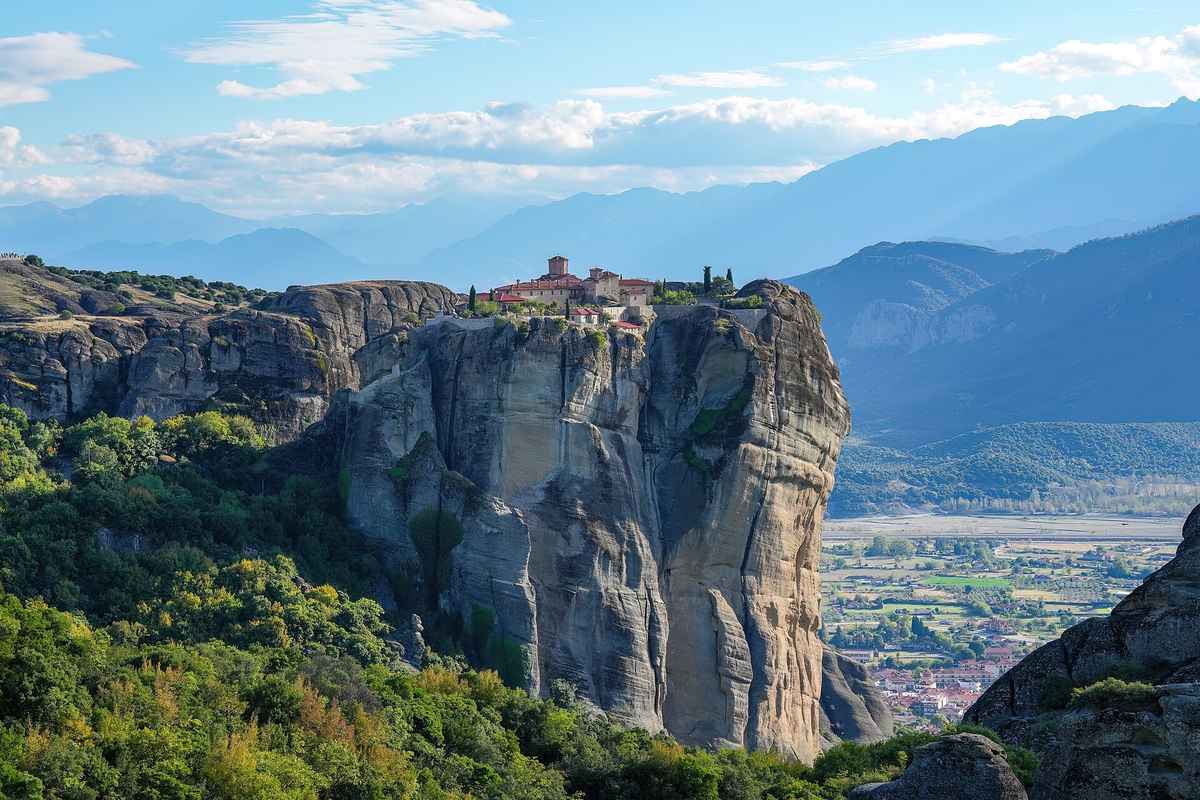
Holy Trinity Monastery stands alone on one of the tallest, most isolated rock pinnacles at Meteora. Locals call it Agia Triada. The pillar rises sheer above the town of Kalabaka on the plain of Thessaly in central Greece. This monastery earns its fame twice over: for its dizzying, almost impossible setting, and for a starring role in a famous spy film. A footbridge and a long carved stairway now carry visitors to the summit. The reward is a small, ancient katholikon and a sweeping panorama over the valley below. This guide explains the site, its cinema history, and the climb. Plan your trip to this monument with My Greece Tours.
This page belongs to a wider set of Meteora resources. Read it beside our full Meteora travel guide for context on the whole rock-monastery complex. Holy Trinity ranks among the smaller, quieter houses on the massif, yet it delivers one of the most dramatic approaches of them all. Its position, cinema fame, and steep access make it a highlight for many travellers. The sections below cover what the monastery is, why James Bond fans know it, how the old and new access worked, the practical details of visiting, and how it fits neatly into a broader tour of the rock pillars and their painted churches.
What is Holy Trinity Monastery at Meteora?
Holy Trinity Monastery, or Agia Triada, is a small Orthodox monastery perched atop one of the tallest, most isolated rock pillars at Meteora. It rises directly above Kalabaka on the Thessaly plain in central Greece.
Holy Trinity Monastery occupies a slender rock tower that rises sheer on every side. The pinnacle counts among the highest at Meteora, and its isolation sets it apart from its neighbours. Monks founded the community many centuries ago, during the medieval flowering of monastic life on these pillars. Its central church, the katholikon, holds frescoes and the quiet dignity of a working religious house. The buildings cluster tightly on the tiny summit platform, shaped by the narrow rock. This is one of the six active monasteries that survive at the site, and it counts among the Meteora monasteries protected as a UNESCO World Heritage treasure.
The setting defines the whole experience. The tower stands slightly apart from the main monastic cluster, giving it a lonely, self-contained grandeur. From the courtyard, the eye sweeps across the roofs of Kalabaka and out over the vast green plain of Thessaly. Distant peaks close the horizon on clear days. The monastery keeps a modest scale compared with the larger houses nearby, and that intimacy is part of its charm. Fewer visitors reach the top at any one moment. The silence, the wind, and the drop on every side create a sense of retreat that larger, busier monasteries struggle to match. Many travellers rank the panorama here among the finest views across the entire complex.
Why is Holy Trinity Monastery famous from James Bond?
Holy Trinity Monastery served as a filming location in the James Bond film For Your Eyes Only. Its vertiginous cliff and rope-net access supplied the dramatic climax, sealing its worldwide fame among cinema fans and travellers alike.
The monastery gained global recognition through its role in the James Bond adventure For Your Eyes Only. Filmmakers chose Holy Trinity for its sheer walls and heart-stopping height above the valley. The climax staged a tense cliff-side sequence on and around the rock, using the very drop that makes the site so remarkable in real life. Audiences worldwide saw the pinnacle and the ropes that once served the monks. The film turned an already extraordinary place into a screen landmark, drawing fresh attention to Meteora and its painted churches. Cinema pilgrims now seek out the exact tower they remember from the story, adding a modern layer of fame to the monastery’s ancient religious purpose.
The film connection shapes how many people first hear of the monastery. Guides mention it, travel articles repeat it, and fans arrive hoping to stand where the scene unfolded. The rope net and the exposed cliff that thrilled viewers reflect a genuine chapter of the site’s history, when monks truly reached the summit by hoisted net and ladder. Reputable guided Meteora tours often point out the spot and explain how the production used the setting. The pairing of spy-film drama with centuries-old faith gives Holy Trinity a distinctive double appeal. Cinema and spirituality meet on one narrow summit, and that blend keeps the monastery high on many travel lists for Meteora.
How did monks reach Holy Trinity Monastery in the past?
Monks originally reached Holy Trinity Monastery only by rope net and removable wooden ladders, hoisted by hand up the cliff. A footbridge and a long, steep stairway carved into the rock later replaced that perilous method.
The earliest access to the summit relied on nerve and rope. Monks and supplies rose in a net or basket, winched from the top by other members of the community. Removable ladders offered the only other route, and the monks pulled them up to keep the sanctuary safe from intruders. This deliberate isolation protected the monastery through troubled centuries. The climb demanded absolute trust in worn ropes and steady hands at the winch. Provisions, building materials, and even visiting clergy travelled the same dizzying way. That history of hoisted access explains the fortress-like character of the rock houses and reflects the harsh reality shared by many of the Meteora monasteries across the massif.
Modern access transformed the visit while keeping the drama intact. A footbridge now spans the gap to the base of the tower, and a long stairway of steps cut into the stone climbs the flank of the pillar. The steps wind steadily upward, hugging the rock face with the valley falling away below. This route replaced the net for everyday use, though the old winch tower still survives as a reminder. The stairway remains a genuine effort, steep and exposed in places, yet far safer than the ropes it succeeded. Reaching the summit on foot lets travellers feel a trace of the isolation the monks embraced, then arrive to the reward of the katholikon and the panorama.
How do you visit Holy Trinity Monastery at Meteora?
Visiting Holy Trinity Monastery means crossing a footbridge and climbing a long, steep stone stairway to the summit. Modest dress is required, the monastery closes one day each week, and a footpath links it down to Kalabaka.
The visit begins at the footbridge and continues up the carved stairway to the top. The climb is steep and takes real effort, so sturdy shoes and a steady pace help. Modest dress is required, as at every working monastery: covered shoulders and knees, with long skirts often provided for women at the entrance. The monastery closes on one fixed day each week, and opening patterns shift with the seasons, so travellers should check current times before arriving. Inside, the small katholikon rewards the climb with frescoes and quiet. The courtyard opens onto that sweeping view over Kalabaka and the plain, and the calm here contrasts sharply with the busier houses that draw larger crowds during peak hours.
A footpath connects the monastery directly down to Kalabaka, giving walkers a fine alternative to the road. The trail descends through rock and greenery toward the town, and it forms a rewarding leg of any longer walking route. Travellers who enjoy the outdoors often pair the visit with hiking in Meteora, linking Holy Trinity to neighbouring pillars on foot. The late afternoon light suits the summit especially well, and staying nearby lets visitors catch a memorable Meteora sunset from a viewpoint over the rocks. Carry water, allow time for the ascent, and treat the site with the respect due to a living religious community rather than a museum.
How does Holy Trinity Monastery fit into a Meteora visit?
Holy Trinity Monastery fits naturally into a wider Meteora itinerary as a quieter, more atmospheric stop between the larger monasteries. Its cinema fame, footpath to Kalabaka, and dramatic views make it a memorable highlight of any route.
A full Meteora visit strings several monasteries together across the rock massif. Holy Trinity works well as a contrast to the grander, busier houses such as Great Meteoron and Varlaam. Its smaller scale and demanding climb thin the crowds, so the atmosphere feels more contemplative. Many travellers slot it between other stops on a driving loop, using the short walks between viewpoints to appreciate the pillars from every angle. The monastery’s James Bond fame and its footpath to Kalabaka add reasons to include it. Guided or self-planned, a well-paced day lets visitors experience both the large treasure-filled churches and the lonely grandeur that Holy Trinity offers on its isolated tower above the plain.
The footpath down to Kalabaka makes Holy Trinity a natural finishing point for a day among the rocks. Walkers can end at the town, resting and eating before the light fades. The monastery pairs beautifully with a broader plan built around the whole complex, and our Meteora travel guide maps out how the six active houses connect. Those short on time still find room for this stop, thanks to its compact size and rich reward. The blend of faith, film, and physical challenge gives the visit a distinct flavour. Holy Trinity earns its place on any serious Meteora itinerary, standing as one of the region’s most striking and unforgettable summits.
Frequently Asked Questions
Which Meteora monastery was in James Bond?
Holy Trinity Monastery, known locally as Agia Triada, is the Meteora monastery featured in the James Bond film For Your Eyes Only. Filmmakers picked it for its extreme height and its sheer, isolated rock tower above Kalabaka. The climax staged a tense cliff-side sequence on and around the pinnacle, using the genuine drop and the rope-net access that once served the monks. Audiences worldwide came to know the tower through that scene. The choice made perfect sense, since Holy Trinity ranks among the tallest and most dramatic of the six active monasteries at the site.
Cinema fans now travel to Meteora specifically to see the monastery they remember from the film, then discover its deep religious history and painted katholikon. The pairing of spy-film drama with centuries-old Orthodox faith gives the monastery a distinctive double appeal that keeps it high on many visitors’ lists across the whole rock complex.
How hard is the climb to Holy Trinity Monastery?
The climb to Holy Trinity Monastery takes genuine effort. Visitors first cross a footbridge to the base of the rock, then ascend a long stairway of steps carved into the side of the pinnacle. The steps rise steadily and grow steep in places, hugging the cliff with the valley falling away below. Reasonably fit travellers manage it at a comfortable pace with short pauses to catch their breath and enjoy the widening view. Sturdy shoes and water help greatly, and unhurried timing makes the ascent far more pleasant. The route is safer and easier than the historic rope net and removable ladders it replaced, yet it still challenges anyone unused to stairs or heights.
The summit reward justifies the work: a small ancient katholikon, a peaceful courtyard, and a sweeping panorama over Kalabaka and the plain of Thessaly. Allow enough time and avoid rushing the descent afterward.
Is Holy Trinity Monastery worth visiting?
Holy Trinity Monastery rewards the effort and ranks as a firm highlight for many Meteora travellers. Its isolated tower delivers one of the most dramatic approaches on the whole massif, and the summit view over Kalabaka and the Thessaly plain counts among the finest at the site. The monastery draws thinner crowds than the larger houses, so its atmosphere feels calmer and more contemplative. Its worldwide fame from the James Bond film adds a distinctive layer of appeal, and the footpath linking it down to the town lets walkers weave it into a longer route. The small katholikon holds frescoes and quiet dignity worth the climb.
Travellers seeking authentic atmosphere, memorable photographs, and a genuine sense of the monks’ historic isolation will find this stop especially rewarding. Modest dress is required and the monastery closes one day each week, so checking current opening details before arriving ensures a smooth and satisfying visit.