
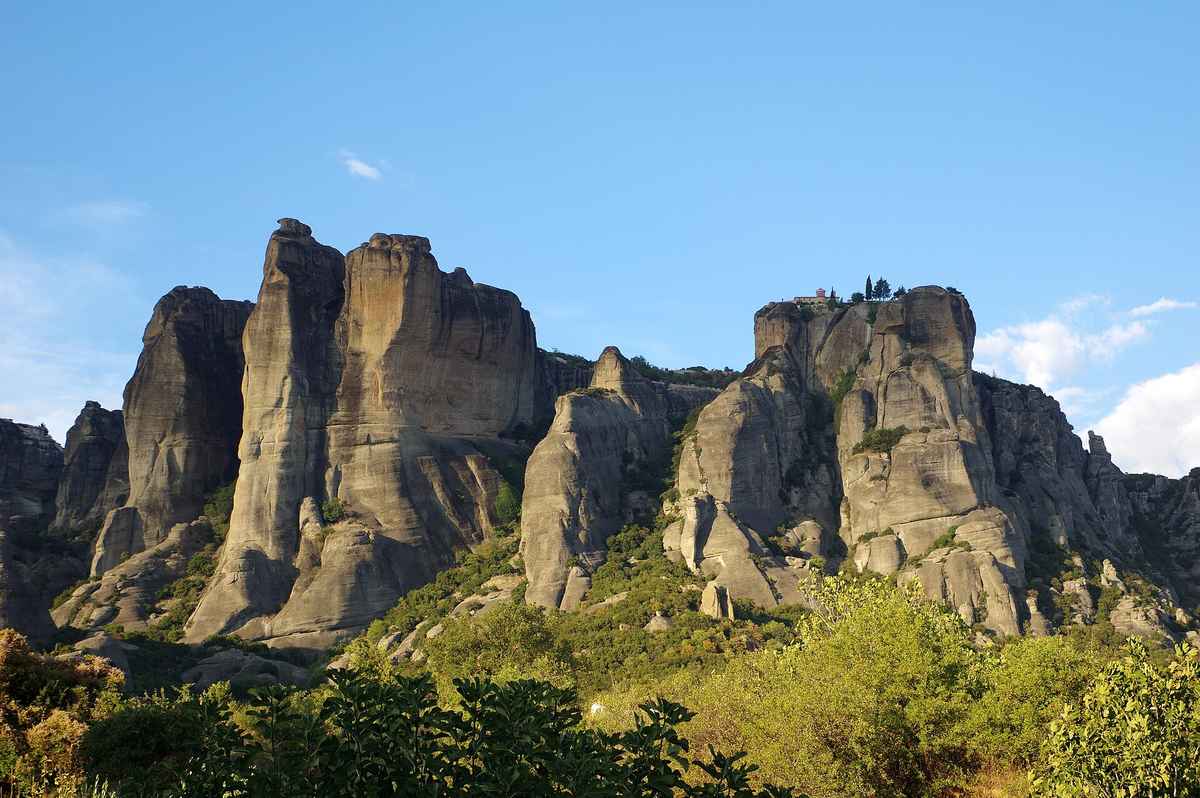
Hiking ranks among the finest ways to experience Meteora. A web of old monk footpaths and stone-cut steps threads between the giant rock pillars and links the monasteries above the plain. Walkers climb from the village of Kastraki through oak forest and bare rock, reaching the cloisters on foot rather than by road. The paths carry centuries of pilgrim and hermit history. They lead past caves, chapels and viewpoints that coaches and cars never reach. Rocky ground, steep pitches and exposed ledges reward preparation and steady footing. Spring and autumn suit the effort best. Plan your walking days, monastery visits and viewpoints with My Greece Tours.
This page maps the walking side of the rocks, from gentle viewpoint strolls to the classic climb between Kastraki and the monasteries. Pair it with our broader Meteora travel guide for orientation, transport and where the pillars sit above the Pineios valley. The sections below cover why the trails stand out, the main monk paths, the hermit caves and viewpoints, safety and gear, and the practical start from Kastraki. Every route rewards a slow pace and a good camera. Distances stay short, yet the ground turns technical fast. Read on, then lace up sturdy shoes and set out.
Why hike in Meteora instead of driving?
Hiking reveals Meteora from angles the road hides. Footpaths climb through forest and rock to the monasteries, tracing old pilgrim routes. Walkers escape coach traffic, meet the pillars up close, and earn quiet viewpoints most visitors never find.
The paved loop road serves buses and cars, delivering visitors to monastery car parks in minutes. The old footpaths tell a different story. They rise from the valley floor, curl around the base of each pillar, and gain height through terrain no vehicle can enter. Walkers pass rock faces streaked with lichen, spot kestrels riding thermals, and hear only wind and birdsong. The Meteora monasteries appear slowly on foot, growing from distant silhouettes into towering stone walls. That gradual reveal shapes the whole experience. A hiker meets the landscape on its own terms, reading the rock, the light and the quiet in a way the road never allows.
Foot travel also unlocks the hidden pockets between the pillars. Small chapels, ruined ascetic dwellings and shaded gullies line the trails, invisible from the tarmac above. The reward comes in solitude and scale. A walker standing beneath a sheer face grasps the sheer verticality that drew monks here centuries ago. Guided Meteora tours often blend a short hike with a monastery visit, giving structure to first-timers. The effort pays back with photographs, silence and a sense of arrival. Reaching a cloister on foot, sweat-earned and slow, carries a weight that a parking space cannot match. That contrast defines why so many choose the trails.
What are the main trails and monk paths in Meteora?
The classic route climbs from Kastraki up to Great Meteoron and Varlaam. Older monk paths link the monasteries along the ridge. Shorter spurs branch to viewpoints and to Roussanou and Holy Trinity, each on stone-cut steps.
The best-known walk starts in Kastraki and climbs steadily toward Great Meteoron, the largest monastery, and neighbouring Varlaam. The path leaves the village on a dirt track, then narrows to a footpath winding through forest and past rock outcrops. Stone steps, worn smooth by generations of monks and pilgrims, mark the steeper pitches. From the top, connecting trails run along the ridge, linking one monastery to the next away from the road. Walkers can chain several cloisters in a single day, choosing which to enter and which to admire from below. Good planning matters, so review opening hours and dress codes and think about where to stay in Meteora before setting out early.
Other paths spread across the massif. A trail drops toward Roussanou, perched on its own slender pillar, while another traverses to Holy Trinity and its long stone staircase carved into the rock. Short link paths join the main circuit, letting walkers build loops rather than out-and-back routes. Signage exists at key junctions, though it thins on the older, quieter sections. A downloaded map or a local guide keeps route-finding simple. Ground conditions change with the weather, turning smooth rock slick after rain. Firm footing and a slow, deliberate pace serve better than speed.
Each path carries its own character, from shaded forest to open rock terrace, and every junction opens a fresh view of the pillars rising around you.
Where are the hermit caves and best viewpoints in Meteora?
Hermit caves dot the cliffs, including the Badovas caves used by early ascetics. Viewpoint walks reveal the pillars from angles cars miss, framing sunset light on the rock. Short spurs off the main paths reach these quiet, dramatic overlooks.
The rocks of Meteora sheltered hermits long before the monasteries rose. Ascetics climbed to caves and ledges high on the cliffs, living in solitude and prayer. The Badovas caves, tucked into a gorge near Kastraki, count among the oldest known ascetic dwellings in the area. A rough path leads toward them, passing ruined cells and a small chapel set against the rock. The walk demands care on loose ground and exposed sections. The reward is a rare glimpse of the eremitic life that seeded the whole monastic community. Standing at a cave mouth, a walker sees the valley the way those early monks did, framed by stone and centred on silence.
Viewpoint walks form the other half of the trail network. Short paths lead to open terraces and rock shoulders that frame the pillars, the monasteries and the plain below. The Psaropetra overlook and several unnamed shoulders near Kastraki catch the last light beautifully, making them prime spots for a Meteora sunset. Photographers arrive early to claim a clear line, then wait as the rock warms from grey to gold. These viewpoints need little climbing, so they suit walkers of most abilities. A short evening stroll rewards with colour and calm. Firm shoes still help on the rock, and a torch matters for the walk back once the light fades from the pillars.
Do you need a guide, gear and safety planning for Meteora hikes?
Trails are rocky, steep and exposed, so sturdy shoes, water and sun protection matter. A local guide adds route-finding and history. Self-guided walking works with a map and care. Check weather, start early, and tell someone your route.
The ground across Meteora turns technical quickly. Smooth rock, loose gravel and exposed ledges demand attention on every path. Sturdy trail shoes or boots grip far better than trainers, and they steady the ankle on uneven steps. Water ranks as essential, since shade thins on the open rock and no springs line most routes. Sun protection, a hat and layered clothing cover the swings between shaded forest and bare terrace. A basic first-aid kit and a charged phone add a safety margin. Weather shifts fast in the hills, so check the forecast and turn back when rain slicks the stone. Simple planning removes most of the risk and leaves the walking to enjoy.
A local guide changes the day for many walkers. Guides know which junctions confuse, which ledges expose and which paths close after rain. They carry the history too, naming the caves, the ruined cells and the monasteries as you pass. Guided Meteora tours suit first-timers, families and anyone short on time. Self-guided walking rewards the confident, provided they carry a map, watch the weather and keep a steady pace. Either way, an early start beats the midday heat and the coach crowds. Tell your accommodation your planned route and rough return time. That small step matters on the quieter trails, where phone signal drops and other walkers grow scarce among the pillars.
When should you hike and how do you start from Kastraki?
Spring and autumn suit hiking best, with mild days and clear light. Summer middays turn hot on the exposed rock. Start early from Kastraki village, follow the marked path uphill, and carry water for the climb toward the monasteries.
Season shapes the whole experience. Spring brings green slopes, wildflowers and comfortable temperatures, making it a favourite window for walkers. Autumn returns the mild days with softer light and thinner crowds. Summer heats the bare rock sharply, so middays grow uncomfortable and the risk of overheating climbs. Early mornings and late afternoons stay workable even in high summer. Winter turns cold and sometimes icy, closing some of the steeper steps to safe passage. Clear light in spring and autumn also flatters the pillars for photography. Picking the right month sets the tone. A mild, dry day on quiet paths beats a scorching climb through crowds every time, so plan your trip around the shoulder seasons where you can.
The walk begins in Kastraki, the village nestled right beneath the rocks. Its lanes give quick access to the trailheads, and its rooms put walkers a short stroll from the first path. Consider where to stay in Meteora so an early start comes easily. From the village edge, follow the signed track uphill; it soon narrows to the old monk path toward Great Meteoron and Varlaam. Carry water, wear sturdy shoes and set off before the sun climbs high. Allow time to enter a monastery or two, respecting the dress code with covered shoulders and knees. A steady half-day covers the classic route, leaving the afternoon for a viewpoint and a slow return to Kastraki.
Frequently Asked Questions
Can you hike between the monasteries in Meteora?
Yes, you can hike between the monasteries on the old monk paths that link them across the massif. The classic route climbs from Kastraki to Great Meteoron and Varlaam, with connecting trails running along the ridge to Roussanou, Holy Trinity and Saint Stephen. These footpaths follow the routes monks and pilgrims used for centuries, keeping walkers off the road and its coach traffic. Stone-cut steps mark the steeper sections, and short link paths let you chain several cloisters in one day. Signage helps at the main junctions, though it thins on the older, quieter stretches. A downloaded map or a local guide keeps route-finding simple.
Plan around monastery opening hours and dress codes, since each closes on a set day. A steady walker covers the core circuit in a half to full day, choosing which cloisters to enter and which to admire from the trail below.
Is hiking in Meteora hard?
Hiking in Meteora ranges from easy to moderately demanding, depending on the route you pick. Distances stay short, yet the ground turns technical fast, with rocky paths, steep pitches and some exposed ledges. The classic climb from Kastraki to Great Meteoron and Varlaam gains real height and takes a steady effort, but fit walkers of most abilities manage it at an unhurried pace. Viewpoint strolls near Kastraki ask far less, reaching open terraces with only gentle climbing. Sturdy shoes matter, since smooth rock and loose gravel test grip, especially after rain. Heat raises the difficulty in summer, so an early start keeps the effort comfortable. The paths reward slow, deliberate walking over speed.
Carry water and sun protection, watch your footing on the steps, and the terrain stays enjoyable rather than punishing. Anyone comfortable on uneven ground and modest climbs will handle the main routes well.
Do you need a guide to hike in Meteora?
You do not strictly need a guide to hike in Meteora, though one adds a lot for many walkers. Confident hikers manage the main routes self-guided, using a downloaded map, watching the weather and keeping a steady pace on the rock. The core path from Kastraki carries signs at key junctions, so navigation stays workable. A local guide earns its place on the quieter trails, where signage thins and older paths branch confusingly. Guides read the ground, steer you past exposed sections after rain, and name the caves, ruined cells and monasteries as you pass, adding the history that gives the rocks their meaning. First-timers, families and anyone short on time gain the most from guided walks.
Self-guided suits the experienced who prepare well. Either way, start early, carry water and sturdy shoes, and tell your accommodation your route and rough return time before setting out among the pillars.