
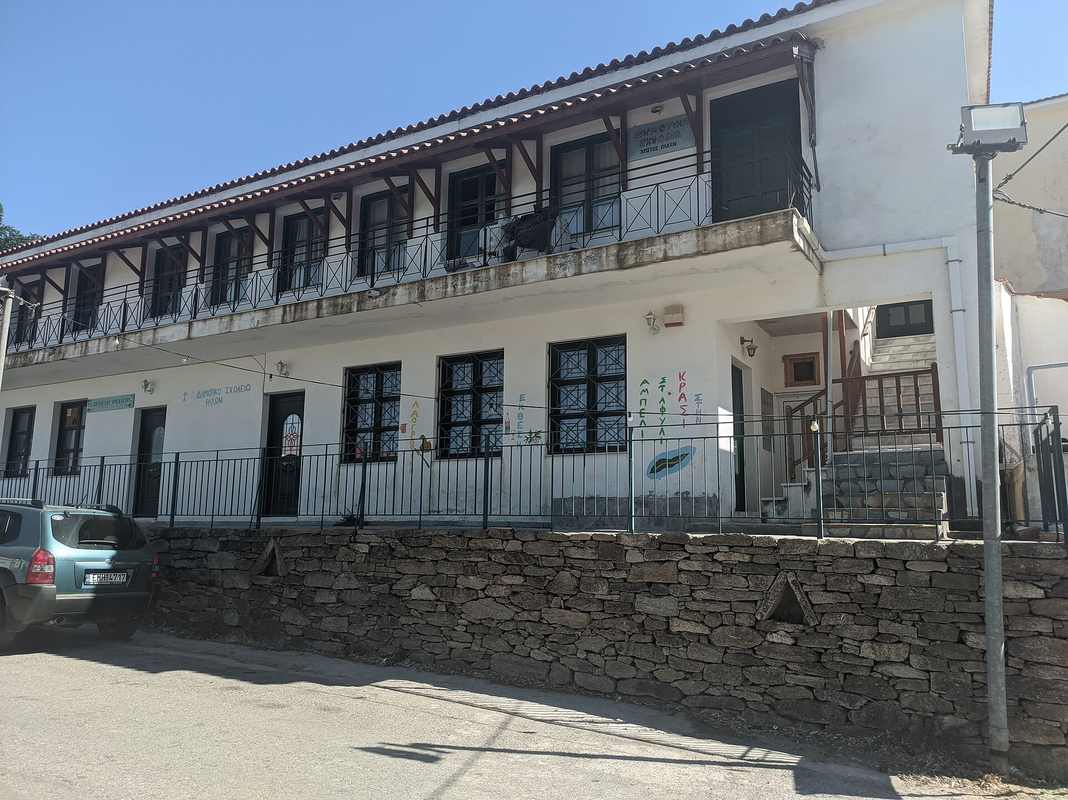
Christos Raches sits high in the western mountains of Ikaria, the main settlement of the Rahes region. Pine and walnut trees shade its stone lanes at roughly 700 metres above the coast. The village runs on a rhythm most travellers find startling. Cafes, tavernas and a well-known bookshop-kafeneio open in the late afternoon and stay lit deep into the night. Residents shop, drink wine and talk long after dark. This inversion of ordinary hours has made the small village internationally known. The cool highland air, the springs and the old churches frame a place that measures time loosely. Plan your highland day with My Greece Tours.
The Rahes district anchors much of Ikaria’s reputation for an unhurried, community-driven life. Christos Raches is its heart, a hub of traditional cafes, a cooperative shop and family-run tavernas. Our Ikaria travel guide places the village within the wider island, from the northern beach resorts to the hot springs of the south. The village also opens the Round of Rahes walking trail through forest and stone. The sections below cover what the village is, why the shops open at night, the walking routes and setting, the lifestyle behind Ikarian longevity, and the practical steps for getting there and timing your visit.
What is Christos Raches on Ikaria?
Christos Raches is the main village of the Rahes region in Ikaria’s western highlands, set among pine and walnut trees near 700 metres, a hub of traditional cafes, a bookshop-kafeneio, tavernas and a cooperative.
The village goes by two names, Christos Raches and Christos Rachon, and both point to the same highland settlement above Ikaria’s western coast. Stone houses cluster along narrow lanes shaded by pine and walnut. Springs feed small fountains, and old churches mark the corners of the square. The altitude keeps the air cool through summer, a relief from the beaches below. A cooperative shop sells local produce, honey and wine pressed by families in the district. Tavernas serve goat, garden vegetables and bread from wood ovens. The square works as a meeting point where the district gathers.
The setting explains part of the draw, since the forest and the height give the place a calm the coastal resorts lack, and the pace slows to match.
The Rahes region groups a cluster of mountain hamlets, and Christos Raches serves as their centre. The village functions as both a working community and a destination, tied to the fabric of the Ikaria Blue Zone that draws researchers to the island. Gardens climb the slopes behind the houses, and residents tend vines and orchards through the cooler months. The bookshop-kafeneio has become a landmark, part reading room, part bar, a place where conversation carries into the small hours. Travellers weighing where to stay in Ikaria often base themselves on the coast and drive up for an evening.
The village rewards a slow visit, an afternoon coffee, a walk under the trees and a taverna meal that stretches long past sunset in the highland cool.
Why do the shops in Christos Raches open at night?
Shops and cafes here open in the late afternoon and trade deep into the night because residents run errands and socialise after dark, an inversion tied to the island’s relaxed, unhurried sense of time.
The daytime heat and the farming calendar shaped this habit over generations. Residents work gardens and orchards through the morning, rest during the hottest hours, then head to the village square as the light softens. Shopkeepers open their doors to match, so a grocery run or a haircut happens at nine or ten at night rather than midday. The bookshop-kafeneio keeps its lights on while conversation flows. This pattern turns the ordinary business of a village on its head. Visitors arriving at noon find shuttered doors and a quiet square. The same lanes fill with voices after dark, tables spilling out and wine poured freely.
The rhythm is not a performance for tourists but a lived schedule that the district has kept for its own reasons across the decades.
The habit connects to the wider Ikarian attitude toward clocks. Residents describe time loosely, and appointments bend to conversation and weather. This flexible sense of hours is part of what makes exploring things to do in Ikaria feel different from a packed mainland itinerary. The night trade also suits the summer festivals, the panigyria, where music and dancing run until dawn and the whole district turns out. Word of the after-dark village spread through travel writing and documentary film, and the phenomenon carried Christos Raches to an international audience. The reality on the ground stays modest, a handful of family businesses keeping unusual hours.
Travellers who want to see it should plan a late evening, order slowly and let the square fill around them rather than rushing to catch a daytime that never really arrives.
What is the Round of Rahes walk near Christos Raches?
The Round of Rahes, or Kyklos tis Rachon, is a marked walking trail that links the highland villages of the Rahes region through pine forest and old stone paths, anchored at Christos Raches.
The trail threads between mountain hamlets on paths worn by generations of foot and mule traffic. Christos Raches works as a natural start and finish, a place to fill water and gather before the walk. The route passes through dense pine forest, past springs and small churches, with sections of restored stone paving underfoot. The cool highland air makes the walk pleasant through the warmer months when the coast bakes. Walkers cross terraced gardens and old threshing floors, reading the land as farmers shaped it. Signposts and waymarks guide the loop, though the pace stays unhurried by design. The forest muffles sound, and the light filters green through the canopy.
The circuit shows the western highlands at their best, a landscape of stone, water and pine that few coastal visitors ever reach on foot.
The walk pairs naturally with a stay in the north around Armenistis or Evdilos. Travellers plotting Ikaria beaches for the afternoon can climb to Rahes in the morning while the air stays cool, then descend to the coast for a swim. The loop rewards steady walking rather than speed, and the springs along the way give places to rest and drink. Sturdy shoes matter on the stone sections, which turn slick after rain. The route also opens views across the forested ridges toward the sea far below. Local maps and the marked posts keep the way clear, but a printed guide helps on the branching paths.
The Round of Rahes turns Christos Raches from a single evening stop into a full day in the mountains, walking, resting and eating at a taverna once the loop closes.
How does Christos Raches reflect Ikaria’s longevity?
The village embodies the Ikarian lifestyle behind the island’s long lives, community ties, home gardens, local wine, late socialising and shared festivals, the daily habits linked to the Ikaria Blue Zone.
Ikaria ranks among the places where residents reach great age in unusual numbers, and Christos Raches shows the pattern up close. Households keep gardens and orchards, so meals lean on vegetables, greens, beans and herbs grown a short walk from the kitchen. Goats graze the slopes, and honey comes from local hives. Wine is pressed by families and shared in the square. The social fabric matters as much as the food, since the nightly gathering keeps residents connected across generations. Isolation is rare in a place where the whole district meets after dark. The unhurried schedule lowers the daily pressure that wears people down elsewhere.
These threads, diet, movement, community and rest, weave the quiet health that researchers came to study.
The festivals sharpen the picture of a connected community. The summer panigyria bring music, dancing and communal cooking, and elders join the young at tables that run until dawn. Walking is built into daily life, up to gardens, down to springs, along the paths of the Round of Rahes. This constant gentle movement replaces the gym with the terrain itself. The village ties directly to the story of the Ikaria Blue Zone, the framework that grouped the island with a handful of long-lived regions worldwide. Christos Raches offers a working example rather than a museum piece.
The habits persist because residents keep them for their own sake, tending land and gathering at night as their families always have. Travellers see the lifestyle in motion, an evening in the square worth more than any brochure claim about health.
How do you get to Christos Raches and when should you visit?
Reach Christos Raches by car from Armenistis or Evdilos on the north coast, a climb into the western highlands. Visit in the late afternoon and evening, when shops and tavernas open for the night.
A car is the practical way up, since the village sits in the mountains above the northern coast road. The drive from Armenistis climbs through pine forest on winding asphalt, gaining height with each turn. Evdilos, the main north-coast port, also serves as a starting point for the ascent. The road narrows near the village, and parking sits at the edge of the square. Bus service on Ikaria is sparse and slow, so renting a car gives the freedom to time an evening visit. The climb takes well under an hour from the coast in normal conditions. Drivers should watch for goats and tight bends after dark.
The height means cooler air on arrival, so a light layer helps once the sun drops behind the ridges and the square settles into its nocturnal routine.
Timing shapes the whole experience. Arriving at midday means shuttered doors and an empty square, so aim for late afternoon onward. The cafes and tavernas fill as the light fades, and the bookshop-kafeneio keeps late hours through the warm season. Summer brings the festivals and the fullest nightlife, though the highland cool makes any evening pleasant. Pair the village with a coastal base and treat it as an evening out rather than a rushed stop. Travellers deciding where to stay in Ikaria often pick Armenistis or Nas for the beaches, then drive up to Rahes for dinner.
Combine the trip with the Round of Rahes walk earlier in the day, or with a swim on the north coast, then climb for the night rhythm that gives the village its name.
Frequently Asked Questions
Why do the shops in Christos Raches really open at night?
The night trade grew from the farming calendar and the summer heat, not from tourism. Residents work their gardens and orchards through the cooler morning, rest during the hottest hours, then come to the square as the light softens. Shopkeepers open to match that flow, so errands, coffee and conversation happen after dark. A grocery run at ten at night is normal here. The bookshop-kafeneio stays lit while talk carries on for hours. This pattern reflects the wider Ikarian sense of time, where clocks bend to weather, work and company. Travel writing and documentary film spread word of the phenomenon, which lifted the small village to international notice. The habit stays a lived schedule rather than a show.
Visitors who arrive at noon find quiet, shuttered lanes. The same square fills with voices, wine and tables after sunset, so an evening visit is the only way to see the village awake.
Is Christos Raches worth visiting on Ikaria?
Christos Raches rewards travellers who want the mountain side of Ikaria and the after-dark rhythm the village is known for. The highland setting among pine and walnut, near 700 metres, offers cool air and quiet that the coastal resorts cannot match. An evening in the square, coffee at the bookshop-kafeneio, wine and a slow taverna meal shows a way of life tied to the island’s longevity. The village also anchors the Round of Rahes walking trail through forest and stone, a strong reason to come by day. Travellers see a working community rather than a staged attraction, so the appeal depends on wanting calm over crowds.
Pair the trip with a coastal base and the beaches of the north for balance. Those planning things to do in Ikaria should give the highlands an evening. The village suits anyone drawn to slow travel, walking and long dinners under the trees.
How do you get to Christos Raches and where should you stay?
Drive to Christos Raches from Armenistis or Evdilos on the north coast, climbing into the western highlands, and base yourself on the coast for beaches and easy evening trips up. A car gives the freedom to time a late visit, since bus service on Ikaria is sparse and slow. The climb from Armenistis winds through pine forest and takes well under an hour. Parking sits at the edge of the village square. Arrive in the late afternoon or evening, when the shops, tavernas and the bookshop-kafeneio open for the night.
Armenistis and Nas make popular coastal bases near the best sand, so many travellers weighing where to stay in Ikaria settle there and drive up to Rahes for dinner. Watch for goats and tight bends on the road after dark. Bring a light layer, since the highland air turns cool once the sun drops behind the ridges.