
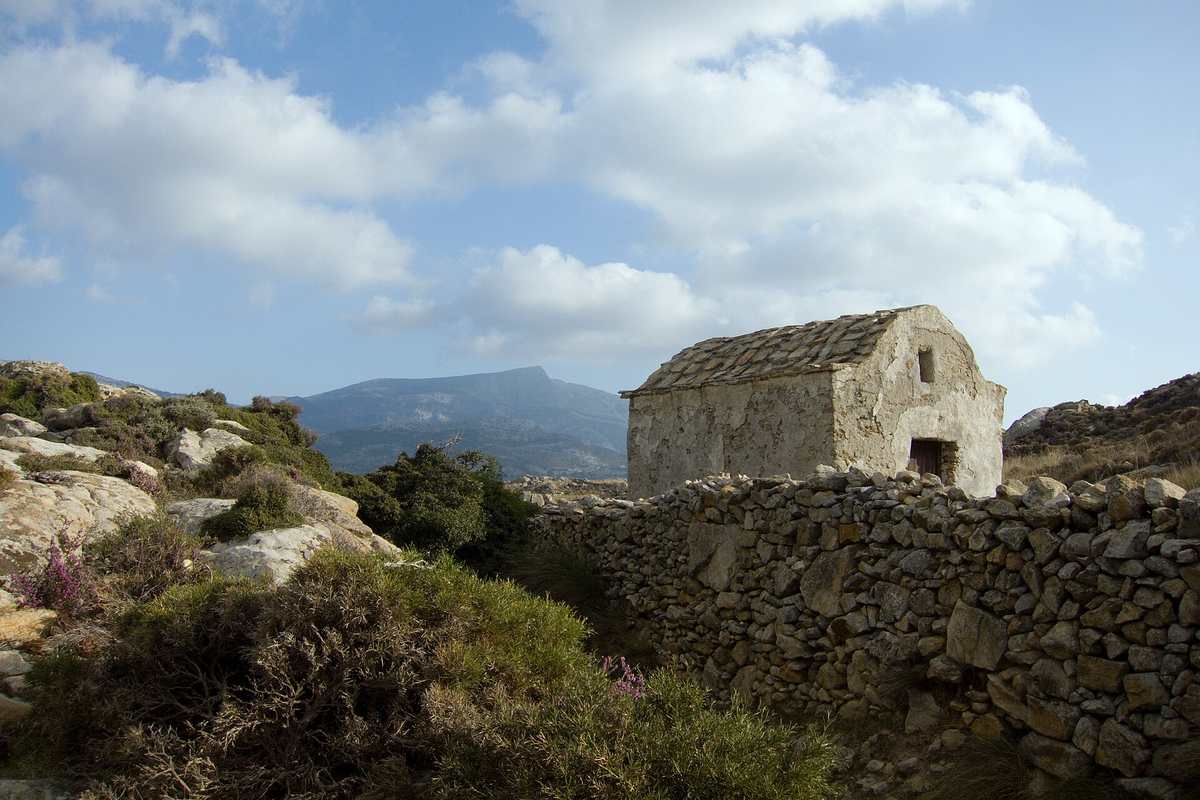
Tsikalario is one of the smallest and most authentic villages on Naxos, tucked into the green heart of the Tragaea valley beneath the peak crowned by Apano Kastro. Stone lanes, springs and dense olive groves surround a hamlet of a handful of families. Travellers come here for the castle trailhead, the ancient necropolis with standing menhirs, and a rare sense of quiet on a busy island. This guide explains where Tsikalario sits, how to reach it, what to see, and how the village fits the wider Naxos story. Explore the region and book your walks and day trips across the island with My Greece Tours.
Tsikalario rewards travellers who want the older, agricultural face of the island rather than its beaches. Read our full Naxos travel guide for context on the Tragaea, the mountain villages and the routes that connect them. The sections below cover the village location and access, the Apano Kastro trailhead, the Geometric necropolis and its menhirs, the green Tragaea setting, and daily life in this tiny hamlet. Each section answers a practical question first, then adds the detail you need to plan a rewarding, unhurried visit.
Where is Tsikalario and how do you reach it?
Tsikalario sits in central Naxos inside the Tragaea valley, roughly 15 kilometres from Naxos Town and just below Apano Kastro. Reach it by car or taxi via the Chalki-Filoti road, then a short marked turn-off.
The village lies in the mountainous interior of the island, well away from the coastal resorts. Tsikalario anchors the western edge of the Tragaea valley, a broad upland basin ringed by the highest peaks on Naxos. Drivers follow the main road from Naxos Town toward the mountain villages, passing through Halki before a signed turning drops toward the hamlet. The final approach narrows into a lane fringed by drystone walls and olive trees. The setting explains the access, since houses were built close together to save cultivable land for olives and gardens. Signposts on the main road point clearly toward the hamlet and the castle above it.
Parking sits at the village edge, since the stone alleys inside are too tight for cars. A hire car gives the most freedom, and the drive from the port takes about twenty-five minutes. Public buses serve the larger villages nearby, so most visitors combine Tsikalario with a stop at a neighbouring settlement on the same trip. The greener Tragaea route, shaded by olive groves and fed by springs, makes the short journey inland a scenic prelude to the hamlet itself. Travellers based in Naxos Town reach the trailheads by car or bus, then continue on foot into the valley network.
Scooters and quad bikes handle the narrow lane easily, and the road stays paved right up to the parking area. Combining the drive with a stop in Chalki or Filoti turns the trip into a wider tour of the fertile interior, well worth a full unhurried morning away from the coast.
Why is Tsikalario the trailhead for Apano Kastro?
Tsikalario sits directly below the rocky peak that carries Apano Kastro, so the marked footpath to the medieval fortress starts here. The climb is short but steep, rewarding walkers with sweeping views over the whole Tragaea.
The path to Apano Kastro leaves the village and rises through terraced slopes toward the crag. This Venetian-era fortress crowns a site fortified since antiquity, guarding the routes that cross the island’s heart. The ascent takes roughly forty minutes and gains height quickly over loose rock, so sturdy shoes matter. From the summit ruins you look out across olive groves, mountain hamlets and distant peaks in every direction. The village makes the natural base for this walk, with a spring and shade before the climb begins.
The route forms part of the wider network for hiking in Naxos, which links the Tragaea villages by old stone paths. Walkers often continue from the castle toward neighbouring settlements rather than returning the same way. Carry water and a hat, since the exposed upper slopes bake under the summer sun. Spring and autumn bring cooler air and green surroundings, the finest seasons for the ascent. Early morning starts avoid the midday heat and give the clearest long-distance views from the top.
What ancient necropolis and menhirs lie near Tsikalario?
A Geometric-era cemetery lies on the slopes near Tsikalario, holding rock-cut tombs and rare standing stones. These upright menhirs mark one of the few such prehistoric monuments in the Cyclades, dating back roughly three thousand years.
The necropolis spreads across a hillside a short walk from the village, along the path toward the castle. Archaeologists have recorded tombs cut into the bedrock alongside tall upright stones set deliberately into the ground. These menhirs are unusual in the Aegean, linking the site to a wider prehistoric tradition of standing-stone markers. The burials date to the Geometric period, an era that shaped much of the island’s early identity. The setting is open and unfenced, so walkers pass directly among the stones on the way uphill.
The monuments tie Tsikalario into the deeper history of Naxos, an island rich in ancient marble, sanctuaries and settlements. The standing stones predate the medieval castle above by many centuries, layering eras across a single slope. Interpretation panels are minimal, so a guide or good map helps you read the ground. Treat the tombs and stones with care, since the site carries no barriers and relies on visitors to respect it. The quiet, unmarked character makes reaching the necropolis feel like a genuine discovery rather than a managed attraction.
What makes the green Tragaea setting around Tsikalario special?
Tsikalario sits in the Tragaea, a fertile upland valley of dense olive groves, springs and old churches. Fed by mountain water, this is the greenest, most agricultural corner of Naxos, in sharp contrast to the arid coast.
The Tragaea forms a vast, near-continuous olive forest draped across the island’s centre. Springs rise from the surrounding peaks and feed the terraces that generations of farmers cut into the slopes. Byzantine chapels dot the groves, many holding faded frescoes that mark the valley’s long Christian past. Tsikalario sits among these trees, its stone houses half-hidden by foliage and low walls. The greenery holds moisture and shade well into summer, keeping the hamlet cooler than the beaches below.
The valley connects a chain of the villages of Naxos, each with its own churches, squares and character. Nearby Filoti anchors the region as its largest settlement, a natural pairing with a Tsikalario visit. Walking paths thread between the hamlets through the olive groves, following routes worn over centuries. The landscape rewards slow travel, with shaded rest stops and running springs along the way. This agricultural heart shows a face of the island that beach visitors rarely see, grounded in farming, faith and stone.
What is village life like in Tsikalario today?
Tsikalario stays tiny, home to a handful of resident families amid stone lanes and springs. Life follows an agricultural rhythm of olives, gardens and grazing, with a deeply authentic, uncrowded character and no resort development.
The village keeps its traditional form of narrow alleys, arched passages and drystone walls. A spring supplies fresh water at the heart of the settlement, a gathering point through the day. Residents tend olive trees, vegetable plots and small flocks on the surrounding terraces. Cats doze in doorways and the pace stays unhurried, far removed from the coastal crowds. Amenities are minimal, so most visitors bring water and combine the stop with a meal in a larger nearby village.
The hamlet suits travellers seeking peace, walking and a genuine glimpse of mountain island life. Respect the quiet, greet residents warmly and leave the lanes and springs as you found them. Combine Tsikalario with the castle climb, the necropolis and a stroll through the Tragaea for a full day inland. The authentic, undeveloped character is precisely what makes this hamlet memorable among Naxos destinations. Plan your visit and tours through our Naxos travel guide.
Frequently Asked Questions
How long does the walk from Tsikalario to Apano Kastro take?
The climb from Tsikalario to Apano Kastro takes about forty minutes at a steady pace, though fitness and stops change that figure. The marked path leaves the village and rises through terraced slopes before a steeper, rockier final stretch to the ruined fortress. The ascent gains height quickly over uneven ground, so proper walking shoes matter more than distance. Most walkers allow two to three hours for the round trip, including time at the summit to explore the medieval remains and take in the panoramic views across the Tragaea. Carry water, since no supplies exist on the route, and wear a hat for the exposed upper section.
Early morning or late afternoon starts avoid the fierce midday heat of summer. Spring and autumn offer the finest conditions, with cooler air and green surroundings. The village spring provides a welcome drink and shade before you begin the ascent.
Are the standing stones and tombs near Tsikalario open to visit?
The Geometric necropolis and its standing menhirs sit on an open hillside near Tsikalario, reachable on foot along the path toward Apano Kastro. The site carries no fences, ticket booth or opening hours, so walkers pass freely among the rock-cut tombs and upright stones. This openness makes the visit feel like a genuine discovery, but it also places responsibility on travellers to protect a fragile prehistoric monument. Do not climb on the stones, remove anything or disturb the tombs, since the site relies entirely on visitor care. Interpretation is minimal on the ground, so a good map, a local guide or prior reading helps you understand what you are seeing.
The menhirs rank among the rare standing-stone monuments of the Cyclades, dating back roughly three thousand years. Combine the necropolis with the castle climb, since both lie along the same slope above the village, and treat the whole area with respect.
Is Tsikalario worth visiting on a Naxos trip?
Tsikalario rewards travellers who value quiet, walking and authentic mountain life over beaches and resorts. This tiny green hamlet in the Tragaea offers a rare combination in one compact stop: a medieval castle trailhead, a prehistoric necropolis with standing menhirs, dense olive groves and springs, and stone lanes with almost no crowds. Half a day covers the highlights comfortably, especially paired with the Apano Kastro climb and a meal in a larger neighbouring village. The undeveloped character is the whole point, so arrive expecting minimal amenities and a slow pace rather than shops and cafes. Drivers reach it easily from Naxos Town in under half an hour, making it a simple addition to any inland itinerary.
Combine it with Filoti, Halki and the wider Tragaea for a full day away from the coast. For anyone drawn to history, hiking and traditional villages, Tsikalario stands out as one of the most genuine corners of the island.