
Melanes is one of the greenest inland corners of Naxos, a cluster of small settlements tucked into a fertile valley just a short drive from the island’s main town. Where most of the Cyclades feels dry and sun-bleached, Melanes surprises visitors with running springs, dense olive groves, plane trees and orchards fed by underground water. The valley is best known for the Flerio quarries, where two colossal unfinished ancient statues still lie in the earth among private gardens. It is a place for slow walking, cool shade and quiet history rather than beaches or nightlife. You can explore its footpaths, quarries and estates independently or on a guided tour with My Greece Tours.
This page belongs to our wider Naxos travel guide and focuses on everything that makes the Melanes valley worth an inland detour. The sections below cover where Melanes sits on Naxos and what it is like, the famous Flerio kouroi, the springs and the Venetian Della Rocca estate, the walks and tavernas you will find there, and the practical details of how to reach and visit the area easily.
What and where is Melanes on Naxos?
Melanes is a green inland village area in the Tragaea region of Naxos, set in a watered valley roughly seven kilometres east of Naxos Town (Chora). It groups a series of small hamlets among olive groves, springs and orchards.
Melanes sits in the heart of the fertile Tragaea, the mountainous green belt that runs through the interior of Naxos. Unlike the coastal resorts, this valley is defined by water: natural springs surface throughout the area, feeding olive groves, citrus trees and vegetable gardens that stay lush even in high summer. The name Melanes is used for a group of small hamlets rather than a single tight village, scattered along the slopes where the land folds into shaded ravines. Traditional stone houses, chapels and old watermills sit among the greenery. Melanes offers travellers an easy taste of authentic inland Naxos.
It makes a natural gateway to the wider network of mountain settlements because it lies so close to the main town yet feels utterly rural.
Getting there takes only about fifteen minutes by car from Chora, following a well-signposted road that climbs gently inland. The elevation and tree cover keep temperatures noticeably cooler than on the coast, which is one reason locals have farmed and lived here for millennia. The valley has long been prized for its marble and its fertile soil, and both left deep marks on the landscape you see today. Melanes is quiet and residential, with a handful of tavernas and limited crowds, so it rewards curious visitors who want scenery and history rather than sunbeds.
It also connects easily to the broader circuit of the villages of Naxos, which leads naturally to the area’s most famous attraction, the ancient marble quarries at Flerio.
What are the Flerio kouroi?
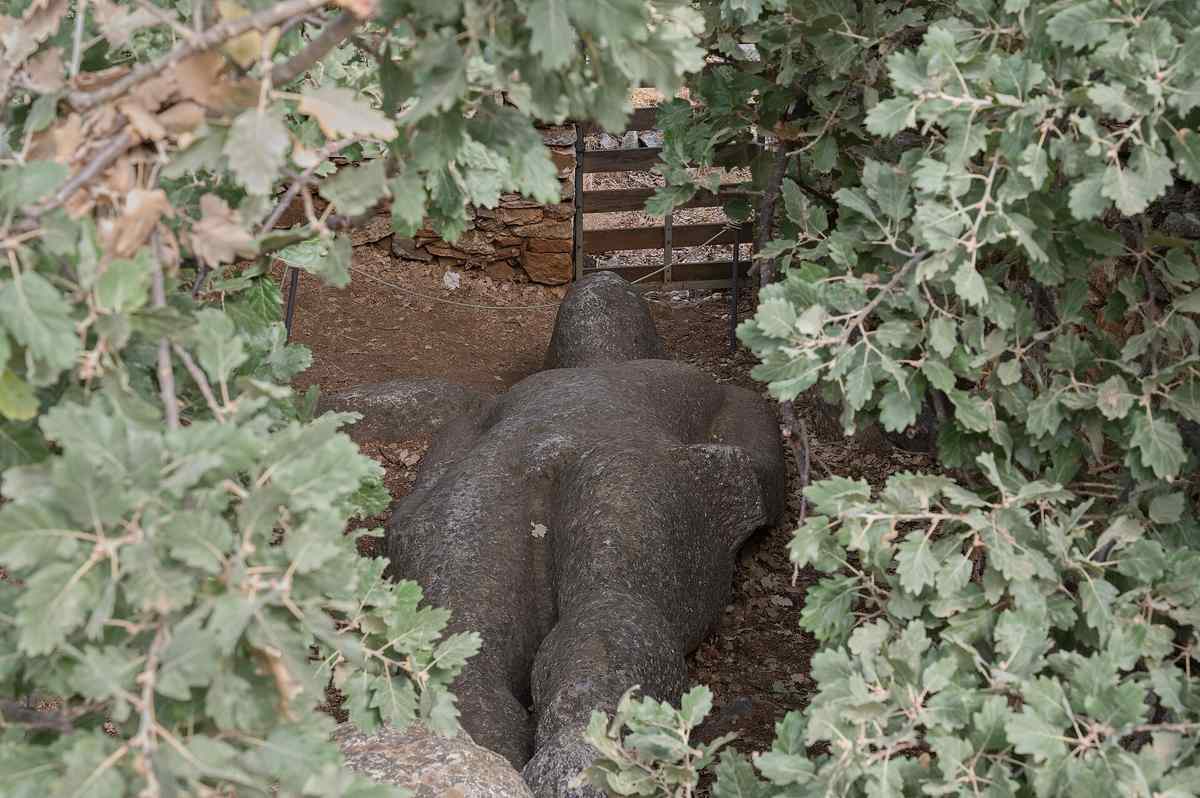
The Flerio kouroi are two enormous unfinished ancient marble statues, carved directly at the quarry and abandoned where they lay. Each depicts a standing youth tens of metres long and remains half-shaped in the local stone among gardens near Melanes.
The Flerio quarries, on the edge of the Melanes valley, were among the most important sources of marble in antiquity. It was here that sculptors began roughing out colossal statues before transporting them. Two of these unfinished works, known as the Flerio kouroi, still lie on the hillside where they were left. A kouros is an archaic standing male figure, arms held to the sides and one foot forward, a type produced across the Greek world in the earliest period of monumental sculpture.
The Melanes examples are unusually large, and because they were never completed you can clearly read the marks of the ancient stonecutters, the rough blocking of the body and the shaping that was interrupted, perhaps by a flaw in the marble or a change of plans.
Walking up to a kouros lying in a private garden, framed by olive trees and a spring, is a strangely intimate encounter with the ancient world. The setting is peaceful rather than monumental, and small signs and a modest visitor area help explain what you are seeing. These figures are cousins of the even more famous giant statue in the north of the island, the great unfinished Kouros of Apollonas. Together they tell the story of Naxos as a marble powerhouse of the archaic age. Beyond the statues themselves, the valley around Flerio preserves the springs, terraces and estate buildings that grew up over centuries, and that layered landscape is the next thing worth understanding.
What is the landscape and the Della Rocca estate like?
The Melanes landscape is a watered mosaic of springs, terraced olive groves, orchards and old stone watermills. At its centre stands the Della Rocca-Barozzi estate, a fortified Venetian-era country property linked to one of Naxos’s leading noble families.
The defining feature of Melanes is water. Springs rise across the valley and were channelled through stone conduits to power watermills and irrigate the fields, creating a green corridor that stands out sharply against the surrounding Cycladic hills. Ancient and later builders lined the water sources with masonry, certain of which survives near the kouros sites. The constant moisture supports plane trees, ferns and mossy banks that feel almost un-island-like. Olive groves climb the terraced slopes, dozens of worked by families for generations, and the produce of the valley, from oil to citrus, has long supplied the island.
This combination of abundant water and good marble is exactly why the area was settled, quarried and cultivated so intensively over such a long span of time.
At the heart of this productive landscape lies the Della Rocca-Barozzi estate, a country property associated with a prominent Venetian-descended family who held influence on Naxos during the centuries of Latin rule after the medieval conquest of the Cyclades. The estate reflects the fortified rural architecture of that world, a self-contained property built to oversee farmland, water and marble resources. Set among gardens and springs, it adds a layer of aristocratic and agricultural history to a valley already rich in ancient remains. Understanding this working, lived-in landscape makes the next step obvious, because the best way to appreciate Melanes is on foot, along the shaded paths that thread between its springs, groves and monuments.
What is there to do and walk in Melanes?
In Melanes you can follow the signposted kouros walk, explore shaded footpaths between springs and olive groves, watch valley birdlife, and eat in traditional tavernas. It is a place for gentle walking and quiet sightseeing rather than beaches.
The main draw is the walk to the Flerio kouroi, a short, mostly easy route from the parking area up to the quarry gardens where the statues lie. Along the way you pass springs, stone terraces and a small taverna, and the shade of the trees makes it comfortable even in the heat of the day. Beyond the kouros trail, the wider valley is criss-crossed by old paths and lanes that once linked hamlets, mills and fields. These make for peaceful strolls with big rewards in scenery. Melanes is also one of the better spots on Naxos for birdlife, with warblers, nightingales and other species drawn to the greenery.
It appeals to walkers and nature lovers as considerable as to history enthusiasts because of the water.
Food is a genuine pleasure here. A handful of family-run tavernas serve local dishes built around valley produce, olive oil, cheeses and vegetables. Sitting under a plane tree with a cool drink after the kouros walk is one of the simplest joys of inland Naxos. The pace is slow and the atmosphere unhurried, which is precisely the point of visiting. Melanes pairs well with a longer day exploring the interior. It connects easily to nearby historic settlements such as Sangri with its ancient temple, so dozens of visitors combine the two.
Once you know what there is to see and do, the only remaining question is the practical one of how to reach the valley and organise your visit.
How do you visit Melanes?
Reach Melanes by a short fifteen-minute drive inland from Naxos Town, following signs toward the villages and the Flerio kouros site. Park at the marked area, walk to the statues, and bring water, sturdy shoes and time for a taverna stop.
The easiest way to visit Melanes is by car or scooter from Naxos Town, a straightforward drive of about seven kilometres that takes roughly fifteen minutes on a good road. The route is signposted toward the villages and, closer in, toward the kouros of Melanes or Flerio, so it is hard to miss. There is a small parking area near the start of the kouros walk, from which a short footpath leads to the statues in their garden settings. Wear comfortable shoes, carry water, and allow at least a couple of hours if you want to enjoy the walk, the springs and a leisurely meal.
Public buses do serve inland Naxos, but a private vehicle or a guided tour gives you far more flexibility to combine sites across the valley.
Melanes works beautifully as part of a wider inland loop rather than a standalone stop, and it sits within easy reach of the broader villages of the interior and nearby monuments. A wide range of travellers pair it with a visit to Sangri and its ancient Temple of Demeter, or with other Tragaea villages, turning a half-day into a rich exploration of the island’s green heart. A guided tour takes the navigation and logistics off your hands and adds context to the ancient quarries and estates you will see. Plan your visit and tours through our Naxos travel guide.
Frequently Asked Questions
Is Melanes worth visiting on Naxos?
Yes, Melanes is well worth visiting, especially if you want to see a side of Naxos beyond its beaches and main town. The valley offers a rare combination of natural beauty and deep history within a short drive of Chora, making it an easy and rewarding half-day trip. Its greatest highlight is the pair of unfinished ancient kouros statues at Flerio, colossal figures that lie in peaceful garden settings and give an unforgettable, close-up sense of how the ancient Greeks quarried and carved marble. Around them you will find springs, olive groves, old watermills and the historic Della Rocca-Barozzi estate, all set in a lush green landscape that feels unusually cool and verdant for the Cyclades.
Add friendly family tavernas serving local produce, gentle walking paths and rich birdlife, and Melanes becomes an ideal choice for travellers who enjoy scenery, culture and a slower pace. It suits history lovers, walkers and families alike, and it pairs naturally with other inland villages for a fuller day of exploring the island’s interior.
How do you get to the Flerio kouros from Naxos Town?
Getting to the Flerio kouros from Naxos Town is simple and quick. The site lies in the Melanes valley about seven kilometres inland, roughly a fifteen-minute drive on a good, signposted road. From Chora you head inland toward Melanes, following brown or local signs that point toward the kouros or Flerio as you approach. There is a small parking area near the start of the trail. From there a short, mostly easy footpath leads up to the statues, which rest among gardens and springs. Sturdy shoes and a bottle of water are useful, as the ground can be uneven and the sun strong in summer. Tree cover provides welcome shade along a great deal of the route.
A car or scooter is the most convenient way to arrive, giving you freedom to explore the wider valley. Local buses to inland Naxos are also available for those without their own transport. A host of visitors prefer a guided tour, which handles the driving and adds valuable historical context to the quarries and the statues you will see.
What else can you combine with a trip to Melanes?
A trip to Melanes combines easily with a series of other highlights of inland Naxos, making it perfect for a half-day or full-day loop. The most popular pairing is with Sangri and its beautifully restored ancient Temple of Demeter. It lies a short drive to the south and offers a striking contrast to the unfinished kouroi at Flerio. From there you can continue into the wider Tragaea region, a green upland dotted with traditional stone villages, Byzantine churches and Venetian towers. Places like Chalki reward slow wandering and cafe stops.
It also fits neatly at the start or end of a day that includes the coast, the castle of Chora, or the island’s famous beaches because Melanes sits so close to Naxos Town. Food is part of the appeal too, so dozens of travellers time their visit around lunch at a valley taverna. For visitors who want an efficient, well-planned route through these inland sights, a guided tour ties the villages, temples and ancient quarries together into a single, memorable day of discovery across the heart of the island.