
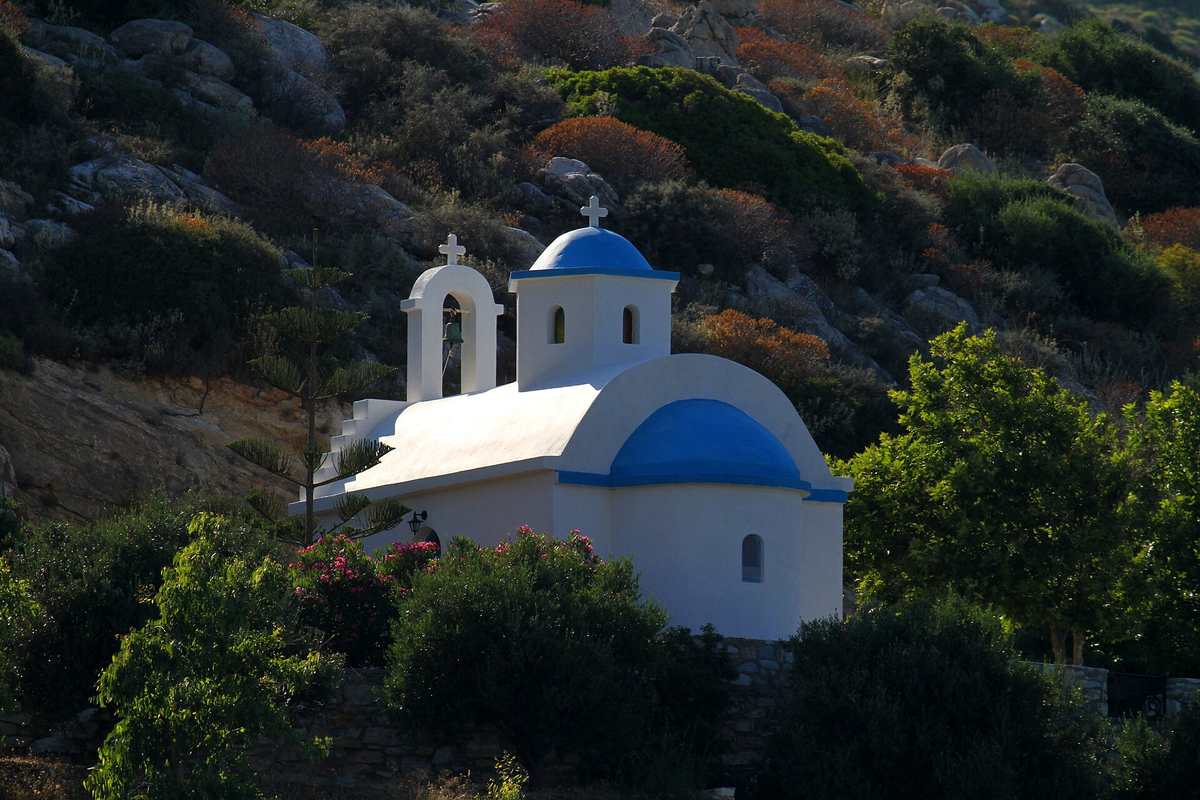
Most visitors know Naxos for its long sandy beaches, yet the true character of the island lives inland, among the mountain and inland villages scattered across its green heart. Here olive groves, terraced fields, and stone hamlets replace the coast, and a slower, more authentic Cyclades reveals itself. Whitewashed lanes wind past Byzantine chapels, Venetian towers, and family tavernas serving cheese, honey, and local wine. Each village keeps its own dialect, festivals, and crafts, giving the interior a depth a handful of other islands can match. Exploring this world of stone and marble rewards curious travellers, and it is easiest to appreciate with My Greece Tours guiding the way through the valleys.
Understanding how these settlements fit together makes any trip richer, and our detailed Naxos travel guide maps the routes, drives, and stops that connect them. The interior is compact enough to explore in a day or two, yet dense with things to see and taste. The sections below cover what the villages of Naxos are like, the Tragaea valley with Halki and Filoti, Apeiranthos and the northern villages, what to see and taste in them, and how to tour the villages of Naxos.
What are the villages of Naxos like?
The villages of Naxos are green, stone-built mountain and inland settlements set among olive groves, orchards, and terraced fields.
Naxos is the largest and most fertile island in the Cyclades, and this abundance shapes its interior completely. Unlike the bare, wind-scoured hills of a host of neighbouring islands, the Naxian mountains are cloaked in olive trees, vineyards, citrus groves, and plane-shaded streams. Around forty inland villages nestle in this landscape, most of them clustered in the central valleys or climbing the slopes of the island’s highest mountain. Each settlement grew where water and farmland allowed, so the villages sit among cultivated terraces rather than perched for defence alone. The result is a patchwork of stone hamlets, church domes, and dry-stone walls that feels genuinely lived-in, worked by families who still tend the same fields their ancestors farmed.
Life in these villages still follows the rhythm of the land. Shepherds move flocks between summer and winter pastures, families press olives in autumn, and every hamlet marks its saint’s feast day with music, food, and dancing in the square. The Venetian and Byzantine past is visible everywhere: fortified towers built by noble families, tiny frescoed chapels tucked into the hills, and marble fountains worn smooth by generations. Prices are gentle and welcomes are warm because the interior stayed agricultural rather than touristic. To see this world at its best, start where it is greenest and most concentrated, in the fertile bowl at the island’s centre known as the Tragaea valley.
What defines the Tragaea valley, Halki and Filoti?
The Tragaea is a wide green valley of olive groves at the centre of Naxos, dotted with Byzantine churches and towers. Its two main villages are Halki, the elegant former capital, and Filoti, the largest mountain village, spread across the slopes of Mount Zas.
The Tragaea forms the lush core of the island, a broad plateau of ancient olive trees where more Byzantine churches survive than almost anywhere else in Greece. At its heart lies Halki, a graceful village of neoclassical mansions, Venetian towers, and shaded squares that once served as the commercial capital of Naxos. Here you can visit the historic Vallindras distillery, where the island’s famous kitron liqueur is still made from citron leaves, and admire the frescoed church of Panagia Protothroni. A short drive away, Filoti spreads dramatically across the flank of the mountain, its whitewashed houses stacked above a central plane-shaded plateia buzzing with village life.
Filoti is the largest of the mountain villages and the natural base for exploring the high interior. From its edge, a well-marked path leads up to the summit of Mount Zas, passing the cave where, in myth, the god Zeus was said to have been raised. The village comes alive during its great festival of the Dormition, one of the biggest religious celebrations in the Cyclades. Both Halki and Filoti reward slow wandering: cobbled lanes, hidden chapels, tavernas serving mountain cheese and wine, and shops selling local honey and woven goods. From the Tragaea the road climbs higher still, toward the marble villages of the north, where the landscape and the stone itself begin to change.
The mountain kitchens inspire a Naxos cooking class built on village produce.
What are Apeiranthos and the northern villages like?
Apeiranthos is the most striking northern village, built almost entirely of grey marble and famous for its Cretan-descended dialect and small museums.
High on the eastern slopes sits Apeiranthos, often called the most beautiful village on Naxos and unlike anywhere else in the Cyclades. Its lanes, staircases, and archways are paved and built entirely in local grey marble, giving the whole settlement a cool, silvery gleam. Settled long ago by families from Crete, Apeiranthos preserves a distinct dialect, strong traditions of poetry and song, and a series of small but excellent museums covering archaeology, geology, and folk life. Venetian towers rise among the houses, and the marble squares fill with the sound of local musicians during festivals. It is a place to linger over coffee, browse woven textiles, and feel how deeply the mountain shaped its people.
North of Apeiranthos the road winds through certain of the island’s most dramatic scenery toward Koronos, a village tumbling down a steep green ravine and long associated with emery mining and its own excellent wine. Further on, the route drops sharply to the sea at Apollonas, once a fishing village and now a relaxed resort with a sheltered bay. On the hillside above lies its famous kouros, a huge unfinished marble statue abandoned in an ancient quarry, a reminder that Naxian marble has been prized since antiquity. These northern villages complete the interior circuit, and everywhere across it the same treasures appear: old churches, fortified towers, and the food and drink that define Naxian village life.
The vineyards around them reward a session of wine tasting in Naxos.
What to see and taste in the villages
In the villages of Naxos you can see hundreds of Byzantine churches, Venetian towers, and marble fountains, then taste the island’s celebrated produce: kitron liqueur, graviera and other cheeses, thyme honey, and robust local wine, all made by families using traditional methods.
The interior of Naxos is an open-air museum of sacred and defensive architecture. The island holds one of the greatest concentrations of Byzantine churches in Greece, a wide range of with fragile early frescoes. Dozens of Venetian towers built by feudal families to guard the fertile valleys. In villages such as Chalki, Sangri, Melanes, and Halki you can walk between chapels barely larger than a room, admire carved marble lintels and fountains, and step inside fortified mansions that recall the island’s long Venetian rule. Nearby Sangri guards the elegant Temple of Demeter. The Melanes valley shelters two more ancient kouroi lying in the groves, so history layers upon history at almost every turn along the quiet lanes.
The villages are equally rewarding for the table. Naxos is the great larder of the Cyclades, and its produce is famous across Greece. Halki gives its name to kitron, a fragrant liqueur distilled from citron; mountain dairies turn out graviera, arseniko. Soft xinotyro cheeses; and beekeepers press aromatic thyme honey from the hillsides. Add sun-ripened potatoes, cured meats, and full-bodied wines from Koronos and the terraced vineyards, and every taverna becomes a showcase of local flavour. A host of producers welcome visitors for tastings, from the distillery in Halki to small family cellars. Seeing and tasting all of this is easiest with a plan, so it helps to know how to tour the villages efficiently.
How to tour the villages of Naxos
The best way to tour the villages of Naxos is a circular drive through the interior, linking the Tragaea, Apeiranthos, and the north in a day.
The classic route is a loop that leaves Naxos Town and heads inland through Melanes and Sangri into the Tragaea valley, stopping at Halki and Filoti, before climbing east to Apeiranthos. From there the road runs north through Koronos and down to Apollonas on the coast, then follows the scenic western shore back to town. Driven at an easy pace with stops for churches, viewpoints, and lunch, the full circuit fills a rewarding day, though a wealth of travellers split it over two. A hire car or scooter gives the most freedom, but the island’s public buses also link the main villages a cluster of times daily, making Halki, Filoti. Apeiranthos reachable without your own transport.
For a deeper experience, a guided tour takes the stress out of the mountain roads and unlocks the stories behind each village, from Venetian families to Byzantine painters and the makers of kitron and cheese. Guides can arrange tastings, time visits around festivals, and reach chapels that are easy to miss on your own. Whichever way you travel, start early to enjoy the cool morning light on the marble of Apeiranthos, wear comfortable shoes for cobbled lanes, and leave room in your schedule for a long village lunch. Plan your visit and tours through our Naxos travel guide.
Frequently Asked Questions
Which villages of Naxos are worth visiting?
The most rewarding villages sit in the fertile interior of the island. Halki, in the heart of the Tragaea valley, charms with neoclassical mansions, Byzantine churches, and the historic distillery where kitron liqueur is made. Filoti, the largest mountain village, spreads across the slopes of Mount Zas and makes a lively base for exploring. Apeiranthos, built entirely of grey marble, is often called the most beautiful village on Naxos and holds a series of small museums. Further afield, Koronos clings to a dramatic ravine and produces fine wine, while Apollonas on the north coast guards a giant ancient marble statue.
Smaller gems such as Sangri, with its Temple of Demeter, and the Melanes valley with its ancient kouroi reward those with more time. Together these villages offer churches, towers, local food, and authentic mountain life, and most can be linked on a single circular drive through the green centre of the island.
What local products are the villages of Naxos famous for?
The villages of Naxos are celebrated across Greece for their food and drink, thanks to the island’s exceptionally fertile land and long farming tradition. The best known product is kitron, a fragrant citrus liqueur distilled from the leaves and fruit of the citron tree, produced most famously at the Vallindras distillery in Halki. Naxian cheeses are equally prized, especially graviera, along with the sharper arseniko and soft xinotyro made in mountain dairies. Beekeepers across the hills produce aromatic thyme honey, and the sun-ripened Naxos potato has protected status and a loyal following. The terraced vineyards around Koronos and the interior yield robust local wines, while village butchers cure traditional meats.
A host of producers welcome visitors for tastings, so a tour of the villages easily becomes a tour of flavours. Buying honey, cheese, and a bottle of kitron directly from the families who make them is one of the great pleasures of exploring the Naxian interior.
How long do you need to explore the villages of Naxos?
You can see the highlights of the villages in a single well-planned day, but two or three days let you experience them properly. A one-day circular drive from Naxos Town through the Tragaea valley, Apeiranthos. The northern villages down to Apollonas covers the essentials, with stops for churches, viewpoints, and a long village lunch. With a second day you can slow down, walk the marble lanes of Apeiranthos at leisure, hike part of the way up Mount Zas from Filoti. Visit the Temple of Demeter near Sangri and the ancient kouroi in the Melanes valley.
Those with a deeper interest in Byzantine art, Venetian history, or local food and wine could happily spend longer, timing a visit around a village festival for music and dancing. Even a short excursion feels rich, so it is worth building at least a full day into any Naxos itinerary for the villages alone because the interior is compact and the roads scenic.