
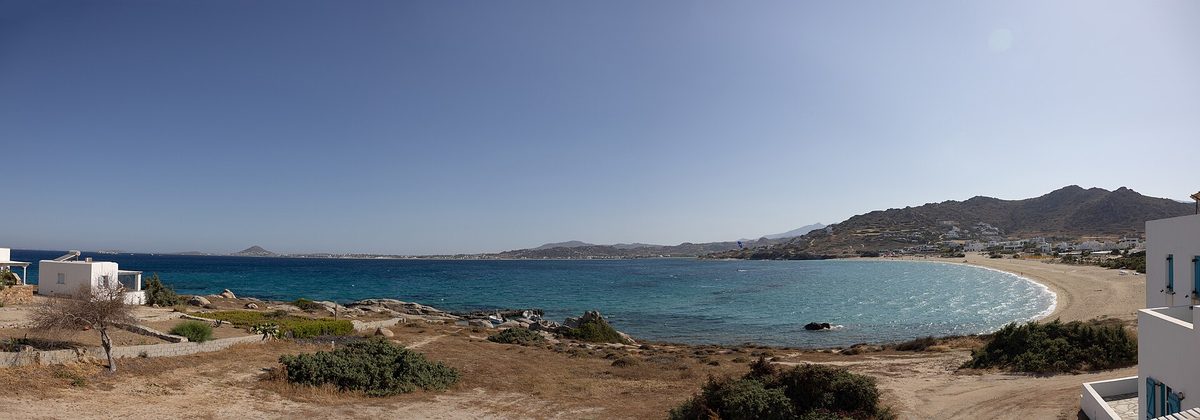
Mikri Vigla is a striking twin-bay beach on the southwest coast of Naxos, framed by pale dunes and a rugged granite headland that pushes out into the Aegean. The name means little lookout, a nod to the rocky promontory that once served as a watch point over the sea. Today the same headland does something more practical: it splits the coast into two bays with completely different characters, one built for wind and one built for calm. Riders, families and beach walkers all find their spot here. You can explore Mikri Vigla and the wider southwest coast with My Greece Tours if you want the local rhythm without guesswork.
This page is part of our wider Naxos travel guide, which sets Mikri Vigla in the context of the island’s beaches, villages and day trips. Here we focus on one of the most distinctive stretches of coast on Naxos, a place shaped as a great deal of by the wind as by the water. The sections below cover what Mikri Vigla is, why it ranks as Greece’s top windsurf and kite spot, which bay suits swimming versus watersports, the schools and facilities on site, and how to get there and when to go.
What is Mikri Vigla in Naxos?
Mikri Vigla is a twin-bay beach on the southwest coast of Naxos, divided by a low granite headland. The northern bay is calm and sandy, the southern bay flat and wind-swept, giving one stretch of coast two distinct moods within a short walk.
The headland is the key to understanding Mikri Vigla. It is a broad shoulder of weathered granite that juts into the sea, and the smooth boulders scattered around its base are a signature of the landscape here. On either side the coast opens into sand: to the north lies the sheltered bay often called Parthena or Limanakia. To the south lies the long, open sweep locals nickname Sahara for its wide dunes. Low cedar and juniper hold the dunes in place behind the sand, and the water shades from pale turquoise in the shallows to deeper blue offshore.
It is one of the more untouched corners of the island, and it sits naturally within the broader family of beaches of Naxos. Understanding this split sets up the next question: why the wind matters so considerable here.
Mikri Vigla is not a resort beach in the built-up sense. Development is low and spread out, with a handful of small hotels, studios and tavernas set back from the shore rather than a strip of high-rises. This restraint is part of the appeal, because it keeps the focus on the natural stage of dunes, granite and open sea. The beach faces broadly west and southwest, which is why it catches both dramatic sunsets and the full force of the summer wind. Walkers can trace the shoreline from one bay to the other in a handful of minutes, crossing the headland on foot. The contrast between the two sides becomes obvious the moment you round the rocks.
That contrast is exactly what makes the wind so central to the place.
Why is it Greece’s top windsurf and kite spot in Naxos?
Mikri Vigla earns its reputation from the meltemi, the strong, reliable summer wind that funnels across the southern bay. Consistent side-shore conditions, flat and shallow water, and a wide sandy launch make it one of the most dependable windsurf and kitesurf venues in Greece.
The meltemi is a dry north-to-northwest wind that blows across the Aegean through the warm months, and Naxos sits squarely in its path. At Mikri Vigla the geography sharpens it further, because the headland and the shape of the southern bay channel the airflow into a steady, side-shore direction that riders prize. The wind is not just strong but consistent, often filling in through the middle of the day and holding for hours. This is why schools and travelling riders build their trips around it. Shallow, largely flat water near shore lets beginners stand and reset, while stronger gusts and more open water further out reward advanced sailors and kiters.
Our guide to things to do in Naxos helps balance the schedule if you want to plan riding days around other activities. The wind also decides which bay you choose, and that is the next practical question.
What sets Mikri Vigla apart from a host of wind spots is the combination of reliability and safety. The southern bay offers a huge, forgiving launch area of soft sand, so rigging and launching a kite or board is straightforward even when the wind is up. The shallow shelf means a fall rarely turns serious, and the side-shore angle carries riders back toward the beach rather than out to sea. Riders can trust the forecast and commit to a base here for a week or more because the meltemi is so predictable in high summer. Windsurfers and kitesurfers often share the water with careful zoning, and the wide beach absorbs the crowds.
All of this makes the spot suit first-timers taking a lesson and experienced riders chasing power in the same session. The steady breeze makes this the island’s prime spot for windsurfing in Naxos.
Which bay is best for swimming versus watersports?
The northern bay is best for swimming and families, with calmer, more sheltered water behind the headland. The southern bay is the watersports zone, where the meltemi and flat shallows favour windsurfing, kitesurfing and lessons rather than relaxed swimming.
Choosing your bay is the single most useful decision at Mikri Vigla. The northern side, Parthena or Limanakia, sits in the wind shadow of the headland. Its water stays noticeably calmer and its shallows warm up gently, which is ideal for children, less confident swimmers and anyone who simply wants to float. Small sandy coves and smooth rocks give it an intimate, sheltered feel. The southern bay, by contrast, is where the action happens: wide, exposed and wind-swept, it is dominated by sails and kites through the afternoon and is better admired than swum in when the meltemi is up.
Families who want a calmer, broader stretch nearby often pair a visit with Plaka Beach just to the north. Knowing which side you need also tells you which facilities to look for, and that is the next section.
Timing plays into the choice as well. Early mornings at Mikri Vigla are often still, before the meltemi builds, so even the southern bay can be pleasant for a swim at the start of the day. Swimmers naturally drift to the protected northern side while riders take over the south as the wind fills in. This daily rhythm means the same beach can serve very different visitors depending on the hour. Sunbathers who want the dunes and the open horizon can still enjoy the southern side from the sand, watching the kites, while keeping their swims to the calmer water. Reading the wind and the time of day is the local skill here.
Once you have it, you can move between the two bays to get the best of both worlds on a single visit. Launch your own boat from the headland through boat rental in Naxos.
What schools and facilities are there at Mikri Vigla?
Mikri Vigla has established windsurf and kitesurf schools offering lessons, rentals and storage, alongside beach bars, a handful of tavernas and small accommodation set back from the sand. Facilities cluster around the southern bay where the wind and the launch area are.
The watersports centres are the heart of Mikri Vigla’s facilities. Long-running windsurf and kitesurf schools operate on the southern bay, offering structured courses for complete beginners, refresher clinics and equipment hire for those who already ride. You can rent boards, sails, kites, wetsuits and harnesses by the hour, the day or the week. Dozens of centres provide storage and rigging space so you do not have to haul gear back and forth. Instructors know the local wind intimately and time lessons to match conditions, which shortens the learning curve considerably. Beyond the water, beach bars serve cold drinks and light food within sight of the action, giving non-riders a comfortable base.
This concentration of services makes it easy to plan a full day, which leads naturally to how you actually reach the beach.
Accommodation at Mikri Vigla is low-key and spread across the headland and the slopes behind the bays. You will find small hotels, studios and rooms rather than large complexes, a wide range of them family-run and geared toward returning wind-sport visitors. A handful of tavernas serve traditional Naxian cooking, and the pace after dark is relaxed rather than lively, which suits guests who spend their days on the water. Most services sit within an easy walk of the sand because the settlement is compact. That said, Mikri Vigla is not a large village. Travellers wanting more shops, restaurants and nightlife use Naxos Town as their hub and treat the beach as a day base or a quiet retreat.
Knowing this shapes how most people plan their transport and their stay.
How do you get to Mikri Vigla and when should you go?
Mikri Vigla lies roughly seventeen to eighteen kilometres southwest of Naxos Town, about a twenty-five to thirty minute drive.
Reaching Mikri Vigla is simplest by road. From Naxos Town you follow the main coastal route south past Agios Prokopios, Agia Anna and Plaka, then take the signed turn-off toward the beach; the whole trip takes around half an hour in normal conditions. A hire car or scooter gives you the freedom to arrive early for calm swims and stay for the evening wind. To combine the beach with other stops along the west coast. Public buses serve the coastal beaches in summer, but they run less frequently to Mikri Vigla itself, so a host of visitors prefer their own wheels.
It sits at the far end of the string of famous west-coast sands, so it pairs easily with the wider beaches of Naxos on a single coastal drive. Timing your visit well is the final piece of the puzzle.
The best timing depends on what you want. For windsurfing and kitesurfing, the peak of summer is prime, when the meltemi is at its most reliable and the schools are in full swing; riders plan trips specifically for these windy weeks. The shoulder edges of the season and the quieter early mornings offer gentler water before the wind builds if you are chasing calm swims and family beach days. Whatever your plan, bring sun protection and water, because the exposed dunes offer little natural shade, and check the daily forecast so you can pick the right bay for the conditions. Plan your visit and tours through our Naxos travel guide.
Frequently Asked Questions
Is Mikri Vigla suitable for beginners in windsurfing or kitesurfing?
Yes, Mikri Vigla is one of the better places in Greece for beginners, largely because of its geography and its established schools. The southern bay has a wide, soft sandy launch area that makes rigging and getting into the water straightforward. The shallow, largely flat water near shore lets learners stand up, pause and reset without being swept into deep water. The side-shore direction of the meltemi tends to carry riders back toward the beach rather than out to sea, which adds a natural safety margin. Local windsurf and kitesurf schools run structured beginner courses with qualified instructors who time lessons to the conditions. A first-timer can start in gentler morning wind and build up as confidence grows.
Rental gear, wetsuits and harnesses are available on site, so you do not need to travel with equipment. That said, the meltemi can blow hard at the height of summer, so beginners should take lessons rather than heading out alone and always check the daily forecast first.
Which bay at Mikri Vigla is better for children and families?
The northern bay, often called Parthena or Limanakia, is the better choice for children and families. It sits in the shelter of the granite headland, which blocks a great deal of the wind. The water stays calmer and the sandy shallows warm up gently, making it comfortable for young swimmers and less confident bathers. Small coves and smooth rocks give it a more enclosed, intimate feel compared with the wide open southern bay. The southern side is where windsurfers and kitesurfers gather. When the meltemi is up it is genuinely windy, with sails and kites moving fast across the water, so it is less suited to relaxed family swimming during peak afternoon hours.
Families often visit in the calmer early morning, keep their swimming to the northern bay, and enjoy the dunes and the spectacle of the riders from the sand. For a broader, easy-going stretch nearby, the neighbouring west-coast beaches such as Plaka give families more room and shallow water. They combine well with a Mikri Vigla stop on the same coastal drive.
Do I need a car to visit Mikri Vigla?
You do not strictly need a car, but it makes visiting Mikri Vigla far easier and more flexible. The beach sits roughly seventeen to eighteen kilometres southwest of Naxos Town, about a twenty-five to thirty minute drive along the coastal road past Agios Prokopios, Agia Anna and Plaka. A rental car or scooter lets you arrive early for calm swims before the wind picks up, stay into the evening. Combine Mikri Vigla with other west-coast beaches and inland villages on the same trip. Public buses do serve the coastal beaches in summer.
Services to Mikri Vigla itself tend to be less frequent than to the closer beaches, which can leave you tied to a limited timetable, especially if you are carrying watersports gear or travelling with children. Taxis and organised transfers are alternatives, and dozens of wind-sport visitors book accommodation right at the beach so they do not need to travel daily. Hiring your own wheels is generally the most practical and rewarding option if you plan to explore Naxos widely.