
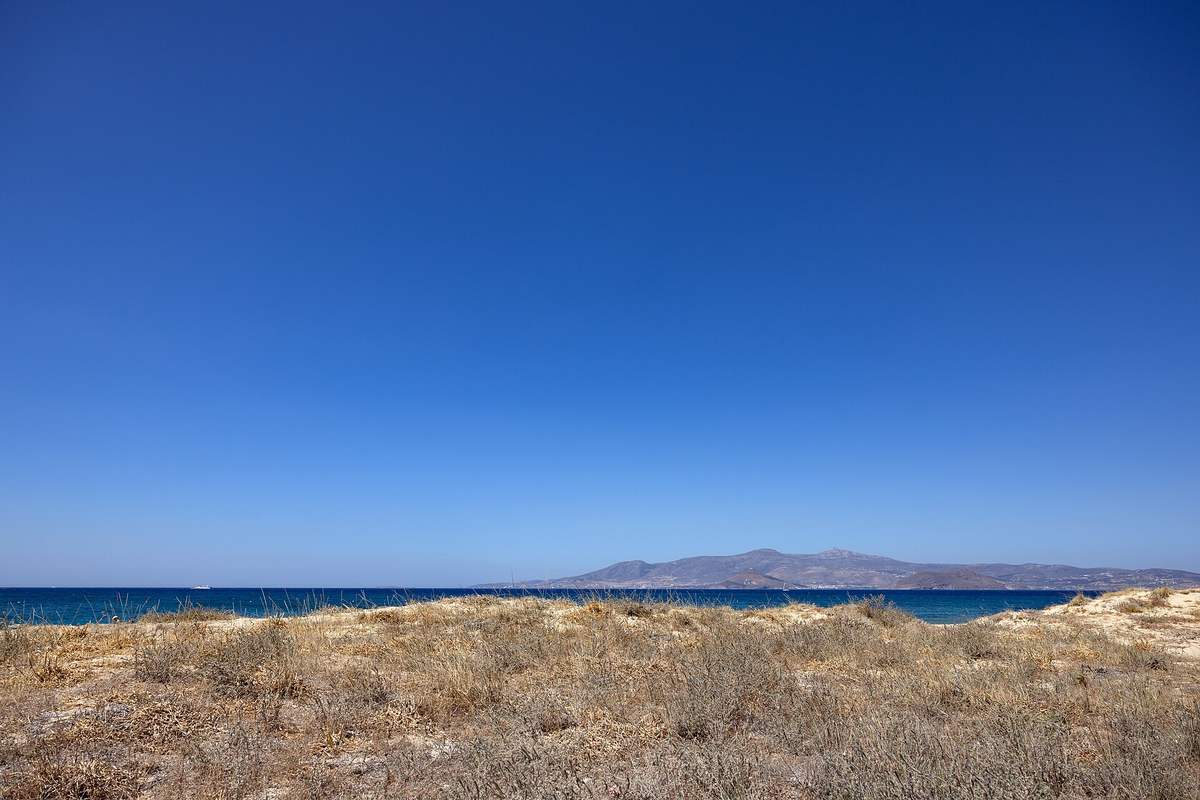
Agia Anna sits on the sunny southwest coast of Naxos, a short hop south of Agios Prokopios and only a couple of kilometres from Naxos Town. Once a modest fishing village, it has grown into a relaxed seaside resort while keeping its small-scale, family-friendly character intact. The pace here is gentle: a compact harbour with bobbing boats, a wide ribbon of soft sand, and easygoing tavernas where lunch drifts into the afternoon. It suits travellers who want a real Cycladic beach base without the crowds of larger resorts. You can reach the whole southwest coast on a guided tour with My Greece Tours if you would rather leave the planning to someone else.
This guide explains what makes Agia Anna special and how to build it into a wider island trip using our Naxos travel guide. Whether you stay a night or a week, understanding the layout of the coast helps you get the most from your days by the sea. The sections below cover what Agia Anna actually is, what the beach is like, the harbour and village atmosphere, the neighbouring beaches of Agios Prokopios and Plaka, and how to get there and where to stay.
What is Agia Anna on Naxos?
Agia Anna is a small seaside resort and former fishing village on the southwest coast of Naxos, just south of Agios Prokopios. It pairs a sandy Blue-Flag beach with a working harbour and an unhurried, family-friendly mood.
The name Agia Anna refers both to the tiny settlement and to the beach that fronts it, so travellers use the word for the whole stretch of coast here. For generations this was a quiet fishing anchorage, and boats still tie up at the little quay each morning. Tourism arrived gradually rather than all at once, which is why the village never lost its human scale. There are no high-rise hotels and no sprawling strips of nightlife; instead you find low whitewashed buildings, a handful of studios and small hotels. Tavernas that look straight onto the water.
The setting places Agia Anna within easy reach of the wider beaches of Naxos, yet it feels like a self-contained little world.
Geographically, Agia Anna marks the southern end of one of the island’s longest continuous sandy coastlines. To the north it blends into Agios Prokopios, and to the south the sand runs on uninterrupted into Plaka, so you can walk for kilometres barefoot at the water’s edge. The land behind the beach is flat and sheltered, with low dunes, tamarisk trees, and small salt flats that give the area a soft, natural frame. This gentle geography is exactly what shapes the character of the beach itself. This is the next thing most visitors want to understand before they choose where to lay their towel.
What is Agia Anna beach like?
Agia Anna beach is a wide, soft-sand Blue-Flag beach with clear, shallow, calm water that shelves very gently, making it ideal for families and weaker swimmers. It offers a mix of organised sections with sunbeds and quieter free stretches toward Plaka.
The sand at Agia Anna is pale gold and fine underfoot, sloping so gradually into the sea that children can wade out a long way while the water stays waist-deep. This shallow, protected profile keeps the sea unusually calm on most days, and the water clarity is excellent, shading from turquoise near the shore to deeper blue further out. The Blue-Flag status reflects consistently clean water and good facilities, which reassures families choosing a base for a longer stay. The northern part of the beach, closest to the harbour and the road, is the most organised, with sunbeds, umbrellas, and easy access to refreshments only steps away.
It is easy to escape the busier sections simply by walking south because the coastline is so long. Natural sand backed by dunes and tamarisks, where you can spread a towel with ample space around you as you move away from the harbour the sunbeds thin out and the beach opens into wide. Afternoon breezes can pick up here, as they do across the Cyclades, but the bay’s orientation keeps conditions manageable for most swimmers. The harbour and the village behind it are only a short stroll away. That easygoing waterfront is what gives Agia Anna most of its charm when the sun climbs and you want shade and a cold drink.
What is the harbour and village atmosphere like?
Agia Anna’s harbour is a small, picturesque fishing port where colourful boats still land the daily catch. The compact village behind it stays low-key, with tavernas, cafes and shops along the waterfront.
The little port is the heart of Agia Anna and its most photographed corner. A short breakwater shelters a scatter of fishing caiques painted in blue, red. White, and in the early morning you can watch fishermen sorting nets and unloading crates of fish. That daily rhythm keeps the village grounded in its origins even at the height of summer. Around the quay, tables spill out onto the waterfront, so you dine with your feet almost over the water and the boats swaying just beyond. Fresh seafood is the obvious choice, but the tavernas also serve classic Naxian dishes made with the island’s celebrated cheeses, potatoes, and local produce.
The overall feel is calm and family-oriented rather than lively. Evenings are about a long dinner, a walk along the sand, and perhaps a nightcap at a quiet bar, not clubs or loud crowds. This makes Agia Anna especially popular with couples and families who want an authentic, restful base with everything within walking distance. It also works beautifully as a launch point for exploring the coast on foot. The neighbouring beaches immediately north and south are the natural next stops for anyone staying here because the resort is so small.
What is nearby — Agios Prokopios and Plaka?
Immediately north lies Agios Prokopios, one of the island’s most acclaimed beaches, while directly south the sand continues seamlessly into Plaka. Both are walkable from Agia Anna along the shore, making it an ideal base for beach-hopping the southwest coast on foot.
Just around the low headland to the north is Agios Prokopios beach, regularly ranked among the finest in Greece for its powder-soft sand and vivid turquoise water. It is livelier and more developed than Agia Anna, with a broader choice of beach bars and watersports. A host of visitors base themselves in quiet Agia Anna and stroll north for a change of scene. The walk takes only a short while, and the two beaches together give you the best of both worlds: a calm home base and a buzzier neighbour a handful of minutes away.
Head south instead and the beach simply keeps going. The sand of Agia Anna continues without interruption into Plaka Beach, a vast, dune-backed expanse that is one of the longest and most laid-back stretches on Naxos. You can walk barefoot from the Agia Anna harbour all the way along the shoreline, choosing exactly how quiet you want your patch of sand to be because there is no physical break. This seamless coastline is one of the region’s great pleasures. Once you have explored it you will want to know the practicalities of getting to Agia Anna and settling in for a stay.
How do you get to Agia Anna and where do you stay?
Agia Anna is about six kilometres from Naxos Town and easy to reach by frequent local bus, taxi, or hire car, with parking near the beach. Accommodation ranges from studios and apartments to small family-run hotels within walking distance of the sand.
The simplest way to arrive is by the regular local bus. It runs often between Naxos Town and the southwest beaches, calling at Agios Prokopios and Agia Anna before continuing toward Plaka. The ride is short and inexpensive, making a car unnecessary if you plan to stay put and enjoy the beach. That said, hiring a car or scooter opens up the rest of the island, from the mountain villages inland to the marble quarries and the beaches of the wild south. There is parking close to the Agia Anna waterfront. A taxi from town or the port is another quick option, especially with luggage on arrival day.
For where to stay, Agia Anna offers a good spread of studios, apartments, and small hotels, most of them a short walk from the beach and the harbour tavernas. It is a smart choice if you want a peaceful, family-friendly base that is still close to Naxos Town and superbly connected to the neighbouring beaches. Book ahead for the peak summer weeks, when the best-placed rooms near the water fill quickly. Once your base is sorted, the whole southwest coast, from Agios Prokopios to Plaka and beyond, is yours to explore at an easy pace. Plan your visit and tours through our Naxos travel guide.
Frequently Asked Questions
Is Agia Anna beach on Naxos good for families with young children?
Yes, Agia Anna is one of the best family beaches on Naxos. The sand is soft and clean, and the sea shelves so gently that the water stays shallow for a long way out, letting small children paddle and play safely close to shore. On typical days the bay is calm and sheltered, without the strong waves you sometimes meet on more exposed coasts. The beach holds Blue-Flag status, which signals consistently clean water and reliable facilities. The organised section near the harbour has sunbeds, umbrellas. Refreshments within a handful of steps, so parents can keep everything close at hand, while the quieter stretches toward Plaka offer more space if you prefer room to spread out.
Add the walkable village with its tavernas and small shops. You have an easy, low-stress base where a day at the beach never requires a long trek or a car. Dozens of families return year after year for exactly this combination of safety, comfort, and calm.
Can you walk from Agia Anna to Agios Prokopios and Plaka?
Yes, and the walks are one of the joys of staying here. To the north, Agios Prokopios lies just around a low headland and is reached in a short stroll, either along the shore or by the coastal road; it is a livelier, more developed beach with more bars and watersports, ideal for a change of scene. To the south the journey is even simpler because there is no break in the sand at all: Agia Anna flows directly into Plaka. You can walk barefoot at the water’s edge for kilometres, picking a quieter spot the further you go.
This seamless coastline means you can base yourself in calm little Agia Anna and still enjoy two of the island’s most celebrated beaches on foot, without needing a car for day-to-day beach-hopping. Comfortable footwear or sandals help on the road sections, and taking water is wise in high summer, but otherwise the routes are flat, easy, and genuinely pleasant.
How do you get from Naxos Town to Agia Anna?
Agia Anna sits roughly six kilometres southwest of Naxos Town, and there are a cluster of easy ways to cover the short distance. The most economical is the local bus, which runs frequently along the southwest coast, stopping at Agios Prokopios and Agia Anna on its way toward Plaka; the ride takes only a matter of minutes and needs no advance booking. A taxi is a convenient alternative, particularly on arrival day when you have luggage, and the fare for such a short hop is modest. Hiring a car or scooter gives you the freedom to reach the mountain villages, the ancient marble sites.
The remoter southern beaches, and there is parking available near the Agia Anna waterfront if you want to explore beyond the beaches. A wide range of visitors happily manage without a car, using public transport for the beaches and perhaps a single hire day for a wider island tour because the resort is so close to town and so well served by buses.