
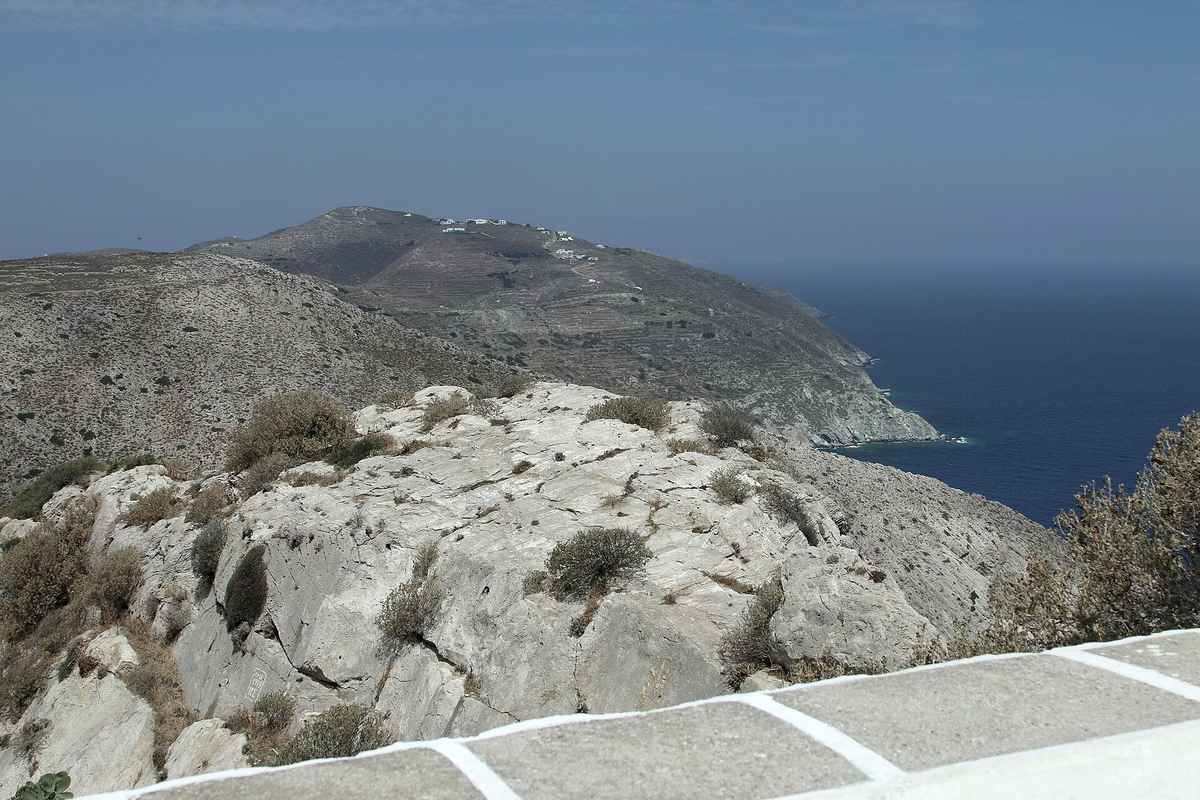
Milos and Folegandros combine beautifully on one western Cyclades trip, pairing volcanic beaches with a dramatic cliff-top Chora over a short ferry. Plan ferries and tours through My Greece Tours.
Combining the two is a natural plan in the Milos travel guide. The sections below cover why they pair well, how many days for each, the ferry between them, the order to visit and a sample itinerary.
Why combine Milos and Folegandros?
Milos and Folegandros pair well as western Cyclades neighbours linked by a short ferry, yet they differ. Milos brings dramatic volcanic beaches and boat trips, while Folegandros brings one of Greece’s most beautiful cliff-top Choras and a wild, unspoilt calm.
The two islands suit each other. Milos delivers beaches. Folegandros delivers a Chora. The blend rewards.
Both sit in the western Cyclades. A short ferry joins them. Both stay relatively quiet. The pairing flows.
Milos spreads its drama wide. Coloured coves line the coast. Boat trips fill the days. The variety dazzles.
Folegandros concentrates its beauty. A cliff-top Chora crowns it. Wild cliffs plunge to the sea. The calm runs deep.
Milos and Folegandros are western Cyclades neighbours, and pairing them gives a trip that balances variety with concentrated drama. Milos is the larger and more varied of the two, an island whose coloured volcanic coves, sea caves and boat trips spread an abundance of beaches and scenery across a relaxed, easy-going coast that rewards exploring over several days.
Folegandros is smaller, wilder and more dramatic, famous above all for its spectacular Chora, a whitewashed village perched on the edge of a sheer cliff high above the sea, widely considered one of the most beautiful in Greece. With its rugged landscape, quiet beaches and unspoilt, romantic calm, it offers a more intense, scenic counterpoint to Milos. Combining the two captures both the beach variety of Milos and the cliff-top magic of Folegandros. Our Milos vs Folegandros comparison weighs them up, and the next section covers how many days for each.
How many days should you spend on Milos and Folegandros?
Spend around four days on Milos and two to three on Folegandros for a balanced trip.
The split favours Milos. Four days suit its beaches. Two or three suit Folegandros. The trip balances well.
Milos needs room to roam. The boat trip fills a day. The coves spread wide. The driving adds up.
Folegandros stays compact. The Chora charms quickly. The beaches sit near. A couple of days suffice.
Romance can stretch it. The cliff-top calm lingers. An extra night soothes. The pace eases.
For a balanced trip, around four nights on Milos and two to three on Folegandros works well. Milos earns the larger share because its attractions are spread out: a full day goes to the boat trip to Kleftiko, the coloured beaches lie scattered around the coast, and the villages and ancient sites each reward unhurried time behind the wheel of a car or quad.
Folegandros is far smaller and more concentrated, so two to three nights comfortably cover its highlights: wandering and dining in the spectacular cliff-top Chora, watching a sunset from its lofty perch, visiting the church of Panagia above the village, and a swim at beaches like Agali and Katergo reached on foot or by boat. Couples drawn to its romantic calm may happily linger an extra night. Our Milos itinerary guide plans the Milos days, and the next section covers the ferry.
How do you get from Milos to Folegandros?
You get from Milos to Folegandros by a short ferry across the western Cyclades, with fast catamarans and conventional boats running in summer. The crossing is relatively quick, making the two neighbours easy to combine, though connections thin out outside the season.
A short ferry joins the islands. Boats leave from Adamas. Folegandros lies southeast. The crossing stays quick.
Fast boats lead the way. Catamarans cross swiftly. Slower ferries follow. Both serve the route.
Summer fills the schedule. Frequent sailings link them. Winter thins them out. Planning helps.
Booking ahead secures it. The route fills in season. Tickets sell fast. Early plans win.
Milos and Folegandros lie close together in the western Cyclades, so the ferry between them is relatively short and straightforward, one of the easier hops in the region. Both fast catamarans and slower conventional boats serve the route in the summer season, departing from the port of Adamas on Milos and arriving at the small port of Karavostasi on Folegandros, with the fast boats covering the distance quickly.
Sailings are most frequent in high summer, as across the western Cyclades, when slotting the crossing between the two stays is easy, while in the cooler months the connections reduce and need more careful planning around the timetables. Booking ahead in peak season is wise, and leaving a little flexibility helps against the occasional weather disruption to fast craft. Our guide to how to get to Milos covers the routes, and the next section covers which island to visit first.
Should you visit Milos or Folegandros first?
Either order works for Milos and Folegandros, as the ferry links them both ways. Milos has wider connections and an airport, so starting or ending there can ease onward travel, while many save the cliff-top drama of Folegandros for a memorable finale.
The order stays flexible. Ferries run both ways. Either island opens well. Logistics often decide.
Milos links widely. Its airport eases travel. Its ferries fan out. Starting there can suit.
Folegandros caps the trip. Its Chora stuns at the end. Its sunsets linger. The finale rewards.
Connections shape the call. Flights and ferries align. The schedule guides the order. Both ways reward.
Either order works for a Milos and Folegandros trip, as the ferry connects them both ways and each makes a fine start or finish. Practicalities often decide it: Milos is the larger island with wider ferry connections and its own small airport, which can make it convenient to begin or end the trip there for onward travel, especially if you are flying.
That said, many travellers like to save Folegandros for last, ending the trip on the unforgettable image of its cliff-top Chora glowing at sunset, a dramatic finale after the beaches and boat trips of Milos. Others prefer to wind down on the calm of Folegandros before a livelier return through Milos. Both islands link to Piraeus near Athens, so check the ferry and flight schedules for your dates and let them guide the order. Our things to do in Milos guide covers the Milos leg, and the next section sketches an itinerary.
What is a good Milos and Folegandros itinerary?
A good trip spends four nights on Milos for its boat trip, beaches and villages, then two to three on Folegandros for its cliff-top Chora, sunsets and beaches, linked by a short ferry and bookended by ferries or flights via Athens.
The itinerary splits the trip. Milos takes the larger share. Folegandros caps it. A short ferry bridges them.
Milos fills four days. A boat trip leads. Beaches and villages follow. Sarakiniko stuns at sunset.
Folegandros fills two or three. The Chora charms. A sunset crowns a night. A beach fills a day.
Athens frames the trip. Ferries or flights connect. The route flows. The trip feels complete.
A rewarding plan starts with four nights on Milos. Give the first day to the Kleftiko boat trip and its sea caves, the second to the coloured beaches of the south coast, the third to the villages of Plaka and Klima and the ancient sites, and the fourth to a remote cove, ending on the white rock of Sarakiniko at sunset.
Then take the short ferry to Folegandros for two to three nights. Use the first evening to wander and dine in the magical cliff-top Chora and watch the sunset, a second day for a swim at Agali or Katergo beach and the walk up to the church of Panagia, and any extra time for the island’s quiet, romantic calm. Bookend the trip with ferries or flights via Athens. This route blends the beach variety of Milos with the cliff-top drama of Folegandros. Plan the Milos half through our Milos itinerary guide.
Pairing Milos with Folegandros is a way to experience two very different kinds of Cycladic beauty in one easy trip. Milos overwhelms you with the variety and colour of its coast, a new beach or sea cave around every corner, while Folegandros concentrates its magic into a single unforgettable image, the white Chora clinging to its cliff above the sea. Both belong to the quieter western Cyclades, so the trip stays relaxed and authentic throughout, and the short ferry makes the transition effortless. For a holiday that balances beach abundance with romantic drama, few western Cyclades combinations are as rewarding or as simple to arrange.
How do Milos and Folegandros differ?
Milos is a large volcanic island with the largest natural harbour in the Cyclades and coloured beaches like Sarakiniko and Kleftiko. Folegandros is smaller, wilder and quieter, defined by a clifftop Chora and secluded coves.
Scale separates the two. Milos spreads across a broad volcanic coast. Folegandros stays compact and steep. The contrast defines the pairing.
Milos owes its shape to volcanic activity, and that geology built the largest natural harbour in the Cyclades, a wide bay that shelters the port of Adamas. The same forces coloured the coast, producing the white lunar rock of Sarakiniko, the sea caves of Kleftiko and a long list of coves in reds, oranges and whites. The island rewards a car and several days of exploring.
Folegandros trades that breadth for height and calm. The island rises to a whitewashed Chora set on the lip of a sheer cliff, with the sea far below and cube houses lining car-free lanes. Its beaches sit in quiet coves reached on foot or by small boat, and the pace stays slow. The two islands share the whitewashed Cycladic look yet feel distinct, which is exactly what makes the combination work.
Getting around marks another difference. Milos rewards a rented car or quad, since its coloured beaches, villages and ancient sites lie scattered along the coast and inland, and a boat handles the caves at Kleftiko. Folegandros works on foot within the Chora and by short bus, taxi or boat to the coves, so a car matters less. The islands also differ in mood, with Milos leaning active and varied and Folegandros leaning romantic and restful. Our Milos vs Folegandros guide sets out the contrast in detail.
When is the best time to visit Milos and Folegandros?
June and September, the shoulder-season months, suit a Milos and Folegandros trip best. The sea stays warm, ferries run often and the crowds and prices ease compared with the height of summer.
Shoulder season fits this pairing. June opens the warm months. September closes them. Both dodge the peak crush.
June brings settled weather, warm water and long daylight, with ferry timetables already at their fuller summer frequency across the western Cyclades. The islands feel lively yet uncrowded, and rooms in the Chora of Folegandros or near Adamas on Milos are easier to secure than in August. Walking the trails and beaches stays comfortable before the highest heat arrives.
September holds the warm sea and dependable sailings while the August rush fades, which makes moving between the two islands smoother. The meltemi wind can pick up in the western Cyclades and occasionally disrupts fast craft, so a buffer day around the crossing protects the plan. July and August deliver the best weather and the most ferries, at the cost of higher prices and busier beaches. Winter thins the connections sharply and suits only flexible travellers.
Should you add Sifnos to a Milos and Folegandros trip?
Sifnos slots naturally into a Milos and Folegandros trip for travellers with extra days. It sits in the same western Cyclades cluster, linked by ferry, and adds hilltop villages, footpaths and a strong food reputation to the mix.
Sifnos extends the route well. The island lies in the same cluster. Ferries tie it to both neighbours. Three islands still form one relaxed loop.
Sifnos is known for its whitewashed hilltop villages, a network of old stone footpaths and a cooking tradition that draws food-minded visitors to the western Cyclades. Two to three nights cover the villages of Apollonia and Kastro, a walk between chapels and a swim at a sheltered bay, which balances the beaches of Milos and the clifftop calm of Folegandros with a gentler, greener character.
Ferries tie the three islands into one western Cyclades cluster, so the crossings stay short and the loop holds together. Sifnos sits between Milos and the busier ports, and the same fast catamarans and conventional boats that link Milos and Folegandros call at its port of Kamares in summer. Booking each leg ahead in peak season keeps the connections tight, and a buffer day guards against a windy sailing. A three-island trip suits travellers who want village life and walking alongside the beaches and clifftop drama of the two core islands.
Adding Sifnos does lengthen the trip and the ferry legs, so it works best on a stay of ten days or more. A common order runs Milos first for its beaches and boat trip, then Sifnos for its villages and walks, then Folegandros for a clifftop finale, all bookended by ferries or flights through Athens. Travellers on a shorter week are better served keeping the focus on the two core islands. Our Milos travel guide anchors the planning.
Frequently Asked Questions
Can you visit both Milos and Folegandros in one trip?
Yes, you can easily visit both Milos and Folegandros in one trip, as the two western Cyclades neighbours are linked by a relatively short ferry, frequent in the summer season. They make a rewarding pairing because they differ, with Milos offering dramatic volcanic beaches and boat trips and Folegandros offering one of the most beautiful cliff-top Choras in Greece and a wild, unspoilt calm. A balanced trip might spend around four nights on Milos and two to three on Folegandros. Booking the ferry and accommodation ahead in peak season, and allowing a buffer day against weather, keeps the trip smooth.
How far is Folegandros from Milos by ferry?
Folegandros is a relatively short ferry trip from Milos, as the two islands are close neighbours in the western Cyclades, making it one of the easier hops in the region. Both fast catamarans and slower conventional boats serve the route in the summer season, departing from the port of Adamas on Milos and arriving at Karavostasi on Folegandros, with the fast boats quickest. Sailings are most frequent in high summer, when the two islands combine easily, while in the cooler months connections reduce and need more careful planning around the timetables. Booking ahead in peak season is recommended.
Is Folegandros worth visiting from Milos?
Yes, Folegandros is very much worth visiting from Milos, and the two pair beautifully as western Cyclades neighbours. Folegandros is famous for its spectacular Chora, a whitewashed village perched on the edge of a sheer cliff high above the sea, widely considered one of the most beautiful in Greece, along with its wild landscape, quiet beaches and unspoilt, romantic calm. It offers a more concentrated, dramatic counterpoint to the beach variety of Milos. A short ferry links the two, and two to three nights are enough to enjoy the Chora, a sunset, a beach and the island’s peaceful atmosphere, making it a rewarding addition to a Milos trip.
How many days do you need for Milos and Folegandros together?
You need about six to seven days for Milos and Folegandros together, which allows around four nights on Milos and two to three on Folegandros. Milos takes the larger share because its attractions spread across a wide volcanic coast: a full day goes to the Kleftiko boat trip, the coloured beaches lie scattered around the shore, and the villages and ancient sites reward unhurried driving. Folegandros is smaller and more concentrated, so two to three nights cover the clifftop Chora, a sunset, the church of Panagia above the village and a swim at a quiet cove. Adding Sifnos or extra beach days pushes the trip toward nine or ten days.
Which is better for beaches, Milos or Folegandros?
Milos is the stronger choice for beaches, as its volcanic coast holds a long variety of coloured coves, sea caves and boat-trip stops such as Sarakiniko and Kleftiko, reached by car, quad or boat. Folegandros has fewer beaches, and they sit in quiet coves like Agali and Katergo reached on foot or by small boat, which suits travellers who value calm and scenery over choice. The two complement each other: Milos supplies the beach abundance, while Folegandros supplies the clifftop drama and peace. Combining them gives a trip that covers both, linked by a short western Cyclades ferry.