
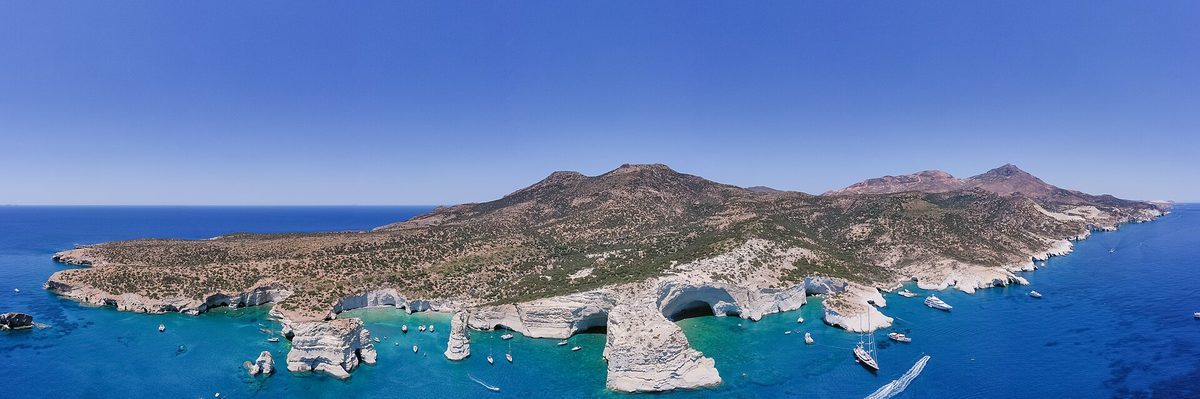
Choosing between Milos and Kefalonia pits a volcanic Cycladic island of dramatic coves against a large, green Ionian island of famous beaches and caves. Plan island tours and tickets through My Greece Tours.
This comparison is a common question in the Milos travel guide. The sections below compare the landscapes, the beaches, the vibe, the access and which island suits you best.
Which is better, Milos or Kefalonia?
Milos is better for dramatic volcanic beaches, sea caves and a compact Cycladic feel, while Kefalonia is better for green mountains, famous beaches and a larger, varied island.
Each island offers a different Greece. Milos is small and volcanic. Kefalonia is large and green. The choice turns on taste.
Pick Milos for the coast. Coloured coves and caves define it. The beaches headline the trip. The boat days dazzle.
Pick Kefalonia for the green. Mountains rise high. Famous beaches gleam. Caves hide underground.
Both reward the beach lover. Milos sells volcanic colour. Kefalonia sells Ionian drama. Scale splits them.
Milos and Kefalonia represent two different faces of Greece, Cycladic and Ionian. Milos sits in the western Cyclades as a small, sun-baked volcanic island where bare hills, mineral-streaked cliffs and dozens of coves turn the coast into the main attraction. Compact and quick to cross, it is made for beaches, boat trips and the strange, sculpted geology of the Aegean, easily covered from a single base.
Kefalonia, the largest of the Ionian islands, lies in the green, mountainous west of Greece, famous for the dazzling beach of Myrtos, the underground lake of Melissani cave, its mountains, vineyards and lush scenery. It is bigger, greener and more varied where Milos is compact, bare and volcanic. Choose Milos for colourful volcanic coves and a focused island trip, and Kefalonia for green mountains, famous beaches, caves and a larger island to explore. The next section compares the landscapes.
How do the landscapes of Milos and Kefalonia compare?
Milos has a dry, compact volcanic landscape of coloured cliffs, white rock and bare hills, while Kefalonia is large, green and mountainous, with pine-clad peaks, vineyards and underground caves. One is a sculpted Aegean coast, the other a lush, dramatic Ionian island.
The two landscapes diverge. Milos runs bare and compact. Kefalonia runs green and tall. Nature drives the gap.
Milos owes its look to fire. Volcanic rock paints the coast. Cliffs glow red and white. Hot springs warm the shore.
Kefalonia owes its look to mountains. Mount Ainos rises high. Vineyards stripe the slopes. Caves pierce the rock.
The contrast shapes the trip. Milos dazzles with colour. Kefalonia awes with green. Both edge clear seas.
The landscapes here contrast Aegean and Ionian Greece. Milos is an unmistakably Aegean island, sculpted by long-cooled lava and mineral springs into cliffs of rust, grey and brilliant white, sea caves and a coast crimped into countless coves. Bare, sun-bleached hills and a compact size, crossable in well under an hour, give it the classic stark beauty of the western Cyclades.
Kefalonia is far larger, greener and more mountainous. Dominated by the pine-clad peak of Mount Ainos, it spreads across a lush landscape of forested mountains, vineyards producing its renowned Robola wine, dramatic coastal cliffs and remarkable underground features like the Melissani and Drogarati caves. It is verdant and grand where Milos is bare and compact. A traveller drawn to coloured volcanic geology and a small island will warm to Milos, while one who loves green mountains, forests and caves will lean toward Kefalonia. The next section compares the beaches.
Which has better beaches, Milos or Kefalonia?
Both have superb beaches of different kinds. Milos has dozens of colourful volcanic coves and sea caves, while Kefalonia has famous dramatic beaches like Myrtos with white pebbles and blue water.
Both islands excel at beaches. Milos sells colour and caves. Kefalonia sells dramatic bays. Both run dazzling.
Milos wins on variety. The coloured coves astonish. Sarakiniko glows white. Kleftiko hides its caves.
Kefalonia wins on icons. Myrtos sweeps below cliffs. White pebbles meet blue water. The scene stuns.
The choice depends on taste. Milos craves the camera. Kefalonia craves the postcard. Both reward the swimmer.
Both Milos and Kefalonia are beach destinations of the highest order, which makes the comparison close. Milos offers unmatched variety, with dozens of coves of remarkable colour and form, from the lunar white of Sarakiniko to the coloured cliffs of the south and the cave-riddled rock of Kleftiko reached by boat. For a traveller who loves varied, colourful, photogenic swimming and boat trips, the Milos coast is a wonderland.
Kefalonia counters with the most famous beaches in Greece. Myrtos, a sweep of white pebbles and electric-blue water beneath towering cliffs, is among the most photographed in the country, while Antisamos, Petani and the harbour cove of Assos add to a coast of dramatic, green-backed Ionian beauty. They are iconic and spectacular, though fewer and larger than the dozens of coves of Milos. Choose Milos for variety and boat-trip coves, and Kefalonia for famous, cliff-backed Ionian beaches. The next section compares the vibe.
How do the vibe and atmosphere of Milos and Kefalonia compare?
Milos has a compact, chic Cycladic vibe with a foodie scene and boat trips, while Kefalonia feels larger, greener and more spread out, with lively resorts, mountain villages and a relaxed Ionian pace.
The two moods differ in scale. Milos feels compact and chic. Kefalonia feels large and varied. Size shapes both.
Milos carries a Cycladic buzz. Whitewashed villages charm. The food scene shines. The boat trips draw a crowd.
Kefalonia spreads its life wide. Resorts dot the coast. Villages fill the mountains. The Ionian pace relaxes.
Atmosphere follows the island. Milos focuses on the sea. Kefalonia blends coast and country. Both stay welcoming.
In atmosphere, the islands reflect their size and sea. Milos delivers the postcard Cyclades in miniature, a compact island of cube-white houses above a blue sea, with the hilltop village of Plaka, a quietly celebrated food scene and an easy, relaxed summer crowd. Everything sits close together, giving it a focused, intimate feel built squarely around the coast.
Kefalonia is larger, greener and more spread out, with the softer, lusher feel of the Ionian. It blends lively coastal resorts with quiet mountain villages, vineyards and a string of harbours, offering more to explore by car across a varied island, at a relaxed pace. Where Milos delivers a compact, chic Cycladic escape, Kefalonia delivers a green, varied Ionian island to tour. The next section helps you choose between them.
How do you get to Milos and Kefalonia?
Milos is reached by frequent ferries from Piraeus near Athens and by short domestic flights, while Kefalonia is reached by its own airport, summer charter flights and ferries via western mainland ports. Milos is the more convenient island from Athens.
Milos sits in the western Cyclades on a well-served route from the port of Piraeus. Conventional ferries and faster boats connect it to Athens through the season, and a small domestic airport links the island to the capital by a short flight. The port at Adamas handles the arrivals and puts the main beaches, villages and boat-trip harbours within a short drive. A traveller basing a holiday on Athens finds Milos quick to plan and quick to reach, with regular sailings that make the island an easy first stop on a Cycladic route.
Kefalonia lies in the Ionian off the west coast of Greece, and the journey follows a different pattern. The island has its own airport with domestic flights from Athens and summer international charter flights that land visitors directly from abroad. Travellers arriving overland reach it by ferry across the Ionian from western mainland ports such as Kyllini, a route that suits a road trip through western Greece. The capital, Argostoli, and the coastal resorts sit a drive from the airport across a large island.
The access gap favours Milos for a short or Athens-based Greek-island trip, and favours Kefalonia for travellers flying in directly or touring western Greece and the Ionian. Milos also pairs easily with Cycladic neighbours such as Sifnos, Serifos and Kimolos on a single hopping route. Kefalonia connects more naturally with the other Ionian islands and the western mainland. The two lie in different seas, so the choice of gateway often settles the choice of island before the beaches enter the decision at all.
Which island is better value, Milos or Kefalonia?
Kefalonia often offers broader value as a large island with charter flights and varied accommodation, while Milos carries higher summer costs as a compact, popular Cycladic destination. Both stay cheaper than Santorini or Mykonos in peak weeks.
Milos has grown into a sought-after Cycladic island, and its summer prices reflect that popularity. Rooms in Adamas, Plaka and Pollonia fill early for July and August, and the best-rated hotels and boat trips command a premium in peak weeks. The island still undercuts the headline cost of Santorini, and the shoulder months of May, June and September bring softer rates with warm seas. A visitor who books ahead or travels off-peak keeps the budget in check on this compact, coast-focused island.
Kefalonia spreads its costs across a large island with a wide range of places to stay, from lively coastal resorts to quiet mountain villages and rural rooms. Summer charter flights bring package options that can lower the total cost of a trip, and the size of the island keeps rates varied rather than uniformly high. Tavernas serve honest Ionian food at fair prices, and the vineyards, caves and beaches cost little to enjoy once a visitor has a car. Peak weeks around the famous beaches still draw a premium.
The value verdict tracks the shape of each island. Milos asks more for a compact, scenery-led break with celebrated food and boat trips, and repays it with spectacle within short distances. Kefalonia spreads spending over a larger canvas, where a hire car unlocks beaches, caves and villages that reward the outlay. Neither island reaches the headline prices of the famous Cyclades, so the decision rests on what a traveller wants from the money rather than on cost alone.
How do dining and nightlife compare on Milos and Kefalonia?
Milos has a refined food scene and relaxed seaside bars, while Kefalonia has hearty Ionian tavernas, Robola wine and livelier coastal resorts. Milos suits chic dinners and sunset drinks, and Kefalonia suits varied dining across a larger island.
Milos has built a strong reputation for eating well. Fishing villages such as Pollonia and Klima serve fresh seafood at the water’s edge, and Plaka holds stylish tavernas and small restaurants that draw food-minded travellers. The nightlife stays gentle and scenic, centred on sunset bars, cocktails in Adamas and long, unhurried dinners rather than clubs. The mood matches the island, polished and easy rather than raucous, with the coast and the food working together to shape the evenings.
Kefalonia dines and celebrates across a bigger, more varied island. Village tavernas turn out generous plates of local meat, seafood and vegetables, paired with the island’s renowned Robola wine from the vineyards around Mount Ainos. The harbour village of Fiskardo and the resorts along the coast bring livelier bars and a broader nightlife than the quiet Cycladic mould, while mountain villages keep a slower, traditional table. The range suits couples, groups and families looking for choice rather than a single scene.
The dining-and-nightlife contrast captures the two islands neatly. Milos offers refined seaside dinners and relaxed, scenic drinks for couples and food lovers on a compact coast. Kefalonia offers hearty Ionian cooking, its own celebrated wine and a wider spread of resorts and harbours to explore after dark. A visitor should choose Milos for stylish, quiet evenings by the sea and Kefalonia for varied dining and livelier nights across a larger island with its own strong food culture.
What is there to do on Milos and Kefalonia beyond the beach?
Milos fills its days with boat trips, sea caves, the catacombs and hilltop Plaka, while Kefalonia rewards caves, vineyards, mountain drives and harbour villages. Milos leans to coastal sightseeing, and Kefalonia to caves, wine and touring a large island.
Milos rewards a visitor who steps back from the sand. The signature boat trip circles the coast to Kleftiko and its sea caves, the ancient theatre and early Christian catacombs record the island’s long history, and the hilltop village of Plaka rewards an evening walk with a famous sunset. The old fishing hamlets of Klima and Mandrakia, with their painted boat-house syrmata, give the island a distinctive character beyond its coves, all within a short drive on a compact island.
Kefalonia turns its energy to caves, wine and the road. The underground lake of Melissani cave and the caverns of Drogarati rank among the island’s headline sights, and the Robola vineyards around Mount Ainos open their doors for tastings. The harbour village of Assos, the elegant town of Fiskardo and the capital Argostoli each reward a visit, and the mountain roads deliver views across a green, dramatic island. A hire car makes touring the interior and the coast the heart of a Kefalonia holiday.
The activity contrast mirrors the islands themselves. Milos keeps a traveller busy along a spectacular coast, with boat trips and monuments a short drive apart on a compact island. Kefalonia asks a visitor to take to the road, trading a focused coast for caves, vineyards, mountain villages and harbour towns across a large canvas. A holiday on Milos revolves around the sea and its coves, while a holiday on Kefalonia revolves around touring a green, varied island with sights inland as well as along the shore.
When is the best time to visit Milos and Kefalonia?
Both islands shine from May to early October, with the shoulder months calmer and cheaper, while July and August bring the warmest seas and the biggest crowds. Both reward avoiding the busiest weeks of high summer for a more relaxed trip.
Milos suits a long warm season from late spring to early autumn. June and September bring hot days, warm seas and thinner crowds, ideal for boat trips and beach days without the peak-August rush. July and August are the busiest and priciest weeks, when rooms and boats book out early. A visitor who can travel in the shoulder months finds the island at its most relaxed and its best value, with the coloured coves and boat harbours far quieter than at the height of the season.
Kefalonia follows a similar Mediterranean rhythm on a larger island. The summer charter flights concentrate arrivals in July and August, filling the famous beaches and coastal resorts, while May, June, September and early October deliver warm weather with more room to breathe. The green interior and the mountain drives stay pleasant across the shoulder months, and the sea holds its warmth well into autumn. A visitor timing a trip outside high summer enjoys the beaches and caves with lighter traffic on the roads.
The timing verdict points the same way for both islands. Each rewards a broad window from May to October, tilted toward the shoulder months for calm and value, with July and August reserved for those who want the warmest water and the liveliest scene. Avoiding the busiest weeks of high summer improves a trip to either, sparing a traveller the fullest beaches and the highest prices. The next section helps you choose between them.
Should you choose Milos or Kefalonia?
Choose Milos for colourful volcanic beaches, sea caves, boat trips and a compact Cycladic escape, and Kefalonia for green mountains, famous beaches, caves and a larger Ionian island to explore.
The verdict rests on what you want. Milos sells coves and boat trips. Kefalonia sells green and icons. One island wins.
Choose Milos for the coast. Volcanic beaches headline it. Boat trips seal the deal. The food rewards the night.
Choose Kefalonia for the green. Mountains and caves define it. Myrtos stuns. The island spreads wide.
They sit far apart. Milos anchors the Cyclades. Kefalonia anchors the Ionian. One trip rarely fits both.
The decision turns on the island you want. Choose Milos for a small, classically Cycladic volcanic island where coloured coves, sea caves, hot springs and boat trips lie within easy reach of a single base. It rewards travellers who want a focused, scenery-led beach holiday, short distances and the intimate charm of white villages above a blue sea.
Choose Kefalonia for a large, green and mountainous Ionian island of famous beaches like Myrtos, dramatic caves, vineyards and varied scenery, with more space to explore by car at a relaxed pace. The two lie far apart in different seas, Milos in the western Cyclades and Kefalonia in the Ionian off western Greece, so they do not combine on one trip, and most travellers choose one as a focus. Plan your island route through our things to do in Milos guide once you decide.
In the end, the decision often comes down to Aegean against Ionian and compact against large. Milos delivers the classic Cycladic experience in miniature, a small, sun-baked island of white villages, colourful volcanic coves and boat trips that you can know intimately in a few days. Kefalonia delivers the lush, green grandeur of the Ionian on a far bigger canvas, with famous beaches, dramatic caves, mountains and vineyards that reward touring at a relaxed pace. Both are superb beach destinations, so weigh your preference for compact, colourful and Cycladic against green, varied and Ionian, and let that guide you to the island that best matches your holiday.
Whichever you choose, both rank among the finest beach islands in Greece, so a trip to either will be built around spectacular swimming and scenery.
Either island makes a superb holiday on its own, so there is no wrong answer, only the one that better suits your taste.
Frequently Asked Questions
Is Milos or Kefalonia better for beaches?
Both Milos and Kefalonia have superb beaches of different kinds, so the better choice depends on taste. Milos offers unmatched variety, with dozens of colourful volcanic coves, sea caves and moonscapes, from Sarakiniko to Kleftiko reached by boat. Kefalonia offers fewer but iconic beaches, led by the world-famous Myrtos with its white pebbles and electric-blue water beneath towering cliffs, plus Antisamos and Petani. Choose Milos for colourful variety and boat-trip coves in the Aegean, and Kefalonia for dramatic, cliff-backed, postcard-famous beaches in the green Ionian.
Is Kefalonia bigger than Milos?
Yes, Kefalonia is far bigger than Milos. Kefalonia is the largest of the Ionian islands, a substantial island of high mountains, forests, vineyards and a string of towns and villages that takes real time to explore by car. Milos is a compact Cycladic island that can be crossed in well under an hour and is easily covered from a single base in a couple of days. The difference in size shapes the trips: Kefalonia suits touring a large, varied green island with famous beaches and caves, while Milos suits a focused beach-and-boat holiday with short distances between its coves and villages.
Is Milos or Kefalonia easier to reach from Athens?
Milos is generally easier to reach from Athens. It lies in the western Cyclades, connected by frequent ferries from the port of Piraeus and by short domestic flights from Athens. Kefalonia sits in the Ionian off western Greece, reached by a long drive and ferry via the western ports such as Kyllini, or by a domestic flight, and it is also popular with international charter flights in summer. For a trip based on Athens, Milos is the more convenient choice, while Kefalonia is often easier for travellers flying in directly or touring western Greece and the Ionian.
How long do you need for Milos or Kefalonia?
Milos rewards a focused stay of about four to five days, enough to cover the coloured coves, take the signature boat trip to Kleftiko and its sea caves, walk hilltop Plaka at sunset and see the ancient theatre and catacombs. The compact size keeps distances short, so a visitor packs in beaches, villages and a boat day without long transfers. Kefalonia asks for more time as a large island, with a week or more suiting the famous beaches like Myrtos, the Melissani and Drogarati caves, the vineyards of Mount Ainos and the harbour villages of Assos and Fiskardo. A hire car lets a traveller tour the coast and green interior at a relaxed pace. Choose a shorter trip for Milos and a longer, road-based holiday for Kefalonia.
Is Milos or Kefalonia better for a first trip to Greece?
Milos is the better fit for a first trip to Greece for travellers who want the classic Cycladic postcard of white villages, blue sea and colourful volcanic coves, with easy access from Athens and short distances between its sights. It delivers the archetypal island-hopping experience with a strong food scene and memorable boat trips. Kefalonia is an excellent first-trip island for visitors flying in directly on a summer charter, offering famous beaches, dramatic caves, vineyards and a large, green island to tour by car. A first-timer chasing the compact Cycladic dream and easy planning from Athens should lean to Milos, while one arriving on a direct flight and wanting varied scenery, famous beaches and space to explore will find Kefalonia a rewarding introduction to Greece.
Is Milos or Kefalonia better for families?
Both islands work well for families in different ways. Milos suits families who want a compact base, with sheltered southern coves offering calm water for children, a boat trip as a highlight day out and short distances that keep travel between beaches and villages quick. Kefalonia suits families who want space and variety, with famous beaches, the underground Melissani cave, vineyard drives and a large island to explore by car, plus a wide range of resorts and rooms. Younger children may find the compact convenience of Milos easier, while older children often enjoy the caves, road trips and range of activities across Kefalonia. Choose Milos for a relaxed, close-knit family beach holiday, and Kefalonia for a varied, car-based family trip across a green Ionian island.
Can you visit both Milos and Kefalonia on one trip?
Combining Milos and Kefalonia on a single trip is difficult because they sit in different seas with no quick link between them. Milos lies in the western Cyclades, best reached from Piraeus near Athens, while Kefalonia sits in the Ionian off the west coast of Greece, reached by its own airport, summer charters or ferry via western ports such as Kyllini. Travelling from one to the other means routing back across the mainland, which eats up valuable holiday time. Most travellers choose one island as a focus and pair it with nearby neighbours instead, hopping Milos with Sifnos, Serifos or Kimolos in the Cyclades, or combining Kefalonia with the other Ionian islands and western Greece. Pick one sea and one island as the heart of the trip.