
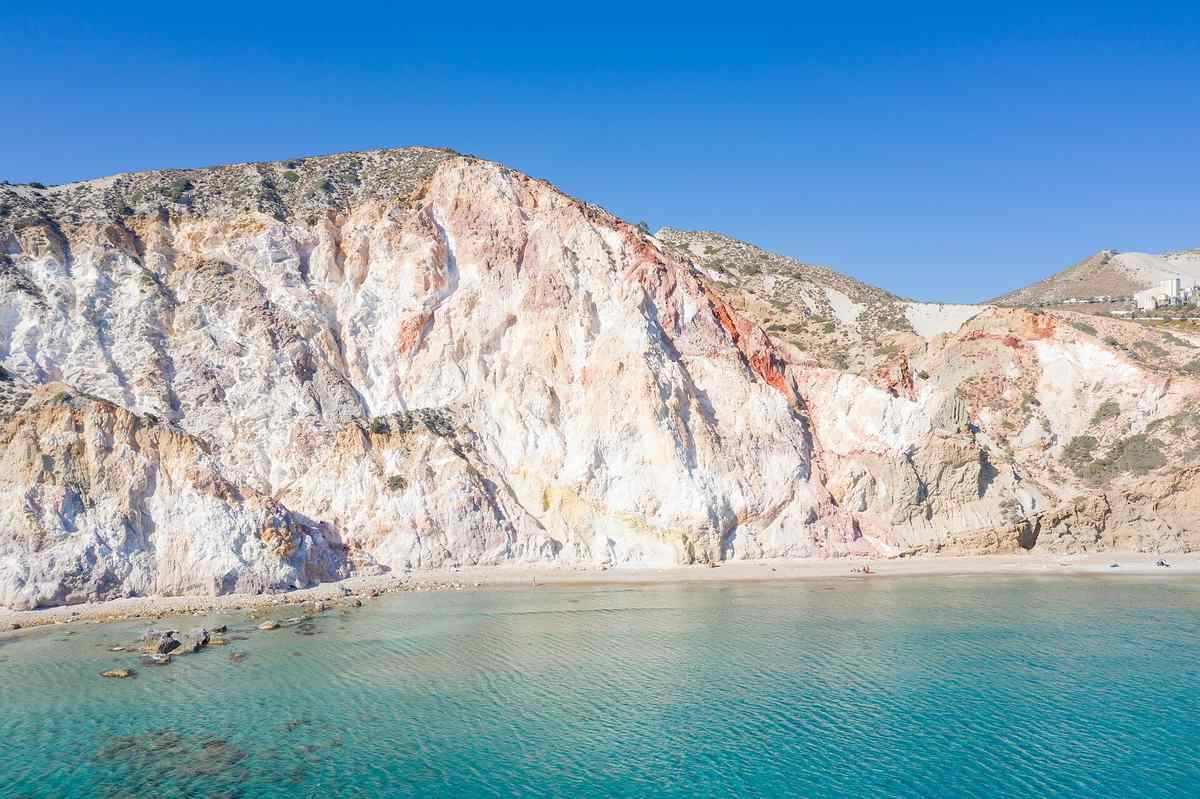
Choosing between Milos and Karpathos pits a volcanic Cycladic island of dramatic coves against a wild, traditional Dodecanese island of mountains and windswept beaches. Plan island tours and tickets through My Greece Tours.
This comparison is a common question in the Milos travel guide. The sections below compare the landscapes, the beaches, the vibe, the access and which island suits you best.
Which is better, Milos or Karpathos?
Milos is better for dramatic volcanic beaches, sea caves and boat trips, while Karpathos is better for wild mountain scenery, windswept beaches and living folk tradition. Choose Milos for colourful coves and easy charm, Karpathos for rugged nature, authenticity and windsurfing.
Each island offers a different Greece. Milos leans volcanic and colourful. Karpathos leans wild and traditional. The choice turns on character.
Pick Milos for the coast. Coloured coves and caves define it. The beaches headline the trip. The boat days dazzle.
Pick Karpathos for the wild. Mountains spine the island. The wind whips the beaches. Tradition runs deep.
Both stay relatively uncrowded. Milos sells colour and calm. Karpathos sells ruggedness. Character splits them.
Milos and Karpathos appeal to different travellers. Milos, in the western Cyclades, is a volcanic island built around its coast, where coloured cliffs, white moonscapes and dozens of dramatic coves make beaches and boat trips the focus. It is scenic, quietly stylish and relatively easy to explore, an island for swimming and chasing the colour and clarity of the sea in a relaxed Cycladic setting.
Karpathos, the second-largest of the Dodecanese, sits remote between Crete and Rhodes and is altogether wilder. A long, mountainous island of dramatic peaks, windswept beaches and the famously traditional mountain village of Olympos, where old customs and dress survive, it is rugged, authentic and a magnet for windsurfers thanks to its strong winds. Choose Milos for colourful volcanic beaches and easy charm, and Karpathos for wild mountain scenery, living tradition and windsurfing. The next section compares the landscapes.
How do the landscapes of Milos and Karpathos compare?
Milos has a dry, volcanic landscape of coloured cliffs, white rock and low bare hills, while Karpathos is large, mountainous and rugged, with high peaks, pine valleys and windswept coasts. One is a sculpted Cycladic coast, the other a wild mountain island.
The two landscapes contrast. Milos runs low and volcanic. Karpathos runs high and rugged. Scale drives the gap.
Milos owes its look to fire. Volcanic rock paints the coast. Cliffs glow red and white. Hot springs warm the shore.
Karpathos owes its look to mountains. Peaks spine the island. Pine fills the valleys. The wind shapes the coast.
The contrast shapes the trip. Milos dazzles with colour. Karpathos awes with scale. Both meet wild seas.
The landscapes here divide between compact Cycladic colour and wild mountain grandeur. Milos is a low, compact island that wears its volcanic birth openly, with mineral-stained cliffs in red, ochre and white, sea caves, arches and warm springs strung along a shore you can drive end to end in under an hour. Its drama is intimate and colourful rather than towering.
Karpathos is far larger and more dramatic in relief. A long, rugged island dominated by a spine of high mountains, it pairs pine-filled valleys and traditional villages with a wild, windswept coastline of cliffs and remote beaches, the north in particular feeling raw and untamed. It is mountainous and elemental where Milos is low and colourful. A traveller drawn to coloured volcanic geology and an easy island will warm to Milos, while one who loves rugged mountains and wild coasts will lean toward Karpathos. The next section compares the beaches.
Which has better beaches, Milos or Karpathos?
Milos has more colourful and varied beaches, with dozens of volcanic coves and sea caves, while Karpathos has long, wild, often windswept sandy and pebbly beaches with turquoise water.
The beaches split by character. Milos sells colour and caves. Karpathos sells wild sand. Both run turquoise.
Milos wins on variety. The coloured coves astonish. Sarakiniko glows white. Kleftiko hides its caves.
Karpathos wins on drama. Long beaches stretch wild. The wind whips the sand. Surfers chase it.
The choice depends on taste. Milos craves calm swims. Karpathos craves the breeze. Both reward the eye.
On beaches, Milos offers colour and variety in a compact space. Within a short span of coast it packs dozens of coves of vivid, contrasting colour, the chalk-white moonscape of Sarakiniko, the burnt-red southern cliffs and the cavernous white rock of Kleftiko reached by boat, balanced by sheltered southern bays for calm, family swimming. The variety on so small an island is remarkable.
Karpathos answers with long, wild and dramatic beaches. Its coast is lined with sweeping sandy and pebbly bays of brilliant turquoise water, such as Apella, Kyra Panagia and Lefkos, set against mountain backdrops, while the exposed beaches around Afiartis make it a world-class windsurfing and kitesurfing destination. They are spectacular but often windy and less sheltered than the calm Milos coves. Choose Milos for varied, colourful, calmer beaches, and Karpathos for wild, breezy beaches and board sports. The next section compares the vibe.
How do the vibe and atmosphere of Milos and Karpathos compare?
Milos has a quietly chic, scenery-led Cycladic vibe with a foodie scene and boat trips, while Karpathos feels wild, deeply traditional and authentic, with living folk customs and a windsurfing crowd.
The two moods differ in spirit. Milos feels chic and scenic. Karpathos feels wild and true. Tradition shapes Karpathos.
Milos carries a Cycladic buzz. Whitewashed villages charm. The food scene shines. The boat trips draw a crowd.
Karpathos guards its customs. Olympos keeps the old ways. Festivals fill the calendar. Tradition lives on.
Surfers gather on Karpathos. The wind draws them south. The board scene thrives. The island stays raw.
In atmosphere, the islands strike different notes. Milos has become a polished yet unpretentious Cycladic favourite, its whitewashed villages such as Plaka backed by a celebrated kitchen scene and a laid-back, stylish summer crowd. Compact and easy to roam, it sets a gentle, coast-focused rhythm that mixes beach days with relaxed village evenings.
Karpathos is wilder, more remote and far more traditional. The mountain village of Olympos is famous for preserving old customs, dialect, dress and festivals, giving the island a powerful sense of living heritage, while its strong winds draw a dedicated windsurfing and kitesurfing crowd to the south. The pace is rugged and authentic rather than polished. Where Milos offers a stylish, scenic beach escape, Karpathos offers raw nature, deep tradition and a board-sports edge. The next section helps you choose between them.
How do you get to Milos and Karpathos?
Milos is reached by frequent ferries from Piraeus near Athens and by short domestic flights, while Karpathos is reached by long ferries across the Dodecanese or by domestic flights to its own airport. Milos is the more convenient island from Athens.
Milos sits in the western Cyclades on a well-served route from the port of Piraeus. Conventional ferries and faster boats connect it to Athens through the season, and a small domestic airport links the island to the capital by a short flight. The port at Adamas handles the arrivals and puts the main beaches, villages and boat-trip harbours within a short drive. A traveller basing a holiday on Athens finds Milos quick to plan and quick to reach, with a route that runs through the summer and into the shoulder months.
Karpathos lies far to the south in the Dodecanese, remote between Crete and Rhodes, and the journey reflects that distance. Ferries from Piraeus take a long haul down the eastern Aegean and often run overnight, and the island has its own airport for domestic flights from Athens and connecting hops from Rhodes. The port and capital of Pigadia serve as the arrival hub for boats, while the airport in the south handles flights. The longer approach suits travellers who want the wild interior, the beaches and the folk traditions rather than a fast beach break.
The access gap favours Milos for a short or first Greek-island trip, and favours Karpathos for travellers already exploring the southern Dodecanese. Milos pairs easily with Cycladic neighbours such as Sifnos, Serifos and Kimolos on a single hopping route. Karpathos connects more naturally with eastern Crete and Rhodes rather than the Cyclades. The seas between the two island groups make a combined trip awkward, so the choice of gateway often settles the choice of island before the scenery even enters the argument.
Which island is better value, Milos or Karpathos?
Karpathos is generally the better-value island, with lower prices and thinner crowds as a remote Dodecanese destination, while Milos carries higher summer costs as a polished, popular Cycladic island. Both stay cheaper than Santorini or Mykonos.
Milos has grown into a sought-after Cycladic island, and its summer prices reflect that popularity. Rooms in Adamas, Plaka and Pollonia fill early for the peak weeks, and the best-rated hotels and boat trips command a premium in high summer. The island still undercuts the headline cost of Santorini, and the shoulder months of May, June and September bring softer rates with warm seas. A visitor who books ahead or travels off-peak keeps the budget in check on Milos.
Karpathos runs cheaper across the board, a reflection of its remote profile and traditional culture. Village tavernas serve honest, local food at modest prices, rooms rarely reach Cycladic peaks, and the island’s appeal costs little, resting on the mountains, the beaches and the folk life rather than paid attractions. The long journey deters the crowds that push up prices elsewhere, so demand stays gentler through the season. For a traveller watching spending, Karpathos stretches a holiday budget further than Milos does.
The value verdict tracks the character of each island. Milos asks more for a stylish, scenery-led break with celebrated food and boat trips, and repays it with colour and spectacle. Karpathos asks less and hands back a raw, authentic experience built on nature, tradition and wild coasts. Neither island is expensive by the standards of the famous Cyclades, so the decision rests on what a traveller wants from the money rather than on cost alone, and both reward booking early for the peak weeks.
How do dining and nightlife compare on Milos and Karpathos?
Milos has a refined food scene and relaxed seaside bars, while Karpathos has hearty tavernas and traditional village festivals. Milos suits chic dinners and sunset drinks, and Karpathos suits authentic feasting and folk celebrations rooted in living custom.
Milos has built a strong reputation for eating well. Fishing villages such as Pollonia and Klima serve fresh seafood at the water’s edge, and Plaka holds stylish tavernas and small restaurants that draw food-minded travellers. The nightlife stays gentle and scenic, centred on sunset bars, cocktails in Adamas and long, unhurried dinners rather than clubs. The mood matches the island, polished and easy rather than raucous, and the painted syrmata boat houses of Klima make a memorable backdrop for an evening meal by the sea.
Karpathos eats and celebrates on its own traditional terms. Village tavernas turn out generous plates of local goat, greens, cheese and honey, often in mountain settings that feel closer to a family table than a restaurant. The nightlife peaks at the folk festivals of Olympos and the interior villages, communal gatherings where locals in traditional dress dance to live lyra music and old customs come alive. These celebrations are the beating heart of Karpathian social life and unlike the polished evenings of a conventional resort island.
The dining-and-nightlife contrast captures the two islands neatly. Milos offers refined seaside dinners and relaxed, scenic drinks for couples and food lovers. Karpathos offers hearty, honest feasting and the raw energy of its folk festivals for travellers who want to witness a living tradition rather than a staged show. A visitor should choose Milos for stylish, quiet evenings and Karpathos for the authentic, communal celebrations that define its mountain villages through the summer. The next section helps you choose between them.
What is there to do on Milos and Karpathos beyond the beach?
Milos fills its days with boat trips, sea caves, the ancient theatre, the catacombs and hilltop Plaka, while Karpathos rewards mountain drives, the folk village of Olympos, hiking and windsurfing. Milos leans to coastal sightseeing, and Karpathos to wild interior and tradition.
Milos offers real depth to explore once a visitor steps back from the sand. The signature boat trip circles the coast to Kleftiko and its sea caves, the ancient theatre and early Christian catacombs record the island’s long history, and the hilltop village of Plaka rewards an evening walk with a famous sunset. The old fishing hamlets of Klima and Mandrakia, with their painted boat-house syrmata, give the island a distinctive character, and an ATV ride opens up the coloured coves and quiet corners beyond the main beaches.
Karpathos turns its energy inland and upward. Mountain roads climb to the famous village of Olympos, where older women still wear traditional dress and old customs and dialect survive, offering a rare window into living Greek folk culture. Hiking trails thread the peaks, pine valleys and remote northern coast, linking chapels and abandoned hamlets, while the windswept southern beaches around Afiartis draw windsurfers and kitesurfers from around the world. The wild north around Diafani rewards travellers who want the island at its most remote and untouched.
The activity contrast mirrors the islands themselves. Milos keeps a traveller busy along a spectacular coast, with boat trips and monuments a short drive apart on a compact island. Karpathos asks a visitor to head into the mountains and the traditional villages, trading easy sightseeing for hiking, board sports and a genuine encounter with folk culture. A holiday on Milos revolves around the sea and its coloured coves, while a holiday on Karpathos revolves around the wild interior, the wind and its living heritage.
When is the best time to visit Milos and Karpathos?
Milos shines from May to early October, with the shoulder months calmer and cheaper, while Karpathos peaks in summer when the winds favour windsurfing and the village festivals run. Both islands reward avoiding the busiest weeks of high summer.
Milos suits a long warm season from late spring to early autumn. June and September bring hot days, warm seas and thinner crowds, ideal for boat trips and beach days without the peak-summer rush. July and August are the busiest and priciest weeks, when rooms and boats book out early. A visitor who can travel in the shoulder months finds the island at its most relaxed and its best value, with the coloured coves and Kleftiko boat trips at their calmest.
Karpathos draws its crowd around the summer winds and the village festivals. The strong meltemi blows hardest in July and August, the prime season for the windsurfers and kitesurfers who flock to Afiartis, while the traditional festivals of Olympos cluster around saints’ days through the summer. The hiking is more comfortable in spring and early autumn, when the mountains stay cooler, and the sea warms enough for the beaches across the summer. The island stays quieter than the Cyclades even in its peak weeks.
The timing verdict depends on what a traveller wants. Milos rewards a broad window from May to October, tilted toward the shoulder months for calm and value. Karpathos rewards a summer visit built around the wind for board sports or a festival date for the folk culture, with spring and autumn better for pure hiking. Either island avoids the worst of the crowds outside the height of summer, so planning around that peak improves the trip on both. The next section helps you choose between them.
Should you choose Milos or Karpathos?
Choose Milos for colourful volcanic beaches, sea caves, boat trips and a relaxed Cycladic escape, and Karpathos for wild mountains, windswept beaches, living tradition and windsurfing.
The verdict rests on character. Milos sells colour and calm. Karpathos sells wildness and tradition. One island wins.
Choose Milos for the coast. Volcanic beaches headline it. Boat trips seal the deal. The food rewards the night.
Choose Karpathos for the wild. Mountains define it. Tradition lives on. The wind draws surfers.
They sit far apart. Milos anchors the Cyclades. Karpathos anchors the Dodecanese. One trip rarely fits both.
The decision comes down to the kind of island you want. Choose Milos for a small, easy-going volcanic island where coloured coves, sea caves, hot springs and boat trips sit within short, simple drives of one another. It rewards travellers after varied, photogenic, often calm beaches and a relaxed, scenery-led holiday with plenty to discover but little effort.
Choose Karpathos for a wild, mountainous Dodecanese island of dramatic peaks, windswept turquoise beaches, the living traditions of Olympos and world-class windsurfing, ideal for travellers seeking rugged nature, authenticity and a sportier edge. The two lie far apart, Milos in the western Cyclades and Karpathos in the Dodecanese between Crete and Rhodes, so they do not pair on one trip, and most travellers choose one as a focus. Plan your island route through our things to do in Milos guide once you decide.
Ultimately the choice reflects how rugged and adventurous you want your holiday to feel. Milos offers drama in a relatively gentle package, with colourful, often sheltered beaches, easy charm and short distances that suit a relaxed trip. Karpathos offers something rawer and more demanding, a big, mountainous, windswept island where the rewards are wild scenery, living tradition and world-class wind for board sports, but where the coast is exposed and the pace less polished. Weigh your desire for colourful, calmer beaches and easy exploring against your appetite for rugged nature, authenticity and adventure, and the island that fits your trip will quickly become clear.
Whichever you choose, both reward travellers who prefer character and natural beauty over the polish and crowds of the most famous islands.
Both lie far from the mainstream trail, so either way you trade a little convenience for a more rewarding, characterful island.
Frequently Asked Questions
Is Milos or Karpathos better for beaches?
Milos is better for colourful, varied beaches, with dozens of volcanic coves, sea caves and moonscapes, from Sarakiniko to Kleftiko reached by boat, and sheltered south-coast beaches for calm swimming. Karpathos is better for long, wild, dramatic beaches with brilliant turquoise water, such as Apella and Kyra Panagia, though they are often windy and exposed, and its southern beaches are world-class for windsurfing. Choose Milos for varied, photogenic, calmer swimming, and Karpathos for spectacular, breezy beaches and board sports in a rugged mountain setting.
Is Karpathos good for windsurfing compared to Milos?
Karpathos is one of the best windsurfing destinations in Greece, far more so than Milos. Its southern coast around Afiartis catches strong, reliable winds that draw windsurfers and kitesurfers from around the world, with dedicated centres and international competitions. Milos does have windsurfing, centred on the beaches of the gulf of Adamas when the meltemi blows, but it is a minor activity rather than a defining feature. For a dedicated board-sports holiday, Karpathos is the clear choice, while Milos suits travellers who want varied beaches and boat trips with windsurfing as an occasional extra.
Are Milos and Karpathos far apart?
Yes, Milos and Karpathos are far apart and in different island groups, so combining them on one trip is difficult. Milos lies in the western Cyclades, reached by ferry from Piraeus near Athens or by a domestic flight. Karpathos sits remotely in the Dodecanese between Crete and Rhodes, reached by long ferries or by domestic flights to its own airport. There is no quick or direct connection between the two, so most travellers choose one island as the focus of a holiday, picking Milos for colourful Cycladic beaches or Karpathos for wild mountains and tradition.
Which island is easier to reach from Athens?
Milos is easier to reach from Athens. It sits in the western Cyclades on a busy ferry route from the port of Piraeus, with conventional and fast boats through the season and short domestic flights to its small airport at Adamas. Karpathos lies far to the south in the Dodecanese, between Crete and Rhodes, reached by long ferries from Piraeus that often run overnight or by a domestic flight to its own airport. For a trip based on Athens, Milos is the quicker and simpler choice, with the port and the main beaches close together. Karpathos makes more sense for travellers already touring the southern Dodecanese or willing to invest the extra travel time for its wild mountains, windswept beaches and the living folk traditions of Olympos.
Is Milos or Karpathos better for a first trip to Greece?
Milos is the better fit for a first trip to Greece. It delivers the classic Cycladic postcard of white villages, blue sea and colourful volcanic coves, with easy access from Athens, a good range of hotels and boat trips, and short distances between its sights. The compact island lets a first-timer swim, explore and sightsee without long transfers, and the sheltered southern bays make relaxed beach days simple. Karpathos rewards a more adventurous or repeat visitor who wants wild mountains, windswept beaches, world-class windsurfing and deep folk traditions rather than a polished, easy holiday. A first-timer chasing spectacular beaches and simple planning should lean to Milos, while a traveller seeking something rugged and off the usual trail will find Karpathos more rewarding.
Is Milos or Karpathos better for families?
Milos is the easier island for most families. Its sheltered southern coves offer calm, shallow water for children, boat trips make a memorable day out, and short distances keep travel between beaches and villages quick. The island’s range of rooms and tavernas suits families who want comfort and simple planning, and the coloured coves keep older children engaged. Karpathos works better for active families with older children who enjoy hiking, windsurfing and the folk festivals, though its wilder terrain, exposed windy beaches and longer journey ask more of parents with young children. The strong southern winds that make it a windsurfing hub can unsettle calm swimming for the youngest. Choose Milos for a relaxed family beach holiday, and Karpathos for an adventurous, tradition-rich trip.
Can you visit both Milos and Karpathos on one trip?
Combining Milos and Karpathos on a single trip is difficult because they sit in different island groups with no quick link between them. Milos lies in the western Cyclades, best reached from Piraeus near Athens, while Karpathos sits remotely in the Dodecanese between Crete and Rhodes. Travelling from one to the other usually means routing back through Athens or Piraeus, which eats up valuable holiday time and undoes the appeal of either island. Most travellers choose one island as a focus and pair it with nearby neighbours instead, hopping Milos with Sifnos, Serifos or Kimolos in the Cyclades, or combining Karpathos with eastern Crete or Rhodes in the Dodecanese. The seas between the two clusters make the choice an either-or decision rather than a shared itinerary.