
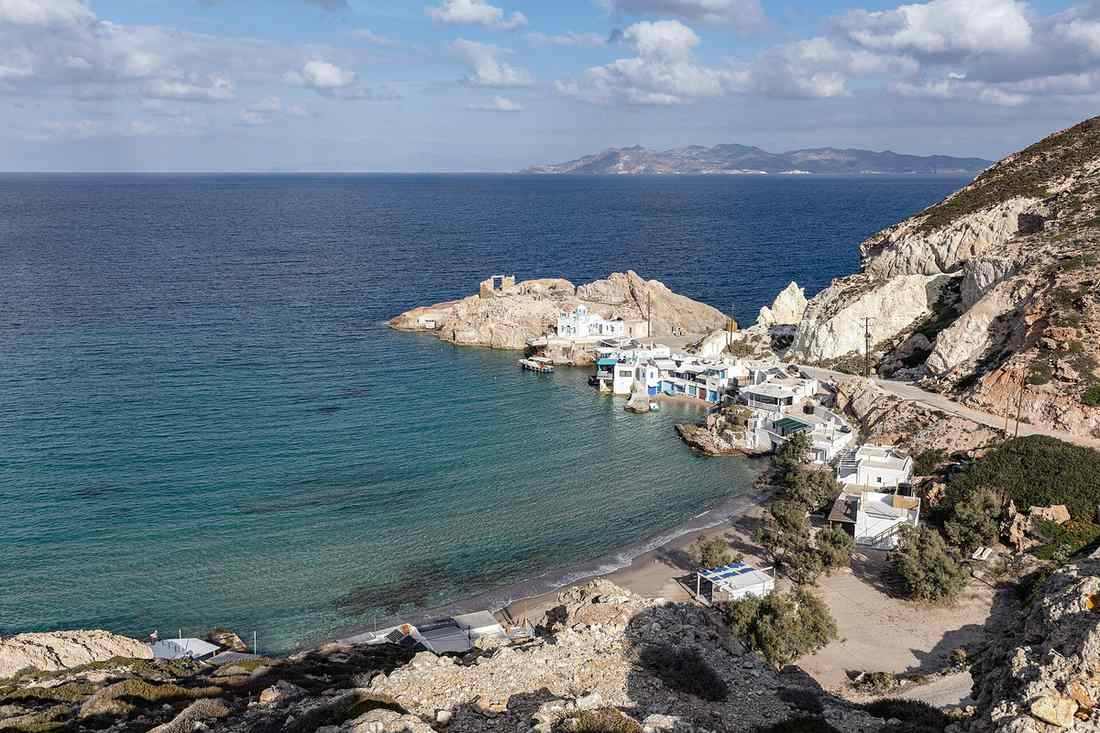
Choosing between Milos and Skyros pits a volcanic Cycladic island of dramatic coves against a remote, traditional Sporades island with a culture all its own. Plan island tours and tickets through My Greece Tours.
This comparison is a common question in the Milos travel guide. The sections below compare the landscapes, the beaches, the vibe, the access and which island suits you best.
Which is better, Milos or Skyros?
Milos is better for dramatic volcanic beaches, sea caves and boat trips, while Skyros is better for unique tradition, folk culture and an off-the-beaten-path feel.
Each island offers a different Greece. Milos leans scenic and volcanic. Skyros leans traditional and remote. The choice turns on spirit.
Pick Milos for the coast. Coloured coves and caves define it. The beaches headline the trip. The boat days dazzle.
Pick Skyros for tradition. A striking Chora crowns it. Folk culture runs deep. The horses roam wild.
Both keep a relaxed pace. Milos sells beaches. Skyros sells authenticity. Character splits them.
Milos and Skyros appeal to different travellers. Milos, in the western Cyclades, is a volcanic island where coloured cliffs, white moonscapes and dozens of dramatic coves make beaches and boat trips the focus. It is scenic, quietly stylish and built around the colour and clarity of the sea, an island that rewards an active holiday of swimming and exploring its sculpted coast.
Skyros, the largest and most remote of the Sporades, sits apart in the central Aegean and feels like a world of its own. Famous for its distinctive Chora beneath a Byzantine castle, its strong folk traditions in carving, pottery and dress, and the small wild Skyrian horses, it is one of the most authentic and least touristy islands in Greece. Choose Milos for volcanic beaches and Cycladic drama, and Skyros for unique tradition, striking architecture and a genuinely off-the-beaten-path escape. The next section compares the landscapes.
How do the landscapes of Milos and Skyros compare?
Milos has a dry, volcanic landscape of coloured cliffs, white rock and bare hills, while Skyros has two contrasting halves, a green, gentle north and a barren, rocky south, crowned by a dramatic Chora below a castle.
The two landscapes contrast. Milos runs colourful and carved. Skyros runs split in two. Geology marks both.
Milos owes its look to fire. Volcanic rock paints the coast. Cliffs glow red and white. Hot springs warm the shore.
Skyros splits north and south. Pine greens the north. Bare rock fills the south. The castle crowns the Chora.
The contrast shapes the eye. Milos dazzles with colour. Skyros surprises with halves. Both face open seas.
The landscapes here differ in both colour and form. Milos is the work of its volcanic past, with eruptions and hydrothermal activity that painted its coast in remarkable colours and carved it into white rock, coloured cliffs and sea caves. The hills are bare and sun-baked, and the spectacle lies in the sculpted, otherworldly geology that defines the western Cyclades, all wrapped around an indented, cove-rich coast.
Skyros is an island of two distinct halves. The north is green and gentle, cloaked in pine forest and farmland, while the south, dominated by the rocky Mount Kochylas, is barren, wild and dramatic, home to the protected Skyrian horses. Above the main town rises a striking Chora of cubic white houses climbing to a Byzantine and Venetian castle, one of the most atmospheric in the Aegean. A traveller drawn to coloured volcanic geology will warm to Milos, while one intrigued by a split landscape and a dramatic hilltop town will lean toward Skyros. The next section compares the beaches.
Which has better beaches, Milos or Skyros?
Milos has far better beaches, with dozens of dramatic, colourful volcanic coves and sea caves, while Skyros has attractive but simpler sandy and pebbly bays. Milos wins clearly for variety and spectacle, Skyros for quiet, uncrowded swimming on a remote, untouristy island.
The beach gap favours Milos. Its coves run into dozens. Skyros counts a quiet set. Drama tips the scale.
Milos wins on variety. The coloured coves astonish. Sarakiniko glows white. Kleftiko hides its caves.
Skyros offers calm swims. Sandy bays line the coast. The crowds rarely arrive. The water runs clear.
The choice is plain. Milos craves the camera. Skyros craves the solitude. Both reward a dip.
On beaches, Milos is in a different class. Its volcanic coast is carved into dozens of coves of remarkable colour and form, from the lunar white of Sarakiniko to the coloured cliffs of the south and the cave-riddled rock of Kleftiko reached by boat. For a traveller who treats the beach as the main event, this wealth of dramatic, photogenic swimming is the very reason countless visitors come to the island.
Skyros offers a quieter, simpler coast. Its beaches, such as Magazia, Molos and the remote southern bays, are attractive stretches of sand and pebble with clear water, and their great virtue is space, since the island’s remoteness keeps them uncrowded even in summer. They are lovely and peaceful but lack the colour and drama of the Milos coves. Choose Milos for spectacular, varied beaches and boat trips, and Skyros for tranquil, empty swimming on an authentic island. The next section compares the vibe.
How do the vibe and atmosphere of Milos and Skyros compare?
Milos has a quietly chic, scenery-led Cycladic vibe with a foodie scene and boat-trip energy, while Skyros feels deeply traditional, authentic and untouristy, with strong folk culture and a timeless pace.
The two moods differ in spirit. Milos feels chic and scenic. Skyros feels timeless and true. Tradition shapes Skyros.
Milos carries a Cycladic buzz. Whitewashed villages charm. The food scene shines. The boat trips draw a crowd.
Skyros guards its traditions. Carvers shape the wood. Potters turn the clay. Festivals keep the old ways.
Authenticity marks Skyros. The Chora feels lived-in. Tourism stays light. The pace runs slow.
In atmosphere, the islands strike different notes. Milos has grown into a quietly stylish, down-to-earth Cycladic destination, with whitewashed villages like Plaka, a celebrated food scene and a relaxed crowd drawn by the beaches and boat trips. Its mood is scenery-led and gently chic, built around exploring a colourful coast, an island that balances relaxation with the buzz of a popular summer spot.
Skyros is one of the most traditional and authentic islands in Greece, shaped by its remoteness and its strong local culture. Famous for its woodcarving, pottery, distinctive houses and lively folk festivals, including a celebrated pre-Lenten carnival, it feels timeless and lived-in rather than polished for tourism. The pace is slow and the visitors are few. Where Milos offers a stylish, scenic beach escape, Skyros offers a genuine immersion in old island life. The next section helps you choose between them.
Should you choose Milos or Skyros?
Choose Milos for volcanic beaches, sea caves, boat trips and a stylish Cycladic escape, and Skyros for unique tradition, a striking Chora, wild horses and a remote, untouristy island.
The verdict rests on what you seek. Milos sells beaches and colour. Skyros sells tradition and calm. One island wins.
Choose Milos for the coast. Volcanic beaches headline it. Boat trips seal the deal. The food rewards the night.
Choose Skyros for tradition. The Chora crowns it. The culture runs deep. The horses roam free.
They sit far apart. Milos anchors the Cyclades. Skyros anchors the Sporades. One trip rarely fits both.
The decision comes down to the kind of island you want. Choose Milos for a volcanic island of dozens of coloured coves, sea caves, hot springs and boat trips, paired with a relaxed, stylish scene and a strong food culture. It rewards travellers who chase dramatic scenery, varied beaches and an active, sun-and-sea holiday with a sense of discovery.
Choose Skyros for a remote, deeply traditional Sporades island of unique folk culture, a striking castle-crowned Chora, wild Skyrian horses and quiet, uncrowded beaches, ideal for travellers seeking authenticity far from the tourist trail. The two lie far apart, Milos in the western Cyclades and Skyros in the Sporades, so they do not pair on one trip, and most travellers choose one as a focus. Plan your island route through our things to do in Milos guide once you decide.
Getting there shapes the choice as much as the islands themselves. Milos is well connected to Athens by frequent ferries and short flights, and slots into a Cycladic hopping route with Sifnos, Serifos and Santorini. Skyros is harder to reach, by ferry from the port of Kymi on Evia or a small flight, with fewer links and little island-hopping, which is part of what keeps it so untouched. So the decision often comes down to effort and reward: an easy, beach-led Cycladic holiday on one hand, or a longer, more committed journey to a remote, deeply traditional island that few travellers reach on the other.
In the end, the islands reward different kinds of traveller. Milos suits those after spectacular beaches, boat trips and a stylish yet relaxed Cycladic escape that is easy to reach, while Skyros suits those drawn to deep tradition, striking architecture and the quiet of a remote, untouristy island worth the longer journey. Matching the island to what you most want from a Greek holiday makes the choice clear.
How do dining and food compare on Milos and Skyros?
Milos serves a compact, seafood-led island food scene of harbour tavernas and Cycladic cooking, while Skyros offers a traditional Sporades table of lobster spaghetti, local goat and mainland-style home cooking.
Milos concentrates its kitchens around Adamas and Pollonia, where tavernas grill the day’s catch and plate octopus, caper-leaf salads and Cycladic cheese pies. The volcanic soil grows capers and tomatoes that anchor the table, and dinner leans on the short distance between the boat and the plate.
Skyros keeps its cooking traditional and tied to the land. The island is known for lobster spaghetti pulled from its waters, alongside goat, local cheese and slow home-style dishes served in the tavernas beneath the Chora. The remoteness of the island keeps the menus rooted in what the farms and boats bring in, with far less outside influence.
The gap reflects character rather than quality. Milos rewards a traveller who wants island seafood within walking distance of the harbour. Skyros rewards one who wants an authentic, traditional table on an island that keeps its old ways.
Which has more to do beyond the beach, Milos or Skyros?
Milos offers boat trips, hot springs, an ancient theatre and catacombs, while Skyros offers a striking Chora, its castle and folk-craft workshops, plus the small wild Skyrian horses found nowhere else.
Milos keeps its activities close to the coast. The boat trip to Kleftiko headlines the itinerary, the Roman theatre and the early Christian catacombs add culture, and the site of the Venus de Milo draws visitors to Tripiti. Kayaking, snorkelling and the thermal springs fill a beach-led week.
Skyros leans on its distinctive culture. The Chora climbs beneath a Byzantine castle in a maze of white houses, workshops turn out the carved furniture and pottery the island is known for, and the folklore museum records its unusual traditions. The rare Skyrian horses graze on the southern part of the island, a draw found on no other Greek island.
The two suit different curiosities. Milos rewards a traveller who wants coves, boat trips and a dose of ancient history. Skyros rewards one who wants folk culture, striking architecture and an island that feels genuinely apart.
How do access and getting around compare for Milos and Skyros?
Milos is reached by ferry from Piraeus or a short flight and toured from one base, while Skyros is reached by ferry from Kymi on Evia or a small domestic flight, which keeps it remote and quiet.
Milos sits in the western Cyclades, linked to Piraeus by ferry and to Athens by a short domestic flight into its small airport. The island stays compact, so a rental car or scooter reaches the coves within short drives, and boat trips cover the caves that roads cannot.
Skyros lies apart in the central Aegean, reached by ferry from the port of Kymi on the island of Evia or by a small-plane flight from Athens. Getting to Kymi means a mainland drive first, which adds to the sense of distance. On the island a rental car links the Chora, the beaches and the horse country, since public transport stays limited.
The practical takeaway favours different planners. Milos suits a traveller who wants a straightforward sail or flight from Athens. Skyros suits one willing to work harder to reach a remote, traditional island that rewards the extra effort with quiet.
Is Milos or Skyros cheaper for a holiday?
Skyros is often cheaper on the ground, with modest rooms and traditional tavernas on a quiet island, while Milos carries higher Cycladic premiums in peak summer for accommodation, boat trips and the ferry out.
Milos prices track the wider Cyclades, where summer demand lifts the cost of rooms, ferry tickets and popular boat trips. Spring and autumn ease the rates, yet July and August place the island in the mid-to-upper tier, with the ferry or flight adding to the spend.
Skyros stays quieter and less commercial, so guesthouses and family tavernas price below the headline Cyclades. The remoteness that raises the effort to arrive also keeps peak-season demand and prices in check, which rewards travellers who value an unhurried, traditional island over convenience.
The value verdict follows the trip style. Skyros offers an economical, authentic escape for those happy to travel further. Milos costs more for a dramatic volcanic coast and its boat trips, and the premium buys spectacle rather than seclusion.
Frequently Asked Questions
Is Milos or Skyros better for beaches?
Milos is far better for beaches, with dozens of dramatic, colourful volcanic coves and sea caves, from the lunar white of Sarakiniko to the cave-riddled cliffs of Kleftiko reached by boat. Skyros has attractive but simpler sandy and pebbly bays such as Magazia and Molos, whose great virtue is space, since the island’s remoteness keeps them quiet and uncrowded. Choose Milos for spectacular, varied, photogenic swimming and boat-trip coves, and Skyros for tranquil, empty beaches on an authentic, off-the-beaten-path island.
Is Skyros more traditional than Milos?
Yes, Skyros is one of the most traditional and authentic islands in Greece, far less touristy than Milos. It is known for its strong folk culture, including distinctive woodcarving, pottery and houses, lively festivals such as its famous pre-Lenten carnival, and the small wild Skyrian horses. Its remoteness has preserved a timeless, lived-in feel. Milos has its own charm and whitewashed villages but is a more popular, polished summer destination built around its beaches and boat trips, making Skyros the better choice for travellers seeking deep authenticity.
Is Milos or Skyros easier to reach?
Milos is generally easier to reach. It lies in the western Cyclades, connected by frequent ferries from Piraeus near Athens and by short domestic flights. Skyros is more remote, reached by ferry from the port of Kymi on the island of Evia, itself a drive from Athens, or by a small domestic flight, with less frequent connections overall. For most travellers based in Athens, Milos is the more straightforward trip, while Skyros rewards those willing to make a longer, less direct journey for a remote and traditional island experience.
Is Milos or Skyros better for families?
Both suit families, in different ways. Skyros works for a quiet, traditional break, with calm beaches, the wild Skyrian horses as a highlight for children and a slow pace far from crowds. Milos suits families ready for a beach-led island week, with sheltered coves for swimming, a boat trip as the highlight and short drives between beaches. A family after an authentic, unhurried island will lean to Skyros, while one after dramatic coves and boat days will get more from Milos.
How many days do you need for Milos versus Skyros?
Milos rewards four to six days, enough to reach the main coves, take a boat trip to Kleftiko and settle into the island rhythm from one base. Skyros suits four to five days, enough to explore the Chora, visit the horse country and reach the beaches on a remote island that rewards a slower stay. Both work as a focused island trip, though Skyros stands alone in the central Aegean rather than linking into a hopping route the way Milos does in the Cyclades.