
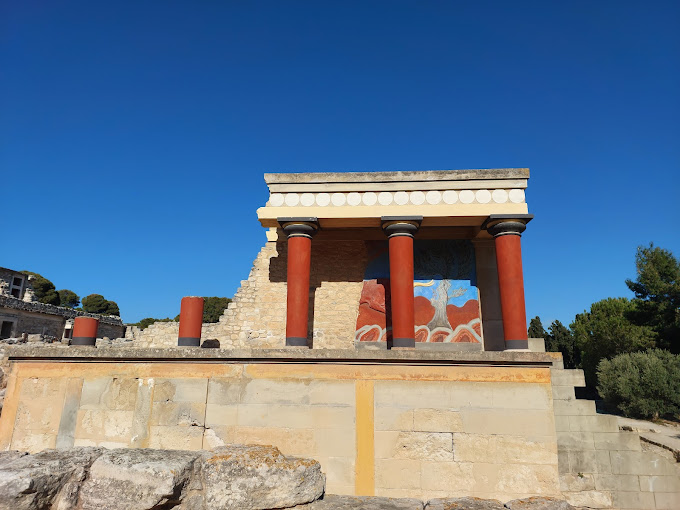
Discover the rich history of the Ancient Minoan Civilization at Knossos, Heraklion Crete. Explore the archaeological site with My Greece Tours and uncover the intriguing myths and legends. Learn about the Palace of Knossos, home to the famous bull-leaping fresco and the origins of Linear A and Linear B. Gain insights into the Minotaur Labyrinth myth and the significance of Knossos in Minoan civilization. Join our guided tours to delve into the fascinating facts, artifacts, and the restoration efforts of Knossos. Visit Knossos for an unforgettable journey through ancient history.
Explore the captivating history of the Ancient Minoan Civilization at Knossos on Crete, where the legendary Palace of Knossos stands as a testament to Minoan architectural and artistic prowess. Embark on a Minoan civilization tour to delve into the myths and legends shrouding this archaeological site, including the iconic Minotaur Labyrinth and the cultural significance of the bull-leaping fresco. The site’s excavations have unveiled artifacts and scripts like Linear A and Linear B, offering insight into this sophisticated society. Join My Greece Tours to uncover the vivid history, restoration efforts, and enduring legacy that Knossos holds within its ancient walls.
Ancient Minoan Civilization Knossos: Unveiling the History of Knossos
- Knossos, in Heraklion Crete, is the heart of Minoan civilization, rich in history and myths.
- The Palace of Knossos is an architectural marvel, central to Minoan culture and historical insights.
- Arthur Evans’s excavations in 1900 unveiled crucial artifacts, enhancing our understanding of the Minoans.
- The myth of the Minotaur Labyrinth highlights Knossos’s role in Minoan legends and cultural narratives.
- Bull-leaping frescoes symbolize Minoan religious and societal values, found prominently at Knossos.
The Origins of Minoan Civilization
On the island of Crete, nestled in the azure waters of the Mediterranean, the story of the Minoan civilization began. Spanning millennia, the Minoan civilization emerged from the Neolithic period, marking its place in history as one of the earliest advanced civilizations. The origins of this remarkable civilization can be traced back to Crete, where fertile landscapes and strategic positioning fostered growth and prosperity. Crete became the cradle of the Minoan civilization, drawing wealth from maritime trade and cultural exchange.
The Minoans, known for their vibrant culture, developed unique societal structures and artistic expressions. This civilization is renowned for transitioning from Neolithic villages to bustling urban centers, leading to its description as the birthplace of European culture. The Minoan civilization’s roots are embedded in Crete’s soil, with remains of ancient villages providing glimpses into their early lifestyle.
Individual settlements evolved into palatial complexes, with Knossos, the most famous, serving as the civilization’s heart. It’s fascinating how the Minoans, despite challenges, established a civilization that not only thrived on Crete but also influenced neighboring societies. Their innovation during the Neolithic period laid the groundwork for advances in architecture, art, and commerce.
While the island of Crete may seem serene today, it’s embedded with the rich tapestry of an ancient civilization that reshaped the course of history, reminding us of the enduring legacy of the remarkable Minoan civilization that dared to arise from humble beginnings.
The Rise of Minoan Crete
The rise of Minoan Crete is a fascinating chapter in the ancient history of civilization, marking the emergence of a vibrant and sophisticated culture. This incredible rise began around 3000 BCE on the island of Crete, laying the foundations for what would become one of the earliest advanced civilizations. The fertile land and strategic position of Crete, nestled between Europe, Asia, and Africa, facilitated the growth and prosperity of Minoan civilization, with Heraklion serving as a pivotal center. As the primary archaeological site on the island, it showcases invaluable insights into the history of the Minoans and their societal advancements.
The history of the site reveals remarkable achievements in architecture, art, and trade, proving the Minoans were ahead of their time. They constructed magnificent palaces, including the famed Palace of Knossos, exemplifying the architectural prowess of Minoan Crete. This history is pivotal in understanding how they progressed into a leading Mediterranean power. The archaeological site of Knossos provides a window into their world, revealing artifacts and structures that speak volumes about the history of the island’s civilization. Today, exploring this site lets us appreciate the resiliency and innovation of the Minoans. As one delves into the fascinating history of Minoan Crete, they’ll find an undeniable spirit of ingenuity that defined island culture and left a lasting legacy in ancient society.
Key Features of Early Minoan Society
In the heart of the Bronze Age, the Minoan civilization flourished on the island of Crete, leaving behind a rich tapestry of art and architecture. Key features of early Minoan society reveal a sophisticated culture that thrived through commerce and innovation. The Minoans are celebrated for their intricate fresco art, which graced the walls of their palaces and depicted everyday life as well as religious ceremonies. One of the most fascinating aspects of Minoan Crete is their advanced use of Linear A and Linear B scripts. Although Linear A remains undeciphered, it provides insights into the bureaucratic and commercial practices of the time. The Minoans’ influence extended beyond Crete, shaping early Mediterranean civilization. As you explore Minoan artifacts in museums, you’ll uncover their artistry in pottery and metalwork. Art was not just decorative but integral to their religious beliefs, with depictions of the snake goddess and bull imagery symbolizing fertility and power. During this period, the Minoans built complex, multi-storied palaces like Knossos, reflecting their architectural prowess and social organization. The use of wood and stone in the construction highlights an early trend towards sustainable practices.

The period also saw the rise of a structured society, with a hierarchy underscored by religious rituals and trade activities, marking Minoan civilization as a precursor to classical societies.
Knossos: The Heart of Minoan Culture
Knossos, located on the vibrant island of Crete, is the epicenter of Minoan civilization, shining its light on the past with unparalleled historical significance. This majestic Minoan palace at Knossos is more than just an archaeological site; it’s the heartbeat of ancient Crete. Connecting Heraklion to its roots, the civilization at Knossos provides a fascinating glimpse into the Minoan world. The architectural brilliance of the palace Knossos, praised far and wide, stands as a testament to advanced Minoan culture. This historic site offers a treasure trove of knowledge about the ancient world, inviting visitors to step into the past. At the archaeological site, both historians and tourists can marvel at findings that describe the daily life and beliefs of Minoans. The site is famed for its vibrant frescoes and for housing artifacts that reflect a sophisticated society. Among the notable discoveries are insights into Linear A and Linear B, the still-enigmatic scripts of this civilization.

The importance of Knossos extends beyond its ruins, influencing much of what we understand about the island’s history. Stepping through this site in Heraklion, one immerses in Minoan culture. Knossos isn’t just another archaeological location; it’s a key chapter in human history, waiting to be explored, deciphered, and cherished. Whether you are captivated by ancient civilizations or architectural marvels, the site draws you into the depths of the Minoan past.
The Role of Knossos in the Civilization
Knossos stands as a monumental testament to the ancient Minoan civilization, playing a pivotal role on the island of Crete. This archaeological site near Heraklion unveils the grandeur of a civilization that thrived from around 2000 BCE. The history of Knossos intertwines with the evolution of the Minoan society, making it a crucial part of the civilization’s identity. The palace of Knossos didn’t just serve as a political hub; it was the heart of Minoan culture, showcasing advanced architectural and artistic achievements that highlight the civilization’s sophistication. Excavations on the site have revealed that the Minoans were pioneers in art and architecture, with Knossos at the forefront of their innovations. Amongst the discoveries, the presence of Linear A and Linear B script shows a glimpse into the administrative mechanisms of the civilization. This archaeological site provides a wealth of insight into the Minoan’s daily life, religion, and trade. Knossos was central to their societal structure, acting as a focal point for religious and cultural gatherings. Its strategic location on the island facilitated the spread of Minoan influence throughout the Aegean. As you explore Knossos, the history of the Minoan civilization comes alive, with each artifact and fresco illustrating the brilliance of a society that shaped ancient Crete. Knossos undeniably signifies the zenith of Minoan advancement, showcasing their enduring legacy in world history.
Knossos Palace: Architectural Marvel of Crete
The exploration of the Knossos Palace, an architectural marvel of Crete, takes us right into the heart of Minoan civilization. The palace, a masterpiece of ancient design, stands as a testament to the ingenuity of its creators, often attributed to the legendary architect Daedalus. Its innovative layout is unlike any other palace structure, embodying the complexities of the Minoan period around 2000 BCE. The palace architecture at Knossos captivates with its grand staircases, intricate frescoes, and expansive throne room, highlighting the sophisticated societal structure. As the centerpiece of the broader Minoan palace, it played a pivotal role in the civilization of Knossos, serving as a political and cultural hub. The artistry of the Minoans is vividly depicted in the vibrant frescoes adorning the palace walls, showcasing scenes of daily life, religious rituals, and the significant bull-leaping spectacle.

The intriguing labyrinth structure within, linked to the myth of the Minotaur, adds another layer of mystique to the civilization knossos. While the enduring allure of Knossos continues to draw visitors, the palace remains a significant testament to the Minoans’ architectural brilliance and cultural richness, providing valuable insights into ancient Crete. This extraordinary site allows us to step back in time and marvel at the achievements of a civilization that set remarkable benchmarks in art, architecture, and urban planning.
Arthur Evans and the Rediscovery of Knossos
Arthur Evans is a name synonymous with the rediscovery of Knossos. His fascination with the Minoan civilization led him to embark on a groundbreaking journey to Crete. Around the turn of the 20th century, Evans started meticulous excavations at Knossos, bringing the long-buried secrets of the Minoan world to light. These archaeological efforts were not just about unearthing structures but also about piecing together a fragmented history. Evans’s work at Knossos provided a tangible connection to the ancient Minoan civilization. His findings included elaborate buildings, intricate frescoes, and numerous artifacts, reflecting the sophistication and grandeur of this once-thriving society. One cannot ignore how Evans’s discoveries at Knossos have shaped our understanding of the Minoan civilization; they filled numerous gaps in historical knowledge. The architectural marvels he uncovered at Knossos are a testament to the Minoans’ advanced techniques and their artistic excellence. Evans was instrumental in naming the elusive scripts he found as Linear A and Linear B, which further deepens the intrigue surrounding Minoan society. Today, the archaeological site of Knossos stands as a testament to Evans’s dedication, offering insight into the opulent palatial life of the Minoans. As you explore Knossos, you walk in the footsteps of Evans, delving into the heart of a civilization that captivated the world through its archaeological unveilings.
The 1900 Excavations and Their Impact
In the year 1900, the rediscovery of Knossos, a significant archaeological site, marked a turning point in understanding the Minoan civilization. This exploration, led by the famed archaeologist Arthur Evans, unveiled the rich history and mysteries hidden within the ruins of Knossos. Evans’s work at this site was not just a reflection of his profound passion for uncovering history but also a pivotal event in archaeological circles. By excavating Knossos, Evans brought to light the grandeur of the Minoan culture. The archaeological site, nestled in the heart of Minoan Crete, became a focal point for historians and enthusiasts alike. The artifacts unearthed by Evans’s team provided invaluable insights into the Minoan way of life. Knossos’s significance was further emphasized by the discovery of Linear A and Linear B tablets, shedding light on the intricacies of Minoan communication. These findings forever changed historical narratives surrounding the Minoans. Moreover, Knossos became a symbol of rebirth for the archaeological community, showcasing the importance of preserving and understanding human history. The 1900 excavations underlined the significance of reconstructing Knossos’s past, enabling future generations to appreciate the depth of Minoan history. Thanks to the dedication of Evans, the site of Knossos remains a beacon of archaeological and historical exploration, continually unveiling new facets of its rich past. Such endeavors underscore the historic importance of meticulous archaeological pursuits.
Unveiling the Artifacts of Knossos
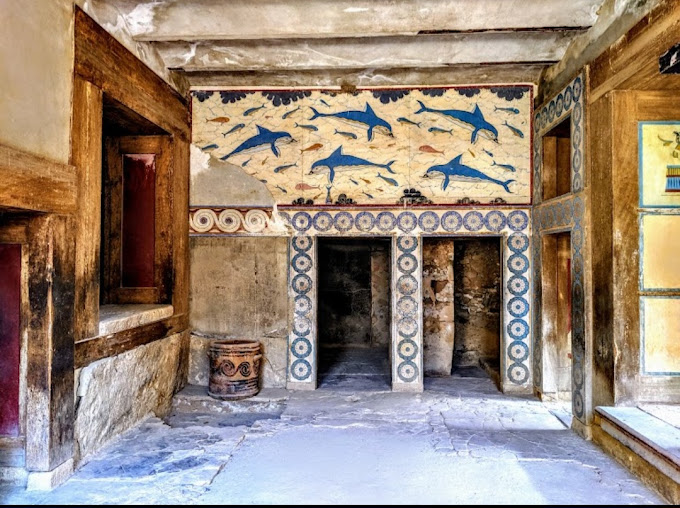
When you step into the world of Knossos, you’re entering a realm where history comes alive through stunning Minoan artifacts. This archaeological site, nestled in the heart of Heraklion Crete, is home to an array of treasures that unveil the rich tapestry of the Minoan civilization Knossos. Art enthusiasts will be enamored by the captivating frescoes, showcasing exquisite art that breathes life into the past. These frescoes, bursting with color and grace, depict scenes of everyday life, religious ceremonies, and the famed bull-leaping, offering a glimpse into the artistic soul of the Minoans. Intricately crafted pottery, tools, and jewelry are among the numerous artifacts that tell the tale of a vibrant and advanced society. One cannot miss the grand Throne Room, an emblematic piece of Minoan art and power. It’s believed that this chamber was central to the governance and religious rituals of Knossos, echoing the splendor of the civilization Knossos once was. A visit to the Knossos Museum extends this journey, housing an impressive collection of Minoan artifacts that further illustrate Knossos’ significance. Whether you’re drawn by the allure of ancient frescoes or the detailed artistry of everyday items, Knossos offers an unmatched archaeological adventure. So, as you explore this historic site, you’ll find that each artifact is a puzzle piece hinting at the grandeur of Minoan artistry and culture.
| Excavation Milestone | Discoveries | Impact on Minoan Studies | Significance Today |
| 1900: Start of Excavations | Discovery of the Palace of Knossos | Introduced the concept of a complex Minoan palace center | Foundation for modern Minoan archaeology |
| 1900-1905: Early Excavations | Discovery of Linear A scripts | Sheds light on Minoan written language | Ongoing research into deciphering Linear A |
| 1908: Unveiling of Frescoes | Uncovered vibrant frescoes | Revealed insights into Minoan art and culture | Influence on interpretations of Minoan society |
| 1920s-1930s: Continued Excavations | Discovery of royal apartments and storerooms | Enhanced understanding of Minoan social structure | Valuable reference for comparative archaeological studies |
This table highlights how Arthur Evans’s efforts at Knossos transformed our understanding of the Minoan civilization and continue to influence archaeological studies today.
Myths and Legends Surrounding the Palace
The ancient Palace of Knossos is not just a cornerstone of the Minoan civilization, but also a site shrouded in fascinating myths and legends. Central to the intricacies of these tales is the renowned labyrinth, believed to be a maze constructed to house the fearsome Minotaur. Legend attributes the creation of this labyrinth to Daedalus under the rule of King Minos, the then-mighty monarch of Knossos. Occupying a prominent place in the lore of Knossos, the tale of the Minotaur highlights not only the significance of the labyrinth but also the essence of the architectural prowess of the palace. The Minotaur, half-man and half-bull, epitomizes the mystical elements associated with Minos, a ruler often depicted in Minoan artifacts found throughout the civilization. This intertwining of myth and reality makes the palace of Knossos compelling. Beyond its role in history, the legends surrounding Knossos provide a window into the beliefs and cultural values of the Minoan civilization. As you journey through the halls and courtyards of the palace, envision the mythical narratives that breathe life into the stone walls of Knossos. Through these tales, the enigmatic past of this ancient palace illuminates the legacy left by the ingenious Minos and his labyrinth-cloaked Minotaur.
The Minotaur and the Labyrinth
The legend of the Minotaur and the labyrinth is one of the most captivating tales associated with Knossos. According to the myth, King Minos of Crete commanded the skilled artisan Daedalus to construct an elaborate labyrinth beneath the palace of Knossos. This labyrinth was designed to house the fearsome Minotaur, a creature that was half-man, half-bull. The labyrinth’s complex design made it impossible to escape once inside, and it became the symbol of the mystery and artistry of Minoan Crete. The history of Knossos reflects this myth through fascinating archaeological findings and exquisite art. Visitors to the palace will find remnants of Minoan culture, including frescoes depicting bulls, such as the renowned bull-leaping scenes, which suggest the cultural significance of bulls in Minoan society. This intertwining of legend and history adds a rich layer to the understanding of Knossos and its role in ancient Crete. Archaeologist Arthur Evans’s work at the palace revealed the importance of Knossos during its peak in the 15th century BCE. His excavations brought the mythical labyrinth closer to reality, unveiling remarkable architectural designs that showcase Minoan ingenuity. As you stroll through the remains of the labyrinth, you can’t help but feel a connection to this ancient myth. It’s a true testament to the allure of Knossos’s vibrant past that continues to captivate the imagination of visitors today.
The Significance of Bull-Leaping
In the vivid tapestry of the Minoan civilization, bull-leaping stands out as an enduring symbol of cultural and artistic excellence. This striking activity, closely associated with Knossos, encapsulates the dynamism and spirit of the Minoans. Located on Crete, Knossos was the heart of the Minoan civilization, where the fascinating art of bull-leaping was not just sport but a significant ceremonial act. The bull-leaping fresco found at Knossos is more than just art; it’s a testament to the athletic prowess and ritual importance that bulls held in Minoan society. This fresco, rich in color and movement, provides us with a glimpse into the cultural period of the Bronze Age, around 2500 BCE. At Knossos, the bull-leaping not only highlighted the spiritual and societal values of the Minoans but also demonstrated their relationship with bulls as powerful symbols in their civilization. The Minoan frescoes, especially the bull-leaping depictions, are treasured as some of the most iconic and informative artifacts unearthed during the excavations at Knossos.
Through this vivid art form, the bull emerges as both a participant and an icon in Minoan traditions. Bull-leaping was more than a spectacle; it was an integral aspect of the religious and cultural fabric at Knossos, enriching our understanding of why this civilizational center is pivotal in the history of ancient Crete.Bull-leaping was a significant cultural and religious practice in the Minoan civilization, reflecting their rich and vibrant society. Here are some fascinating aspects of this ancient tradition: – Participants performed acrobatic jumps over bulls using agile movements and precise timing. – This practice was both a religious ritual and a form of entertainment. – Wall frescoes and artifacts depict the athleticism and skill involved in bull-leaping. – Both men and women participated, showcasing gender roles in Minoan society. – Bulls symbolized fertility and strength, integral to Minoan religious beliefs. – These events may have taken place in large open courtyards or arenas. – Bull-leaping possibly contributed to the development of the Greek myth of the Minotaur. This captivating glimpse into Minoan culture illustrates the complex interplay between religion, art, and social practices.
As you bid farewell to the enchanting world of the Minoans, remember that Knossos is not just an archaeological site, but a portal to a civilization that paved the way for Europe’s rich history. Here, amidst the echoes of myths and the beauty of artifacts, you’ll find a connection to an ancient past that continues to inspire curiosity and wonder. We at My Greece Tours invite you to uncover the secrets of Knossos with us, where every stone and fresco narrates a story of a bygone era. Until next time, keep the spirit of exploration alive!
What is the Ancient Minoan Civilization and why is it significant?
The Ancient Minoan Civilization was one of the earliest advanced civilizations, emerging around 3000 BCE on Crete. Known for its vibrant culture, advanced architecture, art, and commerce, it is often described as the birthplace of European culture. The civilization flourished due to Crete’s strategic position and fertile lands, making it a hub for maritime trade and cultural exchange.
What can be found at the Palace of Knossos in Crete?
The Palace of Knossos is an archaeological marvel known for its grandeur and complex architecture, featuring grand staircases, frescoes, and a throne room. Excavations have unveiled frescoes, pottery, tools, and scripts like Linear A and Linear B, offering insights into Minoan life, art, and commerce. The myth of the Minotaur and the labyrinth add a fascinating historical layer to the site.
What is the myth of the Minotaur and the labyrinth related to Knossos?
The legend of the Minotaur, a creature half-man and half-bull, is central to the myths associated with Knossos. According to mythology, it was housed in an elaborate labyrinth constructed by Daedalus under King Minos’s orders, highlighting the architectural prowess and cultural narratives of the Minoans.
What is the significance of the bull-leaping fresco found at Knossos?
The bull-leaping fresco is a vivid depiction of an athletic and religious ritual important to Minoan society. Found at Knossos, it illustrates the Minoans’ religious and societal values and the centrality of bulls in their culture, highlighting their art and ceremonial practices.
Who was Arthur Evans and what was his contribution to Knossos?
Arthur Evans was an archaeologist who began excavations at Knossos in 1900, unveiling much about the Minoan civilization. His work led to the discovery of the palace’s architecture, frescoes, and artifacts, and he identified the Linear A and Linear B scripts, significantly advancing our understanding of Minoan society.