
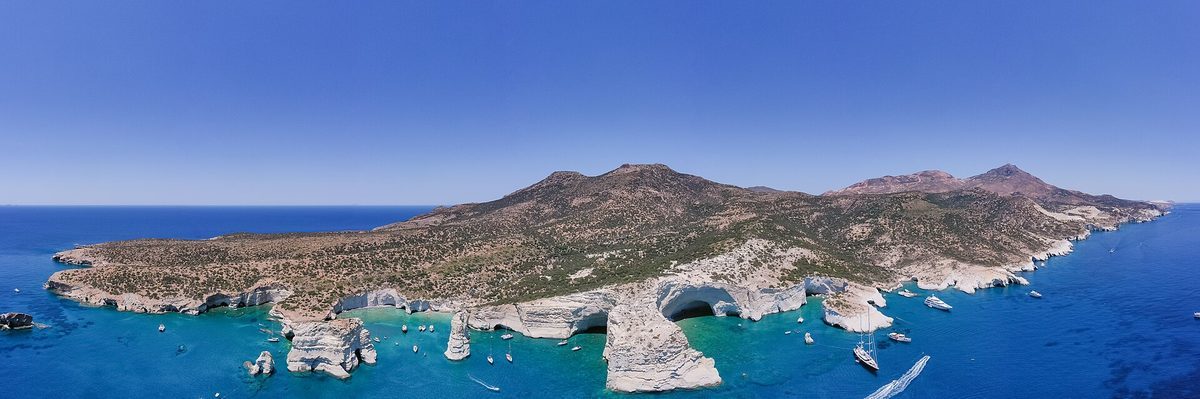
Milos vs Hydra pits a volcanic Cycladic island of colourful beaches against a car-free Saronic island of stone mansions, galleries and easy access from Athens. Plan island tours and tickets through My Greece Tours.
Choosing between the two is a common question in the Milos travel guide. The sections below compare the beaches, the vibe, the cost and which island suits you best.
Milos vs Hydra: which island is better?
Milos is the volcanic beach island, while Hydra is the car-free art island. Choose Milos for colourful beaches, sea caves and dramatic scenery, or Hydra for a sophisticated, walkable harbour town, galleries and an easy two-hour trip from Athens.
The two islands suit very different travellers. Milos offers volcanic beaches and scenery. Hydra offers a car-free harbour and art. Each delivers a distinct holiday.
Milos is the beach and scenery choice. The volcanic coast gives colourful beaches and caves. Boat trips reach the hidden coves. It rewards beach lovers and explorers.
Hydra is the sophisticated, walkable choice. No cars disturb its marble lanes. Galleries and fine dining define it. It suits lovers of culture and calm.
The decision comes down to your priorities. Pick Milos for dramatic beaches and boat trips. Pick Hydra for a car-free town and culture. The sections below compare each side across the things to do in Milos. The next section covers the beaches.
The two islands sit in different seas and feel worlds apart. Milos is a volcanic island in the western Cyclades, in the Aegean, with coloured rock, sea caves and more than 70 beaches. Hydra is a small, chic island in the Saronic Gulf, close to Athens, famous for banning cars and scooters: its marble-cobbled lanes are navigated on foot, by donkey or by water taxi. The contrast is clear: Milos rewards travellers after dramatic beaches and geology, while Hydra suits those after a car-free, walkable harbour town with a sophisticated, artistic atmosphere.
Access and cost mark an early divide. Hydra sits less than two hours from Athens by ferry, making it an easy, popular short break, and it works out noticeably cheaper than Milos. Milos is further and harder to reach, by ferry from Piraeus or a small domestic plane from Athens, and it is more expensive but offers far more beaches and activities. The journey shapes each trip: Hydra is a quick, refined escape near the capital, while Milos is a fuller island destination that rewards the extra effort to reach it.
Which has better beaches, Milos or Hydra?
Milos has far better beaches, with over 70 painted volcanic coves, sea caves and the chalk-white Sarakiniko. Hydra has only a few small, mostly pebbly or rocky swimming spots and no real sandy beaches.
Milos wins on beaches by far. The varied volcanic coast earns the Island of Colours name. Beaches glow red, grey and snow-white. The the best of the western shore open only by sea.
The signature beaches are one of a kind. Sarakiniko bleaches the shore to chalk white. Firiplaka and Paleochori scorch their cliffs with colour. Kleftiko stays tucked behind the sea.
Hydra has few beaches. Small pebbly and rocky spots dot the coast. No real sandy beach exists. Swimmers use the rocks and platforms.
The choice is clear on beaches. Milos rewards beach lovers richly. Hydra suits swimmers, not sunbathers. The lunar Sarakiniko beach shows the Milos style. The next section covers the vibe.
Beaches are a decisive win for Milos. The island offers a volcanic coast of more than 70 coves in a rich span of colours and forms, from the pale lunar flats of Sarakiniko to the burnt-red walls of Paleochori and the sea grottoes of Kleftiko, most of them open only from the sea. The beaches are wild, varied and dramatic, rewarding travellers who chase scenery and a sense of discovery across the whole island, with something new at almost every cove.
Hydra is simply not a beach island. Its coast has only a handful of small, mostly pebbly or rocky swimming spots, such as Spilia and Vlychos, often reached by water taxi, with swimming platforms rather than sand. The water is clean and the swimming pleasant, but anyone expecting beach days will be disappointed. The choice is clear: for beaches, Milos is the overwhelming winner, while Hydra rewards those who come for its town, art and atmosphere rather than the sand.
The difference in beaches reflects the islands’ geology. Milos is a volcanic island ringed by more than 70 coves of coloured rock and sand, many road-free and reached by boat, with swimming at the heart of every day. Hydra is a rugged, rocky island whose coast offers only small pebbly inlets and swimming platforms, with no real sand. For a beach holiday the gap is enormous, and a traveller who pictures days on dramatic sands should choose Milos, while one happy with a clean dip between exploring Hydra’s town will find its swimming spots perfectly pleasant.
How do the cost and access of Milos and Hydra compare?
Hydra is cheaper and far easier to reach, sitting under two hours from Athens by ferry, while Milos costs more and takes longer to reach by ferry or plane.
Hydra wins on access. It sits close to Athens. A short ferry links the two. The trip stays easy.
Hydra wins on cost too. Its daily costs run lower. The savings ease a short trip. The value tempts.
Milos costs more and takes longer. A ferry or plane reaches it. The journey adds to the trip. The reward justifies it.
The trade-off shapes the choice. Hydra is a quick, cheap escape. Milos is a fuller destination. Compare it with our Milos budget guide.
Cost and access mark a clear divide between the two. Hydra sits less than two hours from Athens by ferry, with no airport needed, making it one of the easiest islands to reach for a short break, and it works out noticeably cheaper than Milos for food, drinks and rooms. This combination of proximity and value is a big part of its appeal as a quick, refined escape from the capital.
Milos is more expensive and harder to reach, by ferry from Piraeus or a small domestic plane from Athens, so it takes more time and planning. The trade-off is what each island offers: Hydra is a compact, car-free town to enjoy over a day or two, while Milos is a full island destination with 70-plus beaches, boat trips and far more to do. For a quick, cheap getaway near Athens, Hydra wins on convenience; for a richer island holiday, Milos rewards the extra cost and effort.
How do the vibe and atmosphere of Milos and Hydra compare?
Hydra is sophisticated and car-free, with stone mansions, galleries, fine dining and an artistic, jet-set history. Milos is relaxed and scenery-led, with beaches, boat trips and tavernas. Hydra suits art and atmosphere lovers, Milos suits beach lovers and explorers.
Hydra leans chic and artistic. Stone mansions line the harbour. Galleries and fine dining abound. The car-free lanes set a refined tone.
The island carries a glamorous past. Artists and jet-setters have long visited. The harbour buzzes with sophistication. The mood feels timeless.
Milos leans relaxed and scenic. Beaches and boat trips fill the days. Tavernas and sunsets shape the evenings. The volcanic coast is the draw.
The two suit different trips. Hydra suits art, dining and a car-free town. Milos suits beaches and scenery. Compare the wider Milos vs Syros guide. The next section covers the verdict.
The atmosphere is where Hydra truly stands apart. The absence of cars and scooters gives its marble-cobbled harbour and lanes a uniquely peaceful, timeless feel, navigated on foot, by donkey or by water taxi. Long a haunt of artists, writers and jet-setters, it offers a sophisticated scene of galleries, fine dining, stylish bars and elegant stone mansions, all within an easy reach of Athens. It suits travellers after culture, glamour and a refined, walkable escape rather than a beach holiday.
Milos offers a more down-to-earth, scenery-led experience rooted in nature. The focus falls on the beaches, the boat trip to Kleftiko, the colourful villages and the sunsets, with evenings spent in relaxed tavernas. It rewards beach lovers, couples and explorers after dramatic landscapes and an easy pace, with cars and quads to reach the spread-out coves. The choice is clear: Hydra rewards travellers drawn to art, dining and a car-free atmosphere near Athens, while Milos rewards those after beaches, geology and an active, scenic island trip.
Atmosphere is where the islands truly diverge. Hydra’s ban on cars gives its harbour a uniquely peaceful, timeless feel, and its long history as an artists’ and jet-setters’ haunt fills it with galleries, fine dining and stylish bars, all an easy reach of Athens. Milos offers a more down-to-earth, scenery-led holiday, with beaches, boat trips and relaxed tavernas. Hydra rewards travellers after art, glamour and a car-free escape near the capital, while Milos rewards those after dramatic beaches, volcanic scenery and an active island trip, a clear contrast that usually settles the choice.
Should you choose Milos or Hydra?
Choose Milos for colourful volcanic beaches, sea caves and dramatic scenery. Choose Hydra for a car-free, walkable harbour town, galleries, fine dining and an easy trip from Athens.
Pick Milos for beaches and scenery. The volcanic coves and sea caves are unmatched. The boat trips fill the days. It suits explorers and beach lovers.
Pick Hydra for art and calm. The car-free town and galleries charm. The easy Athens trip tempts. It suits a refined short break.
The two sit in different seas. Milos lies in the western Cyclades. Hydra rides the Saronic near Athens. They do not pair on one island trip.
Most travellers choose one as a focus. Milos pairs with the western Cyclades. Hydra pairs with Athens and the Saronic islands. Compare the wider Milos vs Rhodes guide to plan your route.
How does dining compare on Milos and Hydra?
Hydra leans upmarket, with harbour-front restaurants, refined menus and a cosmopolitan crowd. Milos leans traditional, with seaside tavernas, fresh Cycladic fish and local specialities at gentler prices.
Hydra built its food scene around the harbour and the yachts that moor there. Restaurants along the waterfront serve polished Greek and Mediterranean plates, and the prices reflect the island’s fashionable reputation and its proximity to Athens. Diners who want a stylish evening, a well-stocked wine list and a people-watching table find that Hydra delivers exactly that mood, with the marble quay lit up after dark.
Milos keeps its dining rooted in the fishing villages and the produce of the island. Tavernas in Pollonia, Adamas and the tiny syrmata coves at Klima serve grilled octopus, the local cheese pitarakia and just-landed fish, often with your feet almost in the water. The bill tends to land below what the same meal costs on Hydra, and the atmosphere trades glamour for a slower, family-run warmth that many travellers return for.
The dining split mirrors the wider character of each island. A visitor after refined restaurants and a chic scene books Hydra, while one after honest seaside tavernas and value chooses Milos. Neither disappoints on food quality; the difference lies in polish, price and the kind of evening each island frames around the plate.
Which island suits families and which suits couples?
Milos suits families and active couples with its beaches, boat trips and quads, while Hydra suits couples and culture travellers after a walkable, romantic harbour town without cars.
Milos gives families room to move and plenty to fill a week. The broad sandy beaches at Achivadolimni and Provatas let children paddle in shallow water, the boat trip to Kleftiko turns a day into an adventure, and a rented car or quad reaches the spread-out coves at an easy pace. Couples who like snorkelling, hiking to viewpoints and lingering over a sunset taverna dinner find the island matches an active, outdoorsy holiday.
Hydra rewards couples and travellers drawn to atmosphere over activity. The car-free lanes make an evening stroll feel romantic and unhurried, the galleries and stone mansions give the town depth, and the swimming platforms suit a refined dip rather than a beach day with buckets and spades. Families with young children can enjoy the novelty of donkeys and water taxis, though the pebbly swimming spots and stepped alleys make it less practical than Milos for a classic beach-and-buckets trip.
The right pick tracks the shape of the group. A family after sandy beaches and space chooses Milos, and a couple after a car-free, cultured escape chooses Hydra. The islands answer two different holidays rather than competing for the same one.
How long should you spend on Milos versus Hydra?
Milos rewards four to seven days to reach its beaches and boat trips, while Hydra works well as a day trip or a two-night stay from Athens.
Milos asks for time because its rewards spread across the whole island. Reaching the painted western coves by boat, driving to Sarakiniko at first light, swimming at Firiplaka and exploring the villages fills four to seven relaxed days without repeating a beach. Travellers who rush Milos in a day miss its point; the island earns a proper Cycladic week and pairs naturally with a longer western-Cyclades route.
Hydra distils its charm into a compact town, so it delivers its best in a shorter window. A day trip from Athens covers the harbour, a gallery and a swim, while a two-night stay adds quiet mornings once the day boats leave and a sunset dinner on the quay. The island stays enjoyable longer, yet its lack of beaches and its small size mean the highlights land quickly compared with the deeper, slower rewards of Milos.
Trip length becomes a planning cue in its own right. A traveller with a week and a Cycladic route commits to Milos, while one with a spare day or a short break from Athens folds in Hydra. The islands slot into different itinerary slots rather than trading places.
Frequently Asked Questions
Is Milos or Hydra better?
Milos is the volcanic beach island, while Hydra is the car-free art island. Choose Milos for its colourful volcanic beaches like Sarakiniko, sea caves, boat trips and dramatic scenery across more than 70 coves. Choose Hydra for its uniquely car-free, walkable harbour town, its galleries, fine dining and artistic, jet-set history, plus an easy two-hour trip from Athens. Milos wins decisively on beaches, geology and activities, while Hydra wins on atmosphere, culture, sophistication and accessibility. The right choice depends on whether you want dramatic beaches and the sea or a refined, car-free escape near the capital.
Does Hydra have good beaches like Milos?
No, Hydra does not have good beaches like Milos. Hydra has only a few small, mostly pebbly or rocky swimming spots, such as Spilia and Vlychos, often reached by water taxi, with swimming platforms rather than sand and no real sandy beaches. Milos, by contrast, has over 70 colourful volcanic beaches, sea caves and the lunar Sarakiniko, ranking among the best in the Cyclades. For a beach holiday, Milos is by far the stronger choice, while Hydra is best enjoyed for its town, art and atmosphere, with swimming as a pleasant extra rather than the main draw.
Can you visit both Milos and Hydra?
Visiting both Milos and Hydra on one trip is possible but awkward, as they sit in different seas, Milos in the western Cyclades and Hydra in the Saronic Gulf near Athens, with no direct ferry between them. Pairing them usually means returning to Athens between the two, which suits a trip built around the capital. Hydra makes an easy day trip or short break from Athens, while Milos works as a fuller Cyclades destination. Many travellers combine Hydra with Athens and the Saronic islands at the start or end of a trip, with Milos as a separate Cyclades leg.
Is Milos or Hydra more expensive?
Milos is the more expensive island for a full holiday. Its rooms, tours and restaurants price higher across a Cycladic week, and reaching it by ferry or plane adds to the outlay. Hydra runs cheaper on food, drinks and accommodation, and its two-hour ferry from Athens keeps travel costs down, which makes it a strong value pick for a short break. The gap narrows for a single upmarket dinner on Hydra’s fashionable quay, yet across an entire trip Milos still costs more because it offers more to do. Budget travellers lean Hydra, while those willing to pay for beaches and boat trips accept the higher Milos spend.
Which island is easier to reach from Athens?
Hydra is far easier to reach from Athens. A ferry from Piraeus lands you in the harbour in under two hours, with no flight or airport transfer needed, which makes the island a natural day trip or weekend escape. Milos takes longer and asks for more planning, reached by a multi-hour ferry from Piraeus or a short domestic flight to its small airport. The extra effort suits a dedicated island stay rather than a quick outing. Travellers short on time or after a spontaneous trip favour Hydra, while those committing to a proper Cycladic beach holiday accept the longer haul to Milos.