
Milos vs Zakynthos pits a quiet volcanic Cycladic island against a green Ionian island of famous beaches and lively resorts. Plan island tours and tickets through My Greece Tours.
Choosing between the two is a common question in the Milos travel guide. The sections below compare the landscapes, the beaches, the vibe and which island suits you best.
Milos vs Zakynthos: which island is better?
Milos is the quiet, volcanic Cycladic island, while Zakynthos is the green, lively Ionian one. Choose Milos for colourful volcanic beaches, sea caves and calm, or Zakynthos for famous beaches like Navagio, vibrant resorts and a classic Greek island holiday.
The two islands suit very different travellers. Milos offers volcanic drama and calm. Zakynthos offers famous beaches and buzz. Each delivers a distinct holiday.
Milos is the quiet, scenic choice. The volcanic coast gives colourful beaches and caves. The island stays uncrowded. It rewards couples and explorers.
Zakynthos is the green, lively choice. The Ionian island draws huge crowds. Famous beaches and resorts abound. It suits a classic, social trip.
The decision comes down to your priorities. Pick Milos for volcanic beaches and quiet. Pick Zakynthos for famous beaches and resorts. The sections below compare each side across the things to do in Milos. The next section covers the landscapes.
The two islands lie in different seas and pull different crowds. Milos sits in the western Cyclades, in the Aegean, a small volcanic island of coloured rock, sea caves and a serene pace. Zakynthos lies in the Ionian off the northwest coast, a larger, greener island that draws hundreds of thousands of visitors each year, mainly from Europe. The contrast is clear: Milos rewards travellers after geological wonders and calm, while Zakynthos suits those after famous beaches, lively resorts and a classic package-holiday feel.
Scale and access reinforce the difference. Zakynthos is well over twice the size of Milos, with a far larger population, an international airport and a long-established resort scene. Milos is smaller and quieter, reached by ferry from Piraeus or Santorini, or a small domestic plane from Athens. That extra effort keeps Milos more authentic and noticeably cheaper, while Zakynthos trades part of its calm for easy access, fame and a fuller range of amenities and nightlife.
How do the landscapes of Milos and Zakynthos compare?
Milos is dry and volcanic, with coloured cliffs, white moonscapes, sea caves and thermal springs. Zakynthos is green and verdant, with rolling hills, fertile plains and white cliffs at Navagio. Milos wins on volcanic drama, while Zakynthos wins on green, fertile scenery.
Milos is a volcanic showpiece. Eruptions and hydrothermal water painted its coast. Beaches glow red, grey and snow-white. Thermal springs warm the shore.
Zakynthos runs green and fertile. Rolling hills and plains spread wide. Vineyards and olive groves cover the land. The verdant look defines it.
The two differ at a glance. Milos is bare, bright and volcanic. Zakynthos is green and lush. The contrast is among the sharpest.
Both reward the scenery lover. Milos shows it in coloured coves and white rock. Zakynthos shows it in green hills and cliffs. The moonscape of Sarakiniko beach headlines Milos. The next section covers the beaches.
The landscapes follow each island’s geology and climate. Milos owes its drama to fire, with volcanic rock, hydrothermal colour and thermal springs along a dry, exposed coast of cliffs, caves and bleached white stone. Zakynthos is green and fertile, with rolling hills, vineyards, olive groves and the famous white cliffs that frame Navagio, the iconic Shipwreck Beach. A traveller drawn to stark, otherworldly geology will warm to Milos, while one who loves verdant, classic Ionian greenery will favour Zakynthos.
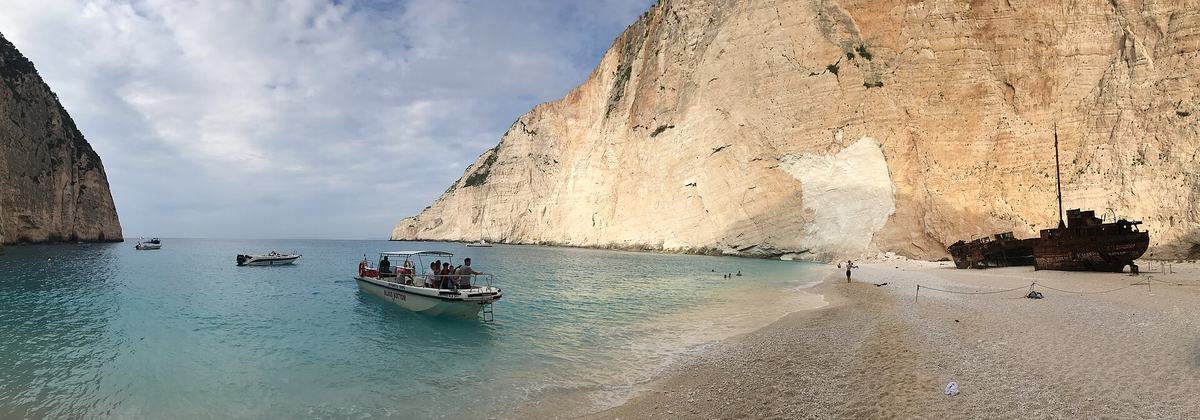
The two islands also differ in their signature natural sights. Milos counters with the lunar Sarakiniko and the sea caves of Kleftiko, a complex of arches and grottoes reached by boat, plus the warm, steaming sands of beaches like Paleochori. Zakynthos answers with Navagio, a turquoise cove framed by towering white cliffs and a rusting shipwreck, and the Blue Caves along the coast. Both deliver world-class scenery, but Milos leans volcanic and varied, while Zakynthos leans green with a handful of famous showpieces.
The colour of the land marks a constant difference. Milos is dry and largely treeless, its drama drawn from bare volcanic rock in shades of white, red and grey. Zakynthos is green and fertile, with rolling hills of vineyards, olive groves and pine that stay lush through the summer. The two islands show opposite faces of Greece, a stark, sun-baked Aegean island against a verdant, watered Ionian one. Travellers drawn to coloured, otherworldly geology lean toward Milos, while those who love green, classic island scenery lean toward Zakynthos, which often settles the decision.
Which has better beaches, Milos or Zakynthos?
Milos has more dramatic and varied beaches, with over 70 coloured volcanic coves, sea caves and the lunar Sarakiniko. Zakynthos has famous beaches like Navagio and Gerakas, plus busy resort sands. Milos wins on variety, Zakynthos on a handful of iconic, postcard beaches.
Milos wins on colour and variety. The varied volcanic coast earns the Island of Colours name. Beaches glow red, grey and snow-white. The best of the west open only by boat.
The signature beaches are unique. Sarakiniko offers a lunar white landscape. Firiplaka and Paleochori streak the cliffs with colour. Kleftiko hides behind the sea.
Zakynthos counters with icons. Navagio draws crowds to its turquoise cove. Gerakas shelters nesting turtles. Resort sands line the south.
The choice depends on your taste. Milos rewards dramatic variety and boat trips. Zakynthos suits famous, postcard beaches. The lunar Sarakiniko beach shows the Milos style. The next section covers the vibe.
Both islands are famous for their beaches, but in different registers. Milos offers a volcanic coast of more than 70 coves in a remarkable range of colours and forms, from the white moonscape of Sarakiniko to the red cliffs of Paleochori and the sea caves of Kleftiko, many reached only by boat. The beaches are wild and natural, rewarding travellers who chase variety, colour and a sense of discovery across the whole island.
Zakynthos leans on a handful of world-famous showpieces and a fuller resort scene. Navagio, the Shipwreck Beach, is one of the most photographed beaches on earth, while Gerakas is a protected nesting site for loggerhead turtles and the south coast holds busy, organised resort sands. The choice comes down to style: Milos wins on dramatic, coloured variety and quiet, while Zakynthos wins on iconic, postcard beaches and lively, serviced resort stretches with easy amenities.
How do the vibe and crowds of Milos and Zakynthos compare?
Milos is calm, quiet and authentic, with tavernas and bars rather than clubs. Zakynthos is busy and lively, with party resorts like Laganas, family areas and traditional corners. Milos suits quiet exploration, while Zakynthos suits a classic, amenity-rich resort holiday.
Milos keeps a low-key calm. Tavernas and bars fill the evenings. Clubs and party resorts stay absent. The mood suits couples and families.
Zakynthos runs busy and varied. Laganas brings vibrant nightlife. Family resorts line the south. Quiet villages survive in the hills.
The crowds set them apart. Zakynthos draws huge summer numbers. Milos stays calm even in August. The pace differs sharply.
The two suit different trips. Milos suits a quiet, scenic escape. Zakynthos suits a lively resort holiday. Compare the wider Milos vs Corfu guide. The next section covers the verdict.
The atmosphere reflects each island’s scale and fame. Milos stays calm and authentic, with the focus on natural beauty, relaxed tavernas and a handful of low-key bars, and it rarely feels crowded even in peak August. It suits couples, families and travellers after a peaceful, scenic holiday. Zakynthos caters to a far wider audience, from the vibrant nightlife of Laganas to the family-friendly resorts of Argassi and Tsilivi and the quieter, traditional feel of Vasilikos and Keri, drawing large summer crowds.
Access and cost reinforce the divide. Zakynthos is easy to reach, with an international airport feeding its busy, package-holiday scene, and it works out more expensive than Milos. Milos is harder to reach and noticeably cheaper, which helps keep it quieter and more unspoiled. The choice is clear: Zakynthos suits travellers after a classic Greek island holiday with famous beaches, amenities and lively nightlife, while Milos suits those after quiet, geological wonders and authentic charm away from the crowds.
The crowds and the cost mark a clear divide. Zakynthos draws hundreds of thousands of visitors each summer, with an international airport feeding lively resorts from the party strip of Laganas to family areas and quieter villages, and prices to match its fame. Milos stays calmer and noticeably cheaper, rarely feeling crowded even in peak August, with the focus on natural beauty and relaxed tavernas rather than resorts and clubs. Zakynthos suits travellers after a classic, amenity-rich Greek island holiday, while Milos suits those after quiet, dramatic scenery and an authentic, unspoiled atmosphere.
Should you choose Milos or Zakynthos?
Choose Milos for dramatic volcanic beaches, sea caves and a calm, authentic feel. Choose Zakynthos for famous beaches like Navagio, lively resorts and a classic Greek island holiday. The two sit far apart in different seas, so most travellers pick one.
Pick Milos for drama and calm. The volcanic coves and sea caves are unmatched. The quiet island soothes. It suits couples and explorers.
Pick Zakynthos for fame and buzz. The Navagio cove and resorts draw crowds. The nightlife and amenities tempt. It suits a classic resort trip.
The two sit far apart. Milos lies in the Aegean Cyclades. Zakynthos rides the Ionian northwest. They do not pair on one trip.
Most travellers choose one as a focus. Milos pairs with the western Cyclades. Zakynthos pairs with the Ionian islands. Compare the wider Milos vs Rhodes guide to plan your route.
Which island is cheaper, Milos or Zakynthos?
Milos tends to run cheaper and quieter, with modest guesthouses and family tavernas. Zakynthos operates at package-holiday scale, with large resorts, organised excursions and a fuller range of prices. Milos wins on value, Zakynthos on choice.
Milos keeps costs modest. Guesthouses and small hotels dominate the stay. Family tavernas serve fresh local dishes. The extra ferry effort trims demand and price.
Zakynthos spans a wide price range. Large resorts and package deals fill the south. Organised excursions and busy bars add spend. The international airport keeps flights frequent and competitive.
The value gap follows access and scale. Milos sits harder to reach, so it draws smaller crowds and holds accommodation and dining prices lower across the season, which suits couples and independent travellers watching a Milos budget. Zakynthos trades part of that calm for volume, with resorts, package flights and organised trips that widen the choice at every price point. A traveller after a quiet, affordable island leans toward Milos, while one after resort amenities, easy flights and abundant options at varied prices leans toward Zakynthos, and cost often settles the decision.
How do you get to Milos and Zakynthos?
Zakynthos has an international airport and ferries from Kyllini on the mainland. Milos is reached by ferry from Piraeus or Santorini, plus small domestic flights from Athens. The two sit in different seas, so access shapes the trip.
Zakynthos connects easily to Europe. The international airport handles direct summer flights. Ferries cross from Kyllini on the Peloponnese coast. The Ionian sea frames the approach.
Milos takes more planning. Ferries sail from Piraeus and from Santorini. Small domestic planes link the island to Athens. The Aegean Cyclades set the scene.
Access marks a defining split between the two. Zakynthos rides an established route into Europe, with an international airport feeding its resort scene and mainland ferries from Kyllini for those driving down through the Peloponnese. Milos asks for a longer approach, reached by ferry from Piraeus or from Santorini, or a small domestic flight from Athens, and travellers often study how to get to Milos before booking. The two islands lie in separate seas, the Aegean Cyclades against the Ionian, so pairing them means a long haul via the mainland. Most visitors pick one island as the anchor and plan the route around it.
Frequently Asked Questions
Is Milos or Zakynthos better?
Milos is the quiet, volcanic Cycladic island, while Zakynthos is the green, lively Ionian one. Choose Milos for its colourful volcanic beaches like Sarakiniko, sea caves, boat trips and a calm, authentic atmosphere that stays uncrowded even in August. Choose Zakynthos for famous beaches like Navagio, vibrant resorts, an international airport and a classic Greek island holiday. Milos wins on dramatic scenery, quiet and value, while Zakynthos wins on iconic beaches, amenities, nightlife and easy access. The right choice depends on whether you want a peaceful, scenic Aegean escape or a livelier, famous Ionian resort island.
Which has better beaches, Milos or Zakynthos?
Milos has the more dramatic and varied beaches, with over 70 coloured volcanic coves, sea caves and the lunar white Sarakiniko, many reached only by boat. Zakynthos has world-famous showpieces like Navagio, the Shipwreck Beach, and Gerakas, a protected turtle-nesting site, plus busy resort sands. Milos wins on variety, colour and a sense of discovery across the whole island, while Zakynthos wins on a few iconic, postcard beaches and lively, serviced resort stretches. The choice comes down to dramatic volcanic variety versus famous beaches and resort amenities.
Can you visit both Milos and Zakynthos?
Visiting both Milos and Zakynthos on one trip is difficult, as they sit far apart in different seas, Milos in the Aegean Cyclades and Zakynthos in the Ionian off the northwest coast, with no direct ferry between them. Pairing them means a long journey via the mainland, usually through Athens, which costs significant time. Most travellers therefore choose one island as the focus of a trip, combining Milos with its western Cyclades neighbours like Sifnos and Serifos, and Zakynthos with the other Ionian islands such as Kefalonia and Lefkada.
Is Milos or Zakynthos better for a first trip to Greece?
Zakynthos often suits a first trip more smoothly, thanks to its international airport, direct summer flights and a resort scene geared to visitors from Europe. Organised excursions, familiar amenities and famous beaches like Navagio make the island easy to plan and navigate. Milos rewards a first trip too, with dramatic volcanic beaches, sea caves and a calm, authentic feel, though it asks for a ferry from Piraeus or Santorini or a small domestic flight from Athens. A first-timer after easy access and buzz leans toward Zakynthos, while one after quiet, scenic wonder leans toward Milos.
Which island is quieter, Milos or Zakynthos?
Milos is the quieter island by a clear margin. The volcanic Cycladic island stays calm even in peak August, with the focus on natural beauty, relaxed tavernas and low-key bars rather than resorts and clubs. The harder ferry access keeps crowds smaller and the pace gentle. Zakynthos draws hundreds of thousands of summer visitors, with the party strip of Laganas, busy resorts and an international airport feeding the crowds, though quiet corners survive at Vasilikos and Keri. A traveller after peace and space leans firmly toward Milos, while Zakynthos delivers energy, fame and lively resort life.