
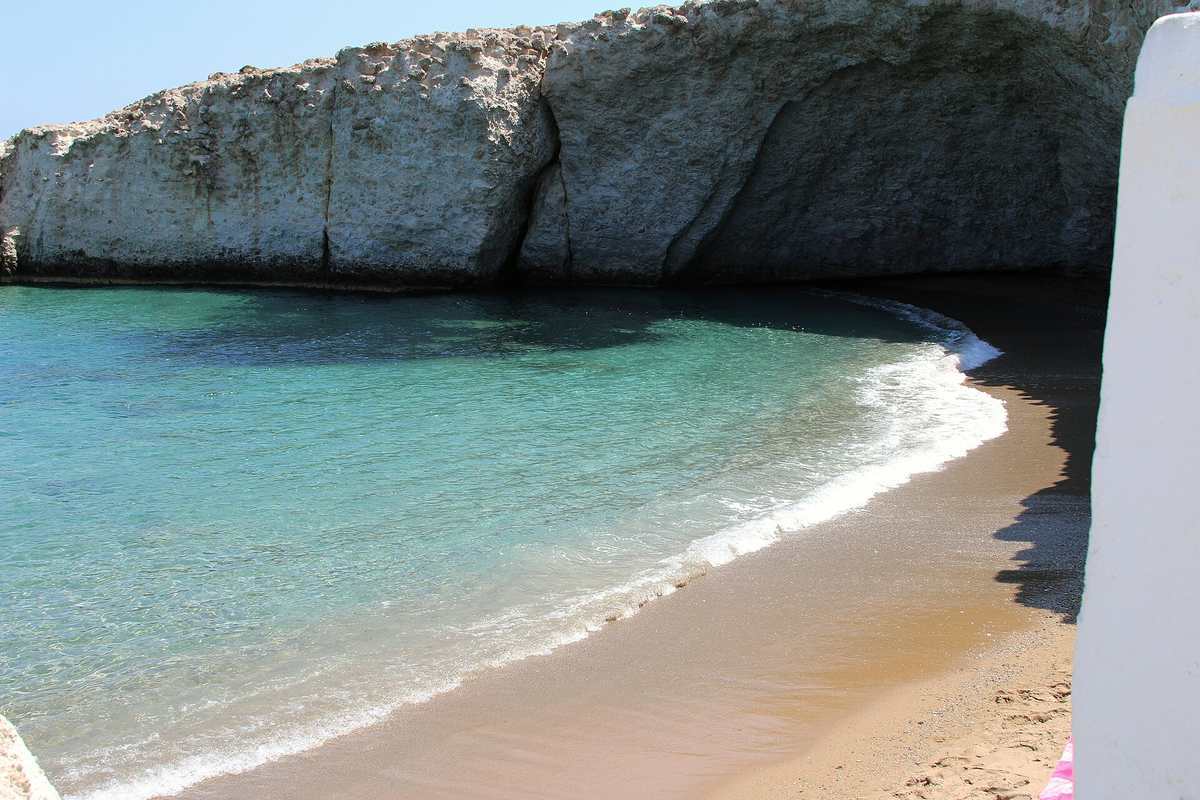
Kalogries on Milos is a remote pair of sandy coves on the northwest coast, ringed by colourful volcanic rock, with calm turquoise water that gives it a pool-like look. Plan boat trips and tours through My Greece Tours.
Kalogries is one of the calmest, most pool-like coves in the Milos travel guide. The sections below cover the beach, why it is so calm, how to reach it, what it is like and what lies nearby.
What is Kalogries beach on Milos?
Kalogries is a remote beach on the northwest coast of Milos, made of two small sandy coves with bright turquoise water. Known as the Nun’s Beach, its semi-circular bay and calm water have earned it the nickname of Milos’ swimming pool.
Kalogries sits on the northwest coast. The remote beach holds two small sandy coves. Bright turquoise water laps the smooth, sandy seabed. The setting feels hidden and serene.
The name carries a meaning. Kalogries means the Nuns in Greek. The beach is also called the Nun’s Beach. The quiet bay suits the gentle name.
The bay looks like a pool. Its semi-circular shape rings the calm water. The locals call it the swimming pool of Milos. The still, clear water earns the name.
Colourful rock frames the coves. Volcanic formations of striking colours surround the bay. Moss covers some of the rock in green. Kalogries ranks among the most pool-like of the Milos beaches. The next section covers why it is so calm.
The remote cove stands out among the island’s beaches. Two small sandy coves notch into the northwest coast. Bright turquoise water laps the smooth, sandy seabed. The semi-circular bay rings the still water like a pool. The locals call it the swimming pool of Milos. Colourful volcanic rock, some green with moss, frames the coves. The name means the Nuns, also called the Nun’s Beach. The setting feels hidden and serene off the busy coast. Kalogries rewards those who seek a calm, pool-like swim, one of the most sheltered coves on the whole of Milos.
Why is Kalogries so calm and pool-like?
Kalogries is calm because its semi-circular bay and surrounding rocks shelter it from the wind and waves. The protected water stays still and clear, with green-blue colours that give the cove its famous pool-like look.
The bay shape does the work. The semi-circular cove wraps around the water. The rocks shelter it from the wind. The waves rarely reach the sheltered shore.
The protection keeps the water still. The sea is not easily stirred by breezes. The surface stays flat and clear. The calm sets Kalogries apart from the exposed coast.
The colours add to the pool look. Green-blue watercolours fill the bay. The sandy seabed brightens the shallows. The combination gives the famous pool-like glow.
The calm rewards a swim. The still, clear water suits snorkelling and floating. The cove stays gentle when the north coast turns rough. Kalogries offers a sheltered swim near the moonscape of Sarakiniko beach. The next section covers access.
The calm is the cove’s great quality. The semi-circular bay wraps around the water. The surrounding rocks shelter it from the wind. The sea is not easily stirred by breezes. The surface stays flat and clear most days. The green-blue colours give the pool-like glow. The sandy seabed brightens the shallow water. The cove stays calm when the north coast turns rough. The shelter sets Kalogries apart from the exposed shore. The still, clear water rewards a swim or a snorkel, a sheltered haven near the busy moonscape of Sarakiniko on Milos.
How do you get to Kalogries beach?
Kalogries is mainly reached by boat, since no paved road leads to it and the dirt track suits only a 4×4 or ATV. Most west-coast and bay boat tours include Kalogries as a swim stop, so a cruise is the easiest way to visit.
A boat is the main way in. No asphalt road leads near Kalogries. The cove sits on the remote northwest coast. A cruise reaches it across the water.
The land route is rough. A dirt track leads toward the coves. Only a 4×4 or ATV handles it well. A normal car is not suited to the road.
Boat tours make it easy. Most west-coast and bay cruises stop at Kalogries. The calm water suits a swim break. A hired boat from Adamas reaches it too.
The boat is the recommended choice. The sheltered cove suits a cruise stop. A Milos boat tour includes it on the route. A sea-kayak trip reaches it too. The next section covers the conditions.
Reaching Kalogries is mainly done by boat. No asphalt road leads near the remote cove. A rough dirt track suits only a 4×4 or ATV. Most west-coast and bay cruises stop here for a swim. A hired boat from Adamas reaches it too. The calm water makes an ideal swim break on a tour. A sea-kayak trip also reaches the cove by water. The boat access keeps the cove quiet and uncrowded. Joining a cruise is the easiest way to visit. A boat tour of the bay strings Kalogries together with the other northern swim stops on Milos.
What is Kalogries beach like to visit?
Kalogries is a wild, unorganised beach with no facilities, protected from the wind by its bay. The shallow, clear water is perfect for snorkelling and relaxed swimming, so visitors bring their own water, food and shade.
The beach stays natural. No sunbeds, no bar and no taverna sit at Kalogries. The remote cove has no facilities at all. Visitors bring their own water and food.
The water rewards a swim. The shallow, clear sea is perfect for snorkelling. The calm, sheltered water suits relaxed floating. The colours glow over the sandy seabed.
The shelter is the draw. The bay stays calm when the meltemi blows. It offers a swim on windy north-coast days. The protected cove is a rare find.
Coming prepared makes the day work. The wild beach offers nothing but sand and sea. Bring shade, water and supplies. The sheltered, pool-like cove rewards a swim stop on a boat tour of Milos. The next section covers what is nearby.
A visit to Kalogries suits a relaxed swim. The wild cove has no facilities at all. There are no sunbeds, bars or tavernas here. Visitors bring their own water, food and shade. The shallow, clear water is perfect for snorkelling. The calm, sheltered sea suits relaxed floating. The colours glow over the sandy seabed below. The bay stays calm when the meltemi blows hard. It offers a swim on windy north-coast days. Coming prepared with supplies makes the visit easy, a sheltered, pool-like swim stop on a boat tour around the island of Milos.
What is near Kalogries on Milos?
Near Kalogries lie the fishing village of Mandrakia, the moonscape of Sarakiniko and the colourful villages of the north. Boat tours of the bay and west coast link Kalogries with the basalt islets of Glaronisia and other swim stops.
The fishing villages sit close. The colourful syrmata of Mandrakia lie along the north coast. The village offers a seafood lunch. It pairs with a Kalogries swim by boat.
The moonscape waits nearby. The white rock of Sarakiniko sits along the coast. Its lunar cliffs contrast with the calm cove. A boat tour can link the two.
The islets lie on the route. The basalt columns of Glaronisia rise off the north coast. A cruise often pairs them with Kalogries. The two make a fine boat day.
The cove anchors a boat tour. A cruise of the bay and west coast strings the stops together. Kalogries adds a calm, pool-like swim. Pair it with the islets of Glaronisia on a boat day around Milos.
The cove anchors a fine north-coast boat day. The colourful syrmata of Mandrakia lie along the shore. The white moonscape of Sarakiniko sits nearby on the coast. The basalt columns of Glaronisia rise off the north. A cruise often pairs them with Kalogries. The calm cove adds a pool-like swim to the route. A boat tour of the bay and west coast strings the stops. The fishing villages add a seafood lunch to the day. The islets and the moonscape fill out the cruise. Kalogries rounds out a scenic boat day on the north coast of Milos.
The cove rewards travellers who want a calm, scenic swim. The semi-circular bay rings the still, clear water. The green-blue colours give the famous pool-like glow. The sheltered cove stays calm when the north coast turns rough. A boat tour of the bay reaches it with ease. The basalt islets of Glaronisia lie on the same route. The fishing village of Mandrakia adds a seafood lunch. The white moonscape of Sarakiniko sits nearby on the coast. Coming prepared with supplies makes the swim stop easy. Kalogries adds a sheltered, pool-like swim to a north-coast boat day around the island of Milos.
Where is Kalogries beach on Milos?
Kalogries lies on the wild northern shore of Milos, notched into the volcanic coastline that runs west from the fishing hamlets toward Cape Vani. The pair of coves faces the open sea, tucked between headlands of light, colourful rock.
The location defines the cove. Kalogries sits along the exposed northern edge of Milos. The volcanic coastline here folds into small bays and headlands. The two coves shelter within one of those folds.
The setting stays remote. No village grows on this stretch of shore. The fishing settlements of the north coast lie a short cruise to the east. The wider bay of Milos opens to the southwest.
The rock tells the island’s story. Light volcanic stone frames the coves in cream and ochre tones. Green moss streaks the lower rock near the waterline. The colours echo the mineral character of the whole of Milos.
The geography keeps Kalogries hard to find. The coves hide from the road behind the coastal rock. The sea approach reveals them at their best. Kalogries belongs to the quiet, undeveloped end of the Milos beaches map.
How do you reach Kalogries beach by car?
Reaching Kalogries by car means driving toward the northern coast, then following a rough unpaved track before a short walk down to the coves. A 4×4 or ATV suits the final stretch better than a standard rental, and the last approach is on foot.
The drive starts on the sealed island roads. The main network links Adamas, Plaka and the northern villages. The asphalt ends before it reaches the cove. A dirt track carries on toward the shore.
The track demands care. The unpaved surface suits a 4×4 or an ATV. A low standard rental car struggles on the loose stones. Slow, steady driving protects the underside of the vehicle.
The final approach is on foot. The track stops short of the water. A brief walk over the rock leads down to the coves. Sturdy shoes help on the uneven ground.
The effort filters the crowds. The rough access keeps visitor numbers low all season. Those who reach it find a quiet, sheltered swim. A hired Milos boat tour spares drivers the track altogether.
Is there parking at Kalogries beach?
Kalogries has no organised car park, so drivers leave vehicles on the flat ground where the dirt track ends and walk the rest of the way. Space is informal and limited, which suits the beach’s wild, undeveloped character.
The parking is informal. No paved lot or marked bays exist at Kalogries. Vehicles stop on the open ground beside the track’s end. Drivers choose a level, stable spot.
The space stays tight. The rough clearing holds only a modest number of cars. An early arrival secures the easier ground. A busy midday can fill the flat area.
The surface needs judgement. Loose stones and dust cover the parking ground. A shady spot rarely exists on the exposed rock. Parking in gear on the slope adds safety.
The walk follows the park. A short path leads from the vehicles down to the coves. Carrying gear over the rock takes a careful minute. The reward is a sheltered, pool-like swim below.
Are there facilities, sunbeds or tavernas at Kalogries?
Kalogries has no facilities at all, meaning no sunbeds, umbrellas, bar or taverna, and no toilets or fresh-water tap. The beach stays entirely undeveloped, so visitors carry in everything they need and carry out all their rubbish.
The beach offers nothing built. No sunbed rows or hired umbrellas line the sand. No beach bar pours drinks at Kalogries. The coves stay wild and unserviced.
The nearest food sits elsewhere. The fishing village of Mandrakia serves fresh seafood along the coast. A meal there pairs well with a Kalogries swim. Packing a picnic covers the beach hours.
The basics fall to the visitor. No toilet or fresh-water point exists on the shore. A packed cool bag holds water and lunch. A carry-out bag keeps the coves clean.
The lack of services shapes the visit. The undeveloped setting rewards self-sufficient travellers. A quiet, natural cove replaces the busy organised beach. Kalogries suits those who value calm over comfort.
Is Kalogries good for swimming and snorkelling?
Kalogries is excellent for swimming and snorkelling, thanks to shallow, clear water over a sandy seabed and colourful rock that draws small fish. The sheltered bay keeps the surface calm, so floating and underwater exploring both feel easy.
The water invites a swim. The shallow entry eases the first steps in. The sandy seabed stays gentle underfoot. The calm surface suits long, relaxed floating.
The clarity rewards a mask. The clear water opens a wide view below. Small fish gather around the submerged rock. A snorkel turns the swim into a slow exploration.
The rock adds interest underwater. The volcanic stone drops into ledges and crevices. Light plays over the colours near the surface. The seabed shifts from sand to stone across the cove.
The shelter keeps it safe on calm days. The bay softens the open-sea swell. A swim stays gentle inside the protected water. A sea-kayak trip reaches the same clear water by paddle.
Is Kalogries beach suitable for families?
Kalogries suits older children and confident families who accept a rough approach and no facilities, since the shallow, calm water is friendly but the track, walk and open rock demand care. It fits self-reliant families more than those needing services.
The water works for children. The shallow, calm shore eases young swimmers in. The sheltered cove stays gentle on settled days. The sandy entry gives sure footing underfoot.
The access adds a hurdle. The rough track and short walk challenge small legs. Carrying gear over the rock takes an extra hand. Older children handle the approach with ease.
The lack of services matters for families. No shade, toilet or snack point exists on the beach. A packed bag covers food, water and nappies. A beach umbrella supplies the only shade.
The setting rewards prepared families. The quiet cove offers space away from crowds. Watchful supervision keeps children safe on the rock and in the water. Kalogries suits families who plan ahead.
Is Kalogries sheltered from the meltemi wind?
Kalogries is one of the more sheltered coves on the northern coast, since its semi-circular bay and framing rock block much of the wind and swell. The water often stays calm here when the meltemi churns the exposed beaches nearby.
The bay shape blocks the wind. The semi-circular cove curves around the water. The framing rock rises against the breeze. The shelter softens the summer meltemi.
The calm sets it apart. The exposed north beaches turn choppy on windy days. Kalogries holds a flatter surface inside its bay. The contrast draws swimmers on rough afternoons.
The direction shapes the shelter. A strong northerly still sends swell into the mouth of the cove. A quieter wind day gives the calmest water. Checking the forecast guides the timing.
The refuge has limits. A severe meltemi stirs even sheltered coves. Caution stays wise when the wind picks up hard. Kalogries offers a rare calm on most breezy north-coast days.
When is the best time to visit Kalogries?
The best time to visit Kalogries is late spring and early autumn, when the sea is warm, the light is soft and the meltemi is gentler than in high summer. Morning hours also bring the calmest water and the quietest coves.
The shoulder months shine here. Late spring warms the sea without the peak crowds. Early autumn holds the summer warmth into calmer weeks. The softer light flatters the coloured rock.
The wind guides the choice. High-summer afternoons bring the strongest meltemi. A calmer forecast day gives the best swim. The sheltered bay still holds up on breezier dates.
The time of day counts too. The early morning brings flat, glassy water. The low sun lights the coves without harsh glare. A midday visit needs a packed umbrella for shade.
The season sets the mood. The quiet months keep the coves nearly empty. A boat day links Kalogries with other stops in fine weather. The Milos beaches reward a shoulder-season swim.
What should you bring to Kalogries beach?
Bring plenty of water, shade, food and a mask to Kalogries, since the undeveloped coves offer no services. Sturdy shoes, a carry-out rubbish bag, sun protection and swim gear round out a self-sufficient day at the beach.
The water tops the list. No tap or shop serves the coves. A full supply covers the beach hours. An extra bottle guards against the northern heat.
The shade needs planning. No trees or umbrellas stand on the open rock. A beach umbrella or shade tent supplies the only cover. A hat and sunscreen protect against the strong light.
The gear rewards the effort. A mask and snorkel open the clear water below. Sturdy shoes protect feet on the track and rock. A cool bag keeps food and drinks fresh.
The clean-up falls to the visitor. A rubbish bag carries out all waste. The undeveloped cove stays pristine when everyone packs out. Kalogries keeps its wild charm through careful visitors.
What safety notes apply at Kalogries?
Kalogries demands normal wild-beach caution, since there is no lifeguard, the rock can be slippery and a strong wind sends swell into the cove. Watch the sea state, mind children on the rock, and time the visit to calm conditions.
The cove carries no lifeguard. No patrol watches the water at Kalogries. Swimmers judge their own limits here. A calm day keeps the swim within easy reach.
The rock needs care. Wet volcanic stone turns slippery underfoot. Careful steps protect against a fall near the water. Sturdy shoes grip the uneven ground.
The sea can change. A rising wind pushes swell into the cove mouth. A current can run stronger outside the sheltered water. Staying inside the bay keeps a swim safe.
The remoteness shapes the risk. No shop or help stands near the coves. A charged phone and a first-aid kit add security. Kalogries rewards swimmers who respect the wild setting.
Which beaches combine well with Kalogries?
Kalogries pairs naturally with the nearby northern beaches and sights, from the white moonscape of Sarakiniko to the basalt islets of Glaronisia and the fishing village of Mandrakia. A boat day strings these calm coves and colourful stops together.
The moonscape sits close by. The white rock of Sarakiniko beach lies along the same coast. Its lunar cliffs contrast with the calm cove. A short cruise links the two.
The islets round out a boat day. The basalt columns of Glaronisia rise off the north coast. A cruise pairs them with a Kalogries swim. The two make a fine day on the water.
The villages add a meal. The syrmata of Mandrakia serve fresh seafood nearby. A lunch there breaks up the beach hours. The colourful harbour suits a slow afternoon.
The stops form a route. A boat tour of the bay strings the coves together. Kalogries adds a sheltered, pool-like swim to the line. A Milos boat tour ties the northern coast into one day.
Frequently Asked Questions
What is Kalogries beach on Milos?
Kalogries is a remote beach on the northwest coast of Milos, made of two small sandy coves with bright turquoise water. Known as the Nun’s Beach, its semi-circular bay and calm, sheltered water have earned it the nickname of Milos’ swimming pool. Colourful volcanic rock, some covered in green moss, rings the coves. The shallow, clear water is perfect for snorkelling and relaxed swimming, and the bay stays calm even when the north coast turns rough.
How do you get to Kalogries beach?
Kalogries is mainly reached by boat, since no paved road leads to it and the rough dirt track is suited only to a 4×4 or ATV. Most west-coast and bay boat tours include Kalogries as a swim stop, so joining a cruise or renting a boat from Adamas is the easiest way to visit. The calm, sheltered water makes it an ideal swim break, often paired with the basalt islets of Glaronisia and other stops on a boat day around the north coast and the bay of the island.
Why is Kalogries called Milos’ swimming pool?
Kalogries is called Milos’ swimming pool because its semi-circular bay and surrounding rocks shelter it from the wind and waves, keeping the water still and clear. The green-blue colours and the smooth, sandy seabed give the calm cove a pool-like look. The protected water is not easily stirred by breezes, so it stays flat and inviting even when the exposed north coast is choppy, making it a perfect spot for a relaxed swim or a snorkel, even on days when the wind churns the rest of the north coast. The shallow, sandy-bottomed water and the colourful surrounding rocks add to its pool-like charm, best reached on a boat tour of the bay or by a hired boat from Adamas.
Are there any facilities at Kalogries beach?
Kalogries has no facilities at all. There are no sunbeds, umbrellas, beach bar, taverna, toilets or fresh-water tap on the shore. The two coves stay entirely undeveloped, which keeps them quiet and natural. Visitors carry in their own water, food and shade, and carry out all their rubbish. The nearest meal sits in the fishing village of Mandrakia along the coast, so packing a picnic and a beach umbrella covers the whole day at this wild, unserviced cove.
Is Kalogries beach good for snorkelling?
Kalogries is a fine spot for snorkelling. The shallow, clear water opens a wide view over a sandy seabed, and the volcanic rock drops into ledges and crevices that draw small fish. The sheltered bay keeps the surface calm on settled days, so a slow underwater exploration feels easy and safe inside the protected water. A mask and snorkel turn the cove into a gentle swim among the colours near the surface, best enjoyed in the morning when the water is at its flattest and clearest.
Is Kalogries suitable for families with children?
Kalogries suits confident families and older children more than those needing services. The shallow, calm water and sandy entry ease young swimmers in on settled days, but the rough track, short walk and open rock demand care and extra hands for gear. No shade, toilet or snack point exists on the beach, so a packed bag covers food, water and supplies. Watchful supervision keeps children safe on the rock and in the water, making Kalogries a rewarding choice for families who plan ahead and travel self-sufficient.
Is Kalogries protected from the meltemi wind?
Kalogries is one of the more sheltered coves on the northern coast. Its semi-circular bay and framing rock block much of the wind and swell, so the water often stays calm here when the meltemi churns the exposed beaches nearby. A strong northerly still pushes some swell into the mouth of the cove, and a quieter wind day gives the flattest water. Checking the forecast guides the timing, since the sheltered bay offers a rare calm on most breezy north-coast afternoons on the island of Milos.
When is the best time to visit Kalogries?
The best time to visit Kalogries is late spring and early autumn, when the sea is warm, the light is soft and the meltemi is gentler than in high summer. The shoulder months keep the coves nearly empty, and the softer light flatters the coloured volcanic rock. The early morning brings flat, glassy water and the quietest coves, while a midday visit needs a packed umbrella for shade on the open rock. A calm-forecast day gives the best swim and links well with other stops on a north-coast boat day.