
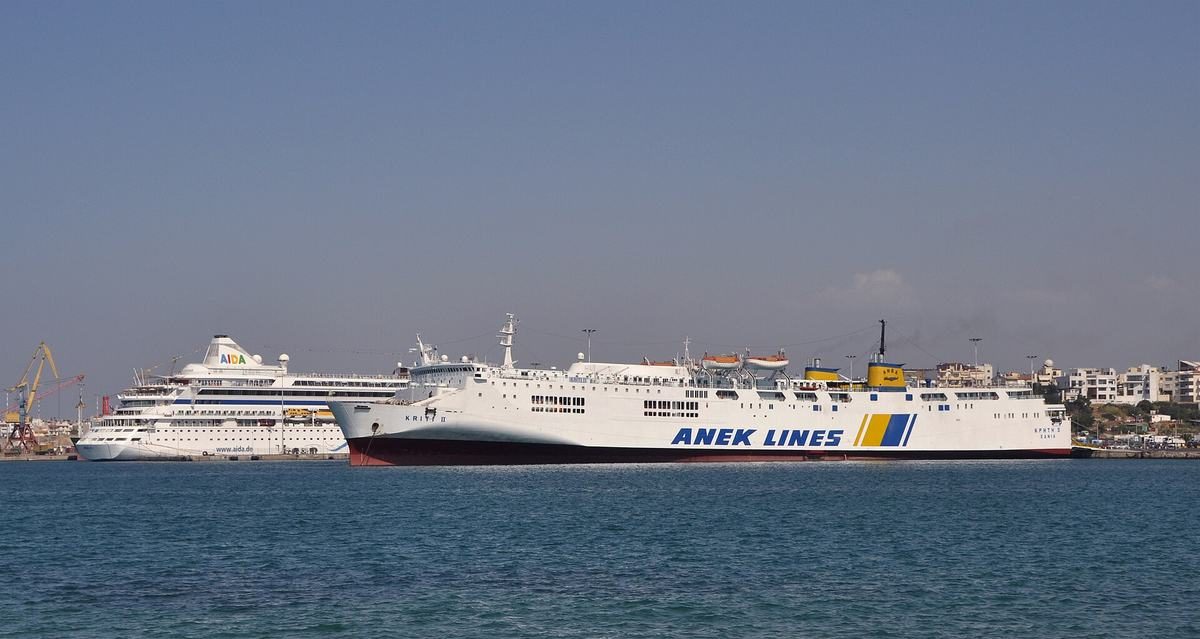
Getting from Milos to Crete means a seasonal high-speed ferry from the port of Adamas to Heraklion, taking around four and a half to five hours. Plan the crossing with ferries, tours and tickets from My Greece Tours.
This crossing links the Milos travel guide to Greece’s largest island. The sections below cover how to get from Milos to Crete, the ferry times and operators, the fares, the ports, and whether to combine the two islands.
How do you get from Milos to Crete?
You get from Milos to Crete by ferry, mainly a seasonal high-speed service from the port of Adamas to Heraklion, the main port of Crete. The crossing takes around 4 hours 30 minutes to just over 5 hours.
Services run chiefly in the summer, operated by SeaJets and others, with around 11 to 24 sailings a week in peak season. Outside summer the connection is very limited. The ferry is the practical way to travel between Milos and Crete, often as part of a wider Aegean route. Milos lies in the Cyclades and Crete to the south, across the southern Aegean Sea, so the only direct way between them is by sea. The main service runs from Adamas, the principal port of Milos, to Heraklion, the largest city and chief port of Crete on its north coast.
The crossing is mostly served by high-speed catamarans that cover the distance in around four and a half to just over five hours. Linking the two islands within a single day. Crucially, this is largely a seasonal route: services run chiefly during the summer, when demand and the wider Cyclades-to-Crete network are at their busiest. The connection becomes very limited or disappears outside the peak months. Because of this seasonality, anyone planning a Milos to Crete crossing can check the current timetable carefully, especially outside high summer. The ferry remains the practical way to travel between the two.
The route is often used as one leg of a longer Aegean island-hopping journey rather than a standalone trip. The questions below cover what travellers ask most.
What are the ferry times and operators?
The Milos to Crete (Heraklion) ferry takes around 4 hours 30 minutes to 5 hours 10 minutes, mainly on high-speed catamarans run by SeaJets.. With Minoan Lines also serving the wider route.
In peak summer there are roughly 11 to 24 sailings a week, with departures spread through the day. The first ferry can leave very early and the last around midday. The schedule is heavily seasonal, so confirm sailings and book ahead, particularly outside the busiest summer months. Crossing times and frequency depend on the season and the operator. The route is served mainly by high-speed catamarans, run notably by SeaJets, that reach Heraklion in around four and a half to just over five hours.. With the larger Minoan Lines also operating on the broader Cyclades-to-Crete network.
In the peak summer the connection is reasonably well served, with somewhere between roughly eleven and twenty-four sailings a week depending on the period. Departures spread across the day, with certain boats leaving Milos very early in the morning and the last typically by around midday. The key point, however, is that this schedule is heavily seasonal: outside the summer the service thins dramatically or stops altogether. So the route cannot be relied upon in spring, autumn or winter without checking. For this reason it is essential to confirm the current sailings for your exact dates and to book ahead, particularly at the edges of the season when crossings are scarce.
The questions below cover what travellers ask most.
How most does the ferry cost and how do you book?
A Milos to Crete ferry ticket starts around €33 for foot passengers, with vehicles from about €21 on top. High-speed and premium seats costing more, often up to €100 or so.
Fares rise in peak summer and for reserved seats, so book online in advance, especially as the seasonal sailings sell out. Arrive at Adamas port at least an hour before departure, or longer with a vehicle, and keep your ticket and ID handy. Booking early is wise given the limited schedule. Fares vary with the type of seat, the season and how early you book. Foot-passenger tickets on the route start from around thirty-three euros.. With an additional charge from about twenty-one euros for a vehicle. While premium and business seats on the fast catamarans cost more, rising toward a hundred euros or so for the top classes.
Prices climb in the peak summer months and for reserved or upgraded seats. Because the route is seasonal with limited sailings, the popular crossings sell out, so booking early is especially important here. The simplest way to book is online in advance through a ferry-booking website that shows the operators and live schedules side by side. Letting you confirm that a sailing actually runs on your dates. On the day, plan to be at the port of Adamas at least an hour before departure as a foot passenger. Or ninety minutes to two hours ahead if you are bringing a car. Keep your ticket and passport or ID ready for boarding.
Given the scarcity of crossings outside high summer, securing your ticket well in advance removes the main risk on this route. The questions below cover what travellers ask most.
What are the ports like at each end?
Ferries leave from Adamas, the main port and lively hub of Milos, where boat tours and buses also depart, close to the capital Plaka.
They arrive at Heraklion, the largest city and main port of Crete on its north coast, a busy working harbour close to the city centre. The archaeological museum and the bus station, with the famous palace of Knossos nearby. Heraklion is well connected for onward travel across Crete, so you arrive with hotels, transport and sights within easy reach. Knowing the ports at each end helps the journey run smoothly. On Milos, ferries depart from Adamas, the island’s main port and busy hub. Where the boat tours and the local buses also operate and where car rental offices and tavernas cluster.
Set conveniently close to the capital of Plaka, so reaching it is easy from anywhere on the island.
On Crete, the boats dock at Heraklion, the island’s largest city and principal port on the north coast. This is a busy, well-equipped working harbour set close to the city centre, within easy reach of Heraklion’s renowned archaeological museum. Its old town and Venetian fortress, the central bus station for travel across Crete. The famous Minoan palace of Knossos just outside the city. As the main gateway to Greece’s largest island, Heraklion is well connected for onward journeys to the rest of Crete. So you arrive into a major city with hotels, transport, sights and services all close at hand, ready to explore far beyond the port itself.
The questions below cover what travellers ask most.
For the wider trip, see the related Milos to Santorini and Milos to Naxos ferries, plan your arrival with how to get to Milos, and map out a Milos itinerary.
Should you combine Milos and Crete?
Yes, Milos and Crete combine well for travellers wanting to pair a small Cycladic island with Greece’s largest, linked by a seasonal ferry of around 4 to 5 hours.
They are very different: Milos for its colourful volcanic beaches, sea caves and relaxed pace, Crete for its vast scale, mountains, gorges, ancient Minoan sites and rich cuisine. Because the connection is seasonal and longer, plan around the summer schedule and book ahead, but the route lets you fold both islands into one ambitious Aegean trip. Pairing Milos and Crete makes an ambitious and rewarding Greek trip, combining a jewel of the small Cyclades with the grandeur of the country’s largest island. The two could hardly be more different, so visiting both gives enormous variety.
Milos is the compact island of colourful volcanic beaches, dramatic sea caves and a relaxed, intimate pace, easily explored in a handful of days. Crete, by contrast, is vast and varied, a near-continent of an island with towering mountains, dramatic gorges such as Samaria. Great ancient Minoan sites like Knossos, Venetian harbour towns, long beaches and one of the richest food cultures in Greece, demanding far more time to explore. Because the ferry between them is seasonal and the crossing longer, at four to five hours. This pairing needs more planning than a short Cycladic hop: travel in summer when the route runs, and book ahead.
Done with that care, the connection lets you fold both the small-island charm of Milos and the epic scale of Crete into a single, memorable Aegean journey. The questions below cover what travellers ask most.
A handful of practical points matter on this longer, seasonal crossing. Confirm well ahead that a sailing actually runs on your dates, as the schedule thins quickly outside high summer. Consider a reserved or business seat on the fast catamaran for comfort over the four-to-five-hour passage. Pack water, snacks and a layer, keep valuables with you, and build a buffer day before any onward flight from Crete in case wind disrupts the boat. Booking early secures both the scarce seats and the better fares on this route.
Frequently Asked Questions
How long is the ferry from Milos to Crete?
The ferry from Milos to Crete (Heraklion) takes around 4 hours 30 minutes to just over 5 hours, mainly on high-speed catamarans run by SeaJets. Boats leave from the port of Adamas on Milos and arrive at Heraklion on Crete’s north coast. The route is heavily seasonal, running chiefly in summer with around 11 to 24 sailings a week. Is very limited or absent off-season, so always confirm the current timetable for your dates.
Is there a ferry from Milos to Crete?
Yes, there is a ferry from Milos to Crete.. But it is mainly a seasonal high-speed service from Adamas to Heraklion, taking around 4 to 5 hours, run chiefly in summer by SeaJets. In peak season there are roughly 11 to 24 sailings a week.. But outside summer the connection is very limited or stops, so it cannot be relied upon in spring, autumn or winter. Always check the current schedule and book ahead.
How most is the Milos to Crete ferry?
A ticket from Milos to Crete starts around €33 for foot passengers, with vehicles from about €21 extra. High-speed or premium seats costing more, often up to €100 or so for the top classes. Fares rise in peak summer and the seasonal sailings sell out, so booking online well in advance is strongly recommended. Given the limited schedule outside high summer, securing your ticket early removes the main risk on this route.