
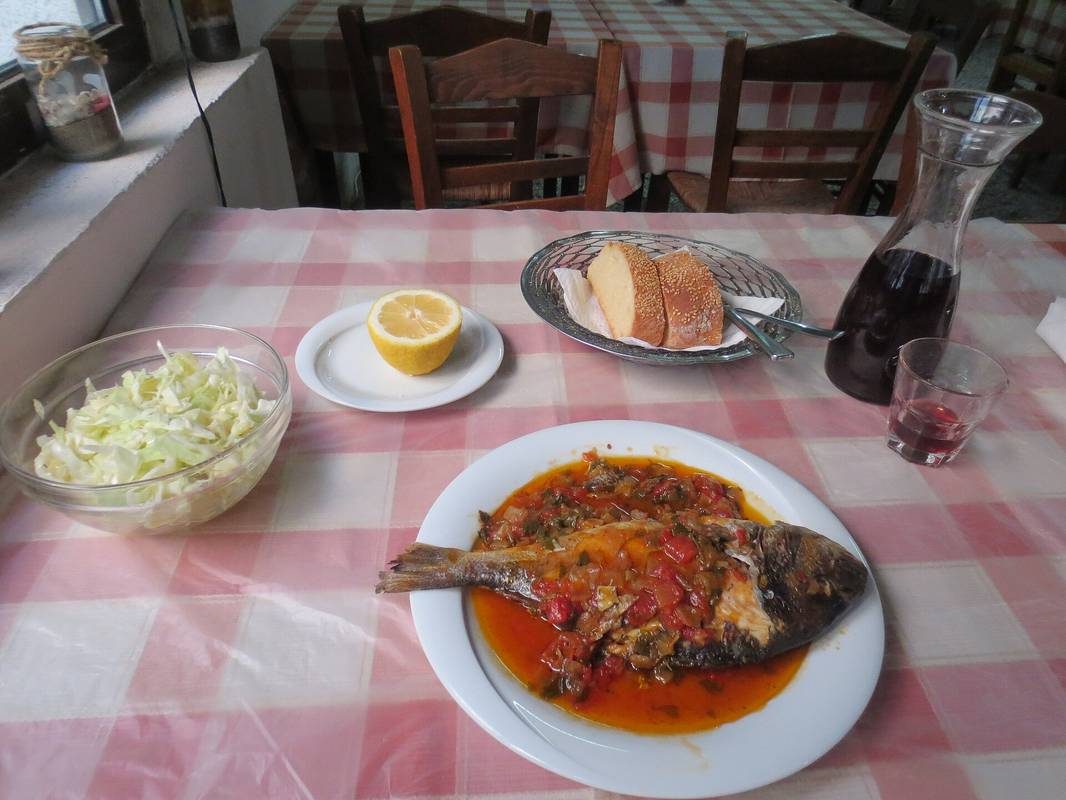
Meze and ouzo are at the heart of Greek dining — small plates shared slowly with cloudy anise spirits in an ouzeri or mezedopoleio. Savour the ritual alongside skip-the-line sightseeing tickets and tours from My Greece Tours.
The meze-and-ouzo ritual is one of the great pleasures of the Athens travel guide. The sections below cover what meze and ouzo are, how to drink ouzo, the classic dishes, where to find the best ouzeris, and how to enjoy the ritual like a local.
What are meze and ouzo?
Meze (mezedes) are small Greek dishes meant to be shared in the middle of the table, eaten slowly over drinks rather than as separate courses. Ouzo is the anise-flavoured Greek spirit traditionally sipped alongside them, served with water and ice, turning cloudy white when water is added. Together they form a way of eating and socialising rather than a single meal. The places that specialise in this are the ouzeri and the mezedopoleio, where plates arrive one by one for hours of relaxed sharing.
At the heart of Greek eating lies not the grand main course but the meze, the array of small dishes designed to be shared. Mezedes are little plates of food, savoury and varied, placed in the middle of the table for everyone to pick at together, eaten slowly and sociably over drinks rather than served as distinct courses in sequence.
The classic companion to meze is ouzo, the anise-flavoured spirit that is one of the national drinks of Greece. Strong and aromatic, it is meant to be sipped slowly, never downed, and is served with a separate glass of water and some ice; add the water and the clear spirit clouds magically into a milky white. Meze and ouzo are less a meal than a way of life, a ritual of unhurried eating, drinking and talking. The places built for it are the ouzeri, which pairs drinks with small plates, and the mezedopoleio, which is meze-first and made for sharing, both dedicated to slowing the day down around the table.
How do you drink ouzo properly?
You drink ouzo slowly and with food, never as a quick shot. Pour a measure into a tall glass, add cold water and ice to taste, and watch it turn from clear to cloudy white. Sip it gradually alongside meze, especially salty seafood, which complements the anise flavour. Tsipouro and raki are similar Greek spirits enjoyed the same way. The point is the pace: ouzo is a social drink that stretches a meal over hours, not a drink to rush. Always eat as you drink.
Drinking ouzo well is about ritual and pace, not quantity. The proper way is to pour a measure into a tall, narrow glass and add cold water and, if you like, ice to taste, diluting the strong spirit to a gentler strength; as the water hits the ouzo, it turns from clear to a cloudy, milky white, the famous louche that is part of the pleasure.
Then you sip, slowly and steadily, never knocking it back like a shot, because ouzo is meant to accompany food and conversation over a long sitting. The crucial rule is always to eat as you drink: ouzo is made to be paired with meze, and it goes especially well with salty seafood, fried or salted, such as anchovies, sardines and octopus, whose brine balances the sweet anise. Close cousins to ouzo, the grape spirits tsipouro and Cretan raki, are enjoyed in exactly the same unhurried way, with or without the anise flavouring. Understanding this, that ouzo is a slow, food-loving, social drink rather than something to rush, is the key to enjoying it as the Greeks do.
What meze dishes should you order?
Meze to order with ouzo include seafood like grilled or marinated octopus, fried calamari, salted anchovies, sardines and shrimp; dips such as tzatziki, taramosalata, fava and spicy tirokafteri; and small plates like grilled halloumi, fried courgette, dolmades, keftedes (meatballs), spicy sausage and Greek salad. Seafood pairs best with ouzo, while meatier meze suit tsipouro. The idea is to order several plates to share and keep ordering as the evening goes on, building a varied, communal spread rather than fixed courses.
Choosing meze is half the fun, and the right approach is to order a selection to share and then keep adding more as the evening unfolds. Because ouzo pairs so well with the sea, seafood mezedes are the classic choice: tender grilled or marinated octopus, crisp fried calamari, salted anchovies and sardines, fried small fish and plump shrimp all sing alongside the anise spirit.
Around them comes a chorus of dips and vegetable plates: cooling tzatziki of yoghurt, cucumber and garlic, the pink fish-roe taramosalata, creamy yellow fava, and the fiery cheese dip tirokafteri, all scooped up with bread. Then there are the warm and hearty meze, grilled halloumi, fried courgette and aubergine, stuffed vine leaves, minty meatballs called keftedes, spicy sausage and a fresh Greek salad. As a rule, the brinier seafood plates suit ouzo, while the peppery meats and sausages go beautifully with tsipouro. There is no fixed menu and no set order; you simply build a varied, communal spread across the table and keep the plates coming as the talk and the drinking continue, which is the whole spirit of the meze table. The questions below cover what visitors ask most.
Where do you find the best ouzeris in Athens?
The best ouzeris and mezedopoleia in Athens are found in the older neighbourhoods. Plaka and Monastiraki have traditional ouzeris often combined with old kafeneia. Exarcheia is the city’s most spirited meze enclave, full of lively spots serving tsipouro and sharing plates. Psyrri, Koukaki and the area around the central market also have excellent options, as do the fish tavernas of Piraeus for seafood meze. Look for busy, unpretentious places full of locals, where the menu runs to pages of small dishes.
Athens is full of places dedicated to the meze ritual, and the best are usually the most unpretentious, found in the city’s older and livelier neighbourhoods. The historic centre around Plaka and Monastiraki preserves traditional ouzeris, often combined with the old-style kafeneio that serves Greek coffee and ouzo with small plates, atmospheric spots beneath the Acropolis.
For the most spirited scene, head to Exarcheia, long the city’s liveliest meze enclave, where philosophy, politics and rounds of tsipouro and sharing plates flow together at rickety pavement tables. The districts of Psyrri and Koukaki, and the buzzing area around the Varvakios central market, also overflow with excellent mezedopoleia, while for seafood meze the fish tavernas of Piraeus are unmatched. Across the city you will find dozens of eateries whose menus run to several pages of little dishes; the trick is to choose the places that are busy and full of locals rather than tourists, where the atmosphere is unhurried and the plates keep coming. In a good ouzeri the food is honest and cheap, and the real luxury is the time spent at the table. The questions below cover what visitors ask most.
The meze ritual also shifts gently with the seasons and the setting, which is part of its charm. In summer it moves outdoors, to pavement tables and seaside tavernas where chilled ouzo and grilled octopus suit the heat, while in winter it retreats to cosy ouzeris where tsipouro and warming plates of meatballs and sausage take over. Wherever and whenever you find it, the heart of the ritual stays the same: small plates, slow drinking and long conversation shared among friends.
How do you enjoy the meze ritual like a local?
To enjoy meze like a local, go in a group, as the table is meant for sharing, and settle in for a long, leisurely session rather than a quick meal, ideally at a late lunch or in the evening. Order a few plates at a time and keep adding, sip your ouzo or tsipouro slowly with water, and let conversation lead the pace. Do not rush or ask for the bill early; the whole point is the unhurried get-together. Tip a little for good service and embrace the slow rhythm.
The secret to the meze ritual is that it is about company and time as much as food, so to do it like a Greek you must embrace the slow pace. Ideally go in a group, since the shared table comes alive with several people picking at the same plates, and settle in for a long session, whether a leisurely late lunch that drifts into the afternoon or an evening that stretches for hours.
Order just a few mezedes to begin with and keep adding more as you go, rather than filling the table at once, so the meal unfolds gradually. Sip your ouzo or tsipouro slowly, always cut with water and eaten alongside the food, and let the conversation, not the kitchen, set the rhythm. Crucially, do not rush or signal for the bill the moment the plates are empty; lingering is expected and the get-togetherness is the entire point, an expression of the Mediterranean way of life. Leave a small tip for good service, relax into the unhurried mood, and you will have understood one of the most authentic and joyful traditions of Greek dining, the heart of how Athens eats, drinks and socialises. The questions below cover what visitors ask most.
Frequently Asked Questions
What is the difference between an ouzeri and a mezedopoleio?
An ouzeri and a mezedopoleio are very similar Greek eateries serving meze, with a subtle difference of emphasis. An ouzeri pairs drinks, ouzo, tsipouro or raki, with small plates, putting the drink at the centre, while a mezedopoleio is meze-first and built around the food for sharing. A tsipouradiko specialises in tsipouro with meze. In practice all three offer the same experience: small dishes shared slowly over drinks.
How do you drink ouzo?
You drink ouzo slowly and with food, never as a shot. Pour a measure into a tall glass, add cold water and ice to taste, and watch it turn cloudy white. Sip it gradually alongside meze, especially salty seafood like octopus and anchovies, which balance the anise flavour. Ouzo is a social drink meant to stretch a meal over hours, so the key is to pace yourself and always eat as you drink.
Where can you eat meze in Athens?
You can eat meze across Athens at ouzeris and mezedopoleia, especially in the older neighbourhoods. Plaka and Monastiraki have traditional ouzeris, Exarcheia is the liveliest meze enclave with tsipouro and sharing plates, and Psyrri, Koukaki and the central market area have many options. For seafood meze, the fish tavernas of Piraeus are best. Look for busy, unpretentious places full of locals with menus running to pages of small dishes.