
Learning a few Greek phrases for tourists, from hello and thank you to ordering food and asking directions, transforms a trip to Athens and Greece, opening doors and delighting locals. Pair these handy words with skip-the-line sightseeing tickets and tours from My Greece Tours for a warmer, smoother visit.
This handy language guide is a practical part of the Athens travel guide. The sections below cover why the words matter, greetings, please and thank you, ordering food and drink, asking directions and shopping, transport, hotels, emergencies, numbers, the Greek alphabet, and tips on pronunciation.
Why learn a few Greek phrases?
Greek phrases are not strictly necessary, since most Greeks in tourist areas speak good English, yet they are hugely worthwhile. Saying kalimera (good morning) or efcharisto (thank you) delights locals and warms every interaction.
The practical reality is that you can travel through Athens and the main tourist areas of Greece speaking only English, since most people working in tourism, hospitality and the cities speak it well. The value of learning a little Greek is therefore not about necessity but about connection and courtesy. Greeks genuinely appreciate when a visitor makes the effort to use their language, even 1 or 2 words. Even the simplest greetings, a cheerful kalimera for good morning or a sincere efcharisto for thank you, reliably bring a smile and warm the interaction.
Making the effort signals respect for the culture and the country, and it turns you from a passing tourist into a more engaged and welcome guest. For the tiny effort involved, learning a handful of phrases is one of the most rewarding things a visitor can do. Studies of travel behaviour consistently show that locals respond faster and more helpfully to visitors who greet them in the local tongue. The most useful place to start is with greetings.
What are the essential greetings?
The key greetings are kalimera (good morning, until noon), kalispera (good evening, from late afternoon), kalinihta (good night), and the all-purpose yia sas (hello or goodbye, polite) or yia sou (casual).
Greetings are the single most useful category of Greek to learn, since you will use them dozens of times a day and they instantly create goodwill. Greeks greet according to the time of day. You say kalimera, meaning good morning, from waking until around noon; kalispera, good evening, from the late afternoon onward through the evening; and kalinihta, good night, when parting at the end of the day, for instance leaving a restaurant or passing the hotel reception on the way to bed. The most versatile greeting of all is yia, which serves for both hello and goodbye.
This greeting comes in 2 forms that reflect Greek politeness. Yia sas is the polite, formal and respectful version, ideal for addressing strangers, older people, waiters, shopkeepers and anyone you wish to show respect. Yia sou is the casual, friendly form used with friends, peers and people your own age. As a visitor, using yia sas is the safe and courteous default. To say goodbye you can also say andio. Master these 5 warm greetings and you will already make a strong impression. Closely linked are the words for courtesy, which come next.
How do you say please, thank you, yes and no?
The essential courtesy words are efcharisto (thank you), parakalo (please, and also you’re welcome), ne (yes, though it sounds like “no”), and ohi (no). Add signomi for excuse me or sorry.
The small words of politeness are the most important to learn after greetings, since they smooth every interaction and are always warmly received. The most essential is efcharisto, meaning thank you, which you will want to use constantly and which never fails to please; you can add poly, meaning very or much, to say efcharisto poly, thank you very much. Equally useful is parakalo, which does double duty, meaning both please when you make a request and you’re welcome when responding to thanks, so it is well worth remembering.
A common and amusing pitfall for English speakers concerns yes and no. The Greek word for yes is ne, which sounds very close to the English word no, while the Greek word for no is ohi, so take care not to mix them up, since nodding while saying ne actually signals agreement. Another handy word is signomi, meaning excuse me or sorry, useful both for politely getting someone’s attention, such as a waiter, and for apologising or squeezing past in a crowd. Sprinkling efcharisto, parakalo, ne, ohi and signomi into your daily exchanges marks you as a considerate visitor.
What phrases help with food and drink?
Useful dining phrases include ena kafe parakalo (a coffee, please), nero (water), krasi (wine), mia bira (a beer), and to logariasmo parakalo (the bill, please). Yamas is the toast meaning cheers.
Eating and drinking are among the great joys of a trip to Greece, so food-related phrases are both practical and appreciated. The magic ordering formula is simply to name what you want and add parakalo: for example, ena kafe parakalo for a coffee, please, or mia bira parakalo for a beer. Handy words to know include nero for water, krasi for wine, bira for beer, psomi for bread and the indispensable kafe for coffee, the lifeblood of Greek social life. When you have finished your meal and want to pay, ask for to logariasmo parakalo, meaning the bill, please.
To show your enjoyment, which Greeks proud of their cuisine love to hear, you can exclaim ti nostimo, meaning how delicious, and thank your host with efcharisto. When raising a glass, the universal Greek toast is yamas, meaning cheers or to our health, accompanied by clinking glasses and good cheer. Even if you cannot recall the exact word for a dish, you can always point to it on the menu or display and add parakalo. Engaging with the food in Greek adds warmth and fun to the Greek dining experience.
What about directions, shopping and pronunciation tips?
For getting around, use pou ine (where is), poso kani (how much is it), and milate anglika (do you speak English). The words aristera (left) and dexia (right) help too. Follow the stress marks over vowels.
Three more phrase groups help with navigating and shopping. To ask for directions or locate something, use pou ine, meaning where is, followed by your destination, for example pou ine to metro for where is the metro. When shopping or checking a price, the key phrase is poso kani, meaning what it costs, and the words aristera for left and dexia for right help you follow directions. If you are struggling, you can politely ask milate anglika, meaning do you speak English, though most people in tourist areas will switch to English readily.
Pronunciation rests on 2 tips that make a big difference. Greek words carry a stress accent, marked in writing by a small accent over the stressed vowel, and putting the emphasis on the correct syllable makes you far easier to understand. Note too that the soft Greek letter g, before the vowels e or i, sounds like the y in yes rather than a hard g. Do not worry about getting it perfect. Greeks are patient with any attempt, so relax, speak with a smile, and enjoy the warm reactions your efforts bring. A little Greek goes a long, rewarding way.
Which words help with getting around and transport?
Transport words include to metro (the metro), leoforio (bus), taxi (taxi), stasi (stop), isitirio (ticket), and pou ine i stasi (where is the stop). Add parakalo to any request to stay polite.
Getting around Athens and Greece is easy once you know a handful of transport words. The metro is simply to metro, the bus is leoforio, and a taxi keeps the familiar word taxi. A stop is stasi, and a ticket is isitirio, so pou ine i stasi means where is the stop and ena isitirio parakalo means one ticket, please. When you want the driver to let you off, edo parakalo means here, please, and stamata means stop. These 6 core words cover most journeys on the metro, tram, bus and ferry.
For longer trips, the port is limani, the airport is aerodromio, and the train station is stathmos. To ask when something leaves, pote fevgi means when does it leave, and to confirm a destination, pao gia followed by the place name means I am going to. Drivers and station staff in Athens deal with international visitors every day, so a clear pou ine paired with your destination almost always gets a helpful answer, often with a pointing hand and a smile to guide you the rest of the way.
What should you say when checking into a hotel?
At a hotel, say echo kratisi (I have a reservation), give your onoma (name), and ask pou ine to domatio (where is the room). Kleidi means key and proino means breakfast.
Checking into a hotel or guesthouse in Greece runs smoothly in English, yet 8 Greek words earn instant warmth at the reception desk. Echo kratisi means I have a reservation, and giving your onoma, meaning name, helps the clerk find your booking fast. The room is domatio, so pou ine to domatio asks where the room is, and the key is kleidi. If you need to know when the morning meal is served, proino means breakfast and ti ora means what time, so ti ora to proino asks what time is breakfast.
Comfort words round out a hotel stay. Zesto means hot and krio means cold, useful for taps, air conditioning and rooms, while petseta means towel and sapouni means soap. To ask for help, boro na echo means may I have, followed by the item you need. Reception staff appreciate the effort, and a polite efcharisto as you collect your kleidi sets a friendly tone for the whole stay. These 8 simple hotel words handle nearly every arrival and departure.
How do you handle shopping and money in Greek?
For shopping, poso kani means how much is it, akrivo means expensive, ftino means cheap, and thelo afto means I want this. The currency is the euro, and you can always point and add parakalo.
Shopping in Athens markets and island shops becomes friendlier and often cheaper with 6 Greek words. Poso kani asks the price, and once you hear it, akrivo means expensive while ftino means cheap, so a smile and akrivo can gently open a conversation about the price at a market stall. Thelo afto means I want this, and thelo, meaning I want, works before any item. To confirm you will take something, endaxi means okay or fine, a hugely versatile word across Greece.
Money words keep transactions clear. The currency is the euro, called evro in Greek, and metrita means cash while karta means card, so me karta asks whether card payment is accepted. If you need change, resta means change, and a paying phrase, tha to paro, means I will take it. Even in busy markets, naming your choice, asking poso kani and thanking the seller with efcharisto turns a plain purchase into a warm exchange that Greek shopkeepers remember and reward.
What Greek words help in an emergency?
In an emergency, voithia means help, astinomia means police, and nosokomio means hospital. The Greek and European emergency number is 112. Say echo anagi voithias for I need help.
Emergencies are rare on a Greek holiday, yet a handful of clear words bring calm and fast help when they matter. Voithia means help and is understood instantly, while echo anagi voithias means I need help. The police are astinomia, a doctor is giatros, a hospital is nosokomio, and a pharmacy is farmakio, marked across Greece by a green cross that is easy to spot on any high street. For a fast summons, kaleste means call, so kaleste astinomia means call the police.
Health words help you describe a problem. Pono means it hurts or I am in pain, and adding a body part clarifies the trouble, for instance to kefali mou pona for my head hurts. Farmako means medicine and the pharmacy staff, often trained to advise on minor complaints, will guide you. The single most important fact to carry is the number 112, the free Greek and European emergency line that connects you to police, ambulance and fire services with English-speaking operators.
How do you count from one to ten in Greek?
The numbers 1 to 10 in Greek are ena (1), dio (2), tria (3), tessera (4), pente (5), exi (6), efta (7), okto (8), enea (9), and deka (10). Use them for prices, tickets and orders.
Numbers turn up constantly when you shop, order and travel, so the first 10 are worth memorising. In order they are ena for 1, dio for 2, tria for 3, tessera for 4, pente for 5, exi for 6, efta for 7, okto for 8, enea for 9, and deka for 10. To order a set quantity, place the number before the item, for example dio kafedes for 2 coffees or tria isitiria for 3 tickets, and add parakalo to stay polite.
Higher numbers build on these roots, so eikosi means 20 and ekato means 100, handy for prices and room numbers. When a seller states a price, hearing pente or deka helps you catch the euro amount even in fast speech. Pairing a number with parakalo and a smile covers most everyday counting, from buying pastries at a bakery to booking seats on a ferry, and it shows a level of effort that Greek vendors and drivers clearly value.
What are the basics of the Greek alphabet?
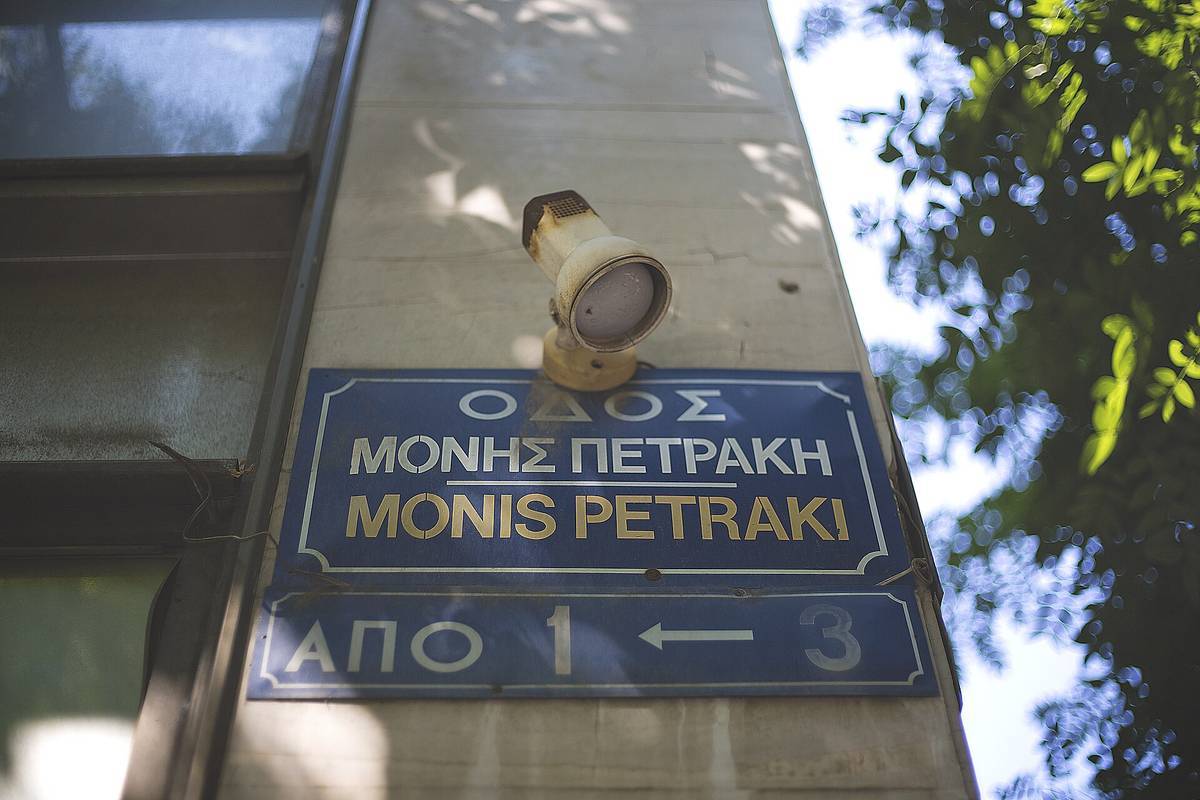
The Greek alphabet has 24 letters. Learning to recognise 5 or 6, such as those on the signs for the metro, the exit, and place names, helps you navigate, though English signs are widespread in Athens and tourist areas.
The Greek alphabet, the direct ancestor of the Latin one, has 24 letters, and recognising just 5 or 6 unlocks signs across the country. The word for exodus, exodos, marks the exit, and the metro word, metro, appears on station signs. Place names on road signs and departure boards often show Greek first, so matching the shapes to a name you know, such as Athina for Athens, keeps you oriented. Letters such as alpha, beta and omega will already look familiar from mathematics and science.
You do not need to master the alphabet to enjoy Greece, since English signs are widespread in Athens, at the airport, on the metro and across tourist areas. Learning to recognise 5 or 6 key words in Greek script, though, adds confidence when you wander into a neighbourhood bakery or read a hand-written taverna menu. Even without the script, a warm kalimera and a heartfelt efcharisto carry you far, and locals will happily point you in the right direction whenever you look unsure.
Frequently Asked Questions
What are the most useful Greek phrases for tourists?
The most useful Greek phrases for tourists are the greetings kalimera (good morning), kalispera (good evening) and yia sas (hello or goodbye, polite), plus efcharisto (thank you), parakalo (please or you’re welcome), ne (yes), ohi (no), signomi (excuse me), and to logariasmo parakalo (the bill, please). Even a handful of these delight locals and warm every interaction across Athens and the islands.
Must you speak Greek to visit Athens?
No, you do not need to speak Greek to visit Athens, since most people in tourist areas, hotels, restaurants and shops speak good English, so you can travel easily. Learning basic phrases like kalimera and efcharisto is still appreciated by locals, shows respect for the culture, and often leads to friendlier service and warmer, more memorable exchanges throughout your trip.
How do you say thank you in Greek?
You say thank you in Greek as efcharisto. To say thank you very much, add poly, giving efcharisto poly. The word for please and you’re welcome is parakalo, which covers both. These courtesy words are warmly received throughout Greece and rank among the most useful phrases a visitor can learn for a friendlier and smoother trip.
What is the emergency number in Greece?
The emergency number in Greece is 112, the free European emergency line that connects you to police, ambulance and fire services, with English-speaking operators available. Useful words to know are voithia (help), astinomia (police), giatros (doctor) and nosokomio (hospital). A pharmacy, farmakio, is marked by a green cross and staff there can advise on minor health complaints during your visit.
For guided ways to put your new Greek to use across the city, browse the tours and tickets on My Greece Tours Athens and travel with ease.