
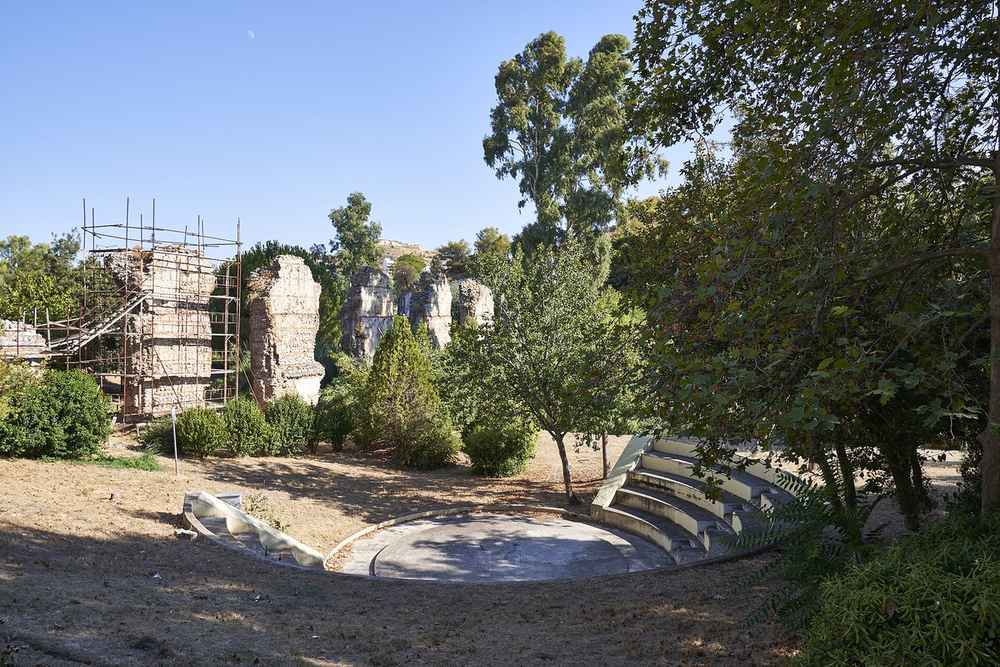
Nea Ionia is an authentic northern Athens neighbourhood founded by Greek refugees from Asia Minor, with a buzzing trade district, refugee-history museums, old stone refugee houses, leafy parks and rich Pontic and Smyrna food. Discover this local gem alongside skip-the-line sightseeing tickets and tours from My Greece Tours.
This heritage-rich district is a local-life corner of the Athens travel guide. The sections below cover what Nea Ionia is, its refugee history, the museums and culture, the old houses and church, the shopping and trade, the food and parks, and how to visit.
What is Nea Ionia?
Nea Ionia is a lively, working-class and authentic neighbourhood in the northern part of Athens, founded by Greek refugees who fled Asia Minor. Named after the ancient Greek region of Ionia, it is known for its strong refugee heritage and Asia Minor culture, a busy trade and shopping district, museums preserving the refugee story, old refugee houses and parks. It offers a genuine, untouristy slice of Athenian life rooted in a moving history.
Away from the ancient monuments and the tourist trail, Nea Ionia is one of the most authentic and characterful neighbourhoods of northern Athens, a lively, down-to-earth, working-class district with a powerful sense of identity rooted in the history of the Greek refugees who created it. Like its neighbour Nea Smyrni, Nea Ionia was founded in the aftermath of the catastrophe of by Greek refugees uprooted from Asia Minor, and it takes its name, meaning New Ionia, from the ancient Greek region of Ionia on the Aegean coast of Asia Minor from which many of its founders came. This heritage shapes the neighbourhood to this day, expressed in its strong Asia Minor and Pontic Greek culture, its food, its museums and even its street names.
Today Nea Ionia is also well known across Athens as a bustling commercial and trade district, a centre of shops and small businesses, and it retains pockets of old refugee housing, churches and green parks. For travellers curious to experience the real, lived-in Athens and a moving chapter of modern Greek history, it is a rewarding and genuine discovery. It is a neighbourhood with a soul. Its story begins with the refugees.
What is the refugee history of Nea Ionia?
Nea Ionia was settled by Greek refugees who fled Asia Minor during the catastrophe and population exchange of, many from the Ionian coast, Smyrna and the Black Sea region of Pontus. By around 97 percent of its residents were refugees. They named their streets after their lost homelands, such as Trebizond and Sinope, and rebuilt their lives and culture here. This heritage of uprooting, loss and resilient renewal remains the defining heart of the neighbourhood’s identity.
To understand Nea Ionia is to understand the great tragedy and the remarkable resilience that gave it birth. The neighbourhood was created by the wave of Greek refugees who poured into Athens following the Asia Minor Catastrophe of, when, at the end of the Greco-Turkish war and the subsequent compulsory exchange of populations, the ancient Greek communities of Asia Minor were forced from their ancestral homes. Many of those who settled here came from the Ionian coast and the great city of Smyrna, and a large number also came from the distant Greek communities of Pontus, the Black Sea region, bringing their distinctive Pontic culture. So overwhelming was this influx that by the late 1920s the great majority of the neighbourhood’s residents, some ninety-seven percent, were refugees from Asia Minor.
Arriving with little, they built a new community from nothing, and their deep attachment to the homelands they had lost is poignantly recorded in the very streets of Nea Ionia, many of which they named after the towns and regions they had left behind, such as Trebizond, Sinope and others along the Black Sea coast and in Ionia. This heritage of loss, memory and renewal remains the beating heart of the neighbourhood. Its identity is inseparable from this past. That heritage is preserved in its museums.
What museums and culture can you experience?
Nea Ionia preserves its Asia Minor heritage through dedicated cultural institutions, including a centre dedicated to researching and promoting Asia Minor culture and a museum of Asia Minor Hellenism displaying refugee heirlooms and artefacts. These tell the story of the lost homelands, the catastrophe and the refugees’ lives. The neighbourhood also keeps alive Asia Minor and Pontic music, dance, traditions and cuisine, making a visit a window onto this rich, distinctive culture and its preservation in modern Athens.
For visitors interested in the human story behind the neighbourhood, Nea Ionia offers meaningful cultural institutions dedicated to preserving and sharing its Asia Minor heritage, a rare opportunity to engage with this important chapter of Greek history. The neighbourhood is home to a centre devoted to studying and promoting the culture of Asia Minor, which works to research, document and celebrate the history, traditions and legacy of the Greeks of Asia Minor, and to a museum of Asia Minor Hellenism, which displays a moving collection of heirlooms, personal belongings, photographs, documents and artefacts brought by the refugees or relating to their lost world, bringing their story vividly to life.
Together these institutions tell the tale of the prosperous Greek communities of Asia Minor, the catastrophe that destroyed them, and the new lives the refugees built in Athens. Beyond the museums, the living culture of Asia Minor and Pontus endures in Nea Ionia through its music and dance, its festivals and customs, and above all its distinctive cuisine, all kept alive by the descendants of the refugees. Experiencing this culture makes a visit genuinely enriching and memorable. It is heritage preserved with pride. The neighbourhood’s fabric also reflects its origins.
What old houses and landmarks can you see?
Nea Ionia preserves traces of its refugee origins in its built fabric, including areas of old stone refugee houses, such as the “Petrina” district of stone dwellings built to house refugees, which evoke the early decades of the settlement. The neighbourhood’s landmark is the historic church of Saint Stephen, near the town hall, a focal point of community life. These old houses and the church, set among the busy modern streets, anchor the neighbourhood’s memory and identity.
The history of Nea Ionia is written not only in its museums but in its very streets and buildings, where traces of the refugee origins survive amid the bustling modern district. In the early decades, the refugees were housed in simple, often hastily built dwellings, and the neighbourhood still preserves pockets of this early refugee housing, most notably an area known as the Petrina, meaning the stone houses, a district of modest stone dwellings built to shelter the refugees, which stand today as evocative reminders of the community’s humble and difficult beginnings. Wandering these older corners, with their small houses and narrow streets, offers a glimpse of the neighbourhood as it was in its formative years.
The principal landmark of Nea Ionia is its historic main church, dedicated to Saint Stephen, standing near the town hall at the heart of the community, which has long served as a focal point for the religious and social life of the neighbourhood and its people. Together, these old houses and the church, surrounded by the busy commercial streets of the modern district, anchor the collective memory and identity of Nea Ionia. They keep the past present. Beyond heritage, the neighbourhood thrives on trade.
What are the shopping, food and parks like?
Nea Ionia is famous across Athens for its large, busy shopping and trade district, with countless shops and small businesses, especially for clothes and textiles, drawing bargain-hunters from across the city. Its food scene is a highlight, with markets and eateries serving distinctive Pontic and Asia Minor specialities. The neighbourhood also has green space, including the large Nea Filadelfeia grove and park nearby, with a windmill and fountains, ideal for a relaxed stroll.
Beyond its heritage, Nea Ionia is a vibrant, functioning neighbourhood with plenty to enjoy, starting with its renowned shopping and trade. Across the city, Nea Ionia is famous above all for its large and busy commercial district, a dense concentration of shops and small family businesses that grew up over the decades and which is especially known for clothes, textiles, fabrics and household goods, drawing shoppers and bargain-hunters from across the wider city, so a wander through its bustling commercial streets offers an authentic taste of everyday Athenian trade and life. The food of Nea Ionia is a particular delight and a direct legacy of its refugee roots, with markets, delis and eateries offering the rich, spiced and distinctive specialities of Pontic and Asia Minor cuisine, a wonderful opportunity to taste flavours not easily found elsewhere.
For green space and relaxation, the neighbourhood and its surroundings offer welcome respite, most notably the large grove and park of neighbouring Nea Filadelfeia, one of the bigger parks in the area, complete with a windmill and dancing fountains, perfect for a leisurely stroll or a picnic. This blend of commerce, cuisine and greenery rounds out the appeal. There is genuine life here. Reaching it from the centre is easy.
How do you visit Nea Ionia?
Nea Ionia lies in the northern suburbs of Athens and is easily reached from the centre, around 20 to 30 minutes away. The metro line 1, the green line, serves the area, with a Nea Ionia station, or you can take a bus or taxi. The neighbourhood is best explored on foot, wandering the commercial streets, the old refugee quarters, the church and the museums. It pairs well with exploring the northern districts and makes an authentic, offbeat addition to an Athens itinerary.
Visiting Nea Ionia from central Athens is straightforward, and the neighbourhood rewards the traveller seeking an authentic, untouristy experience of the city. Lying in the northern part of the Athens metropolitan area, Nea Ionia is well connected to the centre, reachable in around twenty to thirty minutes, and conveniently served by the metro: line 1, the green line, the city’s oldest metro line running north from the centre and Piraeus, has a station serving the Nea Ionia area, making it simple to reach by rail, while buses and taxis also connect the neighbourhood to the rest of the city. Once there, Nea Ionia is best explored on foot, wandering its busy commercial streets to soak up the trade and local life, seeking out the older refugee quarters and their stone houses, visiting the landmark church of Saint Stephen, and, for those interested in the history, calling at the cultural institutions and museums dedicated to the Asia Minor heritage, perhaps pausing to sample the distinctive local food.
The neighbourhood combines naturally with exploring the wider northern districts of the city. For an offbeat, authentic and historically rich addition to an Athens itinerary, Nea Ionia is a genuine reward. The transport network is explained in the Athens metro guide. The questions below cover the points visitors ask most.
Frequently Asked Questions
What is Nea Ionia known for?
Nea Ionia is known as an authentic northern Athens neighbourhood founded by Greek refugees from Asia Minor, with a strong refugee and Pontic heritage. It is famous across the city for its busy shopping and trade district, especially for clothes and textiles, and for its distinctive Asia Minor cuisine, refugee-history museums, old stone refugee houses and the landmark church of Saint Stephen.
How do you get to Nea Ionia from central Athens?
Nea Ionia lies in the northern suburbs of Athens, reachable in around 20 to 30 minutes from the centre. The metro line 1, the green line, serves the area with a Nea Ionia station, and buses and taxis also connect it to the city. Once there, the neighbourhood is best explored on foot, wandering the commercial streets, old refugee quarters, church and museums.
Is Nea Ionia worth visiting?
Nea Ionia is worth visiting for travellers wanting an authentic, untouristy taste of Athens rooted in a moving history. Its strong Asia Minor and Pontic refugee heritage, lively trade district, distinctive cuisine, refugee museums and old stone houses offer a genuine, offbeat experience of everyday Athenian life, easily combined with exploring the wider northern districts of the city.