
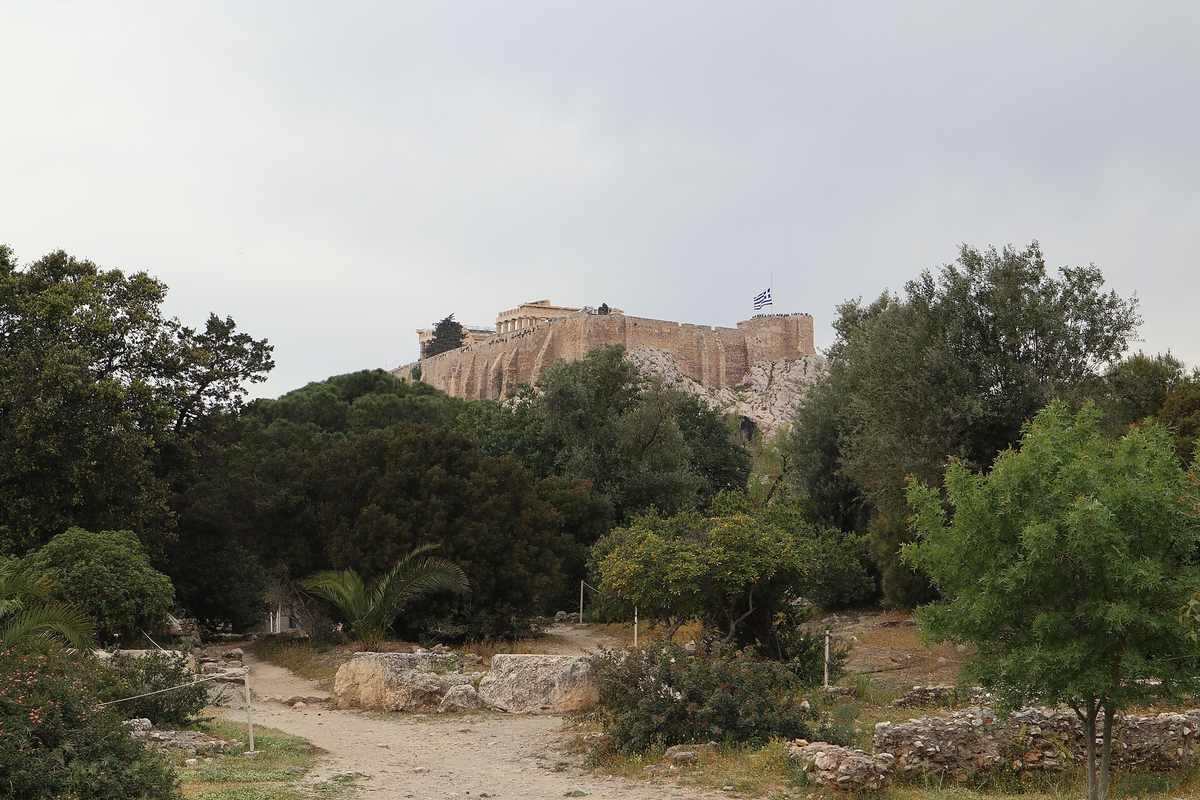
This Acropolis tickets guide covers prices, booking online to skip the queues, opening hours, timed entry and free days, so you can plan a smooth visit to Athens’ greatest monument. For guaranteed timed entry and guided access, book through skip-the-line tickets and tours from My Greece Tours.
This Acropolis tickets guide complements the wider Athens travel guide. The sections below cover the ticket price, how to book and beat the queues, timed entry, opening hours, free days, combo options and the best time to visit the Acropolis.
How much does an Acropolis ticket cost?
A standard adult ticket to the Acropolis costs thirty euros for the citadel and its slopes, at the same price year-round. A reduced ticket costs around fifteen euros for eligible visitors, and EU citizens under twenty-five and children enter free with valid ID.
The first thing to understand when planning a visit is the cost of admission to the Acropolis, which is straightforward but worth knowing in advance. The standard full-price ticket for an adult is thirty euros, granting entry to the Acropolis citadel itself, with the Parthenon, the Erechtheion, the Temple of Athena Nike and the Propylaea, as well as to the archaeological slopes around the rock, including the south slope, home to the Theatre of Dionysus and the Roman-era Odeon. This single price now applies all year round, the previous cheaper winter rate having been discontinued. The year-round price is the one this Acropolis tickets guide uses.
A reduced ticket, costing around fifteen euros, is available to certain categories of visitor such as non-EU students and older travellers, while free admission is granted to children and young people up to a set age, to EU citizens and residents under twenty-five, and to other eligible groups, all of whom must carry valid identification or documentation to prove their status. Knowing the price helps you budget and choose the right ticket type. The exact entitlements can vary, so check current rules. Buying the ticket the right way saves time. Full, reduced and free are the three price tiers in this Acropolis tickets guide.
How do you book tickets and beat the queues?
Book your Acropolis ticket online in advance to choose a timed-entry slot and skip the ticket-office queue. Buy through the official state e-ticket site or reputable tour operators. No fast-track lane exists for security, so advance booking spares the ticket queue.
The single most important piece of advice for visiting the Acropolis is to buy your ticket online before you arrive, rather than queuing to purchase one at the site, as this saves a great deal of time and stress, particularly during the busy months when the ticket lines can be very long under a hot sun. Tickets can be bought through the official Greek state e-ticketing system for archaeological sites, or through reputable tour companies and platforms that sell timed-entry tickets, frequently bundled with a professional guide, a small-group tour or an audio guide that greatly enriches the visit by explaining the monuments. This Acropolis tickets guide treats a bundled guide as an add-on to the plain ticket.
It is worth understanding clearly that there is no genuine skip-the-line or fast-track ticket that lets you bypass the security queue at the entrance; what advance booking does is spare you the separate ticket-purchase queue, so you go straight to the entry line with your ticket in hand. Booking ahead also guarantees entry at your chosen time, which matters because the site now operates a timed-entry system with caps on numbers. Purchasing online, ideally a few days before, is simply the smart way to visit. It pays to plan ahead. Understanding timed entry is the next step. Online booking is the first rule of this Acropolis tickets guide, and the timed-entry slot is the second.
What is the timed-entry system?
The Acropolis uses a timed-entry system to manage crowds. You choose a specific time slot when booking, and a cap limits visitors per slot, so morning slots sell out. Once inside, you stay until closing. Arriving within your slot is essential.
In recent years, to protect the monument and ease the severe overcrowding of peak times, the Acropolis has introduced a timed-entry system that every visitor needs to understand before booking. Under this system, when you reserve your ticket you must select a specific time slot, a defined window during which you are entitled to enter the site, and the authorities cap the number of visitors admitted in each slot, spreading arrivals more evenly through the day. The practical consequences are important: the most sought-after slots, particularly the cooler early-morning hours soon after opening, tend to sell out well in advance during the busy season, so booking early is essential if you want to enter first thing and beat both the heat and the crowds. The first slot of the day is the one this Acropolis tickets guide recommends.
You must arrive within your chosen slot to be admitted, as turning up at the wrong time can mean being refused or asked to wait, so plan your morning accordingly. Reassuringly, the time slot governs only your entry; once you have passed through, you can remain on the rock exploring for as long as you wish until closing time. Grasping this system is key to a smooth visit. Booking your slot early is the takeaway. The opening hours frame your planning. Choose the slot first, because every other step in this Acropolis tickets guide depends on it.
When does the Acropolis open and close for ticket holders?
The Acropolis opens daily, with longer summer hours. From April to October it opens around eight in the morning and closes about eight in the evening. From November to March it closes around five. Last entry falls 20 minutes before closing.
Knowing the opening hours is essential for planning the timing of your visit, and these vary between the summer and winter seasons. During the long summer season, from the start of April to the end of October, the Acropolis keeps extended hours. It opens early at around eight in the morning and stays open until about eight in the evening, with last admission 20 minutes before closing. The summer hours are the longer ones in this Acropolis tickets guide.
In the winter season, from November through March, the hours are considerably shorter. The site opens around eight in the morning and closes around five in the afternoon, again with last entry shortly before closing. Winter visitors have a narrower window and need to start earlier in the day. The winter hours are the shorter ones in this Acropolis tickets guide.
These hours can change on certain public holidays, when the site opens late, closes early or shuts entirely. During periods of extreme summer heat, the authorities sometimes close the Acropolis over the hottest midday hours to protect visitors and staff. Checking the current official hours close to your visit is the safe approach. Good timing makes for a better experience. Certain days even offer free entry. Every opening time in this Acropolis tickets guide is the seasonal pattern, not a promise for one date.
When is the Acropolis free, and are there combo tickets?
The Acropolis is free on set dates, including the sixth of March, the eighteenth of April, the eighteenth of May, the last weekend of September, and the first and third Sunday of each winter month. Package tickets bundle it with the Acropolis Museum.
For budget-conscious visitors and those wanting to see more for less, it helps to know about the free-admission days and the available ticket packages. The Acropolis grants free entry on a number of set dates through the year, which include the sixth of March, the eighteenth of April, the eighteenth of May for International Museum Day, the last weekend of September for European Heritage Days, and the twenty-eighth of October national holiday, as well as on the first and third Sunday of each month during the winter period from November to the end of March; on these days the site can be busier, so arrive early. Free days are the exception to the price in this Acropolis tickets guide.
Regarding combination tickets, the situation has changed in recent years: the old official single ticket that bundled the Acropolis with the other main state archaeological sites of Athens has been discontinued, so there is no longer one government combo for all the ancient sites. However, you can still buy convenient package tickets through tour operators and platforms that combine the Acropolis with the Acropolis Museum and the National Archaeological Museum, with timed entry, which can save both money and queuing compared with buying each separately. These options reward a little research. Combining sights makes good sense. The best timing rounds out your plan. Package tickets sit outside the single-site price in this Acropolis tickets guide, so compare them with the plain ticket before you buy.
When is the best time to visit the Acropolis?
Enter the Acropolis right at opening, around eight in the morning, or in the final hours before closing, to avoid the heat and crowds that peak at midday. Spring and autumn offer the most comfortable weather. Booking the first timed slot is the best strategy.
Choosing the right moment to visit transforms the Acropolis experience, as the difference between a crowded, sweltering midday and a serene early morning is enormous. The single best time to go is right at opening, around eight in the morning, when the air is cooler, the light is beautiful and the worst of the crowds and the heat have yet to build; booking the earliest available timed slot is therefore the ideal strategy. A good alternative, if mornings are difficult, is the last couple of hours before closing, particularly on the long summer evenings, when day-trippers and tour groups have left and the lowering sun bathes the marble in golden light.
The hours to avoid are the middle of the day, from roughly late morning to early afternoon, when the site is at its most crowded and, in summer, brutally hot, with the exposed marble and lack of shade making conditions genuinely punishing. As for the season, spring and autumn provide the most comfortable weather for the visit overall, while in high summer an early start and good sun protection are essential. With sensible timing, your visit to the great citadel will be far more rewarding. Planning the hour pays off handsomely. Reaching the entrance is the next practical question. Pick the opening slot first, the closing hours second, and midday never: that is the timing rule of this Acropolis tickets guide.
How do you get to the Acropolis entrance?
Reach the Acropolis by metro to Akropoli station on Line 2, a short walk along the Dionysiou Areopagitou promenade. The western Propylaea gate is the principal entry. A quieter southeast entrance near the Theatre of Dionysus offers shorter queues.
The Acropolis sits at the heart of the Athens historic centre, so reaching it on foot or by metro is simple. Akropoli station on Metro Line 2 places you a few minutes from the site along the pedestrianised Dionysiou Areopagitou promenade, the marble walkway that curves beneath the sacred rock. Monastiraki and Thissio stations offer alternative approaches from the north through the Ancient Agora and the Apostolou Pavlou promenade. The metro route is the one this Acropolis tickets guide uses.
Two entrances serve the citadel, and choosing between them affects your queue. The main western gate, below the Propylaea, is the busiest and channels the bulk of visitors and tour groups. The southeast entrance, near the Theatre of Dionysus on the south slope, is quieter and can be faster during peak hours, and it lets you climb through the slope monuments before reaching the summit. The getting around Athens guide covers metro fares and passes. Knowing the site rules keeps the visit smooth. The entrance you pick decides your queue, so this Acropolis tickets guide treats the southeast gate as the quiet option.
What are the rules and what should you bring?
Bring water, comfortable grippy shoes, a hat and sun protection for the exposed, slippery marble. Large bags face restrictions, drones are banned, and eating is not allowed on the rock. Photography for personal use is permitted, and a small backpack is fine to carry.
The Acropolis is an active archaeological site with rules that protect the monuments and keep visitors safe. Footwear matters most, since the ancient marble is worn smooth and turns slippery underfoot, so sturdy, grippy shoes are the sensible choice over sandals or heels. Water, a hat and sunscreen are essential in the warmer months, because the summit is fully exposed and shade is scarce across the rock. Water, a hat and shoes are the first items to pack, as this Acropolis tickets guide notes.
Certain items and behaviours are restricted at the entrance. Large bags and suitcases are not permitted and must be left at the cloakroom or storage, while tripods, drones and selfie sticks are banned to protect both the site and other visitors. Eating is not allowed on the archaeological rock, though water is fine to carry. Personal photography is welcome across the site, and the light is at its best early and late in the day. A lift on the north face serves wheelchair users. Deciding between a plain ticket and a guided tour shapes the rest of your plan. These rules apply to every ticket type in this Acropolis tickets guide, plain or guided.
Should you book a ticket or a guided tour?
Book a plain timed-entry ticket for independent exploration at your own pace. Choose a guided tour or audio guide for expert commentary on the Parthenon, the Erechtheion and the Propylaea. Guided tours include your entry ticket in the price.
The choice between a bare ticket and a guided experience depends on how you prefer to explore. A plain timed-entry ticket suits independent travellers who want to wander the citadel freely, pause where they wish, and read up on the monuments beforehand. It is the cheaper route and gives complete control over pace and route across the rock and its slopes. The plain ticket is the baseline in this Acropolis tickets guide.
A guided tour, by contrast, brings the ruins to life through an expert who explains the architecture of the Parthenon, the porch of the Caryatids on the Erechtheion, and the ceremonial approach through the Propylaea. Guided options include your entry ticket in the price, so you avoid buying separately, and small-group formats keep the commentary personal. An audio guide sits between the two, adding structured narration at a lower cost than a live guide. Package tours frequently pair the citadel with the Acropolis Museum for a fuller half-day. Booking at the right moment secures your chosen slot. Guided or plain, a ticket in this Acropolis tickets guide secures one slot only.
How far ahead should you book Acropolis tickets?
Book Acropolis tickets ahead in spring and autumn, and a week or more in peak summer, when early-morning slots sell out first. Same-day tickets are harder to secure in high season, so reserve your preferred time early.
Advance booking has become the norm since the timed-entry system took hold, and the right lead time depends on the season. In the quieter winter months, tickets can be available close to your visit, and same-day booking can work. From spring through autumn, and above all across the peak summer weeks, the cooler early-morning slots fill first and can disappear well before the date. Early booking is the main lesson of this Acropolis tickets guide.
Reserving as soon as your travel dates are fixed is the safest approach in the busy season, since it locks in the first opening slot before the heat and crowds build. Travellers on a fixed itinerary benefit most from booking a week or more ahead, while flexible visitors can watch for released capacity. Package and guided tours also sell out on popular dates, so early reservation matters for those too. Planning the timing rewards the effort. Fix your dates, then book: that is the order this Acropolis tickets guide follows.
Which monuments does an Acropolis ticket open?
An Acropolis ticket opens the main summit monuments: the Parthenon, the Erechtheion, the Propylaea gate and the small temple of Athena Nike. It also covers historic sites at the foot of the rock, such as the Theatre of Dionysus. This Acropolis tickets guide walks the summit first and the slopes second.
On the summit you pass through the Propylaea, the gate at the west end of the rock. The Temple of Athena Nike stands to the right of that gate, at the southwest corner. The Parthenon dominates the peak. The Erechtheion stands on the north side. That is the order in this Acropolis tickets guide: gate, corner temple, peak, north side.
After the summit, the route drops to the slopes. Your ticket covers additional historic sites and artifacts at the foot of the Acropolis. The Theatre of Dionysus is built on the south slope of the hill. The slope walk in our Acropolis tickets guide needs no second ticket.
- Stop 1, Propylaea: the gate to the summit, started around 437 BC under the architect Mnesicles.
- Stop 2, Temple of Athena Nike: an Ionic temple designed by Callicrates, finished around 420 BC on a steep bastion.
- Stop 3, Parthenon: a temple of Athena in Pentelic marble, begun in 447 BC by Ictinus and Callicrates, with Phidias in charge of the sculpture. It is the centre of the Acropolis tickets guide route.
- Stop 4, Erechtheion: an Ionic temple built from about 421 to 406 BC, with a porch of six female figures that face south.
- Stop 5, Theatre of Dionysus: an orchestra terrace first built in the mid to late sixth century BC and rebuilt in stone under Lycurgus. It closes the Acropolis tickets guide route.
Use the list as the route card of this Acropolis tickets guide, and keep the order: gate first, theatre last.
Which seller is official, and what do the ticket terms say?
The official seller is the official Acropolis ticket store run by the Hellenic Organization of Cultural Resources Development. This Acropolis tickets guide treats that store, the official ticket offices and licensed agencies booking groups as the three official channels.
The Ministry of Culture and Sports launched the state e-ticket service under the older address etickets.tap.gr, and the Acropolis Museum website still names that address for Acropolis site tickets. Our Acropolis tickets guide treats etickets.tap.gr and hhticket.gr as older addresses of the state e-ticket service.
The official store shows five short terms. Check any other seller against them before you pay, as this Acropolis tickets guide advises.
- Entry: a ticket is valid for single entry on the selected date and time.
- Changes: you can change the ticket up to 2 hours before the visit, with a maximum of 2 changes per ticket.
- Refunds: tickets are non-refundable.
- Format: bring the ticket in digital or printed form.
- ID: visitors with reduced or free tickets show valid ID or documentation at entry.
A seller with different terms is a reseller, so read its terms first. The official store is the baseline in this Acropolis tickets guide.
How long does the visit take, and how steep is the route?
This Acropolis tickets guide plans one hour on the rock as the minimum, and two hours or more for history or photography. The rock rises 150 m above sea level and its slopes are steep. A lift on the north face serves wheelchair users.
The top of the rock has a surface area of about 3 hectares. This Acropolis tickets guide uses one hour as the floor and adds a second hour for reading and photos. Add more time if you walk down to the slope sites.
The lift on the north face is only for those in wheelchairs. Every other visitor climbs and descends the Acropolis on foot. The lift project also built a 500 m network of smooth artificial stone paths, each 4 m wide, funded by the Onassis Foundation.
The hours in this Acropolis tickets guide count time on the rock, so add the walk up from the street.
What else does this Acropolis tickets guide answer?
How much is a ticket to the Acropolis?
A standard adult ticket to the Acropolis of Athens costs €30, the same price all year, covering the citadel with the Parthenon and the surrounding slopes. A reduced ticket costs around €15 for eligible visitors such as non-EU students and seniors, while children and EU citizens under 25 enter free with valid ID. Booking online in advance is strongly recommended.
Do you need to book Acropolis tickets in advance?
Yes, it is strongly advised to book Acropolis tickets in advance online. The site uses a timed-entry system with caps on numbers, so popular morning slots sell out, and advance booking lets you choose your time and skip the long ticket-office queue. There is no fast-track lane for the security entrance, but booking ahead saves the ticket queue and guarantees entry.
Is the Acropolis ever free to enter?
Yes, the Acropolis is free on set dates, including the sixth of March, the eighteenth of April, the eighteenth of May, the last weekend of September, the twenty-eighth of October, plus the first and third Sunday of each month across the winter. These free days are popular and can be crowded, so arrive early. On all other days a standard or reduced paid ticket is required.
Which Acropolis entrance has the shortest queue?
The southeast entrance near the Theatre of Dionysus on the south slope is quieter than the main western Propylaea gate, especially during peak morning hours. It lets you climb through the slope monuments before reaching the summit. Booking a timed slot online and arriving early still gives the smoothest entry at either gate.
Is the Acropolis ticket also valid for the Acropolis Museum?
No. The Acropolis Museum says its ticket is independent from the ticket to the Acropolis and other associated archaeological sites. The museum stands outside the Acropolis security perimeter, so you buy one ticket for each place. The rule in this Acropolis tickets guide is one ticket per place.
Is the Theatre of Dionysus included in the Acropolis ticket?
Yes. The ticket covers additional historic sites at the foot of the Acropolis, and the Theatre of Dionysus is built on the south slope of the hill. The slope walk in this Acropolis tickets guide ends at the theatre.
Can wheelchair users rely on the Acropolis lift?
Not always. The lift on the north face is built for wheelchair users, but it has broken down before. One news report described visitors who rode up and found it out of order for the way down. Ask the gate staff whether it runs before you go up, as this Acropolis tickets guide advises.
Does the Acropolis ticket include a digital guide?
Yes. The official ticket store says access to the Digital Guide app is included with the ticket. This Acropolis tickets guide counts the app as part of the ticket.
Can you enter the Acropolis twice on one ticket?
No. The official ticket store says a ticket is valid for single entry on the selected date and time. Plan one visit per ticket, as this Acropolis tickets guide does.
Do reduced and free Acropolis tickets need ID?
Yes. The official ticket store says visitors with reduced or free tickets show valid ID or documentation at entry. Carry it, because this Acropolis tickets guide counts the check as part of entry.
Can you change an Acropolis ticket after booking?
Yes, within limits. The official ticket store allows changes up to 2 hours before the visit, with a maximum of 2 changes per ticket, and tickets are non-refundable. This Acropolis tickets guide advises booking once your dates are fixed.