
The Museum of Illusions in Athens is a fun, interactive museum near Monastiraki with more than 60 optical illusions, the Infinity Room, the Ames Room, an anti-gravity room and a playroom of puzzles. Add a dose of mind-bending fun to your trip with skip-the-line sightseeing tickets and tours from My Greece Tours.
This playful, family-friendly attraction is a fun change of pace in the Athens travel guide. The sections below cover what it is, the illusions, the highlight rooms, the playroom, who it suits, photos and tips, and how to visit.
What is the Museum of Illusions Athens?
This fun, interactive “edutainment” museum in the Monastiraki district is part of the international Museum of Illusions chain. Housed in a two-storey building, it features more than 60 optical illusions across 15 themed rooms, from mind-bending installations and perspective tricks to holograms and puzzles. Suitable for all ages, it teaches that nothing is quite as it seems through playful, hands-on exhibits.
For a lighthearted, mind-bending break from ancient ruins and museums, the Museum of Illusions Athens offers an hour or two of pure fun for visitors of all ages. Part of the popular international Museum of Illusions chain, the Athens branch sits right in the central Monastiraki district, close to the main sights, and occupies a two-storey building of around 500 square metres. Inside, it presents a brilliant collection of more than sixty optical illusions, perspective-changing rooms and clever installations spread across fifteen themed rooms, all designed to delight and bamboozle the senses. Described as an “edutainment” concept, blending education with entertainment, the museum reveals the surprising science behind how our eyes and brains can be tricked, teaching visitors in a playful way that nothing is ever quite as it seems.
The exhibits are hands-on and interactive, encouraging you to step inside the illusions, pose for impossible photographs and puzzle over how each effect is achieved. With its mix of spellbinding images, gravity-defying rooms and brain-teasing games, the museum is enormously enjoyable and especially popular with families, couples and groups. It complements the ancient-technology fun in the Kotsanas Museum guide. The illusions themselves are the main draw.
What illusions can you see?
The Museum of Illusions has over 60 illusions across 15 rooms, including optical illusions, holograms, perspective tricks and immersive installations. Highlights include the Infinity Room, the Ames Room, the Anti-Gravity Room, the Vortex Tunnel, the Kaleidoscope and the chair or shrinking-room illusion. Together they trick the eye and brain in surprising, photogenic and often hilarious ways.
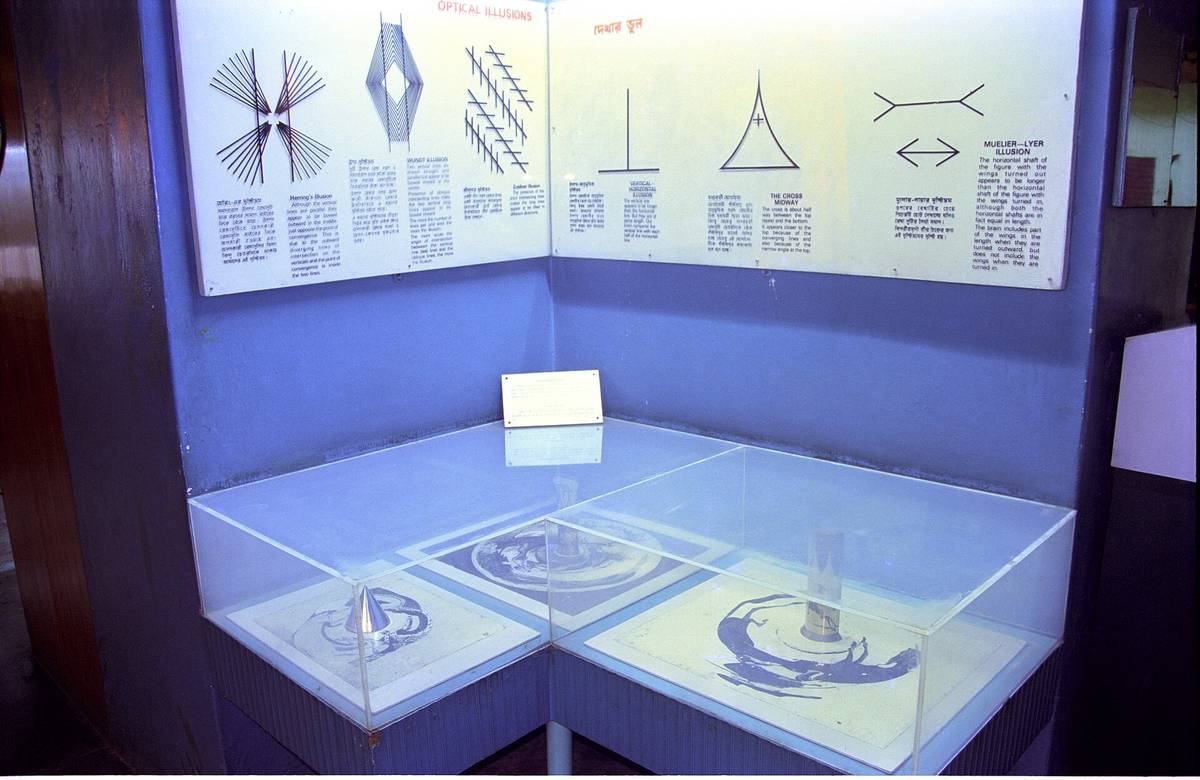
The heart of the museum is its rich variety of more than sixty illusions, displayed across fifteen themed rooms, which range from simple framed optical tricks on the walls to elaborate, room-sized immersive installations you can walk into and become part of. On the walls and tables you will find classic optical illusions, holograms that shift and move as you change your viewpoint, ambiguous images that the brain reads in two different ways, and trick photographs that play with colour and perspective. The real fun, however, lies in the larger interactive installations: the dizzying Vortex Tunnel, a rotating cylinder of lights that makes a stable bridge feel as if it is spinning and tilting; the dazzling Kaleidoscope; the mind-bending perspective rooms; and the famous named rooms described below.
Throughout, the exhibits are accompanied by clear explanations of the science and psychology behind each illusion, so you learn as you play, discovering how easily the human eye and brain can be deceived. The constant surprise and delight as one illusion after another fools your senses make wandering the museum a genuinely entertaining experience. A few rooms stand out as the highlights. The signature rooms are the most memorable.
What are the highlight rooms?
The standout rooms include the Infinity Room, where mirrors reflect light endlessly to suggest infinite space; the Ames Room, where perspective makes people appear to grow or shrink; the Anti-Gravity Room, where water seems to flow uphill and you appear to defy gravity; and the chair illusion, where you appear to shrink or grow according to your seat. These immersive rooms are the most fun and photogenic.
Among the museum’s many illusions, several large, immersive rooms stand out as the highlights that visitors enjoy most and remember longest. The Infinity Room, also called the Room of Infinity, surrounds you with mirrors and lights that bounce light forever, creating the magical sense of standing in boundless space, a mesmerising and beautiful effect. The famous Ames Room exploits a cleverly distorted shape and forced perspective so that two people of similar height appear wildly different in size, one looking like a giant and the other tiny, depending on where they stand, producing astonishing and hilarious photographs. The Anti-Gravity Room, or Tilted Room, plays havoc with your sense of balance, making water appear to flow uphill, objects seem to levitate, and visitors look as though they are leaning impossibly or defying gravity.
The chair illusion, a version of the Ames effect, makes a person appear to shrink or grow dramatically simply by moving from one side of the room to the other. Stepping into these rooms and watching the impossible unfold around you, or capturing it on camera, is the highlight of the museum and a guaranteed source of laughter and amazement. They are made for photos. The playroom adds puzzles for the mind. There is more than illusions to enjoy.
What is the playroom and what else is there?
Besides the illusions, the museum has a Playroom with more than 30 games and puzzles, from brain teasers and building blocks to tangled knots and maths challenges to test your intellect and dexterity. There are also holograms and a “smart” shop. Together with the illusion rooms, these add up to an engaging, hands-on experience that mixes fun with learning for all ages.
Beyond the optical illusions, the Museum of Illusions rounds out the experience with a dedicated Playroom, a space full of hands-on games and challenges that engage the mind as much as the illusions trick the eye. Here visitors can test their wits and dexterity with more than thirty varied games, from classic dilemma puzzles, wooden brain teasers and building blocks to the famously frustrating tangled knots and a range of maths and logic challenges. These analogue games are a wonderful complement to the high-tech illusions, encouraging visitors, and especially children, to slow down, think and play together, often sparking friendly competition and plenty of laughter as everyone attempts to solve them.
Elsewhere in the museum you will also find holograms and other smaller exhibits, while the small “smart” shop near the exit sells puzzles, optical-illusion toys, games and gifts to take the fun home. Together with the illusion rooms, the Playroom ensures that a visit is varied, interactive and genuinely educational as well as entertaining, appealing to curious minds of every age. It is a fitting finale to the experience. The museum suits a wide range of visitors. Almost everyone enjoys it.
Who will enjoy the Museum of Illusions?
The museum appeals to all ages, but is especially popular with families with children and teenagers, couples and groups of friends, who love the interactive, photo-friendly fun. It is also ideal as an air-conditioned indoor activity on a hot or rainy day, and a great break from the ancient sites. Its playful, hands-on nature makes it accessible and enjoyable for everyone.
One of the great strengths of this museum is its very broad appeal, making it a rewarding stop for almost any kind of visitor. Families find it especially delightful, as children and teenagers are captivated by the interactive, hands-on illusions, the impossible photo opportunities and the games of the Playroom, which hold their attention far better than traditional museum displays and turn learning into pure play. Couples and groups of friends equally enjoy the experience, posing together in the Ames Room or the anti-gravity room and laughing at the results, making it a fun, sociable outing. The museum is also a smart practical choice as an indoor, air-conditioned activity, offering welcome relief from the fierce summer heat or a rainy day, and a lighthearted change of pace from the intensity of the ancient sites and serious museums.
Because the illusions are visual and intuitive, the museum is accessible regardless of age or language, and no special knowledge is needed to enjoy it. For an hour or two of guaranteed fun, laughter and amazement, it is a hit with nearly everyone. It pairs well with family sightseeing, like the ideas in the Athens with teenagers guide. A few tips help you make the most of it. Planning ahead enhances the visit.
What tips help, and how do you visit?
The Museum of Illusions is in Monastiraki, about a 15-minute walk from Syntagma and close to Monastiraki metro. It is open daily with a ticket, and most visitors spend one to two hours. Bring your phone or camera for photos, visit with friends or family to pose in the illusions, and combine it easily with the nearby ancient sites, Monastiraki market and Plaka.
Visiting the Museum of Illusions is easy and fits neatly into a day exploring central Athens, with a few simple tips to maximise the fun. The museum is located in the lively Monastiraki district in the heart of the city, only about a fifteen-minute walk from Syntagma Square and very close to Monastiraki metro station, served by lines 1 and 3, so it is highly accessible. It is open daily, with hours that are worth checking before you go, and entry requires a ticket, which can often be booked online in advance to skip any queue. Most visitors spend around one to two hours exploring the illusions and the Playroom, though you can take your time and go at your own pace.
The single best tip is to bring a fully charged phone or camera, since the illusions are made for photography and the impossible pictures are half the fun, and to visit with friends or family so you can pose together in the interactive rooms, where the effects work best with people in the scene. Because of its central location, the museum combines perfectly with the nearby Acropolis and ancient sites, the Monastiraki flea market and the old-town lanes of Plaka. For a playful, memorable interlude, it is well worth a visit. The surrounding area is profiled in the Monastiraki guide. The questions below cover the points visitors ask most.
Frequently Asked Questions
What is the Museum of Illusions Athens?
The Museum of Illusions Athens is a fun, interactive attraction in the Monastiraki district, with more than 60 optical illusions across 15 themed rooms, including the Infinity Room, Ames Room and anti-gravity room, plus a playroom of puzzles. Part of an international chain, it is suitable for all ages and especially popular with families.
How long do you spend at the Museum of Illusions?
Most visitors spend around one to two hours at the Museum of Illusions Athens, exploring the 60-plus illusions, the immersive rooms and the playroom of games and puzzles, though you can take your time at your own pace. It makes a fun, lighthearted indoor activity, ideal on a hot or rainy day.
Is the Museum of Illusions good for families?
Yes, the Museum of Illusions Athens is excellent for families, as children and teenagers love its interactive, hands-on illusions, impossible photo opportunities and playroom of puzzles. It is also enjoyed by couples and groups, and works well as an air-conditioned indoor activity and a fun break from the ancient sites.