
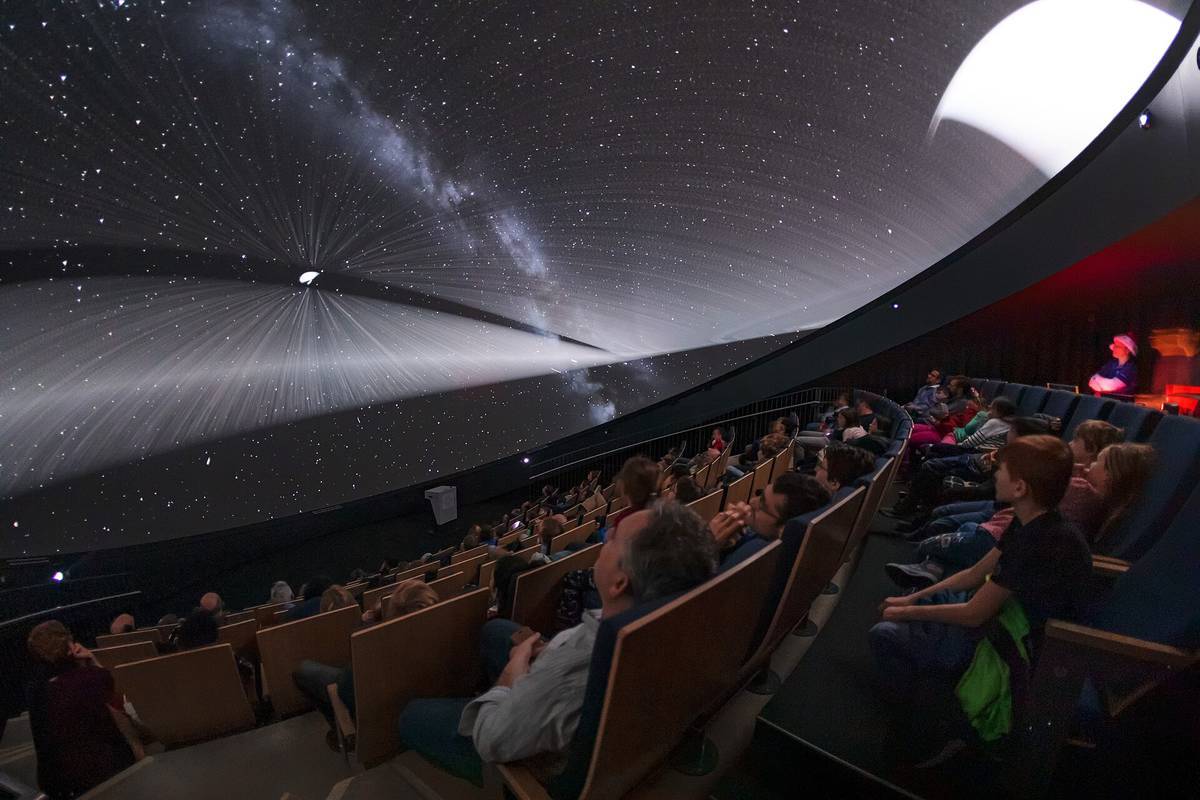
The Athens Planetarium at the Eugenides Foundation is one of the world’s largest digital planetariums, with a vast 25-metre dome, immersive 3D space shows, films on ancient Greece and IMAX-style movies. Add a journey through the cosmos to your trip with skip-the-line sightseeing tickets and tours from My Greece Tours. Plan the whole trip with Greece Tours.
This spectacular science attraction is a fun highlight in the Athens travel guide. The sections below cover what it is, the dome and technology, the shows, who will enjoy it, the Eugenides Foundation, practical details and how to get there.
What is the Athens Planetarium?
The Athens Planetarium, part of the Eugenides Foundation, is among the largest and most advanced digital planetariums on earth and the largest in south-eastern Europe. Opened, it features a huge 25-metre hemispherical dome and a 278-seat amphitheatre, immersing audiences in stunning 3D shows about space, astronomy, science and ancient Greece, narrated in Greek and English.
For a spectacular and immersive journey through the cosmos, the Athens Planetarium is one of the city’s most impressive and family-friendly attractions, offering an experience quite unlike its ancient sites and museums. Operated by the Eugenides Foundation, a cultural and scientific institution, it ranks as one of the largest and most technologically advanced digital planetariums in the entire world, and the biggest in south-eastern Europe, a genuine point of pride for the city. The New Digital Planetarium opened to the public and centres on a vast hemispherical dome around twenty-five metres in diameter, beneath which a comfortable amphitheatre of some 278 seats allows audiences to recline and gaze up at the curved ceiling.
Using an array of high-powered projection systems, the planetarium fills this entire dome with breathtaking, immersive images of stars, planets, galaxies and space, surrounding and enveloping the viewer so completely that you feel as though you are flying through the universe. Shows are narrated in both Greek and English, making them accessible to international visitors. Educational, awe-inspiring and great fun, the planetarium is a wonderful destination for science lovers and families. It complements the science fun in the Herakleidon Museum guide. Its technology is world-class.
What is the dome and technology like?
The Athens Planetarium has a giant hemispherical dome about 25 metres in diameter, one of the largest in the world, set above a 278-seat amphitheatre. An array of around 150 projection systems fills the entire curved ceiling with seamless, immersive images of space and 3D visuals, completely surrounding the audience and creating the sensation of travelling through the cosmos in stunning detail.
The heart of the Athens Planetarium, and the reason for its world-class reputation, is its extraordinary dome and projection technology, which together create a truly immersive experience. The hemispherical dome measures around twenty-five metres across, making it one of the largest planetarium domes anywhere in the world, and it arches over a spacious amphitheatre seating about 278 people in reclining seats angled to look up at the curved screen above. What makes the experience so spectacular is the sophisticated projection setup: an array of around 150 individual projection systems work together to blanket the entire vast surface of the dome with a single, seamless, high-resolution image, so that wherever you look, in front, above or to the sides, you are surrounded by the spectacle.
This complete coverage of the field of vision produces a powerful sense of immersion, allowing the planetarium to whisk audiences on convincing virtual journeys, soaring through the solar system, diving into distant galaxies or hurtling across the surface of planets, all rendered in stunning three-dimensional detail. The combination of the enormous dome, the comfortable amphitheatre and the cutting-edge projection makes every show a feast for the senses. The technology truly impresses. The shows themselves are the main event. The programme is varied and exciting.
What shows can you see at the planetarium?
The Athens Planetarium shows a varied programme on its giant dome, including immersive 3D journeys through space and astronomy, educational science films, historical films about ancient Greece, and IMAX-style movies. It produces two new original digital shows each year, presenting the latest in astronomy and natural science, with screenings narrated in both Greek and English.
The Athens Planetarium offers a rich and changing programme of shows projected onto its enormous dome, ensuring there is always something fascinating to see. The core of the offering is its immersive astronomy and space content: spectacular 3D virtual journeys that take audiences on a tour around the galaxy, across the solar system and out to the edges of the universe, presenting the latest discoveries and developments in astronomy and the natural sciences in an accessible, awe-inspiring way. Demonstrating its commitment to original content, the planetarium produces two brand-new digital shows of its own every year, keeping the programme fresh for repeat visitors. Beyond pure astronomy, the dome is also used to screen other types of film: historical and cultural productions about ancient Greece, which use the immersive format to bring the classical world vividly to life, as well as IMAX-style large-format movies on a range of subjects, taking advantage of the giant curved screen.
With screenings narrated in both Greek and English, the shows are easy for international visitors to follow and enjoy. Checking the current schedule before you go helps you catch the show that interests you most. The variety ensures broad appeal. The audience for the planetarium is wide. Many kinds of visitor enjoy it.
Who will enjoy the Athens Planetarium?
The Athens Planetarium appeals to families with children, science and astronomy enthusiasts, and anyone seeking a fun, immersive and educational experience. Its spectacular 3D space shows captivate kids and adults alike, and as an indoor, air-conditioned attraction it is ideal on a hot or rainy day. With English narration, it is accessible and enjoyable for international visitors of all ages.
The Athens Planetarium has a wide and inclusive appeal, making it a rewarding destination for many different visitors. Families with children find it especially magical, as the immersive, larger-than-life space shows captivate young imaginations, sparking wonder and curiosity about the stars, planets and the universe in a way that no book or screen at home can match, while also being genuinely educational. Science and astronomy enthusiasts of any age are thrilled by the cutting-edge technology and the up-to-date content reflecting the latest discoveries, and even those with no particular background in science are swept up by the sheer spectacle and beauty of the visuals. The planetarium is also a smart practical choice for visitors: as a comfortable, indoor, air-conditioned venue, it offers welcome respite from the fierce summer heat or a rainy day, and a refreshing, modern change of pace from the ancient sites that dominate most Athens itineraries.
Crucially, because the shows are narrated in English as well as Greek, international tourists can fully enjoy them, and the visual nature of the experience transcends language barriers. For a memorable, family-friendly and uplifting outing, the planetarium delights nearly everyone. More family ideas appear in the Athens with kids guide. The foundation behind it adds depth. Its parent institution is notable.
What is the Eugenides Foundation?
The Eugenides Foundation is a Greek non-profit cultural and educational institution founded by the benefactor Eugenios Eugenides to promote science and technical education. It runs the Athens Planetarium, a science and technology library, exhibitions and educational programmes, with a mission to spread scientific knowledge to the public, especially young people, across Greece.
The Athens Planetarium is the flagship of a respected cultural and scientific institution, the Eugenides Foundation, whose broader mission gives the planetarium its educational depth and purpose. The Foundation was established through the bequest of Eugenios Eugenides, a successful Greek shipowner and businessman who wished to contribute to the scientific and technical education of the youth of Greece, and it has pursued that goal ever since as a non-profit dedicated to the diffusion of scientific and technological knowledge among the public. Beyond the spectacular planetarium, the Foundation operates a range of activities and facilities, including a specialised science and technology library, the publication of educational books, hands-on exhibitions and interactive science displays, and a wide variety of educational programmes, lectures and events aimed especially at schoolchildren and young people.
Its modern building, located in the southern Athens area, serves as a hub for science communication in Greece. Understanding the Foundation helps explain why the planetarium is not merely a spectacle but a serious tool for inspiring curiosity and learning about science and the universe. For visitors, this educational mission enriches the experience. The Foundation’s wider work is admirable. Planning a visit is simple. Getting there is straightforward.
How do you visit the Athens Planetarium?
The Athens Planetarium is at the Eugenides Foundation on Syngrou Avenue in southern Athens, reached by bus or tram, or a short taxi from the centre. Shows run on a set schedule with tickets, so check show times and book ahead. Choose an English-narrated screening, allow time for the show plus any exhibition, and combine it with the coast or the Stavros Niarchos centre nearby.
A visit to the Athens Planetarium takes a little planning around the show schedule but is easy to arrange. The planetarium is housed in the Eugenides Foundation building on Syngrou Avenue, the main boulevard running from the city centre toward the coast in the southern part of Athens, a little way from the historic core. It is reached by public transport, with buses running along Syngrou Avenue and the coastal tram passing nearby, or simply by a short taxi or ride-hailing trip from the centre. Because the planetarium operates on a fixed timetable of scheduled screenings rather than continuous entry, the most important step is to check the current programme and show times in advance and to book your tickets ahead, both to secure a seat and to choose a screening that suits you.
Crucially, be sure to select a show with English narration if you do not speak Greek, as the schedule includes both. Allow time for the show itself, typically around forty-five minutes to an hour, plus any accompanying exhibition you wish to see. Because of its location toward the coast, the planetarium combines conveniently with a trip to the Stavros Niarchos Foundation Cultural Center or the beaches of the Athens Riviera. For a spectacular, family-friendly outing, it is well worth the trip. The nearby cultural centre is covered in the Stavros Niarchos Foundation guide. The questions below cover the points visitors ask most.
Frequently Asked Questions
What is the Athens Planetarium known for?
The Athens Planetarium, at the Eugenides Foundation, is known as among the largest and most advanced digital planetariums on earth and the biggest in south-eastern Europe. It features a giant 25-metre dome and immersive 3D shows on space, astronomy and ancient Greece, plus IMAX-style films, narrated in Greek and English.
How long is a show at the Athens Planetarium?
A show at the Athens Planetarium typically lasts around 45 minutes to an hour. The planetarium runs scheduled screenings rather than continuous entry, so it is best to check the timetable and book ahead, choosing an English-narrated show if you do not speak Greek, and allowing extra time for any exhibition.
Where is the Athens Planetarium?
The Athens Planetarium is at the Eugenides Foundation on Syngrou Avenue in southern Athens, between the city centre and the coast. It is reached by buses along Syngrou Avenue, the coastal tram, or a short taxi from the centre, and combines well with the Stavros Niarchos Foundation Cultural Center and the Athens Riviera nearby.