
The War Museum of Athens is Greece’s national military history museum, with four floors spanning prehistoric weapons to the heroic battles of the 20th century, plus an outdoor display of aircraft and artillery. See it alongside the city’s headline sights with skip-the-line tickets and tours from My Greece Tours for a fuller picture of Greek history. Plan the whole trip with Greece Tours.
This major museum is an absorbing stop in the Athens travel guide. The sections below cover what it is, the collections, the highlights, the conflicts, the outdoor exhibits, who will enjoy it, practical tips and how to get there.
What is the War Museum of Athens?
The War Museum of Athens is the official museum of the Greek Armed Forces and the largest military history museum in Greece. It holds over 400,000 artefacts, from prehistoric weapons to the World Wars, across four floors plus outdoor exhibits.
For anyone interested in the long and dramatic military history of Greece, the War Museum of Athens is an essential and absorbing destination. It was established as the official museum of the Greek Armed Forces. It is the largest museum of military history in the country and ranks among the largest of its kind in south-eastern Europe. The building is a striking modernist structure on the grand Vasilissis Sofias Avenue, in the heart of the city’s museum district.
The collections are vast, numbering more than 400,000 artefacts that trace the art and history of warfare across the whole span of Greek history. They run from prehistoric and ancient weapons, through the Byzantine and Ottoman eras, to the Balkan Wars, the Greek War of Independence of 1821, and the struggles of the twentieth century, including both World Wars. These are displayed across four indoor floors arranged in a clear chronological journey. An outdoor area filled with military aircraft and heavy artillery completes the visit. The museum complements the broader history told in the National Archaeological Museum guide. Its collections span thousands of years.
What collections does the War Museum hold?
The collections run chronologically over four floors, starting on the top floor with antiquity, the Byzantine period, the 1821 War of Independence and World War I, then descending to the Greek forces in World War II. Exhibits include weapons, armour, uniforms, flags and dioramas.
The strength of the War Museum lies in the breadth and clear organisation of its collections, which carry the visitor through the whole sweep of Greek military history in a logical sequence. The permanent exhibition begins, unusually, on the top floor. There the displays cover the earliest periods: prehistoric and ancient Greek warfare with weapons and armour, the campaigns of antiquity, and the Byzantine era. The same floor then moves to the more recent struggles of the Balkan Wars, the great Greek War of Independence of 1821, and the First World War.
Descending through the building, the following floors are devoted in particular to the Second World War and the resistance of the Greek armed forces against the Axis powers, a period of immense national significance. Throughout, the galleries are filled with a rich array of objects. Among them are rare swords and firearms, suits of Byzantine and medieval armour, and the revolutionary flags and weapons of the 1821 fighters. Military uniforms, decorations and medals sit alongside detailed scale models and dioramas that reconstruct key battles. Maps, paintings and the personal effects and stories of individual Greek soldiers complete the picture. The era of independence is reflected in the Benaki Museum guide. Certain exhibits stand out as highlights.
What are the highlights of the War Museum?
Highlights include the ancient and Byzantine arms and armour, the weapons, flags and relics of the 1821 War of Independence, the detailed battle dioramas, the World War II galleries, and the free outdoor park of historic military aircraft and artillery.
With so vast a collection, several sections and objects stand out as the highlights that most reward a visit. History enthusiasts are drawn to the displays of ancient and medieval weaponry. These include finely crafted swords, spears, helmets and suits of armour spanning antiquity and the Byzantine centuries, which trace the evolution of Greek arms. Particularly stirring are the galleries devoted to the 1821 War of Independence. There the muskets, swords, banners and personal relics of the revolutionary heroes evoke the birth of the modern nation. The museum’s many dioramas, miniature reconstructions of decisive battles complete with terrain and troops, are a favourite with all ages and help make sense of complex campaigns.
The extensive Second World War galleries, recounting the Greek resistance against the Axis, are both informative and moving. The single most popular highlight, however, lies outside. An open-air park beside the building displays real historic military aircraft used by the Greek Air Force, along with heavy artillery pieces. Visitors can walk among them up close, which delights children especially. This outdoor section can be visited free of charge. Together these make for a rich and varied experience. The outdoor display deserves special mention. The exhibits suit a wide range of visitors.
Which conflicts does the museum cover?
The museum covers the full arc of Greek conflict: ancient and Byzantine warfare, the 1821 War of Independence, the Macedonian Struggle, the Balkan Wars, the World Wars, the Asia Minor Campaign, the Greco-Italian War, the Korean War and Cyprus, each with its own displays.
Few museums trace so many centuries of one nation’s military story under a single roof. Ancient and Byzantine warfare opens the sequence, showing how Greek arms evolved from the classical hoplite to the armoured cavalry of the medieval empire. The 1821 War of Independence forms an emotional centre, followed by the creation of the modern Greek state and the Macedonian Struggle of the early twentieth century. The Balkan Wars and the First World War extend the story into an age of mass armies and modern weapons.
The twentieth-century galleries reach further than many visitors expect. The Asia Minor Campaign and its aftermath are recorded, along with the Greco-Italian War and the German invasion that followed. The Second World War displays, including the resistance and the Greek contribution to the Allied cause, occupy substantial space. Later conflicts appear too, among them the Korean War, where Greek forces served, and the events on Cyprus.
Dedicated dioramas, such as reconstructions of the siege of Messolonghi and a Korean War scene, bring individual episodes to life. The Cyprus displays record the more recent history of the island and the Greek connection to it. Gifts and donated items from foreign armed forces and veterans add an international thread, showing how Greece sat within wider alliances. This full sweep, from the classical hoplite to the modern soldier, sets the museum apart from single-period collections. The outdoor exhibits add another dimension.
What are the outdoor exhibits like?
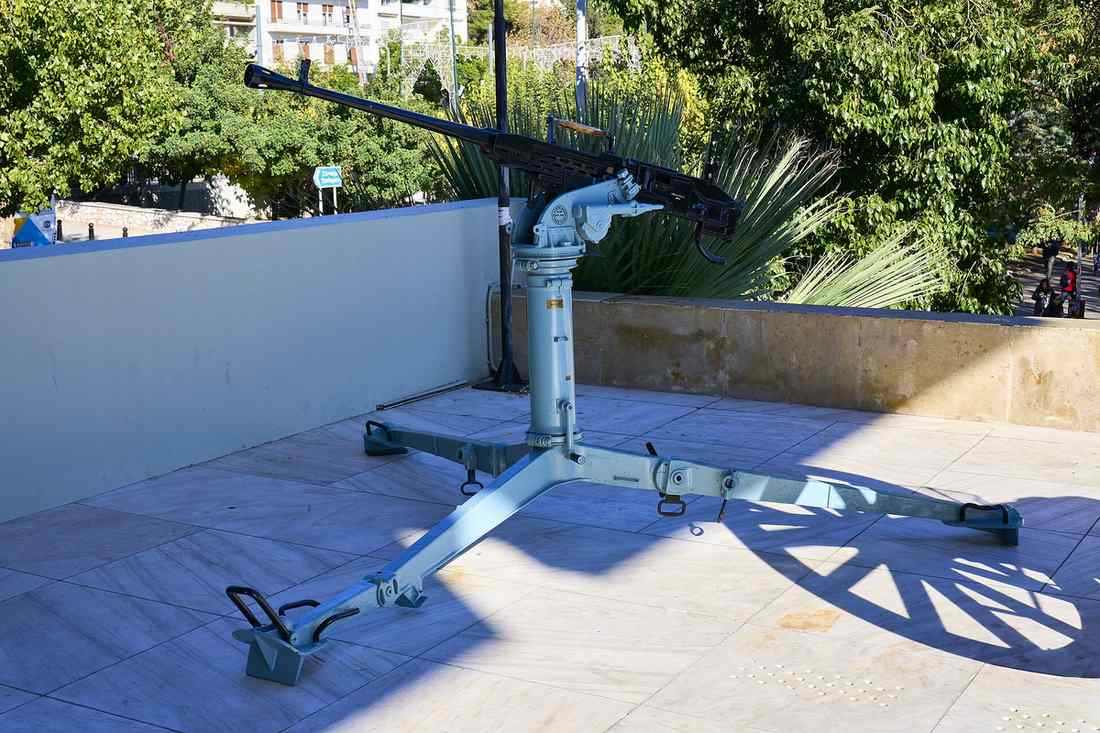
The museum’s outdoor area displays historic military aircraft and heavy artillery used by the Greek armed forces, set around the building. Visitors can walk among real fighter planes, cannons and guns, and this open-air section is free to enter without a ticket.
One of the most distinctive features of the War Museum is its outdoor exhibition, which sets it apart from more conventional indoor museums and adds a hands-on dimension to a visit. The section occupies the open space beside and around the building. It displays real, full-size historic military hardware, above all aircraft flown by the Greek Air Force over the decades, from vintage fighters to later jets. Heavy artillery pieces, cannons and field guns stand alongside them. Visitors are free to wander among these machines, examining them up close and photographing them, an experience that brings the scale of modern warfare home in a way that display cases cannot.
This open-air park is especially beloved by children and aviation enthusiasts, who enjoy seeing genuine warplanes within arm’s reach. Best of all, and unusually for a major museum, the outdoor exhibits can be visited free of charge, without a ticket for the indoor galleries. Even a short stop offers something memorable at no cost. The courtyard and the south and west terraces each hold their own pieces, so it is worth circling the whole building. The combination of the rich indoor collections and the free outdoor aircraft park makes the museum good value. More family ideas appear in the Athens with kids guide. The museum suits many kinds of visitor.
What do the uniforms, weapons and dioramas show?
The uniform galleries trace Greek military dress from the 1821 fighters to the modern armed forces, while the weapons rooms range from ancient swords to twentieth-century firearms. The dioramas, including Messolonghi and a Korean War scene, reconstruct famous battles in miniature.
Beyond the broad chronological floors, three kinds of display draw the closest attention. The uniform collection follows the changing dress of the Greek soldier across two centuries. It moves from the foustanella and sashes of the 1821 revolutionaries, through the field uniforms of the Balkan Wars and the World Wars, to the modern service dress of the army, navy and air force. Seeing the uniforms in sequence makes the human side of each era vivid, since clothing changes with the technology and tactics of its time.
The weapons rooms are equally wide-ranging. Ancient spears, shields and helmets sit near medieval swords and Byzantine armour, and these give way to the muskets and pistols of the independence struggle and the rifles and machine guns of the twentieth century. The dioramas tie these objects to real events. A model of the siege of Messolonghi captures a defining moment of the 1821 war, while a Korean War scene records a later and less familiar chapter of Greek service abroad. These reconstructions, built with careful terrain and figures, help visitors grasp how a battle unfolded. Together the uniforms, weapons and dioramas turn the collection from a store of objects into a narrative. The museum’s appeal is therefore very broad.
Who will enjoy the War Museum?
The War Museum appeals to history and military enthusiasts, anyone interested in the 1821 Revolution or World War II, families with children who love the outdoor aircraft, and visitors seeking an air-conditioned indoor activity. Its free outdoor park and central location suit most travellers.
The War Museum has a broad appeal that extends well beyond dedicated military buffs, making it a worthwhile stop for many kinds of visitor. History enthusiasts fascinated by warfare, weaponry and strategy find plenty among the arms, armour and battle dioramas spanning thousands of years. Those with a deeper interest in Greek history, particularly the pivotal 1821 War of Independence and the country’s role in the Second World War, will find these chapters told with depth and emotion. Families travelling with children find the museum especially rewarding, thanks to the outdoor park of real aircraft and artillery and the engaging scale models inside.
The museum is also a practical choice as an air-conditioned indoor activity during the fierce heat of summer or on a rainy day. It offers respite from the open-air ancient sites, and its central location makes it simple to fit into a wider day of sightseeing. With free outdoor exhibits and modest indoor admission, it offers something for nearly everyone. School groups and students of military history use it as a reference collection. Its breadth is part of its strength. Planning a visit is straightforward.
How do you visit the War Museum?
The War Museum stands at the corner of Vasilissis Sofias and Rizari streets, a 5-minute walk from Evangelismos metro on line 3. It opens daily, with modest admission and free entry on certain days; the outdoor exhibits are always free. Allow around two hours.
A visit to the War Museum is easy to arrange and fits neatly into a cultured day in central Athens. The museum sits at the intersection of Vasilissis Sofias Avenue and Rizari Street, on the elegant boulevard lined with embassies and museums. It is very accessible by public transport. Evangelismos station on metro line 3, the blue line, is about a five-minute walk away, with buses and trolleybuses stopping nearby. The museum is generally open daily, often from around nine in the morning, though it is wise to check the current hours before visiting, as they vary by season.
Admission to the indoor galleries is modest, with reduced rates for seniors and the young and free entry for EU visitors under eighteen. Free admission for everyone is offered on the first Sunday of each month from November to March and on several national holidays, such as 25 March and 28 October. The outdoor aircraft and artillery park is free to enter at all times. Allow around two hours to take in the four floors and the outdoor exhibits at a relaxed pace. Because it sits among a cluster of fine institutions, it combines well with the Byzantine and Christian Museum, the National Gallery and the National Garden nearby.
A few tips make the visit smoother. Start on the top floor and work down, as the exhibition is designed to be read in that order, from antiquity to the twentieth century. Photography is generally allowed in the galleries, which suits visitors keen to record the dioramas and aircraft. The outdoor park is best enjoyed earlier in the day in summer, before the midday sun, and it offers shade around the building.
Families with restless children can head straight for the planes, then dip into the indoor floors afterwards. The gift area and displays of donated items reward a final look before you leave. Benches and a quiet rest point let you pause between floors, which suits a longer, unhurried visit on a hot summer day in the city. Guided tours and school groups can book ahead, and the staff can point out the key rooms for a shorter visit. The local routes are explained in the getting around Athens guide. The questions below cover the points visitors ask most.
Frequently Asked Questions
What is the War Museum of Athens known for?
The War Museum of Athens is known as Greece’s national military history museum and the largest of its kind in the country, with over 400,000 artefacts across four floors spanning prehistoric weapons to the 20th century. It is especially famous for its 1821 Revolution relics, battle dioramas and the free outdoor park of historic aircraft and artillery.
Is the War Museum in Athens free?
The indoor galleries of the War Museum charge a modest admission, with reductions and free entry for EU visitors under 18, on the first Sunday of each month from November to March, and on certain national holidays. The outdoor exhibits of aircraft and artillery, however, are free to enter at all times without a ticket.
How do you get to the War Museum in Athens?
The War Museum is at the corner of Vasilissis Sofias and Rizari streets in central Athens, about a 5-minute walk from Evangelismos metro station on line 3, the blue line. Buses and trolleybuses also stop nearby, and it sits close to the Byzantine and Christian Museum and the National Gallery.
How long should you spend at the War Museum?
Allow around two hours to take in the four indoor floors and the free outdoor aircraft and artillery park at a relaxed pace. History enthusiasts who read every display may want longer, while families focused on the outdoor planes can enjoy a shorter stop. The central location makes it easy to combine with the nearby museums and the National Garden.