
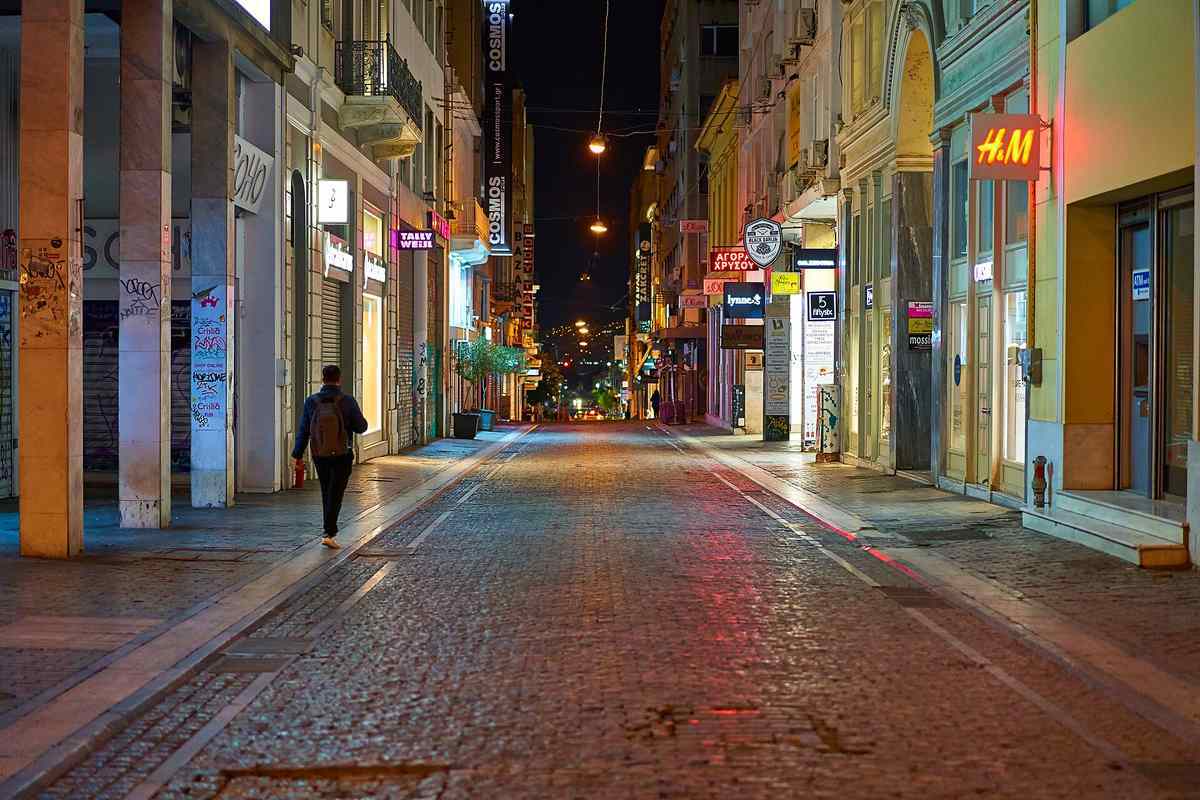
Athens shopping runs from Ermou Street’s high-street brands and Monastiraki’s flea market to Kolonaki’s luxury boutiques and characterful local products. Build your shopping into an easy city visit with central tours and skip-the-line sightseeing tickets from My Greece Tours for a smoother day in town.
Knowing where to browse is part of a great Athens travel guide. The sections below cover the main shopping streets, Ermou Street, Monastiraki’s market, Kolonaki luxury, what to buy and opening hours.
Where do you shop in Athens?
The main shopping areas in Athens are pedestrianised Ermou Street for high-street brands, Monastiraki for the flea market, Plaka for crafts, and Kolonaki for luxury boutiques. These central districts sit between Syntagma and Thissio, within walking distance of each other.
Shopping in Athens is refreshingly compact, with the major districts clustered in the historic centre and easily linked on foot. The undisputed spine of city-centre shopping is Ermou Street, the long pedestrian avenue running from Syntagma Square down toward Thissio, packed with international high-street fashion names. At its lower end it spills into Monastiraki, the classic district for the flea market, souvenirs and antiques, whose lanes are a treasure hunt of evil-eye charms, leather goods and curiosities. Just beside it, the charming old quarter of Plaka offers crafts, jewellery, sandals and gifts in a picturesque setting beneath the Acropolis.
For the opposite end of the market, the smart neighbourhood of Kolonaki, on the slopes of Lycabettus, gathers luxury fashion houses and exclusive Greek designer boutiques. Because all of these sit between Syntagma and Thissio, within a short walk of one another, you can move from budget high-street to flea-market bargains to designer windows in a single day’s stroll. This concentration makes Athens an unexpectedly enjoyable shopping city. The districts double as sightseeing, as covered in the guide to things to do in Athens. The main artery deserves a closer look.
What is Ermou Street?
Ermou Street is the main shopping street of Athens, a 1.5-kilometre pedestrian-only stretch from Syntagma Square to Thissio. It is lined with international high-street brands such as Zara and H&M, plus shoe shops and, near Syntagma, upmarket boutiques.
Any shopping trip in the capital naturally begins on its most famous commercial avenue. Ermou Street is the central, pedestrianised heart of Athens shopping. It is a broad traffic-free stretch about 1.5 kilometres long that runs from Syntagma Square at its upper end down to the Thissio area near the ancient sites. It is the city’s principal clothing-shopping street, dense with international high-street labels. You will find branches of Zara, H&M, Marks & Spencer, Bershka and Sephora lining both sides of the avenue, along with a concentration of shoe shops.
Toward the Syntagma end, the character shifts upmarket. Finer boutiques by Greek and international designers alternate with elegant cafés and restaurants. The little Byzantine church of Kapnikarea sits marooned in the middle of the street as a reminder of the city’s older layers.
The avenue is always busy, thronged with shoppers, buskers and strollers, and its car-free length makes browsing relaxed and easy. For mainstream fashion and familiar brands at sensible prices, this is the obvious place to start. It runs straight down toward the neighbourhood covered in the Monastiraki guide. That district offers a very different kind of shopping.
What is Monastiraki flea market like?
Monastiraki is the classic souvenir and flea-market district of Athens, where shops crowd Ifestou Street and the lanes by Avissinias Square. Goods include replica statues, evil-eye charms, olive-wood carvings, leather sandals, antiques and instruments, with a famous Sunday flea market.
For colour, character and souvenirs, no district beats the busy maze of Monastiraki at the lower end of Ermou. This is the city’s traditional flea-market quarter, and its narrow lanes are a sensory overload of small shops and stalls. The main souvenir strip runs along Ifestou Street. The antiques and bric-a-brac concentrate around Avissinias Square, where dealers spread out everything from old cameras and vinyl records to furniture and curios.
Browsing here you will encounter a wide array of goods. Stalls hold replica statues of the ancient gods, blue-and-white evil-eye charms, carved olive-wood bowls and utensils, and handmade leather sandals. Traditional backgammon sets sit beside folk instruments such as the bouzouki and small hand drums.
The atmosphere reaches its peak at the celebrated Sunday morning flea market, when the streets fill with vendors and bargain-hunters and the whole area buzzes with energy. Gentle haggling is often acceptable, especially for antiques and at the stalls. Set among all this is some of the best people-watching in Athens, with the Acropolis rising above the rooftops. It is the place to find a genuine, characterful keepsake. The surrounding old town is detailed in the Plaka guide. The luxury end of town offers a complete contrast.
Where is the luxury and boutique shopping?
Kolonaki, on the slopes of Lycabettus Hill, has the top luxury and designer shopping in Athens. International fashion houses and Greek boutiques cluster around the central square and along Skoufa, Tsakalof and Voukourestiou streets, known for fine jewellery and watches.
The capital has a clear address for high-end and designer shopping. The elegant neighbourhood of Kolonaki climbs the lower slopes of Lycabettus Hill just above Syntagma, and it is the leading district for luxury in Athens. Around its central square and along the chic streets of Skoufa, Tsakalof and the upper stretch of Voukourestiou, you will find the boutiques of international fashion houses. These sit alongside the showrooms of exclusive Greek designers and jewellers, interspersed with stylish cafés. Voukourestiou in particular is known for fine jewellery and watches.
The city also suits shoppers who prefer modern, climate-controlled malls. Large shopping centres such as the upmarket Golden Hall and the Athens Metro Mall are easily reached and home to dozens of brands under one roof. Each gathers fashion, footwear and homeware retailers with cafés and food courts, so a single stop covers a full afternoon of browsing away from the summer heat.
Meanwhile, the old quarters of Plaka and Monastiraki are increasingly dotted with appealing concept stores, independent designers and artisan workshops selling contemporary Greek crafts, ceramics and fashion. This spread means Athens caters equally to the luxury shopper, the mall-goer and the seeker of one-off designer pieces. The neighbourhood itself is profiled in the Kolonaki guide. Knowing what to buy makes shopping more rewarding.
What should you buy in Athens, and when are shops open?
Good buys in Athens include leather sandals, olive oil, honey, Greek wine and ouzo, worry beads, evil-eye charms, gold and silver jewellery, ceramics and natural cosmetics. Most central shops open Monday to Saturday, roughly 9am to 9pm, and close on Sundays outside Monastiraki.
Knowing the best local products and the shopping hours helps you make the most of your time. For authentic Greek souvenirs, look for handmade leather sandals, high-quality extra-virgin olive oil and olive-wood goods, Greek honey and herbs, bottles of local wine, ouzo or tsipouro, traditional worry beads (komboloi), and the blue evil-eye charms carried for good luck.
Greece is also strong for gold and silver jewellery, much of it inspired by ancient and Byzantine designs, alongside handmade ceramics and natural cosmetics based on olive oil and Greek herbs. As for opening hours, most shops in the central districts trade Monday to Saturday, broadly from around 9am to 9pm on the main shopping streets like Ermou. Smaller stores may keep traditional split hours with a midday break on some days.
The table below groups the main Greek products by category and shows the district where each item is usually easiest to find on a short city visit.
| What to buy | Category | Where to find it |
|---|---|---|
| Leather sandals | Handmade footwear | Plaka and Monastiraki |
| Extra-virgin olive oil | Food and pantry | Varvakios Central Market |
| Gold and silver jewellery | Jewellery | Voukourestiou and Kolonaki |
| Worry beads and evil-eye charms | Traditional crafts | Monastiraki flea market |
| Ceramics and natural cosmetics | Homeware and beauty | Plaka concept stores |
Most shops close on Sundays, with the notable exception of the lively Monastiraki area and its Sunday flea market, and extended Sunday opening applies during the Christmas season and other special holiday periods. The Syntagma and Monastiraki metro stations bookend the main shopping stretch for easy access. Timing your visit avoids closed shutters. The full network is explained in the guide to getting around Athens. The questions below cover the points visitors ask most.
What are the best markets in Athens?
The best markets in Athens are the Monastiraki flea market for souvenirs, the Varvakios Central Market on Athinas Street for meat, fish and spices, and the weekly laiki street markets for produce. The Sunday flea market around Avissinias Square is the most famous.
Beyond the shops and malls, the capital’s markets offer some of its most atmospheric and authentic shopping experiences. The most famous is the Monastiraki flea market, whose lanes around Avissinias Square overflow with antiques, vintage finds, curios and souvenirs, reaching a colourful peak at the Sunday morning sale that has become an Athens institution. For a sensory plunge into everyday Greek life, the Varvakios Central Market on Athinas Street, between Monastiraki and Omonia, is unmissable: its great halls are crammed with butchers, fishmongers and stalls piled high with olives, cheeses, herbs and spices, surrounded by shops selling nuts, dried fruit and traditional foods, and dotted with cheap, characterful tavernas.
Across every neighbourhood, the weekly laiki agora, or open-air street market, brings farmers and growers into the streets on a set day, selling seasonal fruit, vegetables, flowers and household goods at fair prices to locals. These markets serve both for buying edible souvenirs such as olives, honey and herbs and for soaking up the city’s living culture. Visiting in the morning catches them at their busiest and freshest. The surrounding old town is profiled in the Monastiraki guide. The questions below cover the points visitors ask most.
How do you get to and around the shopping districts in Athens?
The metro reaches every main shopping district in Athens. Syntagma station serves the top of Ermou Street, Monastiraki station serves the flea market, and Thissio station sits at the lower end. From these stops the whole area is pedestrianised and walkable.
The shopping core sits inside a compact triangle between Syntagma, Monastiraki and Thissio, and the metro links all three. Ermou Street itself is car-free along its full length, so once you leave the station you cross the district on foot. Syntagma is the natural starting point at the upper end. Monastiraki drops you straight into the flea-market lanes. Thissio marks the quieter lower end near the ancient sites.
Kolonaki lies a short uphill walk from Syntagma, and the Evangelismos metro station serves its eastern edge. Distances between districts are small, often ten to fifteen minutes on foot, so a single walking loop covers high-street, flea market and luxury shopping in one outing. Route planning across the wider network is covered in the guide to getting around Athens.
How do you shop like a local and handle etiquette in Athens?
Shopping like a local in Athens means haggling only at the flea market and antique stalls, carrying cash for small vendors, and timing visits around the winter and summer sales. Non-EU visitors can reclaim VAT on qualifying purchases through the tax-free refund scheme.
Fixed prices apply in shops, malls and boutiques, so haggling belongs to the flea market and the antique dealers around Avissinias Square, where a polite offer is part of the ritual. Cash remains useful at market stalls and small independent stores, even though cards are accepted almost everywhere else. Greece runs two official discount periods, one in winter and one in summer, when clothing and footwear are marked down across the high street.
Non-EU residents can shop tax-free on qualifying goods, reclaiming the value-added tax at the airport when leaving the country, provided they keep the receipts and the shop issues the refund paperwork. Shops in the tourist quarters often speak English, and staff are used to helping visitors choose regional products such as olive oil, honey and jewellery. Choosing family-run stores over the busiest tourist strips usually rewards you with better prices and more genuine goods.
Frequently Asked Questions
What is the main shopping street in Athens?
The main shopping street in Athens is Ermou Street, a 1.5-kilometre pedestrianised avenue running from Syntagma Square to Thissio. It is lined with international high-street brands such as Zara, H&M and Marks & Spencer, plus many shoe shops, and is the busiest shopping spot for both locals and visitors.
What should I buy as a souvenir in Athens?
Good souvenirs from Athens include handmade leather sandals, olive oil and olive-wood products, Greek honey, wine and ouzo, worry beads, evil-eye charms, gold and silver jewellery inspired by ancient designs, ceramics and natural cosmetics. Monastiraki and Plaka are the best areas for traditional gifts and crafts.
Are shops in Athens open on Sundays?
Most shops in central Athens close on Sundays, with the main exception being the Monastiraki area and its busy Sunday flea market. Extended Sunday opening also applies during the Christmas season and other special holiday periods. On other days, central shops generally open Monday to Saturday, roughly 9am to 9pm.
Which metro station is best for shopping in Athens?
Syntagma metro station is the best starting point for shopping in Athens, placing you at the top of pedestrianised Ermou Street. Monastiraki station serves the flea market and souvenir lanes, while Thissio station sits at the quieter lower end. All three districts connect on foot within a short walk.