
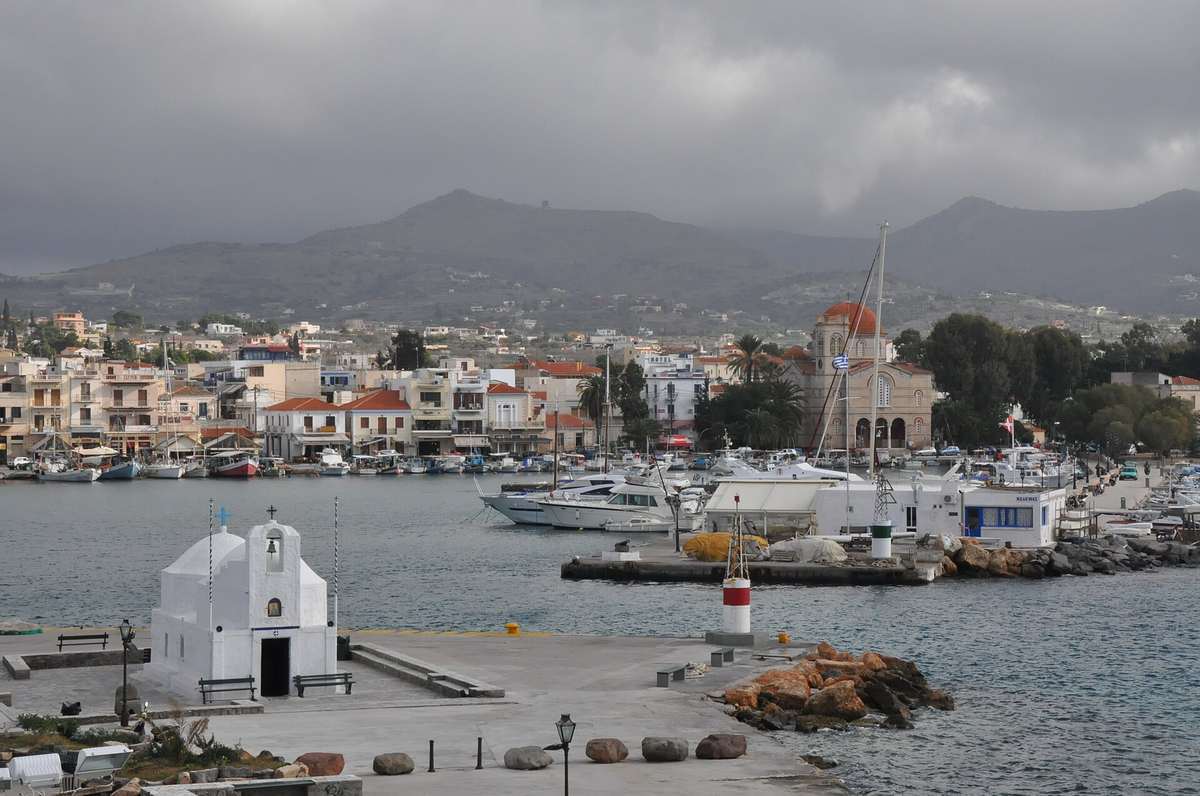
An Aegina day trip from Athens is a 40-minute ferry from Piraeus to a relaxed Saronic island of pistachio groves, the hilltop Temple of Aphaia and a lively harbour town. Reach it effortlessly with a guided island day trip or fast-ferry tickets from My Greece Tours and make the most of your day on the water.
This easy island escape is a favourite in the Athens travel guide. The sections below cover the ferry, what to see, beaches, getting around, costs and the best way to visit.
Why take a day trip to Aegina from Athens?
Aegina is the closest proper Greek island to Athens, just 40 to 70 minutes by ferry from Piraeus. It pairs a charming harbour town with the preserved Temple of Aphaia, the pilgrimage church of Saint Nektarios, sandy beaches and famous pistachios.
Proximity is what makes this island so appealing for a single day away from the city. Aegina lies only about 50 kilometres from Athens across the Saronic Gulf, and the frequent ferries from Piraeus mean you can leave after breakfast and be strolling an island harbour within the hour. Despite that closeness, Aegina feels a world apart from the capital, with a genuine island character that has not been swallowed by mass tourism. The pretty main town wraps around a working fishing harbour lined with neoclassical houses, fish tavernas and caïques selling produce straight from the deck.
The island is famous across Greece for its pistachios, grown in groves that carpet the interior and sold everywhere in sweets and snacks. History runs deep here too, from the magnificent ancient Temple of Aphaia to the great modern pilgrimage monastery of Saint Nektarios. Add quiet beaches, good food and an unhurried pace, and Aegina delivers a complete island experience in a day. It complements the seaside found along the Athens Riviera beaches. Getting there could hardly be simpler.
How do you get from Athens to Aegina?
Ferries to Aegina leave from Piraeus port, reached by metro lines 1 and 3, bus or taxi. Boats run every 30 to 60 minutes from Gate 8. Standard ferries take about 70 minutes for roughly €12; Flying Dolphin hydrofoils take 40 minutes for about €19.
Reaching the island is one of the smoothest journeys in Greek travel. All ferries to Aegina depart from the great port of Piraeus, which connects to central Athens by metro lines 1 and 3, by bus, or by a short taxi ride, so you can be at the quayside in under half an hour from the centre. Services are remarkably frequent, with departures roughly every 30 to 60 minutes from early morning until the evening, giving broad flexibility over when you sail and return. Four companies, including Saronic Ferries, Blue Star Ferries, Anes and Aegean Flying Dolphins, run the route from Gate 8, with around fifteen daily connections throughout the year.
You choose between two speeds: the standard car-and-passenger ferries take about 70 minutes and cost in the region of €12 each way, while the quicker Flying Dolphin hydrofoils cover the crossing in roughly 40 minutes for about €19. Buying a ticket on the day is usually easy outside peak summer weekends, though booking ahead is wise in August. The crossing itself, with views back to the city and out across the gulf, is part of the pleasure. The wider port is explained in the guide to getting around Athens. The island’s great monument tops most itineraries.
What can you see on Aegina?
The star sight is the Temple of Aphaia, among the finest preserved ancient Greek temples, set on a pine-clad hill. Other highlights are the Monastery of Saint Nektarios, the Byzantine ghost town of Paleochora, the ancient column at Kolona, and the pistachio groves.
For an island this size, Aegina holds a remarkable concentration of sights. Crowning the visit is the Temple of Aphaia, a Doric temple of around 500 BC that ranks among the most complete surviving ancient Greek temples anywhere, its honey-coloured columns standing on a pine-covered ridge with views across the gulf to the temples of Sounion and the Acropolis on a clear day. On the road from the town you reach the vast Monastery of Saint Nektarios, one of the largest churches in the Balkans and a major place of pilgrimage, drawing the faithful to the tomb of the popular modern saint.
Just above it lies Paleochora, the medieval capital of the island, an atmospheric hillside scattered with the ruins of houses and around 28 surviving little churches, most holding faded Byzantine wall paintings. In the main town itself, the ancient site of Kolona preserves a lone standing column from a temple of Apollo beside a small museum. Everywhere, the island’s celebrated pistachio groves frame the landscape. These sights blend ancient, Byzantine and living religious heritage in a single day. Lovers of ancient temples will also enjoy the Temple of Olympian Zeus in the city. The beaches invite a swim between them.
What are the beaches and food like on Aegina?
Aegina mixes sandy and pebble beaches, from the town’s Avra and Kolona strands to the sandy bay at Agia Marina and quieter coves. The food centres on fresh seafood at harbour tavernas and the prized pistachios, sold roasted, in pastes and in sweets.
Swimming and eating are central to the island’s easy rhythm. The coastline mixes small sandy bays with pebble coves, so a swim is never far away. In and around the main town you will find the little Avra beach and the swimming spot by the Kolona archaeological site, both within walking distance of the harbour, while the east coast holds the island’s most popular sandy beach at Agia Marina, a shallow, family-friendly bay backed by tavernas not far from the Temple of Aphaia. Quieter coves such as Marathonas and Perdika village to the south reward those who explore a little further.
Aegina excels at simple, fresh cooking. The harbour tavernas serve the catch of the day, grilled octopus and island specialities, and the fishing boats moored along the quay double as floating greengrocers. Above all, do not leave without trying the pistachios, the island’s signature product, sold roasted and salted, ground into creamy pastes, and folded into sweets such as the honey-and-nut pasteli. A leisurely lunch by the water is part of the experience. Food lovers can compare notes with the guide to the best restaurants in Athens. Moving around the island is straightforward.
How do you get around Aegina?
Public buses run from the town port to the Temple of Aphaia, Agia Marina and Saint Nektarios for around €2 to €3. Taxis charge roughly €15 to €40, and scooter or car rentals near the harbour run about €15 to €30 a day.
Getting around is part of the island’s relaxed appeal and need not be complicated. The local bus network has its hub right by the town harbour, and it is reliable and inexpensive. Buses connect the port with the Temple of Aphaia, the resort beach of Agia Marina and the Monastery of Saint Nektarios for only a couple of euros per journey. Checking return times before you set off avoids long waits at rural stops.
Taxis wait at the port and offer a quicker, door-to-door alternative, with typical fares of around €15 to €40 depending on the distance across the island. Rental outlets cluster near the harbour and hire out scooters, quad bikes and small cars from roughly €15 to €30 a day. A rental suits reaching the southern village of Perdika or a secluded cove at your own pace.
The compact town itself is best explored simply on foot, wandering the harbour, the fish market and the back streets. With these options, you can tailor the day to suit a temple-and-beach plan or a slower harbour stroll. The pace suits a relaxed family outing, like those in the guide to Athens with kids. Picking the right approach makes the day effortless.
What is the best way to do an Aegina day trip?
Independent travel suits most visitors: an early ferry from Piraeus, the Temple of Aphaia and Saint Nektarios by bus, a swim at Agia Marina and a harbour lunch before an evening boat. Guided cruises pairing Aegina, Poros and Hydra suit those wanting everything arranged.
The best plan depends on whether you want freedom or an organised package. Going independently gives you the most time on the island and full control of your itinerary. Catch one of the early ferries from Piraeus, head straight to the hilltop Temple of Aphaia and then the Monastery of Saint Nektarios while the morning is cool. Spend the afternoon swimming at Agia Marina or relaxing over a long harbour lunch before sailing back in the evening.
The one-day Saronic Gulf cruises offer the alternative. They combine Aegina with the islands of Poros and Hydra in a single guided trip, including lunch on board and a short stop on each island. This format suits travellers who prefer everything arranged and enjoy time on the water, though it leaves fewer hours ashore on Aegina itself.
Whichever you choose, sailing early maximises your hours and the cooler part of the day, and booking ferry or cruise tickets in advance secures your place in busy months. Reserve your crossing or island cruise ahead to keep the day smooth. A short tour of Aegina Town rewards the time between sights.
What is there to see in Aegina Town?
Aegina Town rings a working fishing harbour lined with neoclassical houses and fish tavernas. Its landmarks include the medieval Tower of Markellos, the Church of Panagitsa on the quay, a lively morning market, and the lone Doric column at the Kolona site.
The harbour front is the heart of the town and the natural place to begin. Fishing caïques tie up along the quay and sell fruit, vegetables and just-landed fish straight from the deck, a scene that has changed little in generations. The waterfront Church of Panagitsa, with its twin bell towers, marks the entrance to the port, while cafés and pastry shops selling pistachio sweets line the road behind.
A short walk inland stands the Tower of Markellos, a fortified stone tower from the late seventeen hundreds that briefly housed the first government of independent Greece. On the northern edge of town, the Kolona archaeological site preserves the lone standing column of an ancient Temple of Apollo, together with a small but rewarding museum of finds from across the island. The Kolona headland also has a sheltered swimming spot, making it an easy combined stop.
Should you visit Perdika and Moni islet?
Perdika is a fishing village on Aegina’s southern tip, prized for seafood tavernas along a car-free waterfront. Small boats cross in about ten minutes to Moni, an uninhabited nature reserve with clear water, pine woods and roaming peacocks.
Perdika rewards travellers who venture beyond the main town and its temples. The village sits about nine kilometres south of Aegina Town and is reached by local bus or taxi in roughly twenty minutes. Its pedestrian waterfront is famous among Athenians for fresh fish and grilled octopus, and a long lunch here is a highlight of any unhurried day on the island.
From the harbour at Perdika, little boats shuttle across to Moni, a tiny island run as a nature reserve. The crossing takes about ten minutes and lands you at a pine-shaded cove with strikingly clear water for swimming and snorkelling. Peacocks, deer and wild goats roam the woods, and a short walk leads to viewpoints over the Saronic Gulf. Moni offers no shops, so bringing water and shade is sensible.
When is the best time to visit Aegina?
Late spring and early autumn are the best times to visit Aegina, when temperatures are warm, the sea is swimmable and the crowds are thinner. Summer brings the hottest weather and busiest ferries, while the pistachio harvest each September fills the town.
The months from April to June and again in September and October give the most comfortable conditions for a day trip. Daytime temperatures sit in a pleasant range for touring the Temple of Aphaia and walking the harbour, the sea is warm enough to swim by late spring, and ferries and beaches are far less crowded than at the height of summer. These shoulder seasons also bring lower prices and easier same-day ferry tickets.
High summer, from July to August, is hot and busy, so an early ferry and a midday break in the shade help the day run well. The pistachio harvest arrives each September and gives the town a festive feel, with fresh nuts on sale everywhere and a dedicated pistachio festival on the harbour. Winter is quiet and green, with mild days ideal for the monasteries and museums, though certain beach tavernas close.
Why is Aegina famous for pistachios?
Aegina’s dry climate and volcanic soil produce pistachios prized across Greece for their intense flavour and green colour. The nuts hold a protected designation of origin, are harvested each September, and fill the shops roasted, salted, in paste and in sweets.
The Aegina pistachio, known locally as fistiki Aeginis, carries an EU protected designation of origin that ties the name to the island. The volcanic ground and the long dry summers concentrate the flavour, giving the kernels a deep green tone and a rich taste that growers and cooks value highly. Terraced groves cover most of the interior and turn a soft red as the harvest nears.
Shops around the harbour sell the nuts in every form, from simple roasted and salted snacks to smooth pistachio butter, brittle pasteli bars and pistachio ice cream. Buying a bag straight from a producer is a classic Aegina souvenir and costs a fraction of mainland prices. Each September the town holds a pistachio festival on the waterfront, with tastings, music and stalls celebrating the harvest.
What does an Aegina day trip cost?
A budget Aegina day trip runs from about €30 per person: roughly €24 return on the standard ferry, a bus fare, and a low-cost taverna lunch. Adding a hydrofoil, taxis, museum entry and a seafood lunch lifts the total toward €60 to €80.
The ferry is the main fixed cost. A standard return sits near €24, while the faster hydrofoil costs about €38 return for the time saved. Local buses charge only €2 to €3 per ride, so reaching the Temple of Aphaia and Saint Nektarios by public transport keeps spending low. Entry to the Temple of Aphaia and the Kolona museum each costs three or four euros, with reduced rates for students and free days in the off-season.
Food is where the day flexes most. A gyros or bakery lunch costs three or four euros, while a full seafood spread in Perdika with wine can reach €25 or more per person. Renting a scooter or small car adds €15 to €30 for the day but removes bus timetables from the plan. Booking the ferry ahead in high summer avoids sold-out sailings and last-minute price pressure.
Where can you stay if you extend the trip?
Most visitors treat Aegina as a day trip, but the island has small hotels and guesthouses for an overnight stay. Aegina Town offers the widest choice near the ferries, Agia Marina suits a beach base, and Perdika appeals to those wanting a quiet fishing village.
Staying a night turns a rushed day into a relaxed short break and lets you catch the harbour at its quietest, early and late. Aegina Town has the greatest concentration of rooms, from simple guesthouses to a small cluster of neoclassical boutique hotels, all within walking distance of the ferry quay, the market and the evening tavernas. This base keeps you close to transport for onward island exploring.
Agia Marina, on the east coast below the Temple of Aphaia, is the island’s main resort and works well for families who want a sandy beach on the doorstep. Perdika, to the south, offers a smaller and calmer choice among fishing boats and seafood restaurants. Wherever you base yourself, the compact size of the island keeps every sight within a short bus or taxi ride. A short set of practical tips makes the day run smoothly.
What tips help you plan an Aegina day trip?
Sail on the first morning ferry, buy a return ticket at Piraeus, and check bus times before leaving the port. Carry water and sun protection for the Temple of Aphaia, cover your shoulders for Saint Nektarios, and save room for pistachios and a harbour lunch.
An early departure is the single most useful decision, giving cooler hours for the hilltop temple and more time on the island before the afternoon boats fill up. Buying the return leg at Piraeus saves queueing on Aegina, and noting the bus timetable at the port avoids a long wait after the Temple of Aphaia, where services are spaced out. A hat, water and sunscreen matter, as shade is limited at the ancient site.
The Monastery of Saint Nektarios is an active place of pilgrimage, so covered shoulders and knees are expected for entry. Cash is handy for the smaller tavernas, buses and roadside pistachio sellers, though card payment is common in the main town. Leaving the harbour lunch and pistachio shopping for the end of the day means you sail back relaxed, with the island’s signature product packed for home.
Frequently Asked Questions
How long is the ferry from Athens to Aegina?
Crossings from Piraeus over to Aegina take about 70 minutes on a standard car ferry, or around 40 minutes on a faster Flying Dolphin hydrofoil. Boats run every 30 to 60 minutes from early morning until evening, so it is one of the quickest island crossings from Athens.
What is Aegina famous for?
Aegina is famous for its pistachios, grown across the island and sold in sweets and pastes, and for the beautifully preserved ancient Temple of Aphaia. It is also known as a major pilgrimage destination thanks to the Monastery of Saint Nektarios, and as the easiest island day trip from Athens.
Can you do Aegina as a day trip from Athens?
Yes, Aegina is ideal for a day trip, as the ferry from Piraeus takes under 70 minutes and runs frequently. An early boat gives you time to see the Temple of Aphaia, visit Saint Nektarios, swim at a beach and enjoy a harbour lunch before an evening return to Athens.
Is Aegina worth visiting?
Aegina is well worth a day of your Athens trip. No other island so close to the capital combines an ancient Doric temple, a major monastery, sandy beaches, a genuine fishing harbour and a famous local product. The short crossing means little travel time and a full day on the island.
Which is better, Hydra or Aegina?
The two islands suit different tastes. Aegina is larger, cheaper and richer in ancient sites and beaches, and its ferry is quicker. Hydra bans cars and charms with stone mansions around a picture-perfect harbour. Aegina fits families and history lovers; Hydra suits those after atmosphere and photography.
How long should you spend in Aegina?
A single full day covers the main highlights, from the Temple of Aphaia to a harbour lunch and a swim. Staying one or two nights lets you add Perdika, Moni islet and the quieter beaches at a slower pace, and enjoy the town after the day trippers have sailed home.