
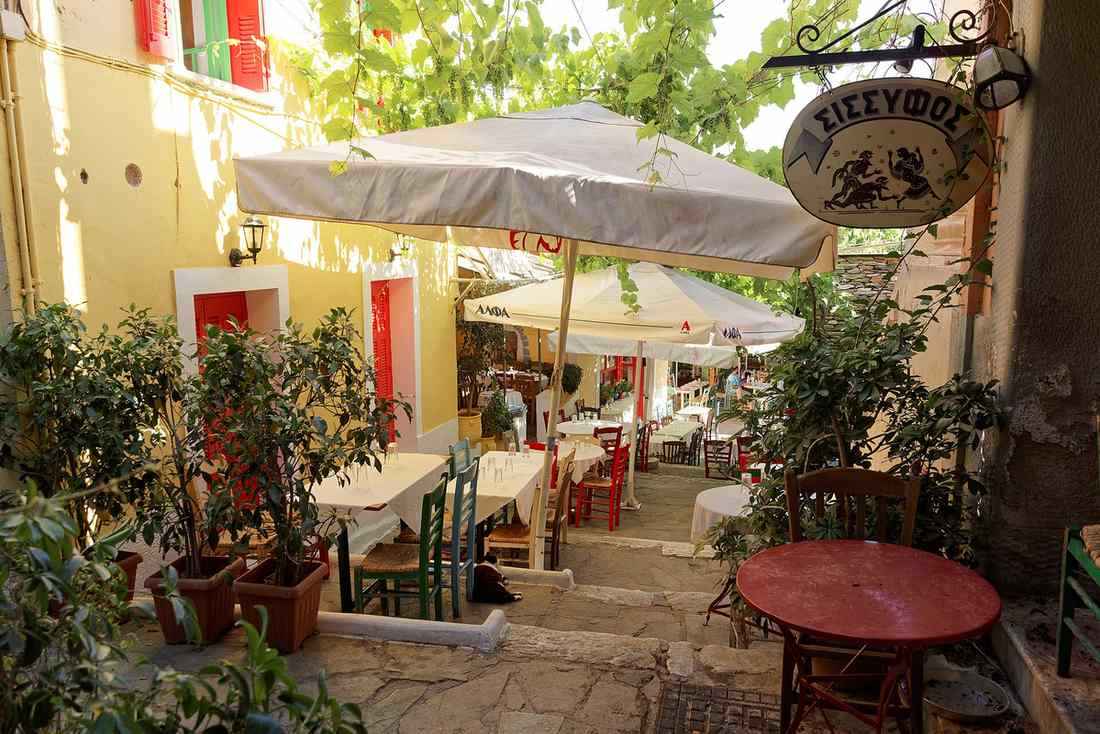
Plaka is the charming old town of Athens below the Acropolis, a maze of neoclassical lanes, tavernas, Byzantine churches and shops, hiding the Cycladic-style Anafiotika quarter and several lovely museums. Explore it on a guided walk and pair it with skip-the-line Acropolis tickets and tours from My Greece Tours for the perfect day.
Plaka is the most atmospheric neighbourhood to explore in the Athens travel guide. The sections below cover what to see, where to eat and tips for visiting in full.
What is Plaka in Athens?
Plaka is the oldest neighbourhood of Athens, set on the slopes of the Acropolis. It is a maze of neoclassical houses, narrow lanes, Byzantine churches, tavernas and shops, plus small museums and the Anafiotika quarter.
Plaka is the historic heart of Athens, the city’s oldest continuously inhabited neighbourhood, nestled on the northern and eastern slopes of the Acropolis and stretching down towards Monastiraki and Syntagma. It is often called the “neighbourhood of the gods” for its setting beneath the sacred rock. The largely pedestrianised district is a labyrinth of narrow, winding lanes lined with elegant 19th-century neoclassical houses, climbing bougainvillea, ancient ruins, Byzantine churches, and a wealth of tavernas, cafes, bars and shops.
Tucked within it is Anafiotika, a tiny quarter of whitewashed, blue-shuttered houses that feels transplanted from a Cycladic island. Plaka holds small museums and historic landmarks, and offers constant glimpses of the Acropolis between the rooftops. Its central location makes it the ideal base and starting point for exploring Athens. For atmosphere, history, food and shopping, Plaka is unmissable, set out alongside the guide to things to do in Athens. There is plenty to see within it.
What are the main things to see in Plaka?
In Plaka, see the Anafiotika quarter, the Monument of Lysicrates, the folk-art and folk-instrument museums, the Roman Agora and Tower of the Winds nearby, Byzantine churches, and the neoclassical lanes themselves.
Plaka is packed with charming sights, both famous and hidden, making it a joy to explore on foot. The highlight for many is Anafiotika, the magical little quarter of whitewashed, flower-draped Cycladic houses clinging to the slope of the Acropolis, founded in the 19th century by builders from the island of Anafi; wandering its tiny stepped lanes feels like a Greek island escape, and it offers lovely views at sunset. The elegant Monument of Lysicrates, a graceful 4th-century BC choragic monument, is a compact masterpiece of Classical design. Plaka brims with small, characterful museums, including the Museum of Greek Folk Art, the Museum of Greek Popular Instruments and the Frissiras and Kanellopoulos museums.
The Roman Agora and the octagonal Tower of the Winds sit at its edge, and Byzantine churches dot the lanes. Of course, the mighty Acropolis and the superb Acropolis Museum rise right above the neighbourhood, so Plaka is the perfect gateway to them. Simply wandering the lanes is the best way to discover it, set out alongside the guides to the Acropolis Museum and Greek mythology sites. Plaka is also a place to eat and shop.
Where do you eat and shop in Plaka?
In Plaka you eat at traditional tavernas serving moussaka, souvlaki and seafood, often with live music or Acropolis views, and drink at historic spots like Brettos. The lanes sell leather sandals, ceramics, jewellery and crafts.
Plaka is one of the best places in Athens for eating, drinking and shopping, all amid its lovely lanes. For dining, the neighbourhood is packed with traditional Greek tavernas and restaurants where you can feast on classics such as moussaka, souvlaki, grilled meats, fresh seafood, Greek salad and mezedes, often in a charming courtyard, on a vine-shaded terrace, with live traditional music, or with a view up to the floodlit Acropolis. While some spots are touristy, plenty of excellent, authentic tavernas remain. For a drink, the historic Brettos bar is a Plaka institution, famous for its rainbow wall of backlit bottles of homemade liqueurs and spirits, and in summer the open-air Cine Paris rooftop cinema screens films with the Acropolis as a backdrop.
For shopping, Plaka’s lanes are a treasure trove of Greek crafts and souvenirs: handmade leather sandals, clay pottery with ancient Greek motifs, jewellery, natural sea sponges, olive-oil products, worry beads and traditional gifts. Browsing and tasting your way through Plaka is a highlight of any visit, set out alongside the guides to Greek food to try and the Athens street food guide. Anafiotika deserves a closer look.
What is the Anafiotika quarter in Plaka?
Anafiotika is a tiny quarter within Plaka, on the slopes of the Acropolis, built by workers from the island of Anafi. Its whitewashed, blue-accented Cycladic houses and stepped lanes feel like a Greek island village.
One of the most enchanting and surprising corners of Athens, Anafiotika is a hidden gem tucked into the upper part of Plaka, right against the rock of the Acropolis. Its story is charming: in the mid-19th century, when Athens became the capital of the new Greek state, skilled builders came from the Cycladic island of Anafi to work on the city’s grand neoclassical buildings, and they built themselves homes here in the familiar style of their island, complete with whitewashed walls, blue doors and shutters, and tiny courtyards. The result is a captivating little quarter that looks and feels exactly like a village on a Greek island, utterly different from the surrounding city, with narrow stepped alleys, cats dozing in the sun, pots of flowers and cascading bougainvillea.
Wandering its peaceful lanes is a delight and a complete escape from the bustle below, and the spot is renowned for its beautiful views over Athens, especially in the soft light of the early evening and at sunset. Anafiotika is a magical highlight of Plaka, set out alongside the guide to the best time to visit. A few tips help you enjoy Plaka.
What tips help for visiting Plaka?
Visit Plaka in the early morning or late afternoon to avoid the crowds and heat, wear comfortable shoes for the cobbled lanes, and wander to discover its corners. Combine it with the Acropolis above.
A few tips help you make the most of charming Plaka. As the neighbourhood is hugely popular and gets very busy, especially in summer and midday, visit in the early morning or the late afternoon and evening, when the lanes are quieter, the light is lovely and the temperatures cooler, ideal for photos and a relaxed stroll. Wear comfortable, sturdy shoes, as Plaka’s lanes are cobbled, uneven and often steep, particularly up towards Anafiotika and the Acropolis. The best way to experience Plaka is simply to wander without a fixed plan, letting yourself get pleasantly lost among the lanes, churches and squares, and chasing glimpses of the Acropolis.
Combine your visit with the Acropolis and Acropolis Museum, which sit right above, for a full day. For dining, step a little off the busiest tourist streets to find more authentic, better-value tavernas favoured by locals. Plaka’s central, walkable location and atmosphere also make it a sought-after, if pricier, area to stay. With these tips, Plaka is a delight to explore, set out alongside the guides to getting around Athens and a first-timer’s itinerary. The questions below cover the points visitors ask most.
What is the history of Plaka?
Plaka is the oldest inhabited neighbourhood of Athens, built over the ancient city on the slopes of the Acropolis. Its neoclassical character dates from the 19th century. Ancient, Byzantine and Ottoman layers survive in its lanes.
Plaka’s character is deepened by its layered history, as it has been inhabited continuously for thousands of years, making it the oldest living neighbourhood in Athens. The district sits directly over part of the ancient city, on the northern and eastern slopes of the Acropolis, and ancient ruins surface throughout it, including the Roman Agora, the Tower of the Winds and the Monument of Lysicrates.
Through the centuries Plaka accumulated layers of history, with Byzantine churches dotted among the lanes and Ottoman-era buildings recalling the long period of Turkish rule. The neighbourhood’s distinctive present-day character dates largely from the 19th century: when Athens became the capital of the newly independent Greek state, Plaka was rebuilt and expanded with the elegant neoclassical mansions and houses that give it such character today.
It was in this period that builders from the Cycladic island of Anafi created the Anafiotika quarter in their island style. In the 20th century Plaka was carefully protected and pedestrianised to preserve its historic character. Walking its lanes, you move through every era of Athenian history at once, set out alongside the guide to the Acropolis history. Reaching Plaka is straightforward on foot or by metro.
How do you get to Plaka in Athens?
Reach Plaka on foot from the historic centre, or take the metro to Monastiraki, Syntagma or Acropoli station. All three stations sit a short walk from the neighbourhood’s pedestrianised lanes, which are then best explored on foot.
Plaka sits in the very centre of Athens, so most visitors arrive on foot from nearby districts. The metro serves it well: Monastiraki station, on the green and blue lines, drops you at the neighbourhood’s western edge, close to the flea market and the Roman Agora. Syntagma station, on the blue and red lines, lies just to the north-east near the parliament, a five-minute walk down into the lanes. Acropoli station, on the red line, sits to the south below the sacred rock and gives quick access to the upper part of Plaka and Anafiotika.
From the airport, the metro blue line runs directly to Syntagma or Monastiraki, and the same stations connect Plaka to Piraeus port. Inside the neighbourhood there is no vehicle access on the main streets, so a comfortable pair of shoes and a rough sense of direction are all you need, set out alongside the guide to getting around Athens. The questions below cover the points visitors ask most.
Frequently Asked Questions
Where is Plaka in Athens and how do you get there?
Plaka lies in the historic centre of Athens, on the northern and eastern slopes of the Acropolis, between Monastiraki and Syntagma. It is easy to reach on foot from the main sights, or by metro to Monastiraki, Syntagma or Acropoli stations, all a short walk away. The largely pedestrianised lanes are best explored on foot.
What is Plaka in Athens known for?
Plaka is known as the oldest and most picturesque neighbourhood of Athens, set below the Acropolis. It is famous for its charming neoclassical lanes, tavernas, cafes, Byzantine churches and souvenir shops, the Cycladic-style Anafiotika quarter, small museums and constant Acropolis views, making it the city’s most atmospheric district to explore.
Is Plaka worth visiting in Athens?
Yes, Plaka is well worth visiting and is a highlight of Athens. Its charming lanes, traditional tavernas, shops, museums and the magical Anafiotika quarter, all below the Acropolis, make it a delight to wander. It is also a central, atmospheric base, within walking distance of the Acropolis, Monastiraki and the main sights.
What is there to do in Plaka at night?
At night, Plaka comes alive with traditional tavernas serving Greek food, often with live music, and restaurants with floodlit Acropolis views. You can drink at historic bars like Brettos, watch a film at the open-air Cine Paris cinema with Acropolis views, and stroll the atmospheric, lantern-lit lanes, making for a charming evening.
When is the best time to visit Plaka?
The best time to walk Plaka is the early morning or the late afternoon into evening, when the lanes are quietest, the light is softest and the temperatures are cooler. Midday in high summer brings the largest crowds and the strongest heat. Spring and autumn are the most comfortable seasons overall, with mild weather and thinner crowds, and Plaka stays pleasant to explore on foot right through the year.