
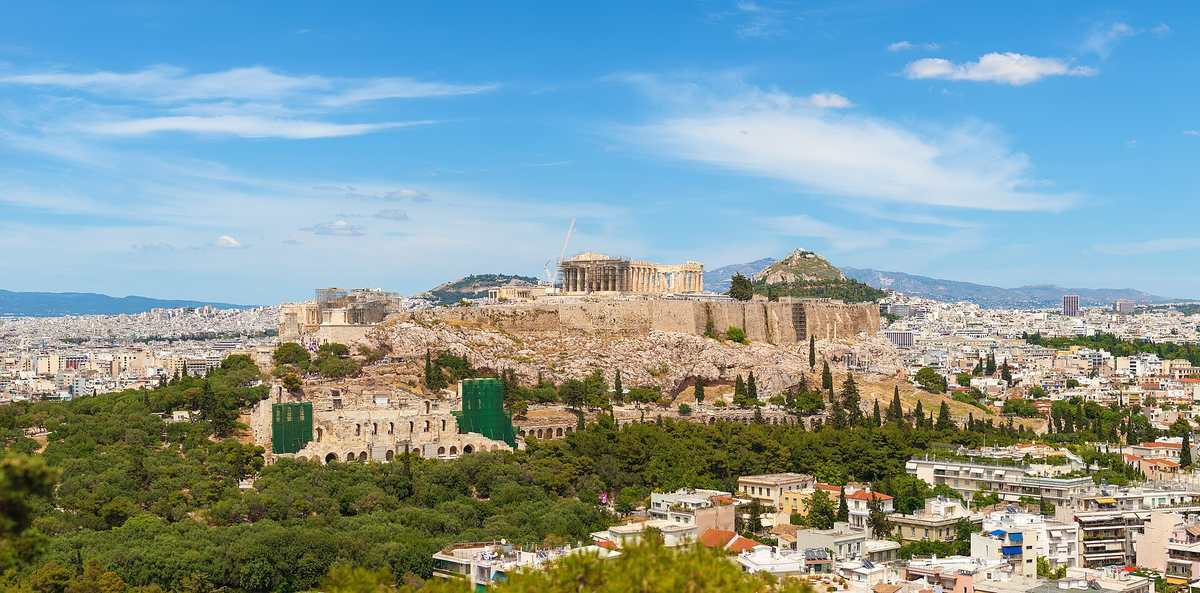
The top things to do in Athens are climbing the Acropolis to the Parthenon, exploring the Acropolis and National Archaeological museums, wandering the Ancient Agora, Plaka and Monastiraki, watching the changing of the guard and catching the sunset from Lycabettus Hill. Plan it all with guided tours, day trips and skip-the-line tickets from My Greece Tours.
Athens packs ancient wonders, museums, neighbourhoods and food into one walkable city, as set out in the Athens travel guide. The sections below cover the top sights and experiences in full.
What are the top things to do in Athens?
The top things to do in Athens are the Acropolis and Parthenon, the Acropolis and National Archaeological museums, the Ancient Agora and Temple of Olympian Zeus, Plaka and the Monastiraki flea market, the changing of the guard, and the Lycabettus sunset.
Athens stands among the world’s great historic cities, where two and a half thousand years of history meet a modern Mediterranean capital, and it packs an exceptional range of things to do into a compact, walkable centre. At its heart sit the ancient wonders, above all the Acropolis crowned by the Parthenon, the symbol of Classical Greece, ringed by major sites such as the Ancient Agora and the colossal Temple of Olympian Zeus. World-class museums, led by the Acropolis Museum and the vast National Archaeological Museum, display the treasures of antiquity. Beyond the ruins, the old neighbourhoods of Plaka and Monastiraki reward a slow wander, full of tavernas, cafes and shops.
Add the changing of the guard at Syntagma, sunset views from Lycabettus Hill, a strong food and nightlife scene, and the nearby Riviera beaches. Easy day trips reach Delphi and Cape Sounion. The city rewards anything from a couple of days to a week. The mix suits every kind of traveller, set out alongside the guide to a first-timer’s itinerary. The ancient sites come first.
What are the top ancient sites in Athens?
The top ancient sites in Athens are the Acropolis with the Parthenon, the Ancient Agora with the Temple of Hephaestus, the Temple of Olympian Zeus with Hadrian’s Arch, the Roman Agora with the Tower of the Winds, and the marble Panathenaic Stadium.
Athens leads the world for ancient sites, and exploring them forms the heart of any visit. The Acropolis heads the list, the sacred rock crowned by the Parthenon, the Erechtheion with its Caryatids, the Propylaea and the Temple of Athena Nike, the masterpiece of Classical Greek architecture. Just below lies the Ancient Agora, the political and commercial heart of ancient Athens and the cradle of democracy, home to the well-preserved Doric Temple of Hephaestus and the reconstructed Stoa of Attalos. Nearby stands the colossal Temple of Olympian Zeus, once the largest temple in Greece, beside the Roman triumphal Arch of Hadrian.
The Roman Agora holds the octagonal Tower of the Winds, an ancient marble clocktower and the only one to survive from antiquity. The marble Panathenaic Stadium, home of the first modern Olympics, completes the picture.
A combined multi-site ticket covers the Acropolis and these sites, all within walking distance in the historic centre, so a single pass and a comfortable pair of shoes open the whole ancient core over a day or two. Below the Acropolis on the south slope sit two ancient theatres, the Odeon of Herodes Atticus, which still stages summer performances, and the older Theatre of Dionysus, the birthplace of Greek drama. To the west, the Kerameikos cemetery and the ruins of Hadrian’s Library add quieter, less crowded corners to a day of ancient sites. These ancient wonders form the soul of the city, set out alongside the guides to the Ancient Agora and the Temple of Olympian Zeus. The museums hold the treasures.
How do you make the most of the Acropolis?
Make the most of the Acropolis by arriving at opening or late afternoon with a skip-the-line ticket, climbing to the Parthenon, and pairing the hilltop with the Acropolis Museum below. Allow around two hours.
The Acropolis is the single sight that defines a visit, so a little strategy pays off. The rock opens early and closes in the evening, and the first slot after opening or the last hours before closing bring cooler air and thinner crowds than the midday rush of cruise groups. A skip-the-line ticket, bought ahead, saves the long wait at the main gate on the north side, while the quieter south entrance near the Acropolis Museum often moves faster. Sturdy shoes handle the worn, slippery marble on the approach.
The climb passes the Odeon of Herodes Atticus and rises through the monumental Propylaea gateway to the summit. There the Parthenon, the Erechtheion with its Caryatid porch and the small Temple of Athena Nike stand against the sky, with a wide view over the city, the Ancient Agora and the sea. Around two hours cover the ascent, the summit and the descent at an unhurried pace. Pairing the hilltop with the Acropolis Museum below, where the original sculptures sit in context, completes the story, set out alongside the guide to Acropolis tickets. The museums hold the treasures.
What are the best museums in Athens?
The best museums in Athens are the Acropolis Museum, displaying the Parthenon sculptures and Caryatids in a modern building, and the National Archaeological Museum, the largest in the country, home to the gold Mask of Agamemnon and the Antikythera Mechanism.
Athens holds collections that span the whole sweep of Greek civilisation, and two world-class museums form the essential pairing. The Acropolis Museum, at the foot of the sacred rock, is a modern building that displays the original sculptures from the Acropolis monuments. Its top-floor gallery, aligned with the temple itself, holds the Parthenon frieze, and the five Caryatids stand a floor below. Glass floors reveal an excavated ancient neighbourhood beneath the building. The National Archaeological Museum, the largest in the country, houses the gold funerary Mask of Agamemnon from Mycenae, the Antikythera Mechanism, an ancient analogue computer, the Artemision Bronze and the Akrotiri frescoes.
Beyond these, the Benaki Museum traces Greek art from prehistory to modern times, the Museum of Cycladic Art shows the elegant marble figurines, and smaller collections fill Plaka. Together they make the city a cultural centre of the first rank. The Byzantine and Christian Museum traces the medieval centuries, the National Gallery hangs Greek painting, and the Stavros Niarchos Foundation Cultural Centre pairs the National Library and Opera under one roof by the coast. A combined museum visit rewards a morning out of the summer heat in air-conditioned galleries. These museums bring the ancient world to life, set out alongside the guides to the must-see museums and the National Archaeological Museum. The neighbourhoods reward a wander.
What neighbourhoods and markets should you explore?
Explore Plaka, the old town below the Acropolis with neoclassical lanes, tavernas and the Cycladic-style Anafiotika quarter; Monastiraki, with its Sunday flea market and rooftop Acropolis views; and Psiri, the trendy hub for bars, street art and nightlife.
Beyond the ancient sites and museums, the historic neighbourhoods reveal the city’s living character. Plaka, the oldest and most picturesque quarter, sits below the Acropolis as a maze of neoclassical houses, narrow lanes, Byzantine churches, tavernas, cafes and souvenir shops. It also hides Anafiotika, a tiny quarter of whitewashed Cycladic-style houses built by island workmen. This corner feels like a Greek island village dropped into the capital. Adjoining it, Monastiraki forms the bustling heart of old Athens, centred on a lively square. The flea market fills the surrounding streets, grandest on Sundays, with antiques, crafts, clothes and trinkets. Rooftop bars above the square serve drinks with Acropolis views.
The nearby Psiri district has turned into a trendy hub of bars, live music, street art, tavernas and nightlife. These central, walkable neighbourhoods, full of atmosphere, food and shopping, rank as a highlight in themselves. Kolonaki, below Lycabettus Hill, adds designer boutiques, galleries and cafes for a smarter afternoon, while Koukaki and Pangrati draw a local crowd to their squares and bakeries. The Ermou pedestrian street runs from Syntagma down to Monastiraki for high-street shopping, and the antique and craft stalls of the flea market spill through the surrounding lanes. A slow stroll, with the Acropolis glimpsed between the rooftops, rewards the walk, set out alongside the guides to Plaka and Monastiraki. The signature experiences come next.
What experiences should you not miss in Athens?
The signature Athens experiences are the changing of the guard at Syntagma, the sunset from Lycabettus Hill, a Greek food tour, cocktails at a rooftop bar with Acropolis views, the Riviera beaches, and a day trip to Delphi or Cape Sounion.
Beyond the headline sights, a set of experiences captures the character of the city. At Syntagma Square, the changing of the guard, performed hourly by the Evzones, the presidential guards in their kilted foustanella uniforms and pom-pommed clogs, is a free spectacle, grandest on Sunday morning. For the widest views, ride the funicular or climb to the summit of Lycabettus Hill, the highest point in the city at two hundred and seventy-seven metres, at sunset for a panorama over Athens, the Acropolis and the sea.
Food ranks as a must, whether a guided street-food tour, a long taverna lunch or souvlaki and loukoumades, and the rooftop bars of Monastiraki and Psiri serve cocktails against the floodlit Acropolis.
In summer, the beaches of the Athens Riviera along the Apollo Coast reward a warm afternoon, reached by tram from the centre. A boat cruise takes to the water off the coast, and easy day trips reach Delphi, the ancient oracle, and Cape Sounion’s clifftop Temple of Poseidon at sunset.
Guided experiences deepen the visit. A summer performance at the Odeon of Herodes Atticus, under the floodlit Acropolis, ranks among the finest evenings in the city during the Athens festival season. A guided walking tour of the Acropolis and Agora brings the myths and history to life. A cooking class or a wine tasting turns an afternoon into a hands-on experience. These experiences round out a trip, set out alongside the guides to the changing of the guard and Lycabettus Hill. The food scene deserves its own stop.
Where should you eat and drink in Athens?
Eat at the tavernas of Plaka and Psiri, the souvlaki grills of Monastiraki, and the stalls of the Varvakios central market. Drink at the rooftop bars around Monastiraki for Acropolis views and the wine bars of Koukaki for a quiet evening.
Athens rewards a hungry traveller across every budget and mood. The tavernas of Plaka and Psiri serve grilled meats, mezze, moussaka and fresh fish under vine-shaded courtyards, while the souvlaki and gyros grills around Monastiraki turn out cheap, quick handheld meals into the night. The Varvakios central market, the Athens meat and fish hall, anchors a district of spice shops, delis and cheap workers’ tavernas that fill with locals at lunch. A guided food tour threads these together, sampling street food, cheeses, olives and sweets while explaining where each dish comes from.
Drinks follow the same range. Rooftop bars around Monastiraki and Plaka frame the floodlit Acropolis after dark, the cocktail bars of the centre have earned a place on world lists, and the wine bars of Koukaki and Kolonaki suit a slower evening. Coffee runs deep in the culture, from the freddo espresso of the squares to the old-style kafeneia of the back streets. Loukoumades, baklava and Greek yoghurt with honey close a meal, and a small glass of tsipouro or ouzo often follows in a taverna. Prices stay reasonable across the centre compared with other European capitals. Eating and drinking well is effortless here, set out alongside the guide to the Athens street food guide. Day trips widen the map.
What day trips can you take from Athens?
The best day trips from Athens are Cape Sounion’s Temple of Poseidon at sunset, the oracle at Delphi, the Argolis citadel and theatre at Mycenae and Epidaurus, and a cruise to the Saronic islands of Hydra, Poros and Aegina.
Athens makes a strong base for day trips, since the ancient sites, mountains and islands of southern Greece lie within easy reach. Cape Sounion, at the tip of the Attica peninsula, holds the clifftop Temple of Poseidon above the sea, at its finest as the sun sets over the Aegean. Delphi, on the slopes of Mount Parnassus, was the ancient oracle and sanctuary of Apollo, its theatre, temple and stadium set in dramatic mountain scenery. The Argolis to the southwest gathers the citadel of Mycenae, the great theatre of Epidaurus and the seaside town of Nafplio into one full day.
The sea offers a change of pace. A one-day cruise from the port reaches the Saronic islands of Hydra, Poros and Aegina, each a short sail apart, with car-free lanes, harbours and beaches. The Corinth Canal and ancient Corinth combine on the road west, and the beaches of the Athens Riviera sit closer still. Arachova, a stone mountain village near Delphi, and the monasteries of Meteora on a longer trip add more to the list for travellers with extra days. A guided tour removes the driving and adds the history, while a hire car suits a flexible pace. A guided tour or a hire car opens each of these, set out alongside the guide to the Athens Riviera beaches. Timing and planning sharpen the visit.
How long do you need in Athens and what tips help?
Around two to three days cover the main highlights, or longer to add day trips and beaches. Buy a combined skip-the-line ticket, start early to beat the heat, wear comfortable shoes, use the metro, and base yourself centrally.
A little planning makes the most of the city. Two to three days cover the main highlights: roughly a day for the Acropolis and its museum, a day for the other ancient sites, museums and neighbourhoods, and more time to add the Athens Riviera beaches or a day trip to Delphi or Cape Sounion. Buy a combined multi-site ticket and skip-the-line entry for the Acropolis in advance to save money and avoid the long queue. Start sightseeing early in the morning, above all in summer, to beat the heat and the cruise and tour crowds at the popular sites.
Wear sturdy, comfortable shoes for the uneven marble, rocky paths and cobbled lanes. Getting around stays cheap and simple on the modern metro, which links the airport, port and main sights, backed by trams and buses. A central base in or near Plaka, Monastiraki or Syntagma keeps the major attractions within walking distance. Spring and autumn bring the mildest weather for walking the sites, while July and August turn hot and busy, so an early start matters most. A refillable water bottle, a sun hat and a light layer for cool evenings cover the seasons. With these habits, Athens reads as a rewarding, manageable city, set out alongside the guides to getting around Athens and the best time to visit. Budget travellers do well too.
What are the best free things to do in Athens?
The best free things to do in Athens are the changing of the guard at Syntagma, the climb up Lycabettus or Filopappos Hill for sunset views, a stroll through Plaka and the Monastiraki flea market, and the National Garden.
Athens rewards budget travellers, since a good share of its best experiences cost nothing. The changing of the guard by the kilted Evzones at Syntagma Square tops the free list, performed hourly and grandest on Sunday mornings. For views without a ticket, the climb up Lycabettus Hill, the highest point in the city, or the pine-clad Filopappos Hill opposite the Acropolis both open panoramas and sunset views over the floodlit monuments. Wandering costs nothing: the lanes of Plaka and the island-like Anafiotika quarter, the stalls of the Monastiraki flea market, and the squares and street art of Psiri all reward a walk.
The leafy National Garden behind Parliament gives shade, a pond and a playground in the centre. The Arch of Hadrian and the columns of the Temple of Olympian Zeus stand in view from the street.
The metro doubles as a free mini-museum, with central stations such as Syntagma and Monastiraki displaying finds uncovered during construction. Churches, viewpoints and neighbourhoods cost nothing, and the state archaeological sites open free on set dates. A walk along the pedestrian Dionysiou Areopagitou promenade below the Acropolis, and up to the Areopagus rock where the apostle Paul once spoke, costs nothing and delivers wide views over the ancient centre. The street art of Psiri and Metaxourgeio turns a walk into an open-air gallery. These free options keep the city open to every budget, set out alongside the guide to budget travel tips. Evenings have their own character.
What is Athens like at night?
Athens at night centres on the rooftop bars around Monastiraki and Plaka with floodlit Acropolis views, the bars and live music of Psiri and Gazi, and long dinners in the tavernas. Summer brings open-air cinemas and performances under the Acropolis.
The city comes alive after dark, when the heat drops and the streets fill. Rooftop bars around Monastiraki, Plaka and Thissio frame the floodlit Acropolis over a cocktail, and the reinvented districts of Psiri and Gazi gather bars, live rembetika and Greek music, clubs and late tavernas. Athenians dine late, so the tavernas stay busy well into the night, and the squares of Koukaki, Pangrati and Exarchia hum with a local crowd around cafes and mezze bars.
Summer adds its own night-time pleasures. Open-air cinemas screen films under the stars in Plaka and Thissio, with the Acropolis as a backdrop at one or two, and the Odeon of Herodes Atticus stages concerts and drama through the festival season. A sunset drink on Lycabettus or Filopappos Hill opens the evening with a panorama over the lit monuments and the sea. These evenings round out a full day, set out alongside the guide to Athens nightlife. The questions below cover the points visitors ask most.
Frequently Asked Questions
What are the must-see things to do in Athens?
The must-see activities are the Acropolis and Parthenon, the Acropolis Museum and the National Archaeological Museum, the Ancient Agora and Temple of Olympian Zeus, Plaka and the Monastiraki flea market, the changing of the guard at Syntagma, and the Lycabettus sunset, food and rooftop bars. Together they fill a rewarding two to three days.
How long do you need in Athens?
Two to three days cover the main highlights, including the Acropolis, the museums, the ancient sites and the old neighbourhoods. Extra days add the Athens Riviera beaches or a day trip to Delphi, Cape Sounion or the Argolis, which builds a fuller four to five day stay for a first visit.
Is Athens worth visiting?
Yes, Athens is worth visiting as one of the world’s great historic cities and the birthplace of democracy, philosophy and drama. It combines the Acropolis, world-class museums and ancient sites with lively neighbourhoods, strong food, nightlife, nearby beaches and easy day trips, so it suits every kind of traveller across a short or long stay.
What is the best season to visit Athens?
Spring and autumn bring the best weather for Athens, with mild days that suit walking the ancient sites and lighter crowds than summer. July and August turn hot, so an early start and a midday rest matter most. Winter stays mild and quiet, with lower prices and short queues at the main sites.
What is the best area to stay in Athens for sightseeing?
Plaka, Monastiraki, Syntagma, Koukaki and Makrygianni make the best sightseeing bases, all central and walkable to the Acropolis, the museums and the ancient sites. A room near a metro station eases airport and port transfers and day trips, so a first visit rarely needs a taxi between the main attractions.
Do you need a guide or tickets in advance for the Acropolis?
A skip-the-line ticket is worth booking ahead for the Acropolis in the busy season, since it cuts the long queue at the main gate. A guide or a guided tour adds the history and myths that bring the ruins to life. The combined multi-site ticket covers the Acropolis and other central sites over a set number of days.
What are the best areas for food and nightlife in Athens?
Psiri and Gazi lead for bars, live music and late nightlife, while Monastiraki, Plaka and Thissio hold the rooftop bars with Acropolis views. Koukaki, Pangrati and Kolonaki draw a local crowd to their wine bars and tavernas. The Varvakios central market and its surrounding grills serve the best-value food in the city, popular with locals at lunch.
Can you see the main sights of Athens in one day?
One day covers the essentials of Athens if you start early: the Acropolis and its museum in the morning, a walk through Plaka and Monastiraki at midday, and the changing of the guard at Syntagma in the afternoon. A skip-the-line ticket and a central base make the day work without wasted time between the sights, and an early dinner in a Plaka taverna closes it well.