
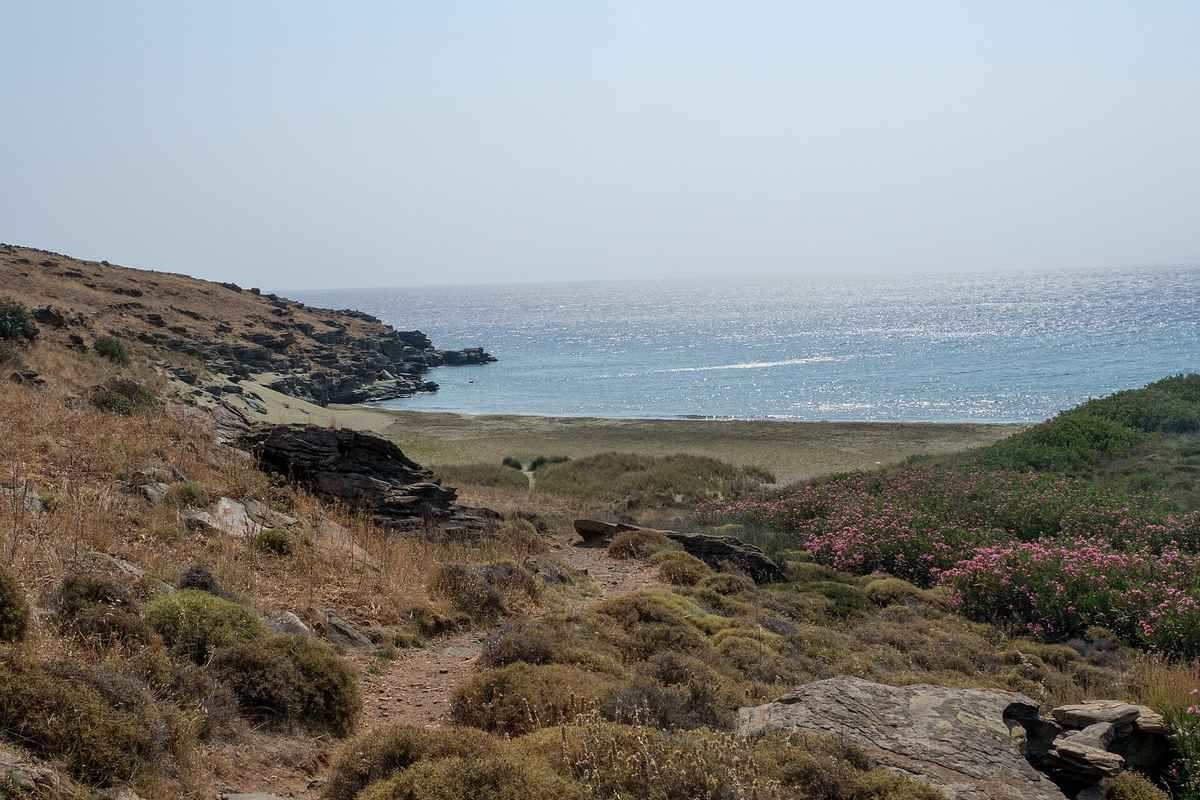
Tinos is just a short 15 to 35 minute ferry from Mykonos, making the neighbouring island an easy and rewarding day trip, famous for the great pilgrimage church of Panagia Evangelistria, its marble-carving villages, dovecotes and authentic Cycladic charm. This guide covers the ferry, what to see, day trips, the church and tips.
Tinos is the closest island hop from the Mykonos travel guide, offering a traditional contrast to glamorous Mykonos. The sections below cover it in full.
How do you get to Tinos from Mykonos?
You get to Tinos from Mykonos by ferry. The crossing takes 15 to 35 minutes, with frequent daily sailings. Ferries leave the Mykonos New Port at Tourlos and arrive at Tinos town. One-way tickets start at around 10 euros.
Reaching Tinos from Mykonos is simple, as the two islands are close neighbours separated only by a narrow channel. The ferry crossing is very short. It takes 15 to 35 minutes depending on the vessel and company. The fastest boats reach Tinos in about 15 minutes, and the average is around 20 minutes.
Ferries run frequently through the day in season, with several daily sailings. That makes it simple to plan a day trip and return the same evening. The boats leave the Mykonos New Port at Tourlos, about 2.5 kilometres north of town. They arrive at Tinos town, the island’s capital and main port, so you step off in the heart of Chora.
One-way tickets start at around 10 euros and cost up to about 18 euros, making Tinos a cheap excursion. This frequent, inexpensive link makes Tinos an ideal day trip from Mykonos, set out alongside the guides to the ports and day trips. The island offers a different feel.
What is Tinos like compared to Mykonos?
Tinos is a traditional, authentic Cycladic island, a contrast to glamorous Mykonos. It is known for religious pilgrimage, marble-carving craft, quiet villages, ornate dovecotes and a peaceful atmosphere. Tinos has fewer crowds and lower prices than Mykonos.
Tinos offers a different experience from its famous neighbour, which is much of its appeal as a day trip. Mykonos is glamorous, cosmopolitan and built around beaches, beach clubs and nightlife. Tinos is traditional, authentic and rooted in Greek culture and faith, with a peaceful character far from the jet-set scene.
Tinos is one of the most important religious destinations in Greece, drawing pilgrims to its great church. It is also famous for its long tradition of marble carving, with skilled artisans still shaping the island’s renowned marble. The island is dotted with whitewashed villages, ornate stone dovecotes that are a Tinian speciality, Venetian architecture and quiet beaches.
Prices are lower and crowds are thinner than on Mykonos. For visitors wanting genuine, traditional Cycladic life, history and craft, Tinos is a rewarding escape from the buzz of Mykonos, set out alongside the guide to Mykonos vs Naxos. Its great church is the highlight.
What is the Panagia Evangelistria church?
Panagia Evangelistria is the great pilgrimage church of Tinos in Chora, built around a miraculous icon of the Virgin Mary. A major site of Orthodox devotion, it draws pilgrims nationwide. A strict dress code applies: no shorts or sleeveless tops.
The most famous sight on Tinos is the great church of Panagia Evangelistria, which stands above Tinos town. It is one of the most important religious sites in Greece. It was built in the 19th century around a miraculous icon of the Virgin Mary, said to have been discovered after visions.
The church is a major centre of Orthodox Christian pilgrimage. It draws devout pilgrims, especially around the feast of the Dormition of the Virgin on 15 August, when many approach on their knees. The marble church and its complex are richly decorated and atmospheric. Visiting offers a moving glimpse into Greek faith and tradition.
A strict dress code applies, since it is a sacred pilgrimage site. Shorts, sleeveless tops and beachwear are not permitted, so dress modestly with shoulders and knees covered. The church is an easy walk up from the port, making it simple to include on a day trip, set out alongside the guide to the Panagia Tourliani monastery. The villages are equally rewarding.
What villages and sights should you see on Tinos?
On Tinos, see Chora with its church and old town, the marble-carving village of Pyrgos, the boulder village of Volax, and the Kechrovouni Monastery with its views. The marble craft and Venetian architecture make the villages a highlight.
Beyond the great church, Tinos rewards exploration with some of the most authentic villages in the Cyclades. A day trip can take in several highlights. Chora, the capital and port, has its grand church, an old town of whitewashed lanes, shops and tavernas, and a pleasant waterfront.
Inland, Pyrgos is the marble capital of Tinos. Local artisans have shaped the island’s world-renowned marble here for generations. The village has marble workshops, a museum, and even marble street signs and fountains. Volax is a striking village nestled among giant round granite boulders, known for its traditional basket weaving.
The Kechrovouni Monastery, perched on a mountainside and home to a community of nuns, offers Cycladic architecture, peaceful courtyards and panoramic island views. Across the island you will see the ornate stone dovecotes that are a Tinian speciality, Venetian touches and traditional villages. The craft and architecture make the villages a real highlight, set out alongside the guide to things to do. A day trip needs a little planning.
How do you plan a Tinos day trip from Mykonos?
To plan a Tinos day trip, take an early ferry from Mykonos, visit the Panagia Evangelistria church and explore Chora. Then see villages like Pyrgos and Volax by bus, taxi, hire car or tour, and return on an evening ferry.
A Tinos day trip is easy to organise with a little planning. Take an early-morning ferry from the Mykonos New Port to make the most of the day. Start in Tinos town, walking up to the great Panagia Evangelistria church and exploring the old town, shops and waterfront.
The famous villages such as Pyrgos and Volax and the Kechrovouni Monastery lie inland. You can use the local buses, take taxis, hire a car or scooter at the port, or join an organised full-day tour from Mykonos. A tour handles the ferry and transport and includes a guide, so it is the easiest way to see the highlights in a day. Independent travel gives more freedom.
Remember to dress modestly for the church, with shoulders and knees covered. Book your return ferry in advance, and check the timetable so you do not miss the last boat back. With an early start and a plan, you can see the best of Tinos in a single day, set out alongside the guides to a Mykonos itinerary and Petros the Pelican, whose famous custody case linked the two islands. The questions below cover the points travellers ask most.
When is the best time to visit Tinos from Mykonos?
The best time for a Tinos day trip is the shoulder season of May, June, September and October, for warm, calm days and fewer crowds. Any clear summer day works too. Avoid the pilgrimage peak around 15 August.
Timing a Tinos day trip from Mykonos well makes for a more comfortable visit. The shoulder months of May, June, September and early October are ideal. They offer warm weather for exploring the villages and the church, calmer seas for the short crossing and fewer crowds. Any clear, calm summer day also works, as the ferry crossing is very short and frequent.
One key consideration is the great religious festival around 15 August, the feast of the Dormition of the Virgin. The Panagia Evangelistria church then draws enormous crowds of pilgrims from across Greece, and the town becomes very busy. Unless you specifically wish to witness this moving event, it is best to avoid that period for a relaxed sightseeing visit.
Within the day, an early ferry gives you the most time to see the church, Chora and the inland villages before returning in the evening. Choosing a calm shoulder-season day, outside the August pilgrimage peak, gives the best Tinos experience, set out alongside the guides to when to visit and day trips.
You may come for the great pilgrimage church, the marble-carving villages, the dovecotes and Venetian architecture, or simply the calm atmosphere so different from Mykonos. An early ferry and a flexible plan let you see the highlights at a relaxed pace and return by evening. With its great church, marble villages and gentle pace, Tinos offers one of the easiest day trips in the Cyclades. The traditional island rewards an unhurried day.
What is the best way to see Tinos in a day?
The best way to see Tinos in a day is an early ferry from Mykonos, then the Panagia Evangelistria church and Chora on foot, followed by the inland villages of Pyrgos and Volax by bus, taxi, car or tour.
Chora sits at the port, so you can walk straight up to the great church and explore the old town, shops and waterfront on arrival. This covers the main pilgrimage sight and the capital without any transport. Keep modest dress for the church, with shoulders and knees covered.
The marble village of Pyrgos, the boulder village of Volax and the Kechrovouni Monastery lie inland and need transport. A guided day trip from Mykonos handles the ferry, driving and timing, which suits a short visit. For more freedom, hire a car at the port and set your own route, set out alongside the guide to day trips from the island.
Frequently Asked Questions
How long does the Mykonos to Tinos ferry take?
The ferry from Mykonos to Tinos takes just 15 to 35 minutes depending on the boat, with the fastest in about 15 minutes and an average around 20 minutes. Frequent daily sailings run from the Mykonos New Port at Tourlos to Tinos town, and one-way tickets start at around 10 euros.
What is there to see on Tinos?
On Tinos, see the great Panagia Evangelistria pilgrimage church and Chora, the marble-carving village of Pyrgos, the boulder village of Volax, the Kechrovouni Monastery with its views, and the island’s traditional villages and ornate dovecotes. The marble craft and authentic atmosphere are highlights.
Is Tinos worth visiting from Mykonos?
Yes, Tinos is well worth visiting from Mykonos as an easy day trip, offering a traditional, authentic Cycladic island of pilgrimage, marble craft, beautiful villages and dovecotes, with far fewer crowds and lower prices than Mykonos. The very short, cheap ferry makes it a rewarding contrast to glamorous Mykonos.
What is the dress code for the Panagia Evangelistria church?
The Panagia Evangelistria church has a strict dress code, as it is an active pilgrimage site. Shorts, sleeveless tops and beachwear are not permitted. Dress modestly with shoulders and knees covered. Carrying a light shawl or long trousers on a day trip makes it easy to visit straight from the ferry.
Where do you catch the ferry to Tinos on Mykonos?
The ferry to Tinos leaves from the Mykonos New Port at Tourlos, about 2.5 kilometres north of Mykonos town. Boats arrive at Tinos town, the island’s capital and main port, right beside Chora. The crossing takes 15 to 35 minutes, so you step off in the heart of the old town.