
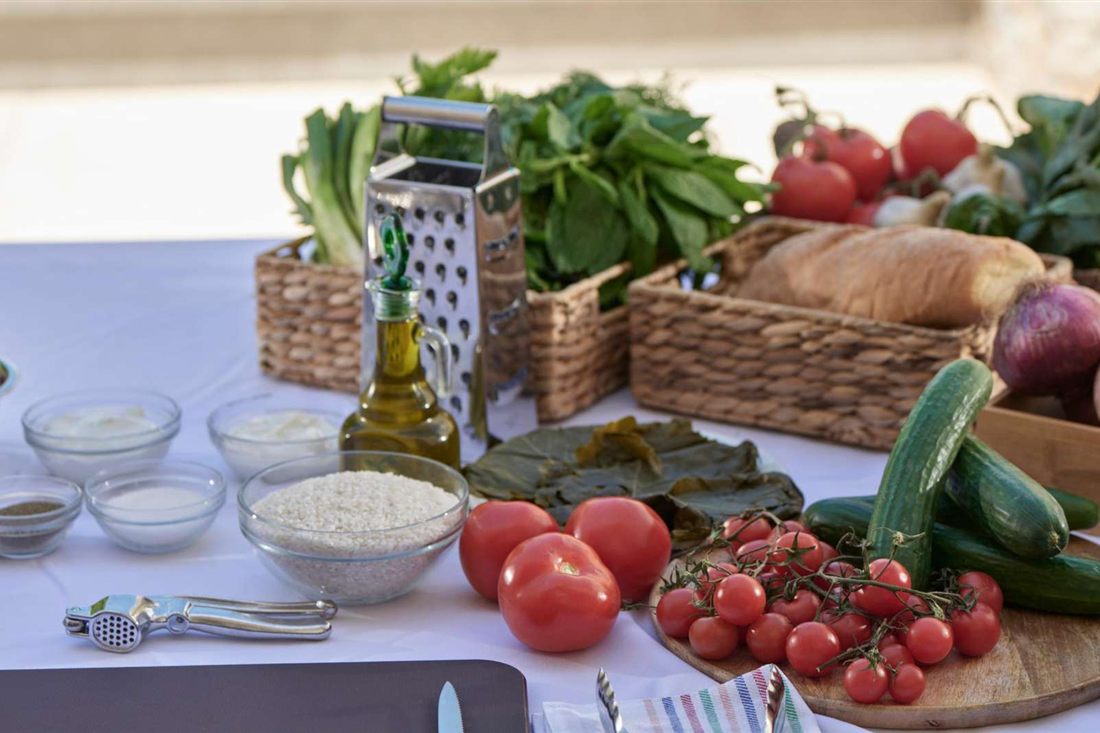
Of the 173 Mykonos listings read on 14 November, 31 are hosted by a farm, a vineyard, a village or a home. Pasture covers 38.9 percent of the island’s land, so Mykonos local experiences start inland around Ano Mera rather than in Chora.
Travellers still choosing between islands can compare every region on the Greece Tours homepage before they settle on a farm, a cooking table or a village lane.
What counts as one of the Mykonos local experiences, and how many listings fit?
A listing counts as one of the Mykonos local experiences when a farm, vineyard, village or home hosts it. A local guide or host can also lead it. Of the 173 listings read, 31 fit, or 17.9 percent.
The test reads the title and the slug of each listing. A cooking class, a wine tasting, a farm visit, a village tour or a local-guide walk counts. A cruise, a transfer, a beach day, a photoshoot or a vehicle tour with no local host does not. That leaves 142 listings outside the 31.
GetYourGuide activity feeds for Mykonos, Mykonos Town, Ano Mera and nearby places supplied the 173 listings. They were read on 14 November. Mykonos local experiences hold 3,412 of the 20,057 reviews on that set, or 17.0 percent. Their share of the listings is 17.9 percent.
The 31 listings fall into four types, shown here with their review totals and run times.
- Cooking and baking classes: 7 listings, 409 reviews, 3 to 5 hours.
- Tastings of wine, olive oil, beer and food: 9 listings, 791 reviews, 2 to 4 hours.
- Farm visits and home meals: 6 listings, 1,385 reviews, 2 to 6 hours, with one listing showing no run time.
- Walks and drives with a local guide: 9 listings, 827 reviews, 1 to 4 hours.
Farm visits and home meals lead on reviews, yet one listing holds 1,325 of their 1,385. Mykonos local experiences on a farm carry the heaviest review load of the four types.
Of the 31 listings, 27 carry reviews and 4 carry none yet. Eight hold 100 reviews or more. The 27 reviewed listings average 4.6 stars.
The five listings with the highest review counts hold 2,682 reviews, or 78.6 percent of the 3,412. Mykonos local experiences at the top look like this, one listing per line.
- One listing, a farm and village route: 1,325 reviews, 4.4 stars, 4 hours.
- One listing, a winery walk with food and wine: 555 reviews, 4.9 stars, 2 hours.
- One listing, a drive through villages and town with a local guide: 313 reviews, 4.6 stars, 4 hours.
- One listing, a cooking class in a home: 296 reviews, 4.9 stars, 5 hours.
- One listing, a private island drive with a local driver: 193 reviews, 5.0 stars, 4 hours.
Cruises, beach days and transfers sit outside these 31. Mykonos local experiences are one slice of the island. Plan the rest of the trip in the Mykonos island guide.
Which village and farm settings host Mykonos local experiences away from Chora?
Mykonos local experiences away from Chora sit in the interior around Ano Mera and in farm compounds called horia. The Municipality of Mykonos puts pasture at 38.9 percent of its land and crops or fallow ground at 15.0 percent.
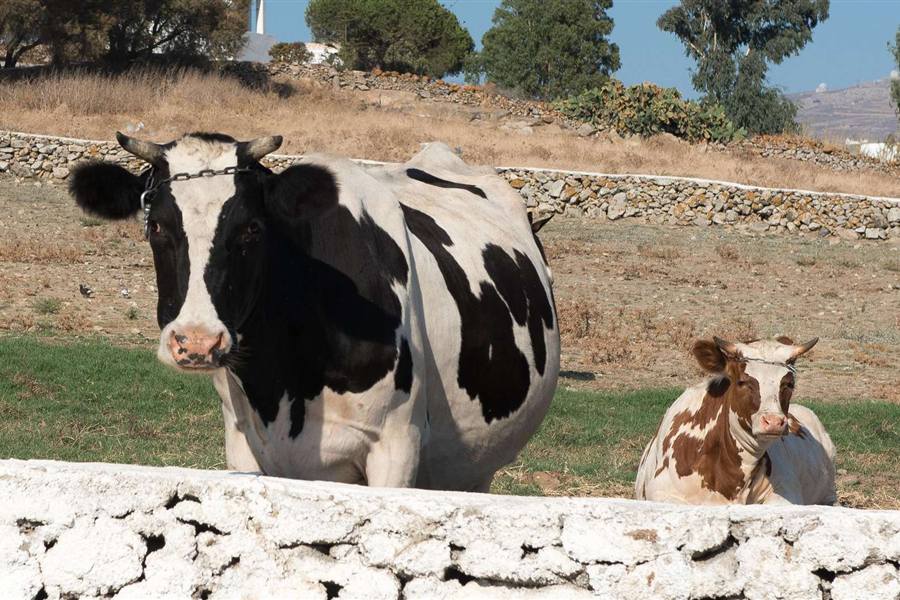
The Municipality gives the island a length of 14 km and a width of 10 km, and calls it hilly. Pasture takes 38.9 percent of the land and settlements 23.9 percent. Rocky ground and other land take 20.3 percent. Crops and fallow ground take 15.0 percent. Mykonos local experiences on a farm work within that share.
The Municipality gives rainfall as 371.7 millimetres a year and calls it the main constraint on crop yields. The Marathia Dam is about 25 m high. The Ano Mera Dam, about 10 km north-east of town, has a reservoir capacity of 1,000,000 cubic metres.
The Ministry of Culture describes the farmland as limited meadows with borders marked out by nature. Ancient farm installations with towers kept watch over the sea. Their remains stand at Halara, Lino, Kosomitis, Portes, Agios Lazaros, Ornos and Glastros. Stone threshing floors lie scattered across the island.
The Delian sanctuary once owned land in western Mykonos, where it kept herds and grew crops. On the north coast, the University of the Aegean excavated a Late Neolithic settlement on the Ftelia beach hill.
Island farms stood as compounds called horia. A Greek gastronomy guide describes family rooms in an L or pi shape. They surround a paved courtyard with a vine-covered pergola. Dry-stone walls and prickly pears enclose each compound, built among rounded grey rocks so that it takes no arable land.
A dovecote, a hay barn, a tool shed and pens for donkeys, pigs, cows and chickens stand around the house. An island architecture guide names the Lino area and Chalara, east of the airport, for fine examples.
Mykonos local experiences are filed under three feed locations: Mykonos (15), Mykonos Town (11) and Ano Mera (5). None sits under Kalafatis, Panormos, Tourlos or Ftelia. The Mykonos group holds 2,509 reviews, the Mykonos Town group 879 and the Ano Mera group 24.
The 5 under Ano Mera are an olive oil tasting, a souvlaki class and a farm visit. The other two are a private tour with a farm lunch and a wine tasting with dinner at a farm.
Panormos Bay on the north coast has two coastal wetlands that flood into small lagoons. The Municipality places them on a migratory route for threatened species.
Wikipedia says one bus depot serves Ano Mera, Elia and Kalafatis. A northern depot serves Tourlos and Agios Stefanos. For the square and the monastery, read the guide to the village of Ano Mera.
What do the listings say about hosts, group size, languages and meeting points for Mykonos local experiences?
Of the 15 most-reviewed local-experience listings, 13 offer pickup, all 15 carry free cancellation and all 15 list English. A group limit of 4 to 30 people shows on 13 of them. That is the booking picture for Mykonos local experiences.
Eight of the 15 listings name the host by role in their descriptions. A local guide leads 3 and a chef leads 2. A local driver, the farmers and a home host appear on one listing each. The other 7 describe the stop or the tasting and name no role.
Group limits on Mykonos local experiences come from the booking form. It caps one listing at 4 people and two at 8. Two listings stop at 15 and six at 20. One caps at 25 and one at 30. The other two list a ceiling of 999, which is no real cap.
Three listings carry a small-group tag and three a private-group tag. Four more offer a private option. The private-group listings cap at 4, 8 and 25 people.
Mykonos local experiences add Greek on two listings, the winery walk and one walk with a local guide. Spanish and Italian appear on one, the farm and village route.
The widgets show a pickup tag on 13 of the 15 listings. The winery walk and the food walk carry none. Both run 2 hours on foot.
Age bands start at 0 on 14 of the 15 listings. The village and town drive starts its youngest band at 6. The winery walk and the food walk set adults at 18 and above. Their child bands start at 4 and at 2.
The descriptions state what guests get from Mykonos local experiences on this list.
- A tasting of 4 Greek wines with a dish of local products at a farm.
- Bread baking at a farm, then a homemade brunch with the farmers.
- Greek dishes cooked in a home, then a meal with the chef.
- A barbecue at an animal farm, with food and drinks.
- A vineyard walk, then a food and wine tasting.
All 15 carry the free cancellation tag. Fourteen show a minimum booking lead. Seven need 10 hours, five need 1 hour, one needs 2 hours and one needs 8 hours. The private island drive with a local guide shows none.
The 15 listings run from 2 to 5 hours. Five of the Mykonos local experiences take 2 hours. Only the cooking class in a home runs 5 hours.
Which crafts and trades shaped island life, and what is left of them for Mykonos local experiences?
Seafaring, trade, boatbuilding, weaving, milling and small farms shaped island life on Mykonos. None of the 173 listings read for Mykonos local experiences is a pottery, weaving or boatbuilding workshop. One farm baking class is the nearest hands-on craft.
Mykonos was a trading centre up to the end of the 18th century. Ancient Mykonos was poor, with limited agricultural resources. Delos lies about 2 km away, which made the island a stop for supplies and transit.
Sailing and merchant work lifted the economy. It declined in the late 19th century and again after the Corinth Canal opened. Under Ottoman rule the island supplied the fleet with one galley and its crews.
Islanders fish, but the catch does not cover the island’s needs. No listing among the Mykonos local experiences read is a fishing trip. Cultivation is small, with barley, grapes and figs as the main crops, and livestock farming is limited.
The caique, called kaiki in Greek, is a traditional wooden fishing boat of the Ionian and Aegean Seas. Its hull has sawn ribs and a timber keel and stem, covered with carvel planking and a deck. The widest beam sits far aft, and the bow is long and sharp.
Plastic and fibreglass boats are replacing wooden ones, and the craft is fading. Greece lists wooden boatbuilding in its National Inventory of Intangible Cultural Heritage. That report says empirical apprenticeship is still the only way to learn it. A school on Samos runs two years of study and one year of apprenticeship.
Mykonos local experiences on the water still use caiques. Islands such as Corfu and Mykonos run tourist excursions on them. One of the 173 listings read names a traditional boat. It is a 3-hour private sunset trip with 5 stars from 4 reviews.
Refugees from Asia Minor brought weaving know-how, and Mykonos became a weaving centre. Milling was a trade too. The windmills ground local cereals and cereals from nearby islands. The flour and rusk went to ships crossing the Aegean. The work faded as milling machines arrived. Seven flour mills survive today.
Dry stone walling is a method of building without mortar. It joined the UNESCO list of intangible cultural heritage, with Greece among the countries named.
The farm baking class comes with brunch. It lasts 3 hours and holds 4.8 stars from 36 reviews. Ask a host who still does the work, the baker, the boatman or the weaver. The answer shows how much of the old trade is left in Mykonos local experiences.
Which island products have a legal protection, and how do Mykonos local experiences show them?
Kopanisti, Graviera Naxou and San Michali hold a protected designation of origin in the EU register. Of the 173 Mykonos local experiences read, 21 are food and drink listings, yet no title names a protected cheese.
The EU protects food names under three schemes, and those rules cover the food in Mykonos local experiences. A protected designation of origin, PDO, is the strongest link to a place. The quality of the product must come from the geographical environment. Production, processing and preparation all happen in the defined area.
A protected geographical indication, PGI, needs a specific quality, reputation or other characteristic that comes from the origin. At least one stage of production happens in the area. A traditional speciality guaranteed, TSG, protects a recipe or a method and is not tied to an area.
A Commission regulation dated 12 June in the late 20th century registered geographical names as PDOs or PGIs. Its annex lists Kopanisti, Graviera Naxou and San Michali among the cheeses of Greece, each with a PDO. The Greek cheese list now holds 22 PDO names.
Kopanisti is the entry on that list tied to Mykonos. The list describes it as a cheese from Mykonos island and the surrounding Cyclades. Mykonos local experiences that serve a cheese plate can name this entry first.
The maker heats the milk to 28 to 30 degrees Celsius. The curd is drained, mixed with red chili peppers and salt, and worked by hand every hour at the start. It is wrapped in cotton cloth under a stone for about a week. Then it ages one to two months in containers, traditionally clay.
Only cheese made on Naxos from the milk of animals raised on the island can carry the name Graviera Naxou. The milk is cow’s milk, or a mix with at least 80% cow’s milk plus sheep’s and goat’s milk. The cheese holds at least 40% fat in dry matter and no more than 38% moisture.
Mykonos local experiences that involve food and drink are 21 of the 173 listings read, or 12%, with 1,271 reviews. Ten are tastings, with 793 reviews and 2 to 4 hours. Eight are classes, with 426 reviews and 2 to 5 hours. Three are a farm barbecue, a traditional meal and a meze picnic.
Five food and drink listings among Mykonos local experiences state age bands. The cooking class and the olive oil tasting take adults from 13 and children from 4 to 12. The winery listing takes adults from 18 and children from 4 to 17.
Ask the host which cheese is on the plate and where it was made. A protected name is tied to a place of origin. The answer settles what a guest tastes on Mykonos local experiences.
Which Greek words and phrases help in a village conversation on Mykonos local experiences?
Greetings, thanks, a polite request and a short run of numbers carry a village conversation on Mykonos local experiences. Greek has 24 letters, and Greek people accept simplified pronunciation, so a plain try at these phrases is understood.
Mykonos local experiences take place in Greece. Greek is its official language and the first language of 13.5 million people. Gia sas (yah sahss) is the formal or plural hello, and gia sou (yah soo) is the informal one. Antio (AHN-dee-oh) means goodbye.
Kalimera (kah-lee-MEH-rah) is good morning, kalispera (kah-lee-SPEH-rah) is good evening and kalinichta (kah-lee-NEEKH-tah) is good night. How are you is Ti kanete (tee KAH-neh-teh). The answer is Kala, efharisto (kah-LAH, ef-hah-rees-TOH), which means fine, thank you.
Efharisto poli (ef-hah-rees-TOH po-LEE) is thank you very much. Parakalo (pah-rah-kah-LOH) means both please and you are welcome. Excuse me is Signomi (See-GHNO-mee) or Me synchoreite (Meh seen-ho-REE-teh). Sorry is Lypamai (lee-PAH-meh).
Use these when you step into a farmyard or a village square on Mykonos local experiences. Greek lists esi and esis as the two forms of you. Esi is the singular and esis is the plural. Greek grammar calls the polite form plithyntikos evgeneias, the plural of courtesy.
The stress mark is a stroke over the stressed vowel, called oxeia or tonos. It cannot sit before the third syllable from the end, so the stress falls in the last three syllables. Capital letters take no stress mark. In the phrases here, read the capital letters as the stressed syllable on Mykonos local experiences.
Four sound rules differ from English, and they apply to every phrase on Mykonos local experiences. Gamma before e or i sounds like the y in yet. Chi is a throaty h, like the ch in loch. Mp at the start of a word is b, and inside a word it is mb. Greek has no sh sound.
These words and numbers finish the list for a village talk:
- Ne (neh): yes
- Ochi (OH-hee): no
- Den katalaveno (dhen kah-tah-lah-VEH-no): I do not understand
- Milate anglika (mee-LAH-teh ang-glee-KAH): do you speak English
- Pou ine (poo EE-ne): where is
- Pou ine i toualeta (poo EE-ne ee too-ah-LEH-tah): where is the toilet
- Pos pigaino sto (pos pi-GEH-no sto): how do I get to
- Nero (neh-ROH): water
- Psomi (psoh-MEE): bread
- Ena (EH-nah), dio (DHEE-oh), tria (TREE-ah): one, two, three
- Pente (PEN-deh), deka (DHEH-kah): five, ten
Which customs and etiquette rules help guests meet islanders on Mykonos local experiences?
Four habits open doors. Say hello first, accept what a host offers, cover shoulders and knees at a chapel, and obey photo signs. The Wikivoyage guide to Greece and Wikipedia back these rules, and they apply to Mykonos local experiences.
The Wikivoyage guide to Greece says Greeks consider it proper etiquette to let the stranger make the first move. A guest on Mykonos local experiences who says hello first finds people turn friendly. In the countryside, strangers greet you, and the guide asks you to greet back in kind.
The same guide rates politeness by behaviour, not by words. It describes an informal air in which everybody is treated like a cousin. Over-emphasised politeness in speech can make a person think you are pretentious. Greeks like small talk, and a long chat can end over a glass of raki.
Greeks use their hands to gesture, the guide says, and one gesture is rude. A raised palm with the fingers spread out is akin to the middle finger. The guide calls it the mountza and says it is thought to come from the days of the Byzantine Empire.
The host’s side of the table has an ancient name, xenia, the Greek rule of guest-friendship. Wikipedia says hosts give a guest food and drink, and guests must be courteous and never a burden. At the table, the guide gives one line for guests of Mykonos local experiences. If a Greek host offers food, sample everything on your plate.
Wikipedia calls the spoon sweet, a spoonful of fruit preserve, a gesture of hospitality. It arrives in a small porcelain or crystal glass dish with a teaspoon. In Greece, the article pairs it with Greek coffee and a glass of cold water. The guide adds that a glass of water traditionally comes with every drink.
Dress codes for churches sometimes include covered shoulders for women and covered knees for both sexes, the guide says. It adds that churches do not mind clothes that are not very provocative. Keep that rule in mind on Mykonos local experiences that stop at a chapel or a monastery.
The guide adds that appropriate clothing is available at the entrance of churches and monasteries with heavy tourist traffic. A visitor picks it up going in and drops it off on the way out.
Heed signs that prohibit photography, says the guide. Where a museum asks, visitors do not photograph objects with people standing beside them, which is considered disrespectful. Treat a host the same way and ask before you raise a camera.
According to Wikipedia, the Greek Orthodox Church dedicates every day of the year to at least one saint or martyr. The vast majority of name days fall on the same date every year. The exceptions are names tied to Easter. Every Greek-language calendar carries detailed name-day lists.
Plumbing has its own island rule. In parts of Greece, including islands, toilet paper goes in the bin, not the bowl, to avoid clogging. Look for the bin beside the toilet in a village house or on a farm during Mykonos local experiences.
In which months and at which hours do Mykonos local experiences run?
Three of the 15 top-reviewed listings show dates in all twelve months. Seven show none from December to February, and five open in April and close in October or early November. Those 15 calendars set the season for Mykonos local experiences.
Read on 14 November, the booking calendar of each of the 15 listings reaches into the following year. The Mykonos local experiences fall into three groups, and each group has its own months.
Three listings show dates in all twelve months. They are one guided farm and village tour and two private tours with a local guide. January carries dates for them. In the calendars, these Mykonos local experiences do not stop for winter.
Seven of these Mykonos local experiences show no date in December, January or February. They restart on 1 March, and five still show dates until the end of November. Three are farm sessions: a wine tasting, a baking class and a barbecue. Four are a village house lunch, a souvlaki class, a cooking class and a private tour.
Five more listings start later. Four show their first date on 1 April and one on 12 April. Four stop on 31 October or earlier, and the fifth shows dates up to 8 November. These are the winery tasting, two walks with a local and two cooking classes.
Mykonos local experiences are short. The listed durations run from 2 hours to 5 hours. Four of the 15 last 2 hours: the winery tasting, two walks and the village house meal. One lasts 5 hours: a cooking class with food and wine.
Farm sources add clock times. One farm states it is open to visitors daily from 10:00 to 19:00. Its tours run at 11:00 or 18:00. A farm excursion with an evening timetable picks guests up at 17:00. It reaches the farm at about 17:45, serves a treat at 18:20 and heads back at 20:00.
A vineyard in the Maou area of Ano Mera runs a two-hour wine and food tasting. It lists six months, from late spring to October. That gives one of the Mykonos local experiences a stated season. The vineyard also offers a 20 to 30 minute talk every day.
Farm work on Mykonos local experiences follows the harvest. Wikipedia places the Mediterranean olive harvest in autumn, from October onwards. It puts fresh figs in season from August to early October. The northern-hemisphere grape harvest runs from early September to early November. These are regional dates, not figures for Mykonos alone.
Church and state holidays also mark the calendar. The Wikivoyage guide puts the Annunciation and Independence Day in March, the Dormition in August and Ohi Day in October. It ranks the Dormition among the three major holidays, with Christmas and Pascha. Regional festivals honour local patron saints and wine harvests.
A guest who travels from December to February finds only three of the 15 in the calendars. All three are tours. Cooking classes, tastings and farm meals restart on 1 March at the earliest. In July and August, all 15 show dates, so Mykonos local experiences have the widest choice then.
Which questions do guests of Mykonos local experiences ask before they book?
Can you book Mykonos local experiences at short notice?
Of the 15 top-reviewed listings, nine ask for at least 10 hours of notice. Three ask for 1 hour, one asks for 2 hours and one asks for 8 hours. One private tour with a local guide shows no notice rule at all.
Do Mykonos local experiences run on Sundays?
Yes. Greek law makes every Sunday a public holiday, says Wikipedia, yet all 15 listings show Sunday dates. Fourteen list a date for every day of each full month in their calendar. The fifteenth, a small-group cooking class, fills part of each month.
Which meal and shop hours shape local experiences on Mykonos?
Wikivoyage lists lunch at 14:00 to 15:00 and dinner at 21:00 to 23:00. Places that cater to tourists open as early as 12:00. Outside tourist resorts, and apart from large supermarkets, shops take a long break from about 14:00 to 17:00.
What does summer heat mean for Mykonos local experiences?
The Wikivoyage guide says islands, especially in the Cyclades, have very little shade against summer heat. It tells walkers to wear a hat and sunscreen, take water and avoid the hottest part of the day.
What happens if a name day falls during Mykonos local experiences?
Wikipedia describes the name day as an open house where all well-wishers are welcome. Entertainment can include a meal, drinks, desserts or music. Gifts are expected from guests. A family can celebrate up to 40 days after the nominal date.
Who helps if a guest falls ill during local experiences on Mykonos?
A sign on a closed pharmacy door names the nearest pharmacy that is open, says the Wikivoyage guide. It adds that helicopter ambulances serve the islands. They carry patients who need immediate attention to the nearest island or city with a major hospital.