
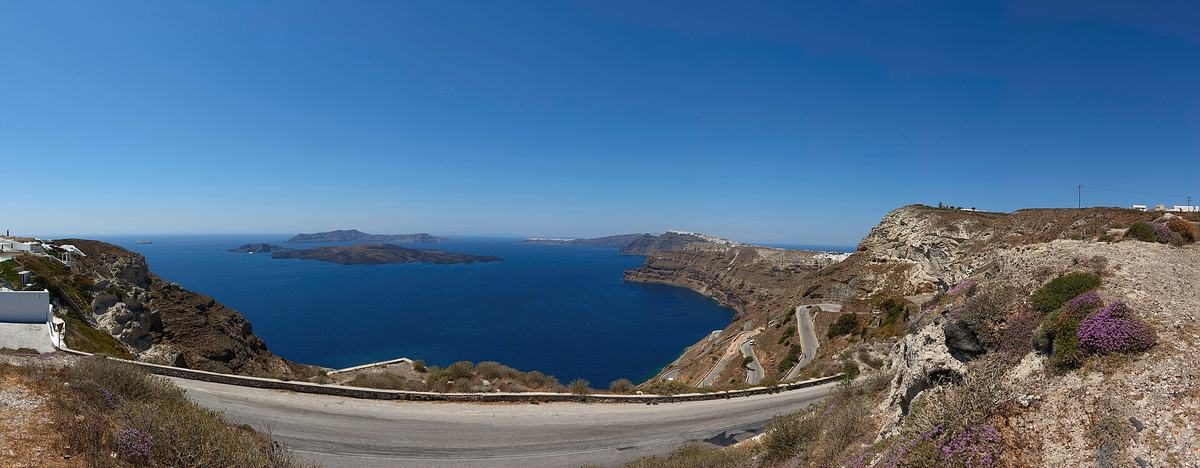
Santorini in May enjoys warm, sunny days of around 21 to 25C, a sea warming to 19 to 20C, manageable shoulder-season crowds and some of the best hiking of the year. This guide covers the May weather, swimming, the crowds and prices, and the best things to do on the island. Plan the whole trip with Greece Tours.
May is late spring and a favourite time in the wider Santorini travel guide. The island is warm but not crowded. The sections below cover May.
How is the weather in Santorini during late spring?
Late-spring Santorini stays warm, sunny and dry. Daytime highs rise from around 21C at the start of the month to 25C by the end, with cool evenings that call for a light jacket. Rain is rare, giving long, bright days.
Late spring brings reliably lovely weather to the island. Daytime temperatures climb steadily, from around 21C at the start to a warm 25C by the end, sunny and dry with the occasional shower possible only in the first days. The heat feels comfortable rather than fierce, ideal for being active outdoors. Evenings stay cool enough that a light jacket or sweater is welcome for caldera dinners and sunset boat trips.
The landscape is still green from the spring rain, the light is clear, and the long sunny days rank this among the most pleasant windows to be on the island, set within the wider Santorini weather. The sea is warming, and the volcanic scenery looks its best. These conditions frame everything else in this guide, from the beaches to the caldera hike and the wineries.
What are the temperatures in Santorini this month?
Daytime highs in Santorini climb from around 21C at the start to 25C by the end, with overnight lows near 15 to 16C. Sea breezes keep the caldera pleasant, and the dry, sunny days rarely feel hot, so outdoor activity stays comfortable.
Temperatures follow a clear upward curve across the four weeks. The opening days bring highs near 21C and cooler nights around 14C, while the final week warms to 25C by day and 16C after dark. That 9 to 10C daily swing is the single most important number to plan around. A warm afternoon on the caldera rim turns into a cool evening within an hour of sunset.
The dry air matters as much as the figures. Humidity stays low, so 25C in Santorini feels lighter than the same reading in a humid coastal city. The constant caldera breeze keeps the villages ventilated. This is why so many travellers rate this window above July for walking, sightseeing and long lunches. Sunburn, not overheating, is the real risk on the exposed clifftop paths and viewpoints.
Can you swim in Santorini in late spring?
Swimming becomes possible in late spring, especially in the final two weeks, with the sea warming to around 19 to 20C. The water reads refreshing rather than warm. Beach tavernas are open, so a beach day works if you do not mind cooler water.
This is the window when the sea becomes genuinely swimmable for most visitors. The water warms to around 19 to 20C, particularly in the second half of the month, cooler than the warm seas of high summer but refreshing after a warm day of sightseeing or hiking. The black-sand beaches of Perissa, Kamari and Perivolos are open and lively but uncrowded, their tavernas and sunbeds running, so a beach day is a real option for anyone happy with slightly cooler water.
The black volcanic sand shapes the beach experience. It absorbs the sun and warms quickly, so the shore feels warm underfoot even when the water reads 19C, which takes the edge off the cooler sea. The final ten days are the sweet spot for a proper swim. The southern beaches around Perissa and Perivolos catch the most sun and shelter, making them the warmest choices, set out alongside the guides to Perissa beach and Kamari beach.
What are the crowds and prices like in Santorini?
This is shoulder season, lively but far from overwhelming, with crowds lighter than June to September. Fira and Oia get busy during cruise-ship hours and at sunset, yet hotel and flight prices sit well below peak. The month offers excellent value.
The month strikes a fine balance between atmosphere and space. This is firmly shoulder season, so the island feels alive and most businesses are fully open, yet the crowds are nothing like the summer peak. Fira and Oia get busy when cruise ships are in port and around the famous sunset. You can still wander the villages, walk the caldera path and find a sunset spot without the shoulder-to-shoulder crush of August.
Prices for hotels, flights and tours run noticeably lower than in high season, so you get warm, settled weather and a vibrant island at much better value. This is one reason the window is a favourite of seasoned visitors, set out alongside the guide to the best time to visit Santorini. Timing within the day changes the crowd picture entirely. Cruise ships dock in the morning and leave by late afternoon.
The pinch points in Fira and Oia last a few hours around midday and again at sunset. Start your caldera walk before nine in the morning or explore the villages after five in the evening, and even a busy day feels calm. The lanes belong to overnight guests once the day-trippers sail away, which is the quiet reward of staying on the island rather than visiting on a cruise ship.
Is the start or the end of the month better in Santorini?
The end of the month is warmer, with highs near 25C and a swimmable sea around 20C, so it suits beach time and full boat schedules. The start is cooler and quieter, with lower prices and the best light for hiking.
The first two weeks lean toward the tail of spring. The hillsides are still green from the winter rain, wildflowers line the caldera path, and the light is soft and clear for photography. Crowds are thinner, prices sit at their shoulder-season lowest, and the walking is superb. The sea stays cool at around 18 to 19C, and evenings need a proper jacket. This half rewards travellers who put scenery, value and hiking above swimming.
The final two weeks edge toward early summer. Highs reach 25C, the sea warms toward 20C and feels genuinely swimmable, and boat schedules run at close to full frequency. The trade-off is a modest rise in visitor numbers and prices as the peak season approaches. For a trip built around beach days, caldera cruises and warm evenings on a terrace, the back end of the month is the stronger pick. The difference stays small enough that neither half disappoints.
What can you do in Santorini during late spring?
Late spring is ideal for walking the Fira-to-Oia path in warm but not brutal heat, exploring the villages comfortably, taking a caldera and volcano cruise as boats run fully, and wine tasting on the spring terraces. The green landscape suits almost everything.
This is one of the most rewarding windows for the island’s highlights. The Fira-to-Oia caldera hike is at its finest, warm but without the brutal heat of summer, with the landscape still greener than later in the year, which turns the 10-kilometre walk into a pleasure. The villages, from Oia and Fira to Pyrgos, Megalochori and Emporio, are far more enjoyable to explore than in August.
The caldera and catamaran cruises to the volcano and hot springs run fully, a fine time for the sea. The vineyards look especially pretty in spring, and outdoor wine tasting is comfortable, set out alongside the guides to Santorini boat tours and the wineries. Pair a morning caldera walk with an afternoon on the water, and a single day covers the two things visitors remember most about the island.
What should you pack for Santorini in the shoulder season?
Pack layers for the 9 to 10C swing between warm days and cool nights: light shirts and shorts for daytime, a jacket or sweater for evenings, plus strong sun protection, comfortable walking shoes, and a swimsuit for the second half.
The packing list follows directly from the temperature spread. Days call for breathable summer clothing, yet every evening on the caldera rim turns cool once the sun drops, so a light jacket, sweater or shawl earns its place in the bag for dinners and sunset boat trips. A collapsible rain layer covers the rare early-season shower, though most days stay dry. Building around layers, rather than a single warm or cool wardrobe, is the key to comfort across the daily swing.
Two items deserve extra attention on this island. Comfortable, grippy walking shoes matter because the Fira-to-Oia path runs over loose volcanic gravel and uneven stone. The villages also climb steep cobbled lanes and staircases that punish flimsy footwear. Sun protection is the other priority. The clifftop routes offer little shade, and the reflected glare off whitewashed walls and pale rock intensifies the exposure, so a hat, sunglasses and high-factor sunscreen belong in your day bag from the first morning.
How do you get to Santorini in the shoulder season?
Reach Santorini by direct flight to the island airport from Athens and a growing list of European cities, or by high-speed and conventional ferry from Piraeus and the other Cyclades. Both flight and ferry schedules expand as the season builds, so connections are frequent.
Flying is the quickest route. Domestic flights from Athens reach the island in under an hour, and the international schedule broadens as seasonal routes from across Europe restart, giving direct options that were dormant in winter. The airport sits a short drive from Fira, so transfers are quick. This makes a short spring break practical even from farther afield, without a long overland or sea leg to reach the island.
Ferries suit travellers who island-hop or prefer the sea approach. High-speed catamarans cross from Piraeus in around five hours, while the slower conventional ferries take roughly eight and cost less, and both frequencies rise toward the summer timetable. Sailing in past the caldera cliffs is a memorable arrival in its own right. The ferry links Santorini easily with Naxos, Paros, Ios and Mykonos, set out alongside the guide to Santorini ferries for routes and timings.
Where can you stay in Santorini for the best views?
For first-time visitors, the caldera villages of Fira, Firostefani, Imerovigli and Oia give the classic sunset views and easy access to the walking path. For lower prices and beach access, the southern coast around Perissa and Kamari works well, and rates undercut summer.
The caldera-rim villages deliver the postcard Santorini. Fira is the busy hub with the widest choice of hotels, restaurants and bus links. Firostefani and Imerovigli are quieter with the same clifftop views, and Oia holds the most celebrated sunset. Staying on the rim puts the Fira-to-Oia path on your doorstep and lets you enjoy the villages after the day-trippers leave. Rim rates in the shoulder season fall far below the summer peak, so this is the time to book a view that would strain the budget in August.
The beach side offers a different, more relaxed base. Perissa, Perivolos and Kamari on the southeast coast trade caldera views for long black-sand beaches, easier parking and lower prices, and they suit travellers who want swimming and tavernas over sunset crowds. A hire car or the local bus links these bases to Fira and the caldera in a short trip, so a beach stay need not cut you off from the famous viewpoints, set out alongside the wider Santorini travel guide for choosing an area.
How many days do you need in Santorini in the shoulder season?
Three to four days cover Santorini well in the shoulder season. That window fits the Fira-to-Oia hike, a caldera cruise, a wine-tasting afternoon and time in the villages, with a spare day for a beach or a slower pace.
The island is compact, so a focused itinerary does not feel rushed. Day one settles you into a caldera village and the sunset. Day two takes the Fira-to-Oia walk in the cool morning air. Day three heads out on a caldera and volcano cruise, and a fourth day leaves room for the wineries, a beach on the southern coast, or the ancient site at Akrotiri without watching the clock.
Adding a fifth or sixth day suits travellers who want a slower rhythm or a day trip to a neighbouring island. The mild spring weather and the lighter crowds make each day more productive than a summer visit, because you spend less time queueing at viewpoints and waiting for tables. A long weekend delivers the headline sights, while a full week lets Santorini unfold at the relaxed pace the season invites.
What festivals and events happen in Santorini in spring?
Spring in Santorini centres on Orthodox Easter, the island’s biggest celebration, with candlelit processions, village feasts and fireworks. The season also brings the start of the wine calendar and open-air cultural evenings as the island shakes off winter.
Orthodox Easter is the emotional peak of the Greek spring, and its date shifts each year within the wider spring window. The villages fill with candlelit midnight processions, the smell of grilled lamb, and fireworks over the caldera, and Pyrgos in particular is famous for its Good Friday illumination of the hillside with hundreds of lanterns. Experiencing Easter on the island is one of the most authentic ways to see local life beyond the postcard viewpoints.
Beyond Easter, spring reopens the island’s cultural rhythm. The wineries swing back into full swing with tastings on their terraces, tavernas move their tables outdoors, and the calendar of local saints’ days brings small village panigiria with music and food. This is a quieter, more local Santorini than the high-summer version, and travelling in this window lets you share the island’s own seasons rather than only its scenery.
Why is late spring good for Santorini wine and food?
Late spring pairs comfortable terrace weather with the reopening of the wineries and tavernas, so you taste the crisp Assyrtiko whites outdoors in the sun. The season’s produce is fresh, the vineyards look green, and tables are easy to book without the summer wait.
Santorini’s volcanic soil and low rainfall give its wines a distinctive mineral edge, and the native Assyrtiko grape produces the dry, citrus-sharp whites the island is known for. The vines grow in low basket shapes called kouloura, coiled to shelter the fruit from the wind, and in spring the terraces are green and photogenic before the summer heat browns them. Tasting these wines on a caldera-view terrace, in warm afternoon light and light crowds, is one of the quieter pleasures of the season.
The food follows the same rhythm. Spring brings the island’s cherry tomatoes, white aubergines, fava and capers into the tavernas, and dishes like tomatokeftedes and fresh grilled fish taste sharper with the local wine beside them. Restaurants reopen through the spring, and the shorter waits mean you can settle into a long, unhurried lunch. Pairing a winery visit with a village taverna, set out alongside the guide to the Santorini wineries, turns an ordinary afternoon into a highlight of the trip.
Frequently Asked Questions
How warm is Santorini in late spring?
Santorini stays warm, sunny and dry, with daytime highs rising from around 21C at the start of the month to 25C by the end, and cool evenings that call for a light jacket. Rain is uncommon, and the long, bright days feel comfortable rather than hot.
Can you swim in Santorini this month?
Swimming becomes possible in the final two weeks, with the sea warming to around 19 to 20C. The water reads refreshing rather than warm, cooler than high summer but pleasant on a hot day. Beach tavernas are open, so a beach day works if you do not mind cooler water.
Is Santorini worth visiting in late spring?
Late spring ranks among the strongest windows to visit, with warm, sunny weather, a swimmable if cool sea, manageable shoulder-season crowds, lower prices than summer and superb hiking. The green landscape and comfortable temperatures suit almost every activity on the island.
Does it rain much in Santorini this month?
Rain is uncommon and grows rarer as the weeks pass. The odd short shower is possible in the first days, yet most days stay dry and sunny, so you can plan hikes, cruises and outdoor meals with confidence and pack only a light rain layer for the rare exception.
Is the Fira-to-Oia hike good in late spring?
Late spring is the finest window for the Fira-to-Oia caldera walk. The 10-kilometre clifftop route runs through green spring scenery in warm but comfortable heat, without the punishing sun of July and August. Start early, wear grippy shoes and carry water and sun protection.
What is the sea temperature in Santorini right now?
The sea warms to around 19 to 20C, cooler in the first half of the month and most swimmable in the final ten days. The water reads refreshing rather than warm, so a dip is pleasant after a hike, while long swims suit the warmer southern beaches best.
Are the boat cruises running in Santorini yet?
Caldera and catamaran cruises to the volcano and hot springs run on close to full schedules, and frequency rises toward the summer timetable. This is a strong time for a sea trip, with settled weather, warm days on deck and lighter crowds than high season aboard the boats.
How many days is enough for Santorini?
Three to four days cover the island comfortably in the shoulder season. That window fits the Fira-to-Oia hike, a caldera cruise, a wine-tasting afternoon and the villages. A fifth or sixth day adds a beach, the Akrotiri ruins, or a slower pace without any rush.
Is Santorini crowded in the shoulder season?
Crowds are far lighter than the June-to-September peak, though Fira and Oia fill during cruise-ship hours and at sunset. Walk the caldera path early or explore the villages after five in the evening, and even a busy day on the island feels calm and open.
What is the best area to stay in Santorini?
The caldera villages of Fira, Firostefani, Imerovigli and Oia give the classic sunset views and easy access to the walking path. For lower prices and beach access, the southern coast around Perissa and Kamari works well, and shoulder-season rates undercut the summer peak everywhere.