
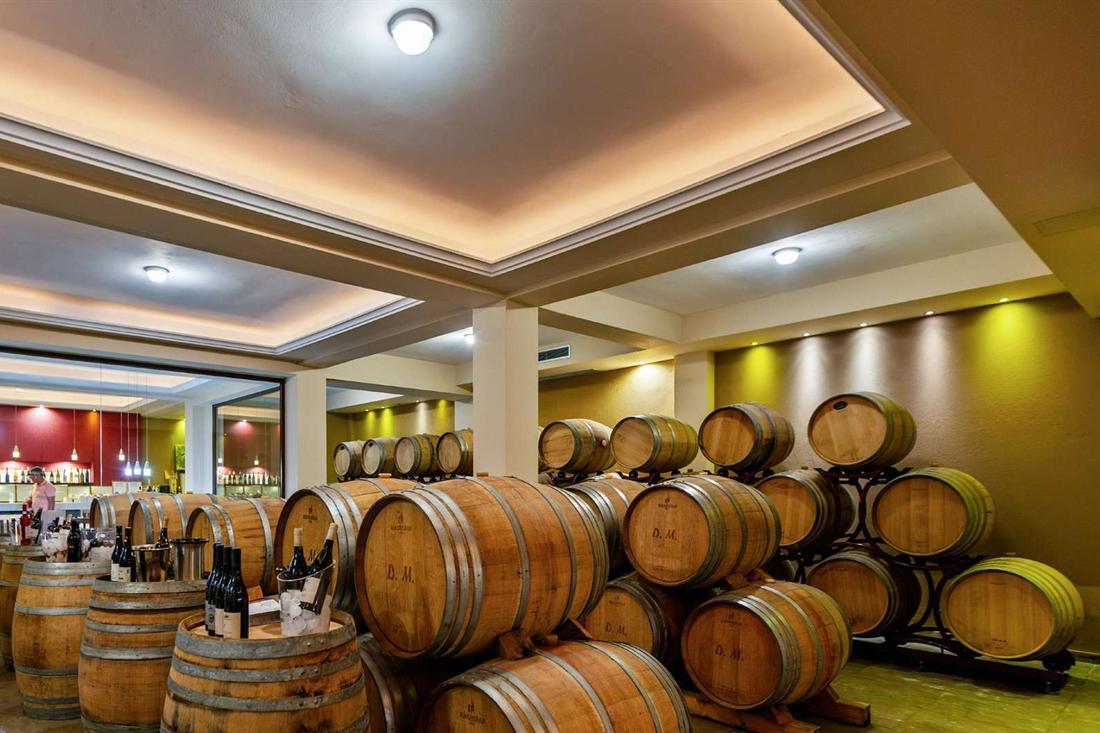
A Larissa wine tasting takes you from the capital of Thessaly to the cellars of its regional unit, where the village of Rapsani on the slopes of Mount Olympus gives its name to a protected red wine. Every other trip in the country starts from our Greece Tours homepage.
This page lists the Larissa wine tasting tours you can book, the wine zones and Rapsani, the grapes in the glass, the Thessalian foods that suit them, the months that work and the questions travellers ask.
What is a Larissa wine tasting?
Expect a guided visit to a winery in the Larissa regional unit, then a tasting of local wine. Vineyards run from flat farmland to the lower slopes of Mount Olympus, so each estate has its own setting.
Larissa is the second largest regional unit in Greece and covers about one-third of Thessaly. Mount Olympus, at 2,917 m, rises in the northeast, and the Aegean Sea borders the unit on the east. Fertile plain fills the larger share of the land.
The estates lie outside the city. They sit under Olympus, near Elassona, near Agia and at Nees Karyes. Each estate sets its own visiting rules, listed in the next section. A Larissa wine tasting therefore changes with the estate you pick.
Hosts at Dougos teach guests how to taste wine properly and leave time for questions. A Larissa wine tasting there doubles as a short lesson, not only a pour.
Rapsani, the wine village, stands at 600 m in the Kato Olympos municipal unit. Elassona lies at the foot of Olympus. Agia lies east of Larissa, with the Aegean beyond it, and Metaxochori belongs to its municipal unit.
The wine town of Tyrnavos has its own guide, so this page leaves its cellars out. Read our Tyrnavos wine tasting page for them, and use this one for the estates around Olympus and Agia.
Which Larissa wine tasting tours can you book?
Two GetYourGuide day trips run from Larissa. The 6.5-hour “Larissa & Tyrnavos: History, Wine & Tsipouro Experience” adds city history; the 6-hour “Tyrnavos Winery, Tsipouro & Pottery Experience” adds pottery. Each includes a winery visit and lists pickup.
The 6.5-hour trip opens with the ancient history of Larissa. It then continues to Tyrnavos for a winery visit and a tasting of local wine, tsipouro and Thessalian flavours. The listing shows free cancellation, and booking stays open until 10 minutes before the start.
The 6-hour trip centres on Tyrnavos. It pairs a winery stop with wine and tsipouro to taste, local flavours and a pottery workshop in Ampelonas. The listing marks it wheelchair accessible, with free cancellation. Booking closes 10 hours before the start.
Both listings sit under Larissa on GetYourGuide. Read each one for its meeting point, languages and group size before you book a Larissa wine tasting by tour.
Drivers planning a self-guided Larissa wine tasting can book estates directly instead. Each of these five is described by its own winery page or a travel listing:
- Dougos Winery sits in the Tempi valley at the foot of Mount Olympus. Visits last 60 to 90 minutes, run by appointment and include the underground cellar. Groups stay at 30 guests or fewer.
- Voï Boutique Winery offers a one-hour tasting of four wines for up to 12 guests, including wines from the Rapsani appellation. The listing names English, French, Greek and Italian.
- Olenos Estate, also written Olinos Estate, grows organic vines on the Kaloudas slopes near Elassona at 400 m. A visit covers the vineyards, the production process, the barrel cellar and the tasting room.
- Manolidis Estate keeps vineyards at Metaxochori near Agia, on a forest-ringed hillside that overlooks the sea. A visit needs an appointment.
- Poultsidis Winery stands at Nees Karyes beside its own vineyards. It has an underground tasting space and wine shop, and ramps and a lift reach every area.
Which wine zones lie on a Larissa wine tasting map?
Rapsani, on the Olympus foothills, is the Larissa area’s PDO zone. Thessalia, Elassona and Tyrnavos are PGI labels from the same Thessaly list. Each zone name ties a bottle to a place and a set of rules.
Greek wine law has two protected tiers. PDO is the appellation of origin of superior quality, and PGI covers quality wines of origin.
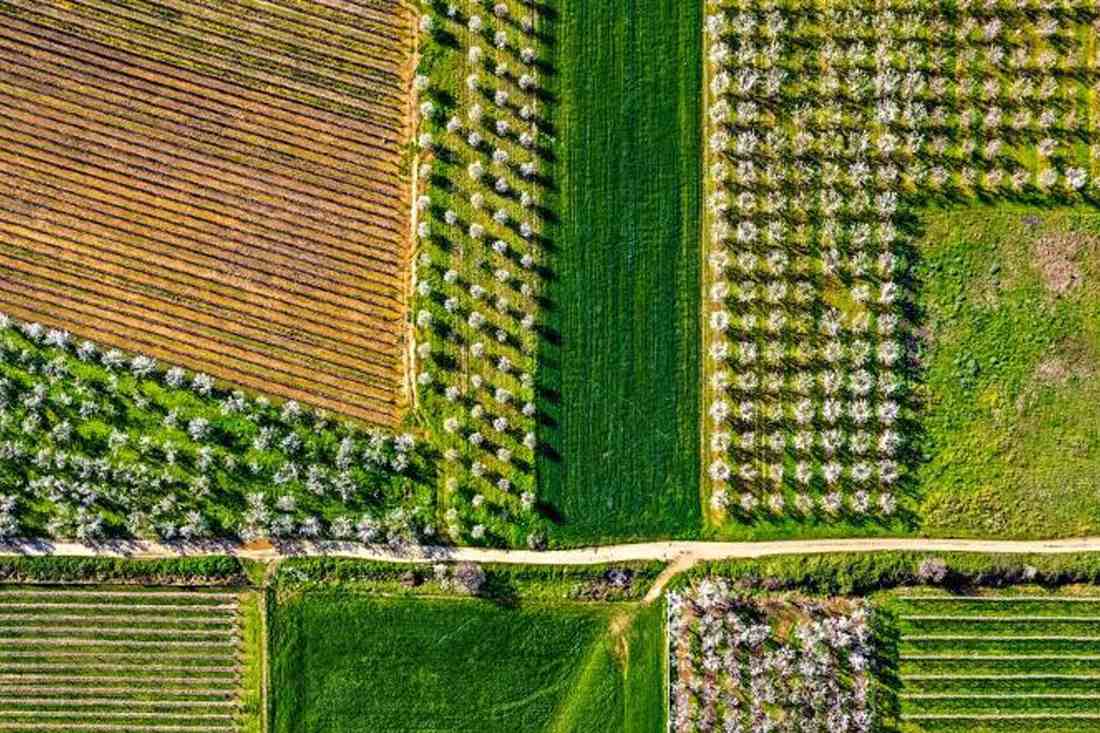
Thessaly holds the largest plain in Greece, yet vines take only a small part of it. The region has four prefectures. Larissa and Magnissia lie in the east, and Trikala and Karditsa lie in the west.
WineTourismGreece lists three PDOs for Thessaly: Anhialos, Rapsani and Messenikola. It also lists eight PGIs: Thessalia, Krania, Elassona, Tyrnavos, Meteora, Krannona, Karditsa and Magnissia. It files Rapsani under Larissa and Mount Olympus.
The Elassona label shares its name with the town of Elassona, which lies at the foot of Olympus. On a Larissa wine tasting at Olenos Estate, the vines stand at 400 m. Rapsani vineyards start at 250 m and climb to 700 m, so height sorts the zones.
WineTourism.com describes the Thessaly mountain wine area with warm, dry summers and rainy winters. Higher ground feels more continental. Cool mountain winds and snowmelt help the vines keep their acidity.
Tyrnavos is the largest wine-growing centre in Thessaly, and PGI Tyrnavos belongs to it. A Larissa wine tasting map splits into three settings: mountain Rapsani, foothill Elassona and the plain around the city.
Why does Rapsani matter on a Larissa wine tasting?
Rapsani is the Larissa area’s PDO red, grown on the southeastern slopes of Mount Olympus. Its blend joins Xinomavro, Krassato and Stavroto, each at least one third, fermented together from the start.
The PDO zone spans Rapsani, Pyrgetos, Ambelakia and Krania. It covers about 450 hectares, and the vines sit roughly 12 km from the Aegean coast. Wikipedia lists Pyrgetos, Aigani, Rapsani and Krania as the communities of Kato Olympos.
The soil is iron-rich schist. Higher sites add granite and limestone below it, while lower ground has clay loam. Day and night temperatures differ by 10 to 15 °C, which preserves the acidity in the grapes.
The rules name three grapes and give each at least a third of the wine. All three ferment together at every step. A wine made from separate batches cannot carry the PDO label. WineTourismGreece describes the mix as equal parts.
Rapsani is one of four PDO zones built around Xinomavro, and the only one outside Macedonia. A Larissa wine tasting here shows the grape far from its northern home.
Tsantali is the largest Rapsani producer, with nearly 700,000 bottles a year, and it revived the appellation after a slump. Dougos is a family estate with organic certification and bottles about 70,000 a year.
Dougos names its three tour packages after local places. Tempi pours three wines, Ossa pours six, and Olymp pours six versions of one wine. A Larissa wine tasting on the Olymp package shows how that wine changes with age.
Rapsani reds are dense and dry, with a mineral edge from the schist. Top bottles can age for 8 to 15 years or more. Voï includes wines from the appellation in its four-wine pour, so a Larissa wine tasting there can feature Rapsani. WineTourismGreece adds that the wine earned the name nectar of the Olympian gods.
Which grapes fill the glass on a Larissa wine tasting?
Four red grapes of Thessaly shape the pour: Xinomavro, Krassato, Stavroto and Limniona. Xinomavro gives acid and tannin, Krassato gives colour and alcohol, Stavroto gives ruby colour, and Limniona gives dark fruit.
The name Xinomavro joins the Greek words for acid and black. Wine-Searcher gives it high tannin and acidity, with prune, strawberry and sun-dried tomato as classic flavours. Fringe Wine calls Rapsani one of the southernmost outposts of Xinomavro in Greece. A Larissa wine tasting pours the grape near that southern edge.
Wine-Searcher says Krassato grows only in Thessaly. Fringe Wine calls it the one Rapsani grape thought to be native to the area. The name comes from krasato, meaning wine-coloured. Wine-Searcher gives it moderate acid and tannin but high alcohol and colour. Dark berries and leather are its flavours. A Larissa wine tasting pours it as a blending partner.
Stavroto is a dark-skinned grape, also grown only in Thessaly. Wine-Searcher credits it with the ruby-red colour of Rapsani wines and a softening effect on Xinomavro. The grape ripens late, is prone to mildew and rarely appears as a single-grape wine. Fringe Wine adds its other name, Ampelakiotiko Mavro, meaning black from Ambelakia village.
Limniona is an ancient red grape from Thessaly, says That Useful Wine Site. It has thick skins and ripens late in a long season. The wines are dark and medium-bodied, with acidity, dark red fruit, minerality and soft tannins. The site says they reward ageing for a decade or more. DNA tests show Limniona is not the grape Limnio.
White drinkers have Roditis, the “pink” grape, which Wikipedia calls very popular in Thessaly. It makes elegant, light white wines with citrus flavours. A Larissa wine tasting that includes a white pour starts from that style.
Which Thessalian foods pair with a Larissa wine tasting?
Pies, cheese and roast meat from the Larissa plain and Elassona suit a Larissa wine tasting. Pairing writers name lamb, goat and aged cheese for Rapsani, and a crisp dry white for cheese and spinach pie.
VisitGreece, the national tourism site, opens its Larissa food page with batzina, a zucchini pie without pastry. Nettle pie, called tsouknidopita, follows. The page also lists Elassona lamb and kid with PDO status, leek sausage, patsas and Agrafa graviera.
Cooks there use lipa, a local fat, because the region has no abundance of olive oil, says the same page. Elassona’s own tourism site adds PDO feta from goat and sheep milk on the Olympus slopes, plus kasseri and yoghurt.
The Elassona site names four pie types: choropites, savoury pies; trahanopites, with trahana; galatopites, with milk; and kolokythopites, with zucchini. All use handmade dough. Its herb pie holds wild herbs, braised first, with local feta and trahana.
Elassona roast goat cooks slowly with garlic, oregano, olive oil and lemon, then comes out with potatoes. The roast lamb is marinated in Olympus herbs, garlic and lemon, then cooked with potatoes in a wood-fired oven.
Wine with Seth lists braised lamb shoulder, slow-roasted goat and hard aged cheeses such as graviera for Rapsani red. A Larissa wine tasting can set those pairings beside the Elassona roasts and the Agrafa graviera.
IWA Wine pairs Xinomavro with lamb souvlaki. Its firm tannins and sun-dried tomato and olive notes mirror the Mediterranean spices in the meat. Sommo lists beef, venison and tomato-based dishes for Rapsani.
For pies, Fiona Beckett of Matching Food and Wine names an Assyrtiko or any crisp dry white. She pairs it with cheese and spinach pies like spanakopita.
Produce rounds out the table. FreshPlaza calls the Agia lowland known for its apple growing. VisitGreece names Agia cherries, Platykampos garlic, cornel and Farsala beans among the local products.


When is the right season for a Larissa wine tasting?
Late spring and early autumn bring cooler days, with average highs of 26.8 °C and 29.2 °C. July climbs to 34.4 °C. Harvest around Rapsani starts in early September, so autumn visits fall in picking time.
Larissa summers are hot and dry. Wikipedia gives July a high of 34.4 °C and August 34.0 °C. Rain falls at 22.0 mm and 21.0 mm in those months. It adds that temperatures near or above 40 °C occur every year for a short spell.
For a Larissa wine tasting with time outdoors, late spring and early autumn give lower highs than June to August. The last spring month brings 26.8 °C and 40.2 mm of rain. September brings 29.2 °C and 32.4 mm. October falls to 22.4 °C, but rain rises to 54.0 mm. November brings 58.2 mm.
Winter is cold. A winter Larissa wine tasting meets a January high of 10.2 °C and 45.2 mm of rain. December is the wettest month at 64.5 mm.
Gastronomy Tours puts the Greek grape harvest between mid-August and late October, depending on grape, region and wine style. Wine with Seth says the Rapsani harvest starts in early September. It can last up to a month, because higher vineyards pick later than lower ones.
Tsantali’s technical sheet for its Rapsani Grand Reserve records a hand harvest in mid-October. Wine-Searcher calls both Xinomavro and Stavroto late-ripening grapes.
Upiria reports that Dougos Winery takes visitors by appointment only, in groups of 30 or fewer. Tours there sell out quickly in the height of tourist season. An early booking is the safe route in those months. Pair the cellar visit with a city day by reading our Larissa tours page.
What do travellers ask about a Larissa wine tasting?
Four limits shape every Larissa wine tasting. Greece sets the age rule at 18 and the standard driver limit at 0.5 mg/ml. EU flights cap cabin liquids at 100 ml per container, and a guideline covers wine carried between EU countries.
Can children join a Larissa wine tasting?
The winetourism.com listing for Voï Boutique Winery shows a children’s ticket beside the adult ticket, so that host admits children. Greek law bars minors from entertainment venues that serve alcohol, and the source does not name wineries. Ask each host before booking.
What is the legal drinking age in Greece?
The WHO European Observatory reports that Greece protects people under 18 from alcohol. Shops, vending machines and online sellers cannot sell to minors. Buyers must show valid ID proving they are over 18. Servers who pour alcohol for minors face criminal charges.
Can you drive after a Larissa wine tasting?
Your Europe lists 0.5 mg/ml as the blood alcohol limit for all other drivers in Greece. The limit is 0.2 mg/ml for motorcycle and moped riders, novice drivers and professional drivers. From 0.5 mg/ml the sanctions are a fine, 5 penalty points and a 30-day licence withdrawal.
Can you carry wine bottles home on a flight?
On flights from EU airports, cabin containers hold 100 ml or less inside a transparent bag of 1 litre. Larger containers and corkscrews go in checked baggage. Between EU countries, 90 litres of wine is the indicative guideline for personal use. Only 60 litres of that can be sparkling.
Can a non-drinker join a Larissa wine tasting?
The Voï listing names a cellar, a tasting room and a laboratory among the things to see. Its programme covers natural vinification and sustainable practices. The listing names red, white and rosé wines and spirits, with no alcohol-free drink. Ask the host before you book.