
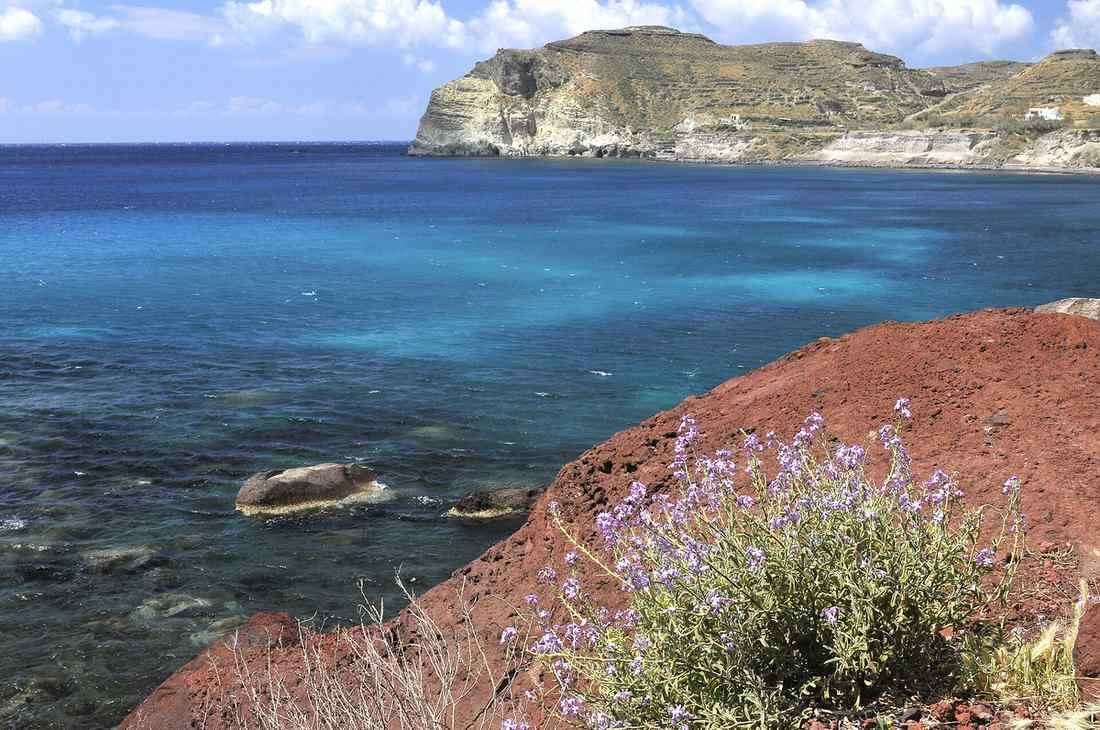
A secluded, beautiful cove near Akrotiri, White Beach is framed by tall pale cliffs and reachable only by boat from the nearby harbour or from the Red Beach. With no road and few facilities, it offers scenery, swimming and solitude. This guide covers the beach, how to get there by boat, what to expect and tips. Plan the whole trip with Greece Tours.
White Beach is a hidden gem of the wider Santorini travel guide. It lies on the south-west coast near Akrotiri. The sections below cover the cove.
What is White Beach?
White Beach is a small, secluded cove on Santorini’s south-west coast near Akrotiri, named for the tall pale cliffs of white and grey volcanic rock that enclose it. With pebbles, clear deep water and no road access, it stays peaceful.
White Beach is one of Santorini’s most tucked-away shores. It sits within the dramatic coastline near the Akrotiri archaeological site, close to the famous Red Beach. A small cove hemmed in by towering pale cliffs of white and light-grey volcanic rock gives the spot its name and a striking, sheltered beauty. The beach is pebbly, and the water turns clear and deep close to shore.
The cove stays quiet and unspoilt because no road runs down to it, a sharp contrast to the busy organised beaches. You come here for the scenery, the clean swimming and the sense of solitude rather than for facilities, set within the wider Santorini beaches. Reaching it takes a boat, and that short crossing is part of what keeps the numbers down.
What is White Beach like?
White Beach is a compact strip of pale grey pebbles below towering white and light-grey volcanic cliffs. The water is clear and deepens quickly, the setting feels enclosed and dramatic, and the atmosphere stays calm because the crowds thin out here.
The scenery is the whole point of White Beach. The cliffs rise almost sheer above the shore in shades of chalky white and soft grey, streaked by the layered volcanic rock that formed this part of Santorini. Against that pale backdrop, the pebbles underfoot and the deep blue water create a stark, photogenic contrast that draws swimmers and photographers alike.
The beach itself is small and pebbly rather than sandy, so the surface is firm under bare feet and the shallows shelve into clear, quickly deepening water. The enclosed shape of the cove shelters it from the open-sea swell, which keeps the surface calm on settled days. The overall feel is raw and natural, with volcanic rock, clean water and very little human clutter.
- Towering pale white and grey volcanic cliffs frame the cove.
- The shore is pebbly, with clear water that deepens fast.
- The enclosed setting stays calm and quiet on settled days.
- The stark cliff-and-water contrast makes it a photographer’s cove.
How do you get to White Beach?
You reach White Beach only by boat, with small taxi boats running from the harbour near Akrotiri village in about 10 to 15 minutes, or shuttling from the Red Beach in around 5 minutes. The fare is roughly 5 to 10 euros, on informal schedules.
No road runs to White Beach, so a boat is the only sensible way in. Small taxi boats run from the little harbour near Akrotiri village, often on a loop that takes in the Red Beach and White Beach before returning. The ride out to White Beach takes about 10 to 15 minutes. From the Red Beach, the boats that shuttle between the two coves make the hop in around five minutes.
Fares run roughly 5 to 10 euros per person, though the service is informal and weather-dependent, so confirm times locally and expect changes on windy days. The boat approach past the cliffs is part of the appeal, set out alongside the guides to the Red Beach and Santorini boat tours. The unofficial cliff path is a poor substitute and carries real risk.
Is there a path to White Beach?
A rough, unofficial path connects the Red Beach to White Beach along the base of the cliffs, but it means clambering across loose boulders and is officially discouraged due to falling rock from the crumbling cliffs overhead. The safe way is by boat.
You hear talk of walking between the beaches, but it is best avoided. A rough, unmarked path does run along the foot of the cliffs from the Red Beach to White Beach. It forces you to scramble over uneven rocks and, more seriously, passes beneath the same soft, eroding cliffs that make the Red Beach itself officially unsafe, with a genuine risk of rockfall.
Local authorities advise against the scramble. The sensible, safe and far easier choice is one of the frequent little taxi boats, which also spares you the effort in the heat. Treating the cliffs with respect keeps a visit to White Beach a pleasure, set out alongside the guide to Akrotiri nearby. Come prepared, because facilities on the cove are minimal.
What can you do at White Beach?
You swim and snorkel in the clear, deep water, explore the rocks and nearby sea caves by boat, take dramatic cliff photographs and simply relax in the quiet. Most visitors pair White Beach with the neighbouring Red Beach in one boat trip.
Swimming is the main draw. The water is clean and deepens fast, so it suits confident swimmers who want a proper dip rather than a paddle. Snorkelling around the rocky edges of the cove rewards you with clear visibility and glimpses of marine life sheltering among the volcanic stones, and water shoes make the rocky entry easier.
Beyond the water, the cove is a photographer’s setting, with the pale cliffs and deep blue sea framing striking shots. The boat trip that brings you in often passes sea caves and coloured rock formations along the coast, so the journey is an attraction in itself. Because White Beach sits so close to the Red Beach, most travellers combine the two coves in a single boat outing.
- Swim in the clear, quickly deepening water off the pebbles.
- Snorkel around the rocky edges for clear underwater views.
- Photograph the pale cliffs against the deep blue sea.
- Combine the visit with the Red Beach and nearby sea caves by boat.
What facilities and amenities does White Beach have?
White Beach has minimal facilities, with no beach bars or restaurants and only scattered sunbeds. It is an undeveloped cove, so you bring your own water, food and shade rather than relying on the services found at Santorini’s organised beaches.
This is a beach without amenities. There are no beach bars, no tavernas and no shops on the shore, and shade is limited to whatever the cliffs and any scattered sunbeds provide. That absence of development is exactly what keeps the cove quiet and unspoilt, but it means you carry in everything you want for the day.
The contrast with Santorini’s organised beaches is sharp. Beaches like Perissa and Kamari line their sand with sunbeds, umbrellas, bars and watersports, while White Beach offers bare volcanic scenery and clean water instead. Treat it as a wild swimming cove rather than a serviced resort strip, and pack accordingly so the lack of facilities never spoils the visit.
When is the best time to visit White Beach?
The best time is the summer boat season from June to September, when the taxi boats run most reliably and the sea stays warm. Go earlier in the day for boats and shade, and skip rough, windy days when crossings stop.
The taxi boats depend on calm seas, so the cove works best across the settled summer months from June through September. That window gives you the warmest water, the most dependable boat service and the longest daylight for a relaxed visit. Outside that season, crossings grow unreliable and the cove empties out.
Timing within the day matters too. Arriving earlier gives you the pick of the boats, cooler air and better shade before the sun climbs over the cliffs, and it leaves a comfortable margin to catch a return boat before it fills. On days with strong wind, the boats stop running and the sea turns choppy, so watch the forecast and keep plans flexible, guided by the best time to visit Santorini.
What should you bring and expect at White Beach?
Bring water, snacks, sun protection, a hat, water shoes and cash for the boat, because White Beach has no bars or restaurants and only scattered sunbeds. Expect a rocky, gravelly entry that hides sea urchins, and confirm the last return boat time.
White Beach rewards the self-sufficient. With no bars, restaurants or reliable shade, you carry in everything for the day: ample water, snacks, strong sun protection and a hat against the limited cover. Cash matters too, since the informal taxi boats take payment on the spot and card facilities do not exist on the cove.
Water shoes earn their place here. The entry turns rocky and gravelly, and sea urchins lurk among the stones, so sturdy footwear protects your feet on the way in and out. The taxi boats do not always pull right up to the shore, so expect to wade the last stretch, and keep dry bags for anything that must stay out of the water.
Above all, confirm the last return boat before you settle in, because missing it strands you at a cove with no road out. A quick word with the boat operator on arrival fixes the return time in your mind. With that small margin of planning, White Beach delivers beauty and calm in place of the crowds and clutter of the busier shores.
- Water and snacks, since no bars or restaurants exist on the cove.
- Sun protection and a hat against the limited shade.
- Water shoes for the rocky, gravelly entry and sea urchins.
- Cash for the informal taxi-boat fare.
- A firm return-boat time, confirmed with the operator on arrival.
How does White Beach compare to Red Beach?
Both beaches sit near Akrotiri on Santorini’s south-west coast and link by short taxi boats. Red Beach draws its name from dark red volcanic cliffs and has a closed access path, while White Beach is enclosed by pale white and grey cliffs.
The two coves are natural companions and share the same volcanic drama. Red Beach takes its name from the deep red and rust-coloured cliffs that tower over its shore, a landscape unlike almost any other beach in Greece. Its official land path has been closed on safety grounds due to rockfall, which pushes most visitors toward boat access instead.
White Beach offers the pale opposite, with cliffs in chalky white and light grey rather than fiery red. Both coves stay pebbly, both reward strong swimmers with clear deep water, and both suit an undeveloped, scenery-first day out. Since a taxi boat links them in about five minutes, the two together make one easy half-day, covered in the guide to the Red Beach.
Where can you stay near White Beach?
The nearest base is Akrotiri village on the south-west coast, close to the harbour boats. Fira offers the widest choice of hotels and transport links, while the resort beaches of Perissa and Kamari suit travellers who want an organised, sandy stretch nearby.
No accommodation sits on White Beach itself, so you stay elsewhere on the island and travel in by boat. Akrotiri village is the closest base, a short hop from the harbour where the taxi boats depart, and it puts the Akrotiri archaeological site on your doorstep. That makes it a quiet, convenient choice for a beach-focused stay.
Fira, the island’s capital, gives the widest range of hotels, restaurants and bus connections, so it works well as a central base for exploring beyond the coves. On the south-east coast, the long organised beaches of Perissa and Kamari offer sand, sunbeds and a lively resort atmosphere that balances the wild feel of White Beach, all reachable within a short island drive.
Is White Beach worth visiting?
White Beach is worth visiting for its striking pale cliffs, clean deep water and rare sense of solitude. The boat-only access keeps the crowds thin, and pairing it with the Red Beach turns the trip into one of Santorini’s most scenic half-days.
The cove earns its place on a Santorini itinerary through scenery and calm. Few beaches on the island match the drama of towering pale cliffs dropping straight into clear, swimmable water, and the boat-only access filters out the crowds that fill the organised strips. That combination of beauty and quiet is the heart of its appeal.
The trade-off is simple. You give up bars, restaurants and easy road access, and in return you gain a wild, uncrowded cove that most day-trippers never reach. For travellers who plan ahead, carry their own supplies and pair the visit with the Red Beach and a boat tour of the coast, White Beach delivers one of the island’s most memorable stretches of shore.
Frequently Asked Questions
How do you get to White Beach in Santorini?
You reach White Beach only by boat, with small taxi boats from the harbour near Akrotiri village taking about 10 to 15 minutes, or shuttling from the Red Beach in around 5 minutes, for roughly 5 to 10 euros. No road runs down to it, and schedules stay informal and weather-dependent.
Are there facilities at White Beach?
White Beach has minimal facilities, with no beach bars or restaurants and only scattered sunbeds. Bring water, snacks, sun protection and water shoes, since the water turns rocky and gravelly with sea urchins, and confirm the last return boat before you settle in.
Can you walk to White Beach from Red Beach?
A rough, unofficial path links the two coves along the foot of the cliffs, but it forces you over uneven stones and is advised against, given the threat of rockfall from the eroding cliffs above. The safe and easy way is one of the short taxi boats.
Is the water at White Beach good for swimming?
The water at White Beach is clear and deepens quickly off the pebbly shore, which suits confident swimmers and snorkellers. Water shoes help at the rocky entry, where sea urchins shelter among the stones, so tread carefully as you wade in from the boat.
Can you combine White Beach with Red Beach?
Most visitors pair the two coves in a single trip, since a taxi boat links them in about five minutes. Both sit near Akrotiri, both share pebbly shores and clear deep water, and together they make one scenic half-day of boat-access swimming on the south-west coast.
What makes White Beach different from other Santorini beaches?
White Beach stands apart through its pale white and grey volcanic cliffs, boat-only access and near-total lack of development. Where Perissa and Kamari offer sand, bars and sunbeds, this cove trades services for wild scenery, clear water and the quiet that comes with reaching it by boat.