
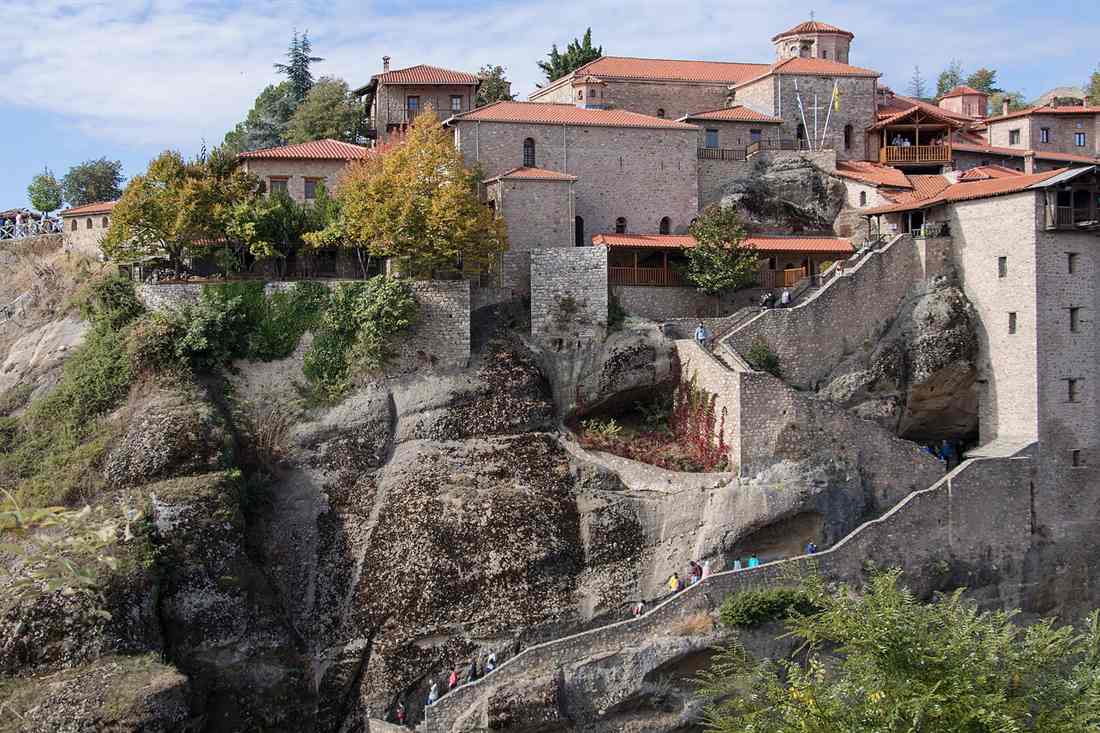
The 2-day tour of Delphi, Meteora and Thermopylae from Athens joins the oracle site, the mountain town of Arachova, the Leonidas monument and at least two Meteora monasteries. Tours across the rest of the country are listed on Greece Tours.
The sections below cover what the Delphi, Meteora and Thermopylae tour includes, each stop, the distances, season and booking, with links into the Thermopylae tours pages. The tours shown are checked on GetYourGuide and Viator.
What is the 2-day tour of Delphi, Meteora and Thermopylae?
The 2-day tour of Delphi, Meteora and Thermopylae starts in Athens. It combines ancient sites, mountain scenery, and Orthodox heritage for this route. The route includes Delphi, Arachova, Thermopylae, Kastraki, Meteora, two monasteries, and Kamena Vourla.
This private two-day route begins with pickup in Athens or Pireas. The first day links Arachova, Delphi Archaeological Site, and Thermopylae before an overnight stay in Kastraki. The itinerary then returns to Athens or Pireas after the second day.
The second day centres on Meteora and Thermopylae only as part of the wider route. It includes Meteora scenery and visits to Great Meteoron and Rousanou. The listing describes sunset sightseeing at Meteora. It also includes scenic driving through the regional landscape.
Delphi was a Pan-Hellenic sanctuary at the foot of Mount Parnassus. Ancient Greeks connected it with Apollo, the Pythia, and the centre of the world. This gave the stop a clear cultural role. The sanctuary also hosted the Pythian Games every four years.
What does the Delphi, Meteora and Thermopylae tour include?
The Delphi, Meteora and Thermopylae tour includes pickup, an English-speaking live tour guide, and a private group. It also provides the listed overnight stop in Kastraki. Attraction entries carry an extra fee within the package.
- Pickup and drop-off options in Athens or Pireas.
- Live tour guide in English.
- Private group experience.
- Overnight stay in Kastraki.
The listing marks Delphi Archaeological Site, Thermopylae, Great Meteoron, and Rousanou with an extra fee. The article therefore separates transport and guiding from admission arrangements at those stops. This distinction keeps the stated inclusions clear.
At Meteora and Thermopylae, the plan combines scenic viewing with short visits rather than a single extended activity. The listing gives two hours for Meteora and one hour at each named monastery. These timed stops create a defined second-day sequence.
The wider experience adds free time in Kastraki and a stop at Kamena Vourla. That stop includes sightseeing, a walk, coffee, dinner, and local snacks in the listed itinerary. The route therefore includes a local refreshment break after the principal sites.
Which stops does the two-day route make?
The route connects Athens, Arachova, Delphi, Thermopylae, and Kastraki. It then continues to Meteora, Great Meteoron, Rousanou, and Kamena Vourla. This sequence places Delphi, Meteora and Thermopylae within one compact circuit, with Kastraki serving as the overnight base.
- Arachova, for a photo stop and mountain views.
- Delphi Archaeological Site, for a guided visit.
- Thermopylae, for a photo stop and sightseeing.
- Kastraki, for free time and the overnight stay.
- Meteora, Great Meteoron, and Rousanou, for sightseeing and visits.
- Kamena Vourla, for coffee, dinner, and local snacks.
The first-day order moves from Athens through Arachova to Delphi, then continues to Thermopylae. The listing assigns about thirty minutes to Arachova and Thermopylae. Delphi receives two and a half hours. These durations describe the scheduled visits.
Kastraki follows the first sightseeing stops and hosts the overnight stay. On the next day, Meteora provides the landscape setting before visits to Great Meteoron and Rousanou. Each monastery receives a one-hour visit in the itinerary.
For background on the wider route, the Delphi and Meteora two-day itinerary explains these northern stops. It shows how they fit together. This tour adds Thermopylae and Kamena Vourla to that regional pattern. The added stops make the circuit broader.
How does it differ from a Delphi and Meteora tour without Thermopylae?
A Delphi and Meteora tour without Thermopylae leaves out the Leonidas memorial area. It also leaves out the route’s dedicated stop there. This itinerary adds Delphi, Meteora and Thermopylae. It covers a third historical location before reaching Kastraki on day one.
The difference is geographic as well as thematic. Delphi presents a sanctuary linked with Apollo. Thermopylae is a narrow pass associated with the Greek-Persian conflict and the monument to Leonidas. The two locations represent distinct parts of ancient Greek history.
Meteora adds a separate religious landscape in Thessaly. Its rock formations hold monasteries connected with Orthodox monastic life. The route joins sacred sites from different periods. The complex includes six extant monasteries, with two named in this tour.
A dedicated Thermopylae day trip from Athens focuses on the pass and Leonidas memorial. A Meteora day-trip option focuses on the rock complex and monasteries instead. The two options therefore have narrower themes.
With Delphi, Meteora and Thermopylae in one plan, the tour adds a stop. This stop lies between central Greece and the Meteora area. The result is a two-day circuit with archaeology, a memorial site, and monastic heritage. Kastraki connects the first-day route with the second-day visits.
This pairing of Meteora and Thermopylae also places religious heritage beside a memorial landscape. Delphi adds a sanctuary with a different ancient role. The three destinations create clear contrasts within one regional itinerary.


What happened at Thermopylae, and what stands there now?
Thermopylae recalls the battle between Greek defenders and the Persian army in the fifth century BC. The Delphi, Meteora and Thermopylae route links the battlefield with the Leonidas Monument. The monument marks this memorial site.
Thermopylae was a narrow pass beside the Malian Gulf in Greece. Greek forces resisted the Persian invasion there during the fifth century BC. The Delphi, Meteora and Thermopylae route places this history beside modern memorials. King Leonidas of Sparta led the Spartan contingent, which became central to the site’s historical memory.
The battlefield landscape has changed since antiquity because the coastline moved. The route visits the place associated with Leonidas and his 300 Spartans. A bronze statue marks Leonidas and carries the phrase “Come and take them!” beneath it.
- The Leonidas Monument shows a bronze statue of the Spartan king.
- A metope below the statue depicts scenes from the battle.
- Two marble figures represent the Eurotas River and Mount Taygetos.
- A monument honours the 700 Thespians who fought beside the Spartans.
The Thespian monument uses a bronze figure of Eros. Its symbols represent sacrifice, strength, freedom, and the loss of life. These memorials give the Delphi, Meteora and Thermopylae itinerary a clear historical stop before the route continues.

Why does the route stop in Arachova?
Arachova sits on the southern slope of Mount Parnassus, about eight kilometres from Delphi. The Delphi, Meteora and Thermopylae route links this mountain town with local landscape, streets, and regional traditions. The stop lies between Athens and the Delphi sanctuary.
Arachova stands at 970 metres above the Pleistos valley. Its location places the town close to Delphi and along the road connecting Delphi with Livadeia. On the Delphi, Meteora and Thermopylae route, travellers encounter this mountain settlement before reaching the ancient sanctuary.
The town has uphill houses, cobbled streets, and a central clock tower covered with ivy. Its products include formaela cheese, black wine, textiles, carpets, rugs, handicrafts, and woodcut work. These details show Arachova as a living town, not an archaeological site.
Mount Parnassus also gives Arachova a winter connection with nearby ski facilities. On the Delphi, Meteora and Thermopylae route, the stop adds a mountain community between Athens and Delphi. It also provides a visual change from ancient ruins and memorials.
What do you see at Delphi on this route?
Delphi preserves the sanctuary of Apollo, the ancient oracle, the Sacred Way, treasuries, a theatre, and a stadium. On the Delphi, Meteora and Thermopylae route, these remains sit beside Mount Parnassus and the Pleistos valley.
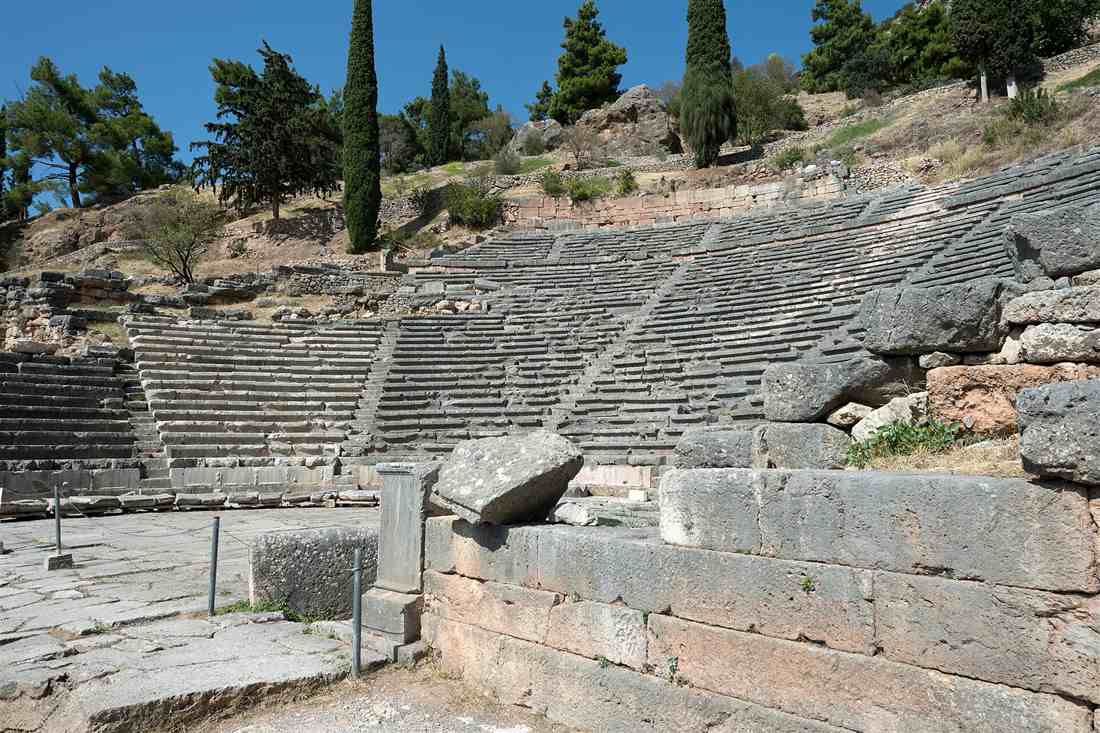
The sanctuary was the religious centre of the Greek world during the sixth century BC. Ancient visitors consulted Pythia, the priestess of Apollo. The site also held the Omphalos. Ancient Greeks linked this stone with their belief that Delphi marked the world’s centre.
The Sacred Way rises through the sanctuary toward the Temple of Apollo. Treasuries once held offerings from Greek city-states. The theatre and stadium hosted performances and the Pythian Games, which took place every four years.
The Delphi Archaeological Museum displays objects from the sanctuary. Its collection includes the Charioteer of Delphi, the Sphinx of Naxos, and statues of Kleobis and Biton. A detailed overview of the site appears on the Delphi archaeological site page.
The Delphi, Meteora and Thermopylae route presents Delphi as both an archaeological site and a mountain sanctuary. The ruins occupy a slope between the Phaidriades rocks. The landscape remains part of the place’s meaning, alongside the surviving buildings and museum objects.
Which Meteora monasteries can the tour visit?
Meteora contains six surviving monasteries on sandstone pillars near Kalabaka and Kastraki. The Delphi, Meteora and Thermopylae tour can visit at least two. The full group gives context for this Orthodox monastic landscape in Thessaly.
Monks began settling in Meteora’s caves during the eleventh century. Twenty-four monasteries were built on the rock formations by the sixteenth century. Their churches preserve post-Byzantine wall paintings, including works linked with Theophanes the Cretan.
- Great Meteoron, also called the Monastery of the Transfiguration.
- Varlaam, known for its monastery buildings on a high rock.
- Holy Trinity, one of the monasteries with a religious community.
- Saint Stephen, a monastery that became a convent for nuns.
- Saint Nicholas Anapausas, associated with a church painted by Theophanes.
- Rousanou, one of the six surviving Meteora monasteries.
At Meteora, the Delphi, Meteora and Thermopylae route includes a visit to at least two monasteries. The exact pair depends on the tour’s operating arrangements and access conditions. Visitors can read about the monastery group on the Meteora monasteries page.
Stone steps and paths now connect the monasteries with the surrounding plateau. Earlier access relied on ladders, ropes, and nets. The setting combines sandstone formations with religious buildings, frescoes, courtyards, and Thessaly views.


How far apart are Delphi, Meteora and Thermopylae?
Delphi, Meteora and Thermopylae form a long central Greek route from Athens. The itinerary links mountain roads, archaeological places, monasteries, and the Leonidas monument across two days. The plan combines road travel with guided visits, photo stops, sightseeing, and a hotel night in Kastraki.
Greek tourism material places Delphi about 180 kilometres from Athens by road. For Delphi, Meteora and Thermopylae, the route continues through central Greece before reaching Thessaly around Meteora by road.
- Athens to Delphi: about 180 kilometres by road.
- Delphi to Meteora: about 230 kilometres by road.
- Meteora to Thermopylae: about 150 kilometres by road.
- Thermopylae to Athens: about 200 kilometres by road.
These figures explain the tour’s full-day travel pattern across Delphi, Meteora and Thermopylae. The listing includes a professional English-speaking driver, fuel surcharges, and toll roads. The road sections connect the stops without changing the tour’s private format.
The route includes an overnight hotel stay in Kastraki at Meteora. That stop leaves the second day for monasteries before Athens. The overnight stop divides the road itinerary between sightseeing days.
Which season suits the Delphi, Meteora and Thermopylae tour?
Delphi, Meteora and Thermopylae work across the year, with different daylight and weather conditions. Late spring and autumn give moderate temperatures for outdoor stops and road travel. The listed stops include open-air visits at archaeological, mountain, and memorial sites.
Late spring brings longer daylight for Delphi, Meteora, and Thermopylae. It supports walking around remains, rock pillars, and the Leonidas memorial. Plan extra time for monastery access and exposed rock surroundings.
Summer gives the longest daylight but higher daytime heat. The Delphi, Meteora and Thermopylae itinerary includes outdoor sightseeing, so water and sun protection suit this period. Extra shade breaks help during exposed visits.
Autumn brings cooler air around the monasteries. Winter conditions at Meteora require seasonal planning through the Meteora in winter page. The Athens to Meteora route page explains the wider road connection from Athens to the monasteries.
The listing does not assign a single travel season. Check dates before selecting a private departure that fits the planned visit and preferred weather. Daylight affects outdoor photographs and walking.
How do you book and cancel the Delphi, Meteora and Thermopylae tour?
Delphi, Meteora and Thermopylae are booked as a private two-day activity from Athens or Piraeus. The listing gives free cancellation up to 24 hours before departure for a full refund. Booking also covers transport, accommodation, and listed tour services for the private party.
The activity has pickup options in Athens and Piraeus, including a hotel or cruise terminal. It returns to Athens or Piraeus after the second day of the Delphi, Meteora and Thermopylae route.
- Select a date and check the available starting time.
- Choose pickup details in Athens or Piraeus.
- Review the private-group itinerary and one-night Meteora hotel stay.
- Keep the cancellation deadline visible before finalising the reservation.
The booking includes hotel accommodation, admission fees, and a professional guide at Delphi and two Meteora monasteries. It lists meals, drinks, snacks, fuel surcharges, and toll roads for this private activity.
The activity is marked as a new listing without reviews. Confirm availability after choosing the travel date and pickup point. The listing records no guest feedback. No guest feedback appears yet.
Frequently Asked Questions
How long is the tour?
The activity lasts two days and includes one night away from Athens. It is a private tour with pickup and drop-off options in Athens or Piraeus. The schedule combines Delphi, Thermopylae, Meteora, and overnight accommodation in a hotel at Kastraki.
Where is the overnight stop?
The overnight stop is in Kastraki, beside the Meteora area. The listing describes hotel accommodation there after the first day. On the second day, the group tours Meteora and its monasteries. The return to Athens or Piraeus follows in the late afternoon.
What monastery count does the itinerary include?
The tour visits at least two Meteora monasteries, with extra visits possible. The named stops are Great Meteoron Monastery and the Monastery of Rousanou. A professional guide accompanies visits to two monasteries during the activity. The visit plan also identifies Great Meteoron as part of the monastery experience.
Does the tour include the Leonidas monument?
Thermopylae is a listed stop, with sightseeing and a photo stop lasting about 30 minutes. The site includes the modern Leonidas memorial. The listing presents the stop as connected with Leonidas and his 300 Spartans. Its short visit fits within the road itinerary.
Does the activity have customer reviews?
The listing marks this activity as new and shows no reviews for it. Review scores displayed for related Meteora activities belong to those separate products. They do not represent customer feedback for this two-day private tour from Athens. The new listing status applies to this exact activity.