
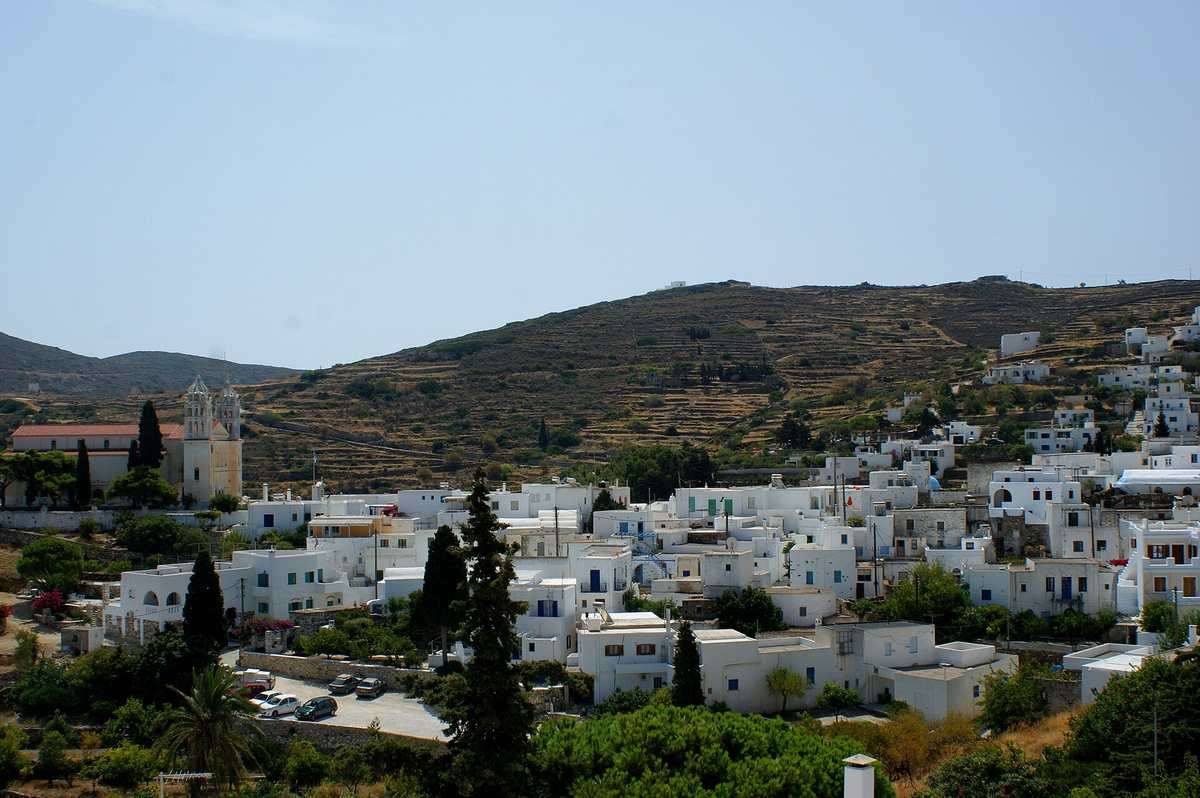
Paros hiking is led by the ancient marble Byzantine Road from Lefkes to Prodromos and Marpissa, one of the oldest trails in the Cyclades, alongside the Kefalos castle hill and the coastal paths of Paros Park. The island’s green interior and quiet villages reward walkers of every level. This guide covers the best routes, the difficulty, what to bring and how to walk them.
Walking reveals the island beyond the beaches, a rewarding part of the guide to things to do in Paros. Trails thread the hills and the coast. The sections below cover the routes.
What is the Byzantine Road?
The Byzantine Road is a thousand-year-old marble-paved path from the hill village of Lefkes to Prodromos and Marpissa, the oldest trail on the island. Built to link the monasteries, it runs about 3.5 kilometres through olive groves, past old churches and stone bridges.
The Byzantine Road is the island’s signature walk. Paved with Parian marble and built in Byzantine times to link the island’s villages and monasteries, it is the oldest trail here and among the longest-used historic roads in the Cyclades. The path runs about 3.5 kilometres from the hilltop village of Lefkes down to Prodromos, with the option to continue to Marpissa and even on to the coast at Piso Livadi. Along the way it passes olive groves, stone bridges, herb gardens and the remains of old churches, set out in the guide to Lefkes Paros. The walk is easy and rewarding.
How long and hard is the walk?
The walk is easy, with little climbing, taking about 1 to 1.5 hours from Lefkes to Prodromos at a relaxed pace, plus another 30 to 45 minutes on to Marpissa. It needs good walking shoes rather than special equipment, and is simple to follow.
The trail suits walkers of most abilities. The downhill route from Lefkes to Prodromos covers gentle terrain with little elevation, taking around 1 to 1.5 hours at an easy pace, and the optional continuation to Marpissa adds another 30 to 45 minutes through more olive groves. It is well marked and simple to follow, needing only good walking shoes rather than hiking boots or gear. The marble slabs can grow slippery in the heat as dust settles on the stone, so proper footwear and care matter, set out alongside the guide to Prodromos Paros. Other trails extend the network.
What other trails are there?
Other trails include the climb to the Kefalos castle hill above Marpissa, the coastal paths through Paros Park to the Korakas lighthouse, and walks around the villages and valleys. They range from short strolls to half-day routes with sea views.
The island offers walking well beyond the Byzantine Road. From Marpissa, a path climbs the Kefalos hill to its Venetian castle ruins and the Monastery of Agios Antonios, with wide east-coast views. On the north coast, marked trails wind through the protected Paros Park to the Korakas lighthouse, a 45-minute walk to one of the island’s best sunset spots. Shorter routes link the inland villages and the terraced valleys around Lefkes. These add variety for keen walkers, set out in the guides to Marpissa Paros and Monastiri beach Paros. A little preparation helps.
What should you bring and know?
You should bring good walking shoes, water, sun protection and a hat, since shade is limited and the marble can be slippery. Start early or late to avoid the midday heat, and carry a charged phone with the route, though the main trails are well marked.
Walking the island calls for sensible preparation. Sturdy walking shoes are essential, since flip-flops slip on the polished marble, and plenty of water, a hat and reef-safe or sport sunscreen guard against the strong sun on the largely shadeless trails. Setting out in the cooler morning or late afternoon avoids the worst heat, and a charged phone with an offline map helps, though the Byzantine Road and Park trails are clearly marked. Taking litter away protects the landscape. With this kit, the trails are comfortable, set out alongside the guide to the best time to visit Paros. Reaching the trailheads is easy.
How do you reach the trailheads?
You reach Lefkes, the main trailhead, in about 20 minutes by car from Parikia or Naoussa, or by bus, with around seven daily services from Parikia. From the end at Marpissa, regular buses run back to Lefkes and Parikia for a couple of euros.
The trails are easy to reach by car or bus. Lefkes, the start of the Byzantine Road, lies about 20 minutes by car from either Parikia or Naoussa, with around seven daily buses from Parikia and a couple from Naoussa. Walking point-to-point is simple, since buses from the Marpissa windmills run regularly back to Lefkes and Parikia for tickets from around €2, so you need not retrace your steps. A car gives flexibility for the Kefalos and Paros Park trails, set out in the guide to how to get to Paros. Timing the season matters most.
When should you go hiking?
The best time to hike is spring and autumn, from April to early June and September to October, when the weather is mild, the hills green and the trails comfortable. Summer hiking is best early in the morning or late afternoon to avoid the heat.
The season shapes the walking. Spring, from April to early June, brings green hillsides, wildflowers and ideal temperatures for the Byzantine Road and the Park trails, while September and October offer warm, settled weather as the heat eases. Summer is hot for hiking, so the early morning and late afternoon are the only comfortable windows, with plenty of water essential. Winter is mild but can be wet and the trails muddy. The shoulder months are the walkers’ season, as the guide to the best time to visit Paros sets out. The questions below cover the points travellers ask most.
Frequently Asked Questions
What is the best hike in Paros?
The best hike is the ancient marble Byzantine Road from Lefkes to Prodromos and Marpissa, the oldest trail on the island. About 3.5 kilometres and easy, it passes olive groves, stone bridges and old churches through the green interior.
Is the Byzantine Road hike difficult?
The Byzantine Road is an easy hike with little climbing, taking about 1 to 1.5 hours from Lefkes to Prodromos. It needs good walking shoes rather than special gear, though the marble can be slippery in the heat, so proper footwear matters.
When is the best time to hike in Paros?
The best time to hike is spring and autumn, from April to early June and September to October, when the weather is mild and the hills are green. In summer, hike early in the morning or late afternoon to avoid the heat.