
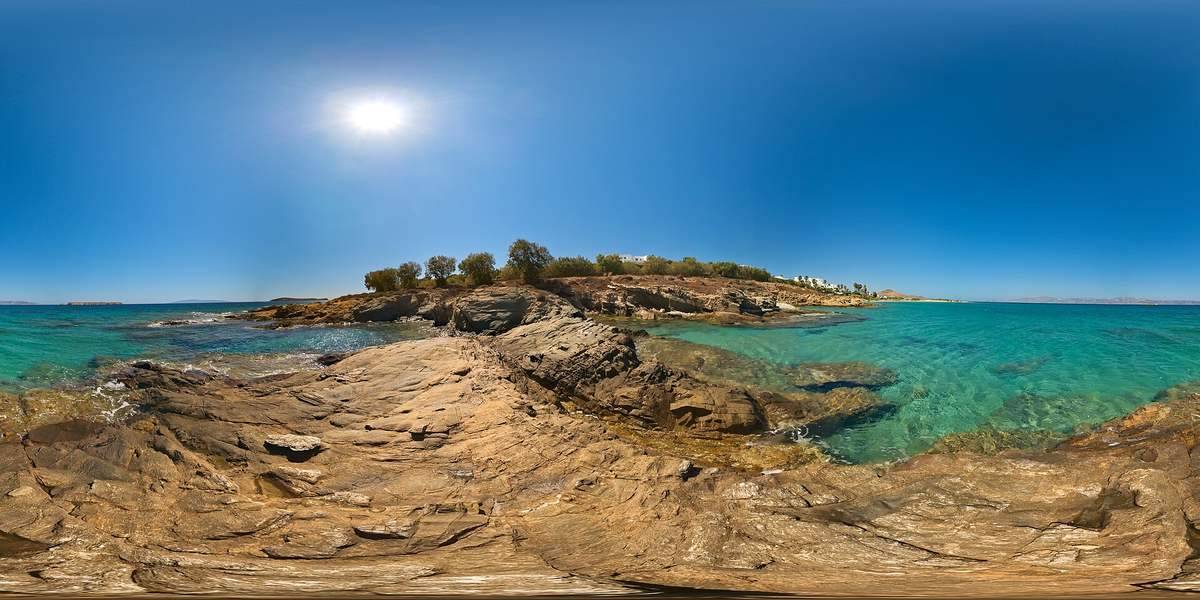
Faragas beach Paros is a sheltered south-coast bay of three sandy coves with golden sand, shallow turquoise water and a beach club, protected from the north wind by rocky headlands. Its calm, clear shallows make it a favourite for families and quiet swims. This guide covers what the beach is like, the coves, how to get there and who it suits. Plan the whole trip with Greece Tours.
The beach is one of the loveliest on the quieter south coast, a key entry in the guide to Paros beaches. It lies near the village of Aliki. The sections below cover the visit.
What is the beach like?
The beach is a sheltered bay of golden sand and shallow, calm turquoise water on the south coast, with a sandy bottom you can wade far out into. Rocky headlands shelter it from the north wind, so it rarely has waves even in summer.
The beach is a calm, picture-book south-coast cove. Golden sand fringes clear, shallow turquoise water with a soft sandy bottom that lets swimmers wade out a long way before it deepens, ideal for relaxed swimming. Rocky heights enclose the bay and shelter it from the meltemi that churns the north coast, so the water usually stays calm and flat. About 300 metres long, it feels intimate and protected, set out alongside the guide to the best time to visit Paros and its winds. The bay is really three beaches in one.
What are the three coves?
The bay holds three beaches separated by rocky outcrops: the main beach is the longest and well-organised, the second is quieter, and the third is the most secluded. All three are sheltered from the north wind and offer calm, shallow swimming.
The beach rewards a little exploring. Within the larger bay, rocky spurs reaching the sea divide the shore into three distinct coves: the main beach, the longest and best organised with sunbeds and a beach club; a second, quieter stretch with fewer crowds; and a third, the most secluded, for those seeking peace. Because the rocks shelter all three from the northern winds, the water stays calm and clear across the bay. Choosing a cove to match your mood is part of the charm, set out alongside the guide to things to do in Paros. Facilities centre on the main beach.
What facilities are there?
The main beach is well-organised, with sunbeds and umbrellas to rent, toilets and the Barbarossa beach club offering a bar, restaurant and small market. The quieter second and third coves have few or no facilities, so bring water and shade.
The beach mixes comfort with quiet. The main cove is well set up, with sunbeds and umbrellas for hire, toilet facilities and the Barbarossa beach club, which runs a bar, a restaurant and a small market, enough for a full day without leaving. The second and third coves stay more natural, with little or no service, so visitors heading there should bring water, snacks and their own shade. This range lets you pick a serviced day or a secluded one within the same bay, set out alongside the guide to best restaurants in Paros. The calm shallows suit families especially.
Is it good for families?
The beach is excellent for families, with shallow, calm water and a sandy bottom where children can wade safely far from shore, plus a beach club and facilities on the main cove. The shelter from the north wind keeps it gentle even on breezy days.
The beach is among the best on the island for children. Its shallow, calm water and soft sandy bottom let young swimmers paddle safely a long way out, and the shelter from the meltemi means it stays gentle when the north coast is windy. The main cove’s sunbeds, beach club and toilets make a family day comfortable, while the quieter coves offer space away from the crowds. Bringing sun protection and water is wise, especially for the unorganised coves, set out in the guide to Paros with kids. Getting there takes a short drive.
How do you get there?
You get there by car or scooter, about 16 kilometres south of Parikia and near the village of Aliki, with parking by the beach. A summer bus to Aliki gets you close, and the south-coast location pairs well with a visit to Aliki and the Kefalos hill.
The beach sits on the quieter south coast, best reached by road. By car or scooter it lies about 16 kilometres south of Parikia, around 26 from Naoussa, with parking near the sand, while a summer bus to nearby Aliki gets you within reach. Its location near the fishing village of Aliki and the ancient Venetian castle hill of Kefalos makes it easy to combine with a village lunch and a little history, set out in the guides to Aliki Paros and how to get to Paros. Timing the visit improves it.
When is the best time to visit?
The best time to visit is on windy summer days, when its shelter from the meltemi keeps it calm while the north coast is choppy, or the quieter shoulder months. Arriving early secures a sunbed on the main cove in peak season.
The beach comes into its own when the wind blows. On the many summer days when the meltemi churns the exposed north and east coasts, this sheltered south-coast bay stays calm and swimmable, making it the perfect fallback. June and September bring warm water and thinner crowds, while July and August are busiest, so arriving early secures a sunbed on the organised main cove or space on the quieter coves. Its calm in the wind is its great seasonal advantage, as the guide to the best time to visit Paros notes. The questions below cover the points travellers ask most.
Frequently Asked Questions
What is Faragas beach like?
Faragas is a sheltered south-coast bay of three sandy coves with golden sand and shallow, calm turquoise water, protected from the north wind by rocky headlands. The main cove is organised with a beach club, while the others stay quieter.
Is Faragas beach good for families?
Faragas is excellent for families, with shallow, calm water and a sandy bottom where children can wade safely far from shore, plus a beach club and facilities on the main cove. Its shelter from the north wind keeps it gentle on breezy days.
How do you get to Faragas beach?
You reach Faragas by car or scooter, about 16 kilometres south of Parikia and near the village of Aliki, with parking by the beach. A summer bus to Aliki gets you close, and it pairs well with a visit to Aliki and the Kefalos hill.