
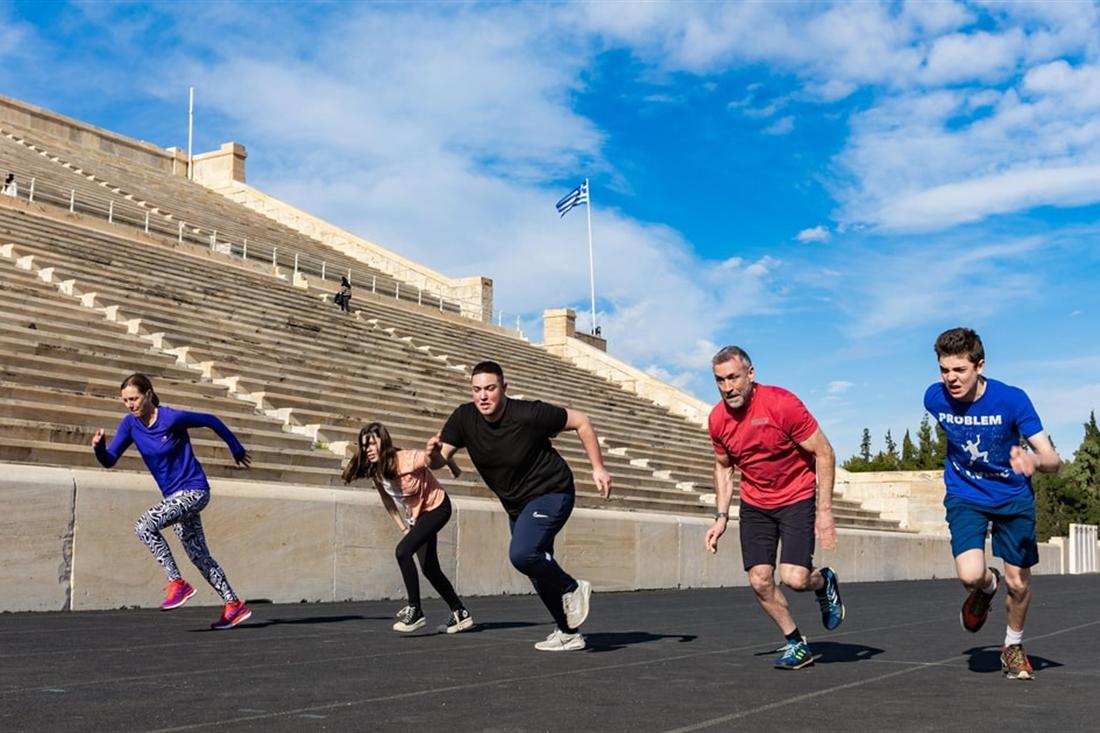
The Athens Olympic Games workout is a 2-hour session that starts at the Zappeion with the story of the Games, trains discus, javelin, shot put and long jump in a 19th-century gym, and ends with a run in the marble Panathenaic Stadium. Tours across the rest of the country are listed on Greece Tours.
The sections below cover the session you can book, the meeting point, the events, how ancient athletes trained, the prizes and races of ancient Olympia, the first modern Games, who it suits, timings and booking, with links into the Athens pages. The session shown is checked on GetYourGuide.
What is the Athens Olympic Games workout?
The Athens Olympic Games workout is a 2-hour outdoor session that mixes Olympic history with light training. It starts at the Zappeion, moves to a 19th-century gym and ends in the Panathenaic Stadium.
A certified sports trainer leads each group. The session covers how ancient athletes trained and which events they contested. Guests then try those events in a simple, safe form.
Alternative Athens runs the Athens Olympic Games workout every morning. The activity is mild, so guests need no sports background. The pace follows the group, and props are provided.
The route stays in central Athens, a short walk from Syntagma Square. It links three places tied to the revival of the Games in the city.
Which Athens Olympic Games workout can you book?
The Athens Olympic Games workout is listed on GetYourGuide as a 2-hour session. Viator sells a small-group version, and Alternative Athens takes direct bookings. A private family version runs through Kids Love Greece.
- GetYourGuide: Athens: Olympic Games Workout Session, 2 hours
- Viator: Small-Group Olympic Games Workout in Athens
- Alternative Athens: the Olympic Games tour, for up to 12 people
- Kids Love Greece: a private, customised family version
The GetYourGuide listing describes visits to venues tied to authentic Olympic events. It also names the training methods of ancient Olympic athletes. Both are the core of every Athens Olympic Games workout.
Alternative Athens books any of its tours as a private session on request. The family version by Kids Love Greece is private by design and built around children.
Where does the Athens Olympic Games workout start?
The Athens Olympic Games workout starts in front of the Zappeion Hall, in the National Garden. The hall stands between the Temple of Olympian Zeus and the gardens. The exact meeting details arrive after booking.
The Zappeion Hall sits at the southern edge of the National Garden. Its colonnade faces a wide forecourt, which serves as the meeting point.
The columns of the Temple of Olympian Zeus rise just to the west. The Panathenaic Stadium lies a short walk to the east, across Vasilissis Olgas Avenue.
The tour ends back at the meeting point. That leaves guests in the centre of Athens, close to Syntagma, Plaka and the metro.
What happens at the Zappeion on the Athens Olympic Games workout?
The Athens Olympic Games workout opens at the Zappeion with the story of the Games. The trainer explains the ancient Olympics, how athletes trained and how Athens revived the Games at the end of the 19th century.
Evangelos Zappas, a Greek merchant, paid for early attempts to revive the Olympic Games. His legacy funded the Zappeion Hall, which carries his name.
His cousin Konstantinos Zappas carried out the will and saw the hall built in the National Garden.
At the first modern Olympics, the Zappeion hosted the fencing events. Alternative Athens describes the building as the first Olympic Village of the modern Games.
This talk sets the scene for the training that follows. Guests learn which events appeared over the history of the ancient Games before they try them.
What is the Zappeion used for today?
The Zappeion is a conference and exhibition hall run by the Greek state. It hosts trade fairs, cultural events and official meetings. The Athens Olympic Games workout meets and holds its history talk on the forecourt, in front of the main entrance.
The treaty that brought Greece into the European Communities was signed in the Zappeion. The hall has hosted state ceremonies and international meetings ever since.
Its round inner courtyard is ringed by columns. The National Garden wraps around the building on three sides.
Which events do you try on the Athens Olympic Games workout?
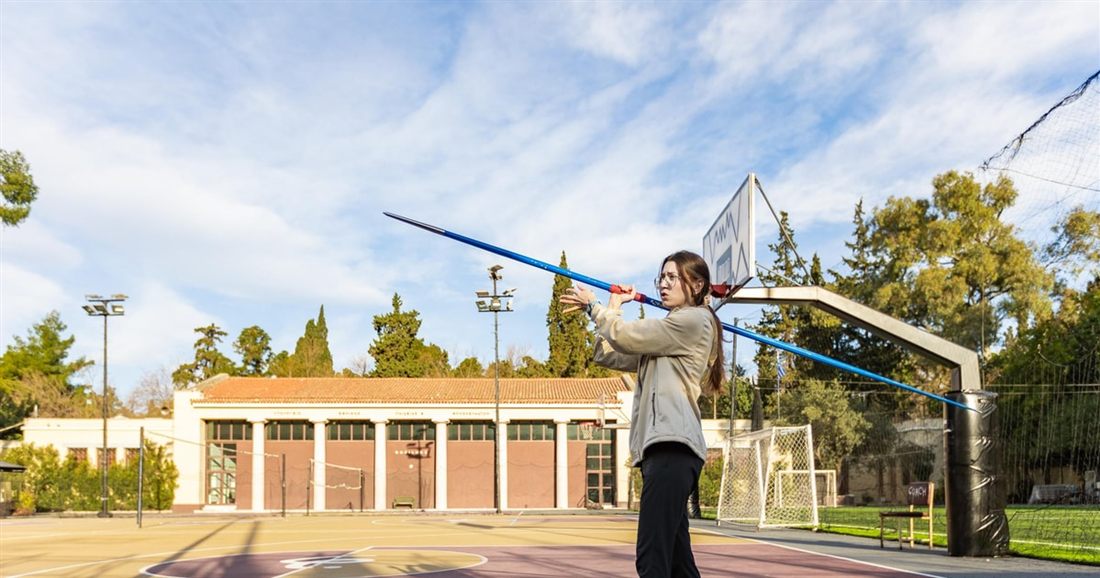
The Athens Olympic Games workout covers the discus and javelin, two classic ancient events. Shot put, long jump and relay races follow. A warm-up and stretching session comes first, in a small 19th-century gym near the Zappeion.
- Stretching and a warm-up led by the trainer
- Discus throws and spins
- Javelin throws with foam javelins
- Shot put
- Long jump
- Relay races and a final run on the stadium track
The old gym hosts the throwing and jumping practice. Each event starts with the trainer’s demonstration, then guests try it in turn.
The Athens Olympic Games workout puts the stress on taking part. The final run counts for the experience, not for the time on the clock.
What were the ancient Olympic Games?
The ancient Olympic Games were a sports festival held every four years at Olympia, in honour of Zeus. The recorded list of winners starts in 776 BC. The Athens Olympic Games workout explains their place in Greek society.
Olympia lies in the western Peloponnese, in the sanctuary of Zeus. Athletes came from cities across the Greek world. A sacred truce, the ekecheiria, protected their journey to the Games and back.
Only free Greek men took part as athletes. The programme grew from a single sprint to running, combat and horse events over the centuries.
The Games ran for more than a thousand years. They ended in the late fourth century AD, under the Christian emperor Theodosius I.
How did ancient Olympic athletes train?
Ancient Olympic athletes trained for months in the gymnasium and the palaestra, the wrestling school. The Athens Olympic Games workout explains these methods and shows how they shaped modern athletics. Athletes also spent a final month training at Elis.
The gymnasium held running tracks and throwing grounds. The palaestra was a courtyard for wrestling and boxing. The palaestra and gymnasium of Olympia still stand beside the ancient site.
Athletes trained and competed naked. They rubbed olive oil into the skin before exercise. Afterwards, they scraped off the oil, sweat and dust with a curved tool called a strigil.
Long jumpers carried halteres, weights of stone or metal held in each hand. Swinging them forward added distance to the jump. The Athens Olympic Games workout uses simpler modern props in their place.
What were the events of the ancient pentathlon?
The ancient pentathlon held five events: the stadion sprint, the long jump, the discus, the javelin and wrestling. The Athens Olympic Games workout covers four of the five. Wrestling stays out, for safety in a mixed group.
- Stadion: a sprint of one length of the stadium
- Long jump: with halteres in the hands
- Discus: a throw of a stone or bronze disc
- Javelin: a throw with a leather thong wound round the shaft
- Wrestling: the final event of the five
The full story of the ancient contests is on the ancient Olympic Games page.
The pentathlon rewarded all-round athletes. The javelin thong made the spear spin in flight, which helped it fly straight and far.
What prizes did ancient Olympic winners receive?
Ancient Olympic winners received a wreath of wild olive, cut from the sacred tree at Olympia. The Athens Olympic Games workout ends with a podium moment in the same spirit. Home cities added their own rewards for a champion.
A boy whose parents were both alive cut the olive branches with a golden knife. The wreath, called a kotinos, was the only prize at Olympia itself.
Back home, champions won fame and gifts. Athens gave its Olympic winners free meals for life. Poets such as Pindar wrote victory odes, and cities set up statues of their winners.
Which running races did the ancient Olympics hold?
The ancient Olympics held four main foot races. The stadion was a sprint of one length of the track. The diaulos ran two lengths, and the dolichos ran far longer. The hoplitodromos was a race in armour.
- Stadion: one length of the stadium, about 192 metres at Olympia
- Diaulos: two lengths, out and back
- Dolichos: a long race of 7 to 24 lengths
- Hoplitodromos: a race in helmet and shield
The relay races on the Athens Olympic Games workout are a modern event. The ancient Games had no relays, and every runner raced alone.
What were the combat events at ancient Olympia?
Ancient Olympia held three combat events: wrestling, boxing and the pankration. The pankration mixed boxing and wrestling, with only biting and eye gouging banned. The Athens Olympic Games workout leaves all three out for safety.
- Wrestling: a throw to the ground counted as a fall, and three falls won
- Boxing: fighters wrapped their hands in leather straps
- Pankration: a mix of strikes and holds, with almost no rules
Combat bouts had no weight classes and no time limit. A fight ended when one man gave up or was unable to go on.
What do you do at the Panathenaic Stadium on the Athens Olympic Games workout?
The Athens Olympic Games workout ends at the Panathenaic Stadium with a run on its track. Guests walk in through the old stadium tunnel and stand on the Olympic podium. The stadium is built entirely of white marble.
The Panathenaic Stadium hosted the first modern Olympic Games. Athenians call it Kallimarmaro, meaning beautiful marble. Its long horseshoe shape follows the plan of the ancient stadium on the same site.
The final run is a relay or a short sprint on the track. Guests then climb the podium for a winner’s moment. The stadium entry fee is not part of the workout.
The stadium also holds a museum with memorabilia from the modern Olympic Games. Guests can visit it after the Athens Olympic Games workout ends.
How did the first modern Olympics come to Athens?
The first modern Olympic Games took place in Athens at the end of the 19th century. The Frenchman Pierre de Coubertin led the revival, and Greece hosted the first Games. The Athens Olympic Games workout retells this story on the spot.
The Panathenaic Stadium was restored in marble for those Games. George Averoff, a Greek benefactor, paid for the work. His statue stands at the stadium entrance.
Athletes from 14 nations took part in those first Games.
The marathon ran from the town of Marathon to the stadium. A Greek water carrier, Spyridon Louis, won it in front of a home crowd. The win made him a national hero.
The Olympic flame still passes through the stadium before every Games. After the lighting at Olympia, Greece hands the flame to the host city there.
What is the Athens Classic Marathon?
The Athens Classic Marathon runs every November from the town of Marathon to the Panathenaic Stadium. It follows the route of the first modern Olympic marathon. Runners finish on the same marble track used on the Athens Olympic Games workout.
The route covers the full marathon distance of about 42 km. It climbs inland from the coast at Marathon before dropping into central Athens.
The race recalls the legend of the messenger who ran from Marathon to Athens with news of victory. Guests on the Athens Olympic Games workout run the last metres of that finish.
How long does the Athens Olympic Games workout last, and what is included?
The Athens Olympic Games workout lasts 2 hours. It includes a certified sports trainer, the guided route, the training session and all the equipment. Entry fees, such as the Panathenaic Stadium ticket, are not included.
- A certified sports trainer as guide
- The history talk at the Zappeion
- The training session in the old gym
- Discus, javelin and other props
- Photos taken by the guide during the session
Groups stay small, with up to 12 people on the Alternative Athens tour. The language is English.
The private family version also runs for 2 hours. Parents can add a visit to the stadium museum at the end.
Who suits the Athens Olympic Games workout?
The Athens Olympic Games workout suits families, sports fans and history lovers who prefer hands-on activities. No fitness level is needed, and the activities adapt to each guest. Children of all ages take part with their parents.
The workout is light, and guests go at their own pace. It does not suit people with back problems, mobility issues or recent surgery.
The family version targets children directly. They stretch, throw the discus and javelin, race on the Olympic track and stand on the podium. More family days in the capital are on the Athens with kids page.
The Athens Olympic Games workout also suits travellers who want an active morning before museum visits. It fills two hours and ends in the city centre.
What do you wear and bring to the Athens Olympic Games workout?
Wear comfortable sports clothes and athletic shoes for the Athens Olympic Games workout. Bring water and sunscreen, since the session runs outdoors. Avoid open-toed shoes and a heavy meal in the two hours before the start.
- Sportswear that allows free movement
- Athletic shoes with a good grip
- A bottle of water
- Sunscreen and a hat
- Money or a card for the stadium ticket
The track and the gym floor need shoes that grip. Sandals and flip-flops slip on the throws and the run.
The trainer provides the discus, javelin and other props. Guests carry only their own water and personal items.
When does the Athens Olympic Games workout run?
The Athens Olympic Games workout starts at 8:30 every day. It does not run from 7 to 17 August. Other closed days are 1 and 2 January, 25 and 26 December and 15 August. Easter Sunday and Monday close too.
The early start avoids the midday heat of an Athens summer. The family version also recommends early mornings in summer for the same reason.
The session runs through all four seasons. Spring and autumn bring mild mornings for the run in the stadium.
The open marble stadium has no shade over the track. August mornings in Athens start warm, so water and a hat matter on the run.
How does the Athens Olympic Games workout fit with a trip to Ancient Olympia?
The Athens Olympic Games workout covers the modern revival in the capital. Ancient Olympia, about 300 km west in the Peloponnese, holds the original sanctuary and stadium. A day trip from Athens reaches it.
Olympia sits about 4 hours by road from Athens, across the Corinth Canal and the northern Peloponnese.
- An Ancient Olympia day trip from Athens visits the sanctuary of Zeus
- The ancient stadium of Olympia keeps its original earth track
- The Museum of the History of the Olympic Games shows athletes’ gear
The two days tell one story. Olympia shows where the Games began, and the Panathenaic Stadium shows where they returned.
How do you book the Athens Olympic Games workout?
Book the Athens Olympic Games workout online through GetYourGuide, Viator or Alternative Athens. Reserve-now, pay-later terms apply on booking sites, and last-minute bookings are possible. The stadium ticket is bought separately on the day.
Alternative Athens sends the exact meeting details after booking. Private sessions are booked through the same channels.
Groups book as one party for the small-group session. Families who want the session for their children alone book the private version.
Frequently Asked Questions
Are the javelins on the Athens Olympic Games workout real?
No. The javelins are made of foam, so they are safe to throw in a group. The discus and the other props follow the same idea. The trainer shows the ancient technique, and guests copy it with the safe props.
Is the final run a race?
It can be, but the result does not matter. The final run on the stadium track stresses running, not finishing times. Groups run relay races or a short sprint, and every runner ends on the podium for a photo.
Do you get photos of the session?
Yes. The guides take photos of guests during the workout. The shots cover the throws in the gym and the run on the marble track. Guests also take their own photos on the podium.
Does the workout go to Olympia?
No. The workout stays in central Athens, at the Zappeion, the old gym and the Panathenaic Stadium. Olympia lies in the western Peloponnese, a full day away by road from the capital.
Where is the Olympic flame lit?
The flame is lit at Olympia, in front of the Temple of Hera. The rays of the sun light it. The Olympic flame lighting ceremony page covers the ritual. The flame then travels to the Panathenaic Stadium in Athens.
Is the Panathenaic Stadium open to visitors without the workout?
Yes. The stadium opens to visitors every day with an entry ticket. Visitors walk the track, climb the marble seats and see the Olympic museum. The Athens Olympic Games workout adds the history talk and the training session around that visit.
Can adults without children join?
Yes. The small-group session welcomes adults, couples and solo travellers as well as families. The trainer adapts each event to the group in front of them.